


Hand Painted Oil Lamp
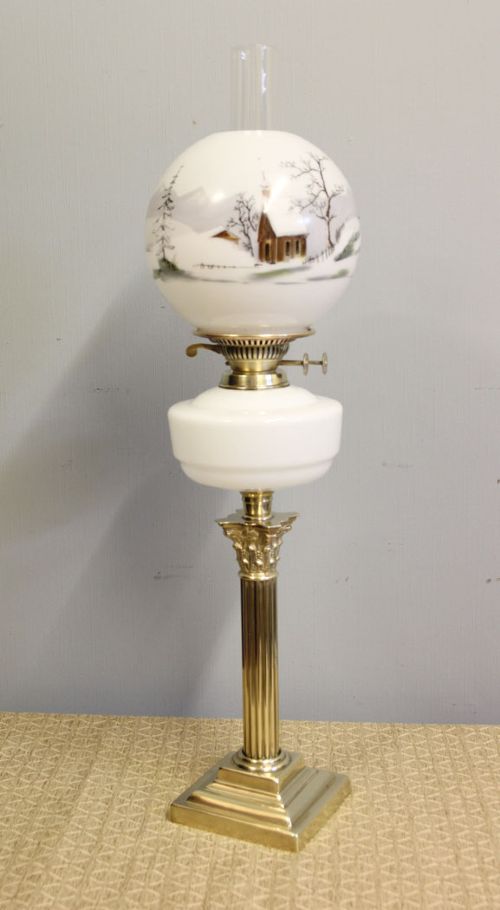
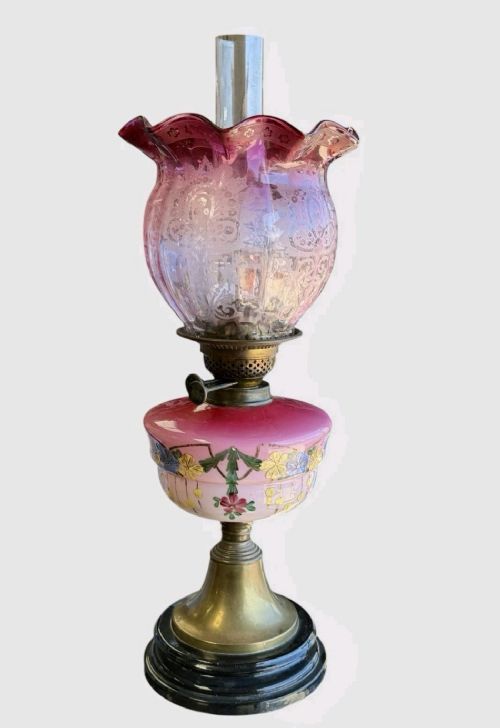
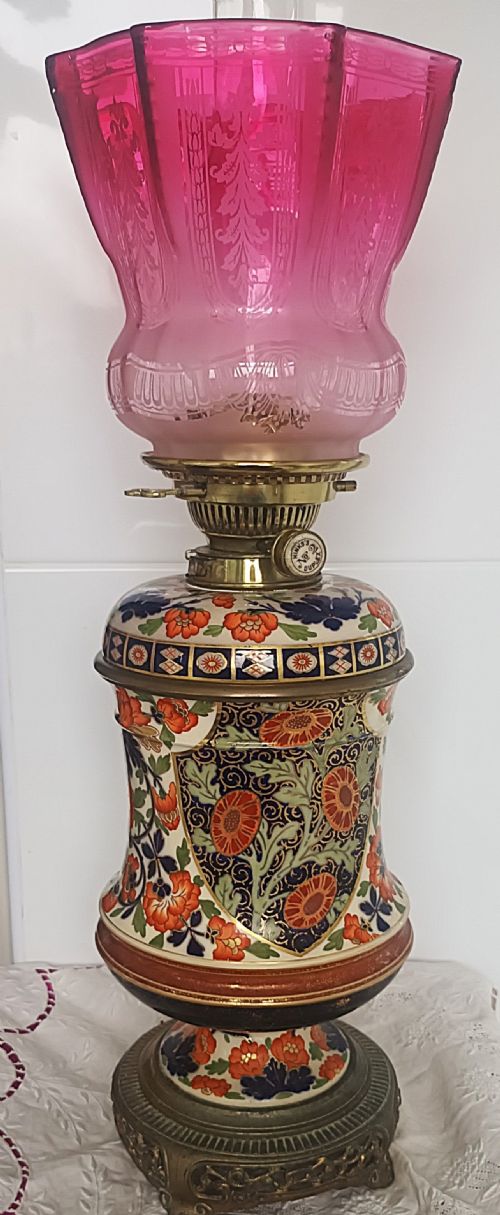
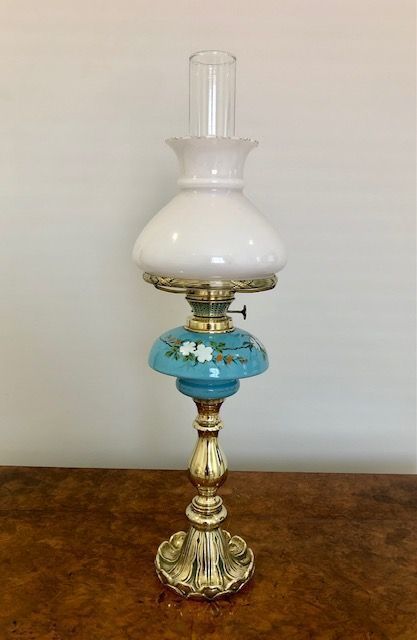
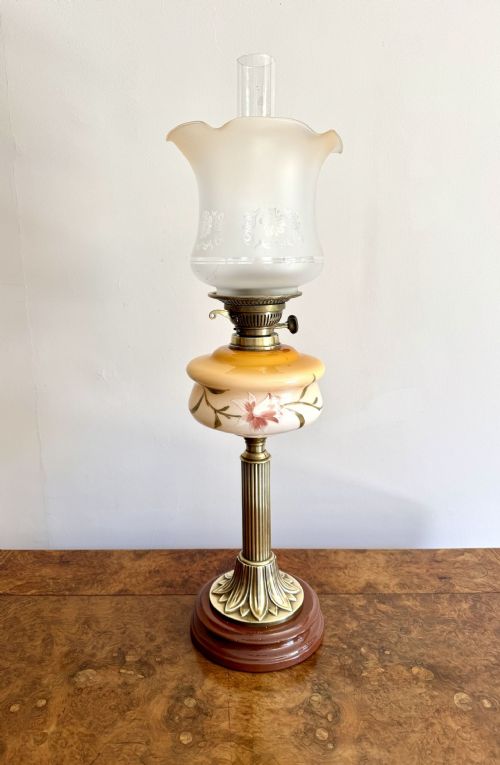
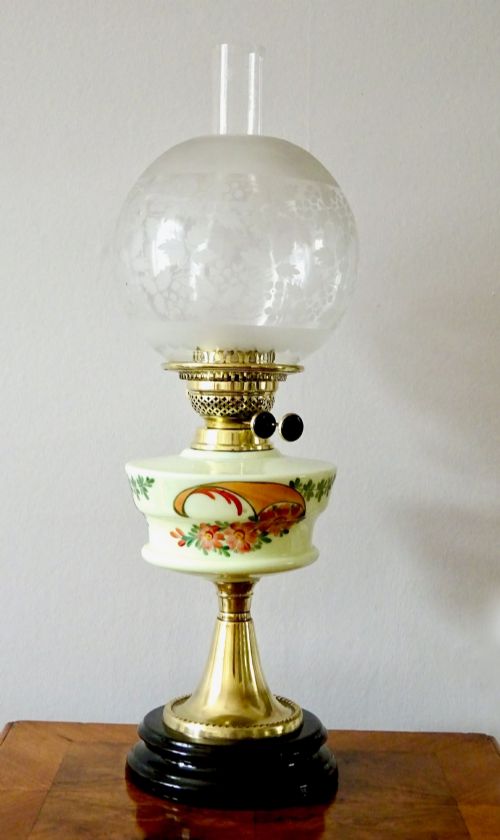
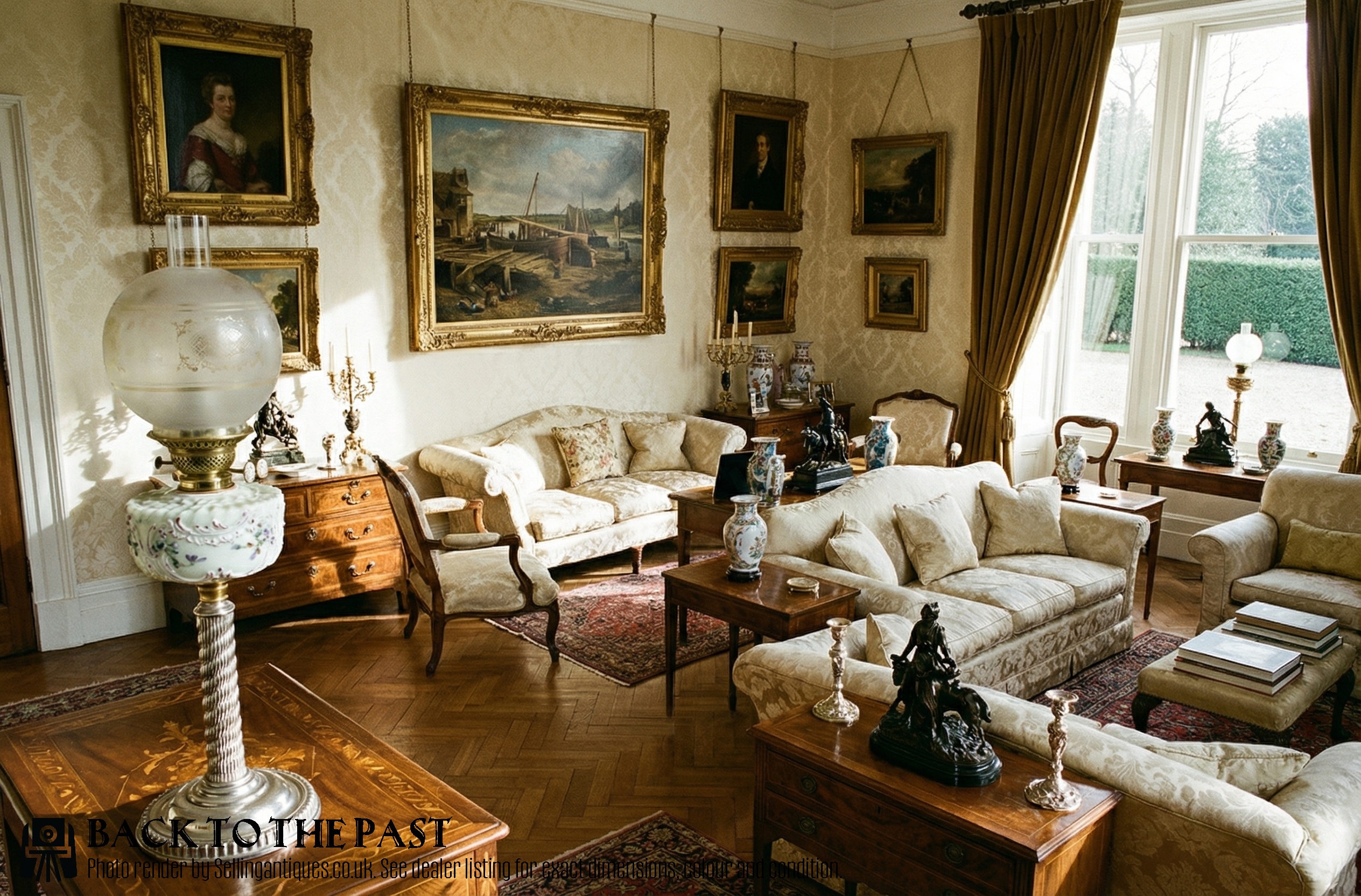
These hand painted oil lamp examples bring nineteenth century illumination into a room with floral ceramic and opaline bowls paired to brass or bronze bases.
What They Are
When buyers search for a hand painted oil lamp, they encounter Victorian lighting vessels designed for domestic illumination during the nineteenth century. These objects combine metal reservoirs and stands with hand painted ceramic, porcelain, opaline glass, or faience bodies.
The versions most commonly met on this page date from around eighteen eighty and into the Victorian era, often featuring duplex burners. Many pieces have undergone conversion to electricity while retaining their original decorative character and painted motifs.
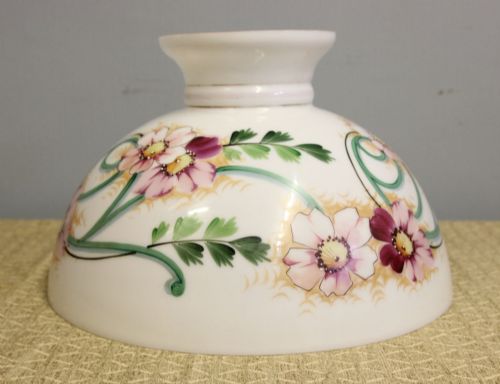
Forms range from simple table lights to substantial parlor lamps mounted on bronze or brass bases. The painted decoration typically depicts floral sprays or naturalistic subjects applied directly to the glass or ceramic body.

How They Were Made
Maker workshops constructed these lamps using mixed media, combining cast brass, silver plate, or bronze with blown glass and fired ceramic. Metal components were turned, cast, and polished to form the structural base and burner assemblies.
Ceramic and glass bodies received hand painted enamel or slip decoration before firing, securing the pigment onto the surface. Artisans then assembled the weighted metal feet with the decorated reservoirs using threaded rods and collars.
Retail Price Guide 2026
Typical UK retail prices for hand painted oil lamp, calculated from the Sellingantiques database of over a million retail prices indexed since 2003. This retail price guide relies exclusively on Sellingantiques data; no external sources or auction records are used, so the figures do not describe the wider market.
The inventory records brass, glass, ceramic, opaline glass, and silver plate as the primary materials used across these Victorian pieces.
What Varies in Quality
Quality rests upon the crispness of the metal casting and the artistry of the hand painted motifs upon the ceramic or glass body. Finer examples display detailed brushwork and substantial metal weight rather than thin stamped brass components.
The integration of the conversion work and the preservation of the original burner mechanisms also distinguish better examples. Superior pieces retain matching glass chimneys and shades that complement the proportions of the painted reservoir.
The Hand Painted Oil Lamp Glossary
- Duplex burner
- A double wick mechanism designed to produce a brighter flame than single wick burners. This type appeared frequently on larger Victorian lighting.
- Opaline glass
- A translucent pale glass often used for lamp bodies because it took hand painted enamel decoration effectively. It diffuses light softly.
- Faience
- Tin glazed earthenware decorated with painted colours before firing. It provides a robust and colourful surface for floral designs on nineteenth century bases.
- Paraffin lamp
- A term used interchangeably with oil lamp in British usage. These vessels burned paraffin or kerosene to feed the wick.
Frequently Asked Questions
Can I use my oil lamp today?
Most surviving examples have been converted to electricity for safe modern use in homes. This preserves the decorative value while removing the fire risks associated with burning paraffin.
Original burners and collars often remain intact on unconverted pieces even if the wick mechanisms are no longer utilised for lighting.
How do I clean the painted glass?
Use a soft, dry cloth to remove dust from the ceramic and glass sections. Avoid harsh chemical cleaners that might damage the hand painted enamel decoration.
Metal components benefit from gentle dusting, keeping abrasive metal polishes away from the painted surfaces to protect the nineteenth century finish.
Are these lamps all Victorian?
The recorded examples date from the Victorian period, specifically around eighteen eighty and the broader nineteenth century. Napoleon III pieces also share this exact timeframe.
Stylistic markers such as brass fittings and hand painted floral ceramic bodies help place these lighting fixtures firmly in the later decades of the nineteenth century.
Why are some lamps converted?
Conversion to electricity allowed these decorative vessels to remain useful household objects as domestic lighting technology changed. This practice extended the working life of ornamental lamps into the twentieth century and beyond.
Many buyers specifically seek converted examples for bedside or table placement where practical wiring is essential.