




Opaline Glass Table Lamp
Opaline glass table lamps bring a soft, diffused glow to a room through milky, translucent glass paired with brass, bronze, or marble.
Opaline Glass Table Lamp
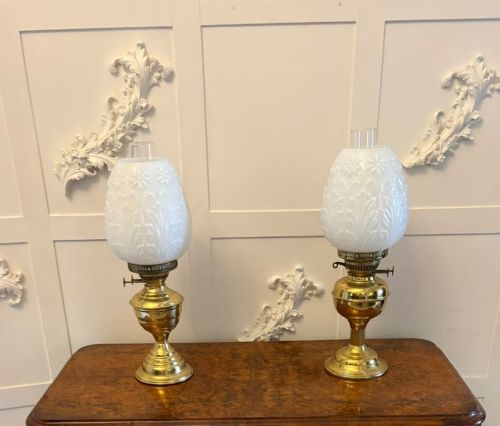
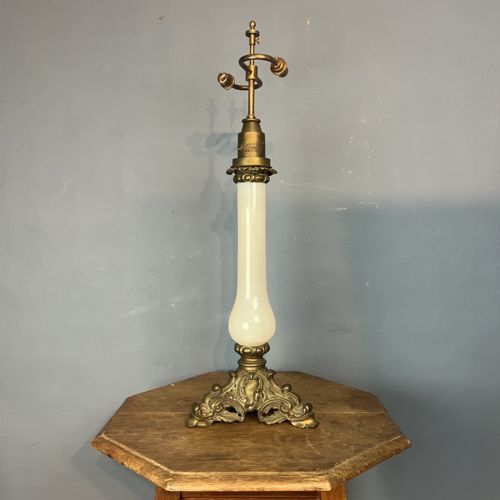
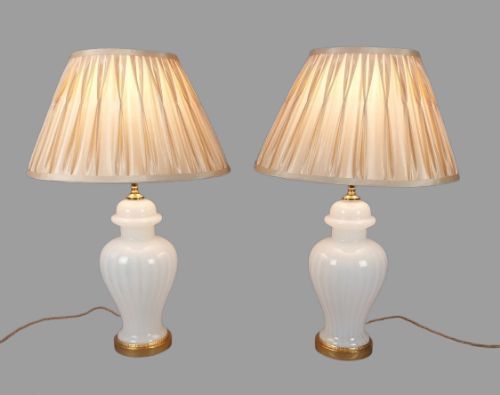
An opaline glass table lamp combines a milky translucent body or shade with sturdy mounts in brass, bronze, or marble. When someone searches for an opaline glass table lamp, they encounter forms ranging from converted Victorian oil lamps to Art Deco and Modernist desk lights.
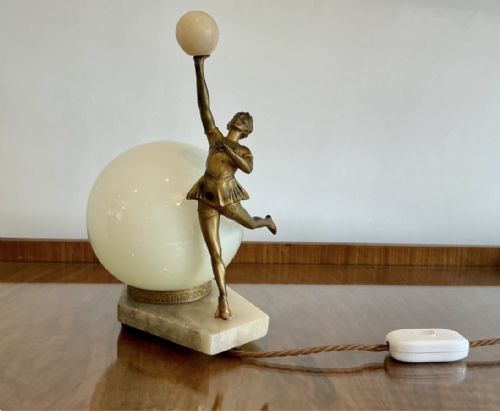
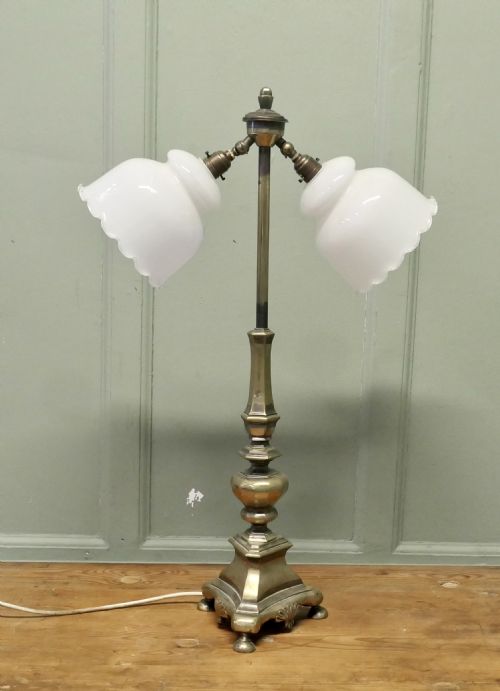
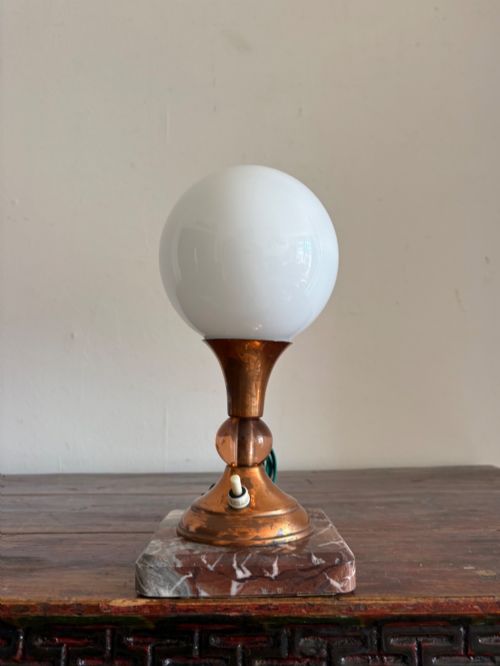
The pieces on this page span the mid-nineteenth century through the 1930s, encompassing Victorian, Edwardian, and Art Deco styles. Victorian and Edwardian examples often feature gilt brass columns and oil lamp conversions, while later twentieth-century pieces adopt streamlined chrome or geometric marble bases.
How they were made
Maker skill centres on blowing and pressing opaline glass to achieve its characteristic opacity and smooth surface texture, which softens the light from the burner or bulb. This glass is then mounted onto heavy metal bases of cast brass, bronze, or copper, frequently secured with threaded collars and central rods.
Many structural elements involve turned and cast brass components, sometimes combined with marble or granite plinths for stability. Later pieces introduce chrome and plated metals alongside hand-painted decoration or moulded details such as pineapples and columns.
Pineapple lamps and seagull night lights prove that nineteenth and twentieth-century makers enjoyed bringing a touch of wildlife to the sideboard.
What varies in quality
Quality rests in the weight and purity of the glass, the crispness of the brass or bronze casting, and the integration of the mounts. Finer examples display thick, even opaline glass with a smooth touch and solid metalwork that holds the vertical alignment without sway.
The distinction between standard production and superior workshop output appears in the detailing of the cast mounts and the fidelity of the period style, whether that is Rococo Revival scrollwork or clean Art Deco geometric lines.
Joseph Hinks·Wild And Wessel
The Opaline Glass Table Lamp Glossary
- Opaline glass
- A milky, translucent glass developed in various pastel or white tones to diffuse light evenly. It gained popularity during the nineteenth century for decorative lighting and tableware.
- Converted oil lamp
- A former paraffin or oil-burning lamp adapted for electric use. This process typically involves running a flex through the original burner mechanism while retaining the glass font and brass stem.
- Gilt brass
- Brass that has been treated with a thin layer of gold or gold-coloured wash to impart a richer metallic finish. It appears frequently on nineteenth-century columnar bases.
- Column lamp
- A lighting form modelled on classical architectural pillars. These pieces elevate the opaline glass reservoir or shade upon a raised cylindrical shaft.
- Rococo Revival
- A nineteenth-century design style drawing on ornate, asymmetrical scrolls, floral motifs, and natural shell shapes. It is often seen on mid-Victorian metalwork mounts.
Opaline Glass Table Lamp: Frequently Asked Questions
How do I wire an antique opaline lamp?
Rewiring requires running modern flex through the central channel of the lamp, often utilising existing pathways left from oil or paraffin conversions. A qualified electrician should handle the internal connections to ensure safety with older metal bodies.
Most antique lamps accept standard modern bulb holders disguised within the original brass collar or shade gallery. Keeping the historic fittings intact preserves the character of the piece while meeting current electrical standards.
Are these lamps converted oil lamps?
Many examples from the Victorian and Edwardian periods started life as oil or paraffin burners before conversion to electricity. You can identify these by the presence of original brass burners, thumb wheels, or font chambers beneath the glass.
Other pieces were manufactured specifically as electric table lamps, particularly those bearing Art Deco or Modernist designs from the 1920s and 1930s. Both types sit comfortably side by side in a room.
How do I clean opaline glass?
Cleaning requires warm water and a mild dish soap applied with a soft cloth to remove dust and surface grime without scratching the surface. Avoid harsh chemical cleaners or abrasive pads that can damage the delicate outer layer of the glass.
Metal mounts should be wiped gently with a dry cloth to preserve their natural patina. Avoid vigorous polishing unless the brass has modern lacquer that requires removal.
What period do these lamps come from?
The pieces span from the mid-nineteenth century through the 1930s, covering Victorian, Edwardian, and Art Deco eras. Dates are determined by manufacturing techniques, burner types, and stylistic indicators such as classical columns or geometric chrome.
Nineteenth-century pieces tend to feature heavy brass and gilt columns, while 1920s and 1930s examples often introduce marble bases, chrome, and mottled opaline finishes.