


Bronze Victorian Oil Lamp
A bronze victorian oil lamp brings heavy metal and luminous glass together to anchor a room with period weight.
Bronze Victorian Oil Lamp
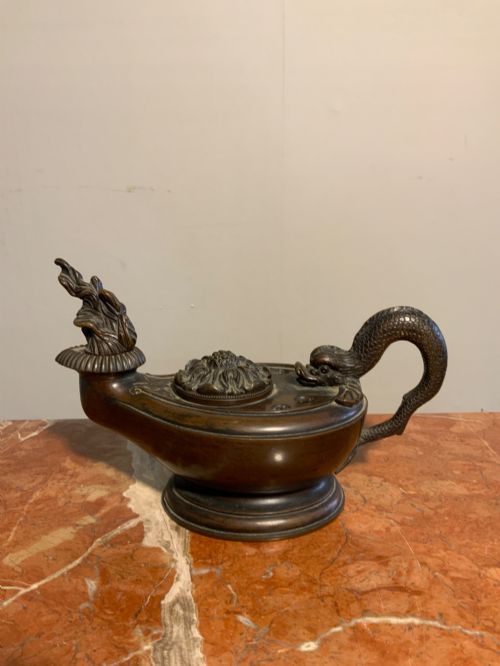
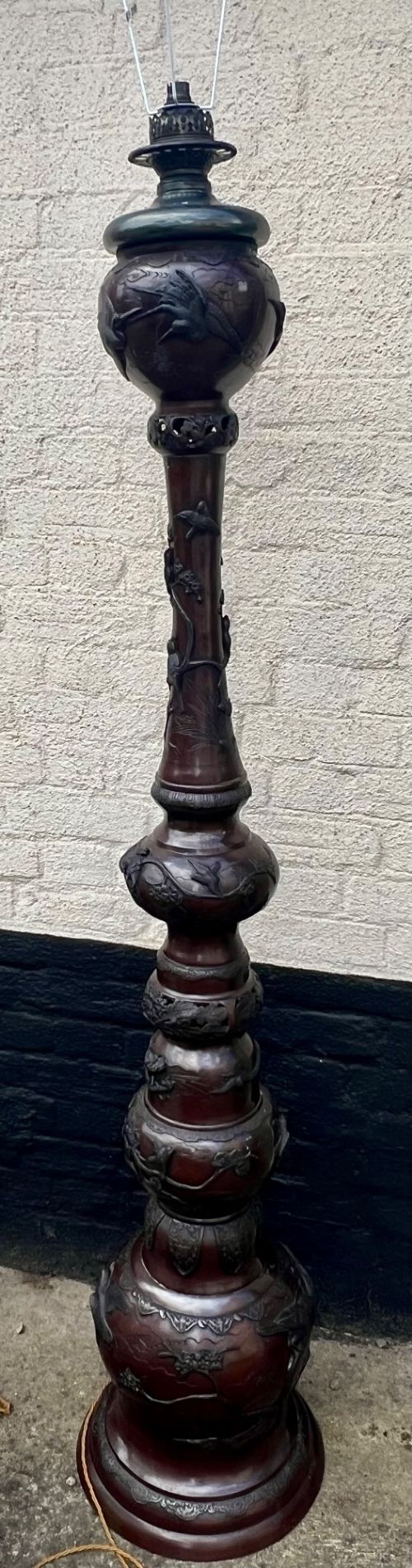
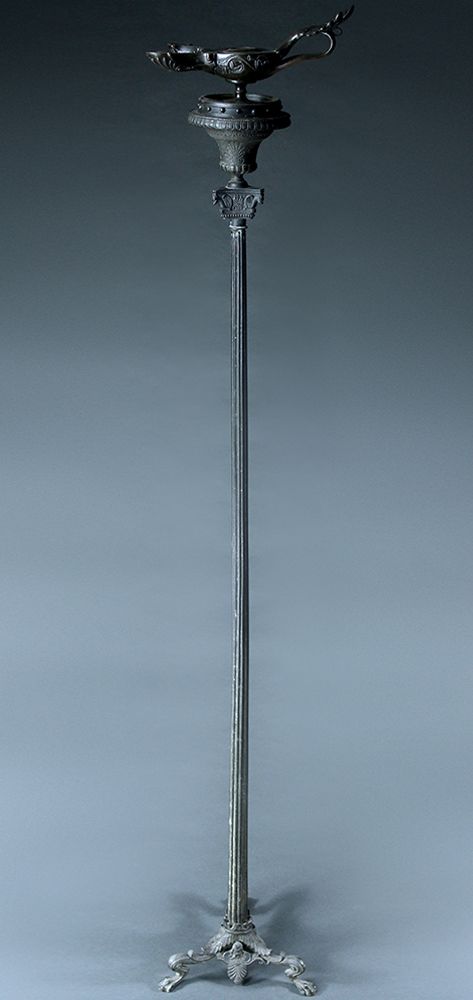
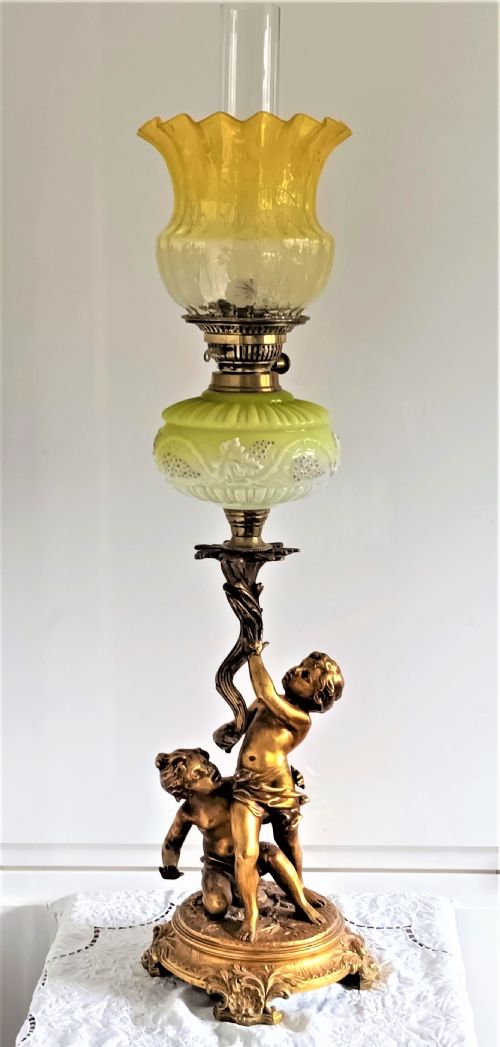
A bronze victorian oil lamp combines cast metal bases with glass reservoirs to create heavy, functional lighting fixtures from the nineteenth century. These pieces emerge in various forms, including table lamps, floor lamps, and specialised column designs originating across English, French, and Japanese workshops.
The selections on this page span the 1860s through the 1890s, drawing on historicising revivals such as Neo-Classical, Rococo, and Grand Tour aesthetics. Buyers encounter everything from slender columnar standards to wide-bellied reservoirs supported by heavy cast bases.
While many examples retain their original fuel-burning configurations, others show later conversions for electricity. The foundational metalwork remains steadfastly nineteenth-century, whether rendered in plain cast bronze, cold-painted surfaces, or rich ormolu highlights.
Materials and construction
Foundry work relies on bronze casting for the main structural columns and bases, frequently combined with brass fittings and gilt or ormolu surface treatments. This heavy metal framework provides the essential ballast needed to support substantial glass reservoirs above.
Vessels and shades utilise coloured or opaline glass, sometimes paired with porcelain or faience inserts painted in floral or classical motifs. The juxtaposition of opaque ceramic bodies and translucent glass creates deliberate contrasts in texture and weight.
Makers integrated cold painting or enamelling directly onto the metal and ceramic surfaces to add polychrome detail. Assembly involved threaded joins and collars that allowed distinct metal and glass components to lock firmly together.
Some Victorian lamps carry traces of soot trapped inside their glass reservoirs from long-forgotten evenings of paraffin combustion.
Judging quality and craftsmanship
The distinction between standard production and superior work rests on the crispness of the bronze casting and the depth of the chasing. Finer examples display sharp relief work on acanthus leaves, figurative mounts, and classical motifs without the soft edges typical of secondary casts.
Material integration also separates tiers of execution, particularly where glass reservoirs meet cast metal collars. High-grade pieces employ hand-blown opaline or blue glass with precise enamel work, aligning seamlessly with heavy, well-proportioned bronze bases rather than mismatched components.
JOSEPH HINKS
The Bronze Victorian Oil Lamp Glossary
- Ormolu
- Gilded bronze produced by applying a mercury-gilt amalgam to cast brass or bronze, creating a durable golden surface finish. This technique appears widely on French revival lighting.
- Opaline glass
- An opaque, slightly translucent glass developed in pale colours like white or blue, frequently utilised for nineteenth-century lamp reservoirs. It diffuses light softly from the burner collar.
- Grand Tour
- A nineteenth-century travel phenomenon that inspired decorative arts modelled on classical antiquities and archaeological discoveries. Lamps from this tradition often feature architectural columns or Pompeian motifs.
- Cold painted bronze
- A method where pigment is applied to cold metal without subsequent high-temperature firing, requiring binders to adhere to the surface. It allows for intricate, multicoloured details on figures and mounts.
- Faience
- Tin-glazed earthenware popular in continental European ceramics and incorporated into nineteenth-century lamp bodies. It provides an opaque white canvas for hand-painted botanical or figurative designs.
Bronze Victorian Oil Lamp: Frequently Asked Questions
Were these lamps converted to electricity?
Many nineteenth-century lighting fixtures undergo later conversions to house electrical wiring safely. These adaptations typically route cords through the original burner mechanism or central column.
Buyers should inspect the wiring and consult a qualified electrician to ensure the vintage hardware meets current safety standards before plugging the lamp in.
What glass types are used?
Reservoirs and shades are constructed from opaline glass, blue glass, or frosted glass. These materials were chosen for their ability to hold lamp oil securely while diffusing warm light.
Coloured glass components often feature hand-painted enamel decoration or contrasting layered casings that catch ambient light in a room.
How do I identify the period?
Dating relies on stylistic clues such as the classical proportions of Neo-Classical columns, the organic curves of Art Nouveau faience, or the heavy ornamentation of Rococo revival mounts. Supporting materials like opaline glass and gilt bronze point directly to nineteenth-century manufacturing methods.
Maker stamps, registry marks, and foundry signatures stamped into the metal base provide the most definitive chronological anchors for individual pieces.