
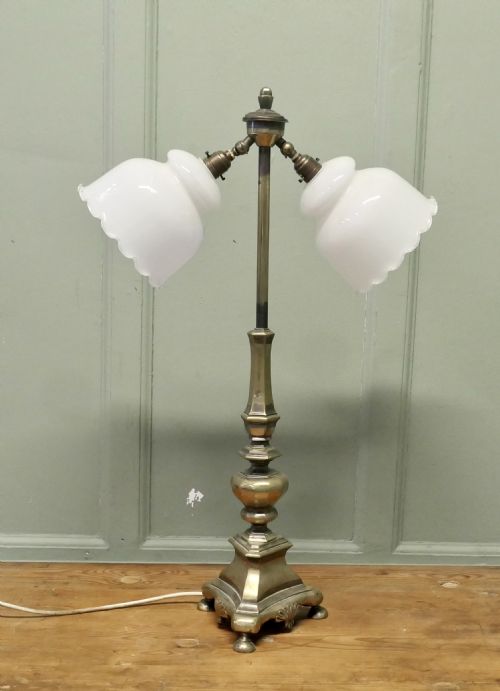


Vintage Opaline Reading Lamp
A vintage opaline reading lamp combines milk glass with metal to give a focused, glare-free light.
Vintage Opaline Reading Lamp
When you search for a vintage opaline reading lamp, you encounter lighting designed for desks, tables and reading spaces from the nineteenth and twentieth centuries. These pieces pair milk glass shades with metal stands made from brass, bronze or chrome.
The selections on this page span several decades, including Victorian, Edwardian, Art Deco and Modernist examples. Table lamps dominate the forms available, ranging from tall column lamps to angled twin reading lights and desk models.
How they were made
The makers of these lamps combined blown opaline glass with cast or spun metals such as brass and bronze. Glass elements diffuse light evenly through their milky opacity, while heavy metal bases provide necessary stability for desk and table use.
Assembly methods rely on threaded brass fittings, collars and mounts to secure the glass shades to metal columns. Structural components often feature gilt touches or patinated bronze finishes that reflect the aesthetic tastes of their respective periods.
Listings feature items spanning the 1860s through the 1930s, constructed from brass, bronze, chrome, wood and opaline glass.
What varies in quality
Quality in these lamps rests primarily on the weight and purity of the materials used. Heavier brass and bronze castings combined with thick, evenly blown opaline glass distinguish the finer examples from standard production pieces.
The sophistication of the mechanics also defines the tier of a piece, particularly in adjustable desk lamps and twin-angled designs. Superior items exhibit precise joints, well-executed metal chasing and balanced proportions that maintain stability at any angle.
JOSEPH HINKS·WILD & WESSEL
The Vintage Opaline Reading Lamp Glossary
- Opaline glass
- A milky, semi-translucent glass that diffuses light softly. It gained popularity in the nineteenth century for lighting and decorative objects.
- Pricket lamp
- A form of lamp or candlestick that uses a central spike to secure the candle or fitting. In later electrified versions, the term often describes tall, slender column forms.
- Pullman lamp
- A style of reading or berth light originally designed for railway carriages. These fixtures prioritise directional, space-saving illumination.
- Gilt brass
- Brass that has been treated with a thin layer of gold or gold-coloured wash. This finish provides a bright, decorative sheen to metal mounts and columns.
Vintage Opaline Reading Lamp: Frequently Asked Questions
What is opaline glass?
Opaline glass is a type of translucent milk glass produced by adding bone ash, arsenic or other agents to the molten batch. This creates a dense, cloudy appearance that softens harsh bulb glare.
In reading lamps, this material ensures an even distribution of light across a desk or table surface without creating sharp shadows.
How do I date a brass and opaline lamp?
Dating relies on stylistic clues and construction methods specific to periods like the Victorian era, Edwardian period or Art Deco movement. Heavy bronze columns and ornate mounts point to nineteenth-century manufacture.
Sleeker chrome elements and geometric lines indicate later Modernist or 1930s design trends. Maker marks and patent stamps, where present, help narrow down the production year.
Were these lamps originally electric?
Many nineteenth-century examples began their lives as oil or gas lamps before being converted to electricity later in their history. Brass fonts, burners and galleries frequently hide modern wiring adaptations.
Twentieth-century pieces, such as 1930s Modernist desk lamps, typically left the workshop pre-wired for electric bulbs.
How do I style a vintage desk lamp at home?
These lamps function effectively as task lighting on a wooden desk, side table or reading nook. Their neutral white glass shades complement both traditional period interiors and contemporary minimalist spaces.
Pairing a brass column lamp with leather and dark wood enhances the historic character of the room.