




White Opaline Glass Lamp
White opaline glass lamps diffuse light with a soft milky glow, combining milk glass shades and bodies with brass, bronze, or chrome mounts.
White Opaline Glass Lamp
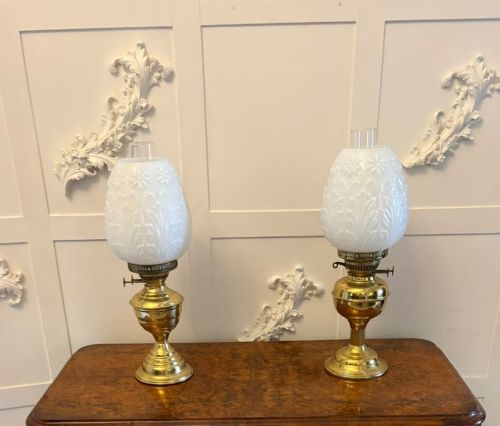
A white opaline glass lamp brings together opaque white glass and metal mounts in forms ranging from Victorian oil lamps to Art Deco pendants and table lights. These pieces function as both functional illumination and decorative focal points within a room.
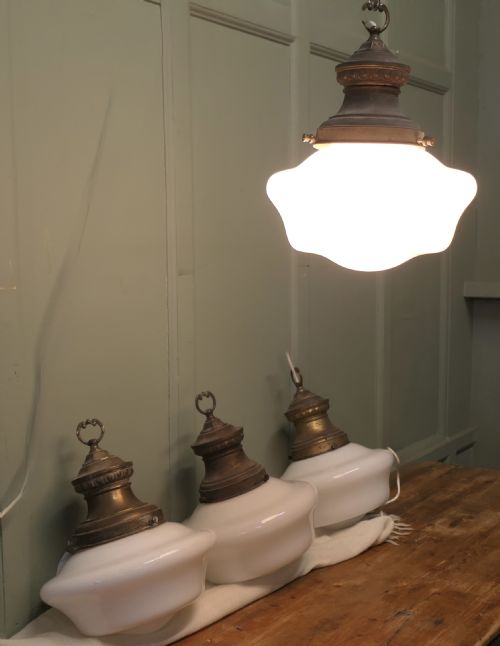
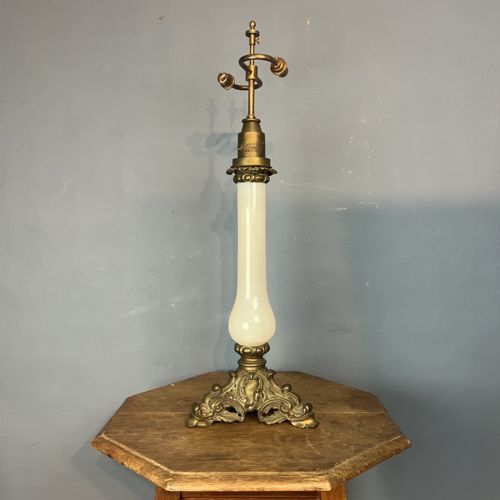
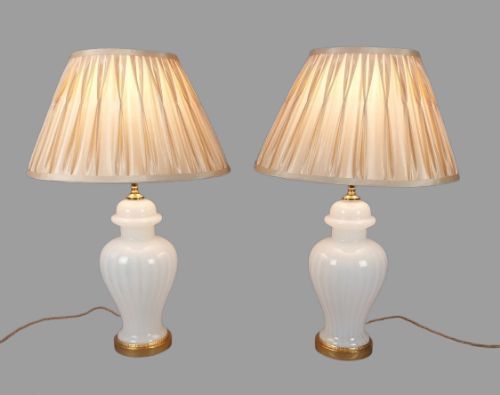
The selection here draws primarily upon early twentieth century and Victorian designs, featuring table lamps, hanging pendants, and converted oil lamps. Examples span French and English workshops, utilising classic shapes like the bottle, column, and pear.
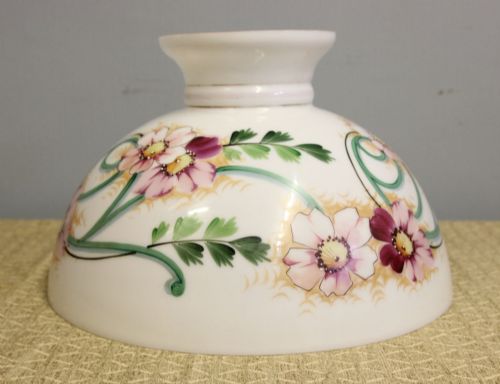
Victorian pieces often pair heavy brass bases with hand-painted or gilt-accented opaline bodies, while later twentieth century examples lean towards streamlined industrial pendants and chrome-mounted desk lights.
Materials and construction
Makers produced opaline glass by adding bone ash or other agents to the molten batch to achieve its characteristic dense, milky opacity. This glass was then blown or moulded into shades, columns, and reservoirs before being paired with metal mounts.
Brass, bronze, and chrome form the structural hardware, serving as bases, galleries, and burners for table models and ceiling fixtures. Gilt brass and hand-painted details frequently decorate Victorian and Edwardian iterations.
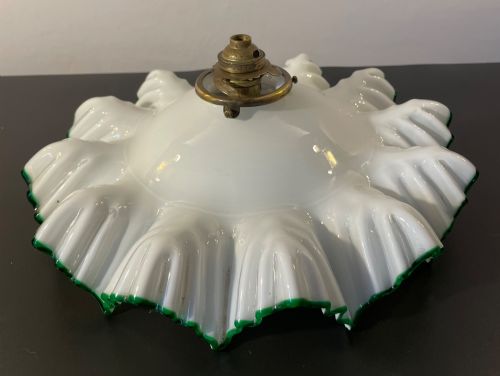
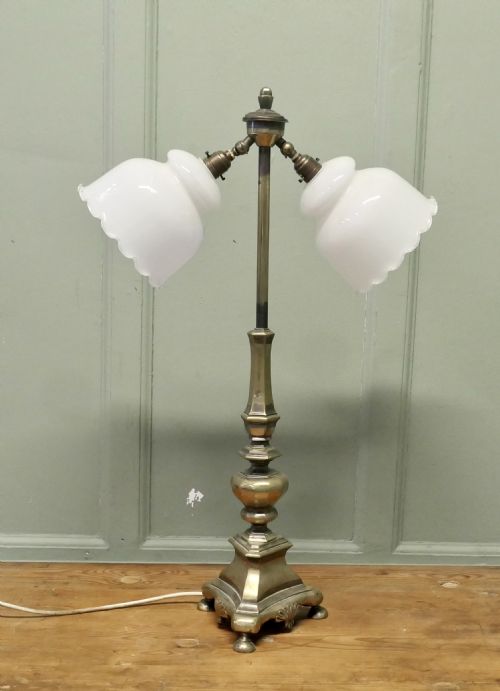
Pendant lights often integrate fabric cords or metal chains to suspend the heavy glass shades, while desk lamps utilise articulated brass or chrome arms for directional reading light.
Selected pieces trace design shifts from Victorian opaline oil lamps to 1930s industrial pendants and Art Deco desk lights.
Judging quality
Quality rests upon the weight and purity of the opaline glass itself, where a denser, more evenly distributed milkiness denotes superior production. Thinner or streaked glass indicates less refined nineteenth or twentieth century work.
The precision of the metal mounts, whether cast brass, heavy bronze, or polished chrome, separates standard production from finer output. Crisp chasing on gilt brass and maker stamps signify higher grade manufacturing.
Joseph Hinks·Wild and Wessel·Mc Gary
The White Opaline Glass Lamp Glossary
- Opaline glass
- A type of semi-opaque glass with a milky white appearance, frequently utilised for nineteenth and twentieth century lighting.
- Oil lamp
- A lighting device that burns liquid fuel via a wick, commonly converted to electricity in later periods while retaining its original brass and glass components.
- Pendant light
- A light fixture suspended from the ceiling by a cord, chain, or metal rod, holding an opaline glass shade or globe.
White Opaline Glass Lamp: Frequently Asked Questions
How do I clean white opaline glass?
Wash the glass gently using warm water and mild soap, avoiding abrasive pads that might scratch the surface. Dry with a soft cloth to prevent water spots.
Keep metal mounts separate from water during cleaning to preserve patinated brass, bronze, or chrome finishes.
Are these lamps safe for modern wiring?
Many antique and vintage lamps retain older electrical components and benefit from professional rewiring before regular use. A qualified electrician ensures the fixture meets current safety standards.
Retaining original sockets and switches is possible while updating internal cables for safe household integration.
How do I date a white opaline glass lamp?
Examine the metal hardware, fitter types, and manufacturing techniques to determine the period. Victorian pieces tend to feature heavy brass castings and oil burner mechanisms, whereas 1930s examples often display Art Deco streamlining or chrome.
Pendants and table lamps from the early twentieth century generally show simpler, industrial or transitional lines compared to mid-century designs.
Where should I place an opaline lamp?
Position table lamps on sideboards or desks where their opaque shades can cast a diffused, glare-free light across the room. Pendant variations suit hallways, kitchens, or dining spaces as primary overhead lighting.
The neutral white tone of the glass integrates easily into both traditional period interiors and modern minimalist schemes.