


White Glass Column Lamp
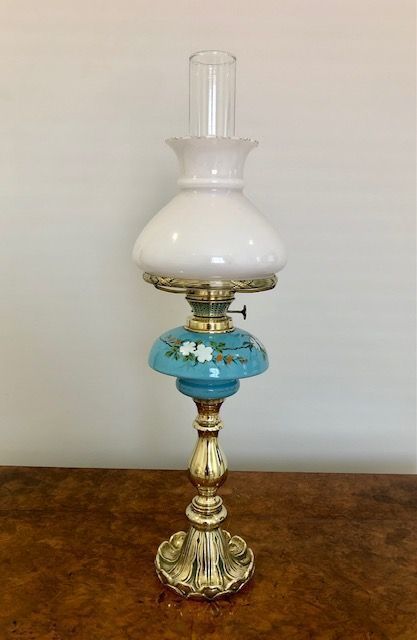
A white glass column lamp brings height and clean light to a room, combining tactile glass shafts with brass mounts.
White Glass Column Lamp
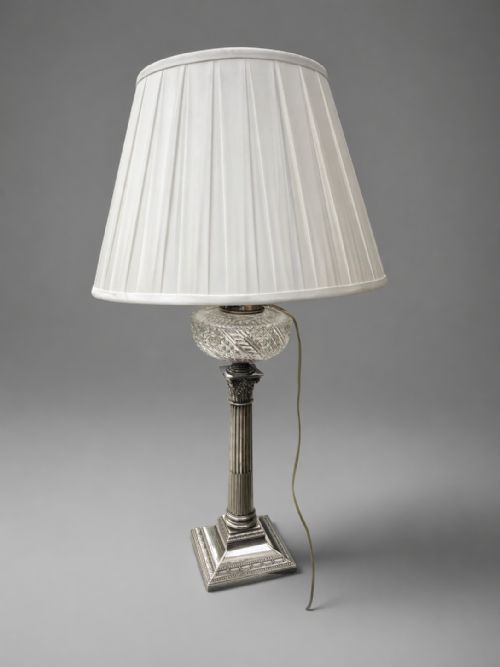
A white glass column lamp stands as a distinct form of lighting, drawing on Victorian and Edwardian designs that incorporate classical architectural shapes. These pieces frequently pair a slender central shaft in opaline, milk, or white glass with solid brass or bronze bases and Corinthian capitals.
Most examples found here date from the nineteenth and early twentieth centuries, spanning the Victorian and Edwardian periods into the nineteen-twenties. They originate primarily from English and French workshops, encompassing converted oil lamps alongside table and floor standing versions.
Materials and construction
The manufacture relies heavily on the combination of blown or moulded white glass with heavy cast brass or bronze components. Metalwork forms the structural core, providing stable stepped or square bases and ornate column capitals that secure the glass shaft.
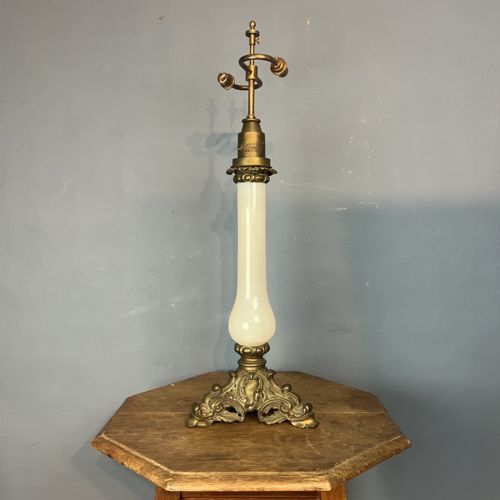
Makers utilised opaline and milk glass for the tubular columns, occasionally adding hand-painted gilt decoration or pairing the body with cut glass elements. Many surviving pieces began as oil burners before undergoing later conversion to electricity.
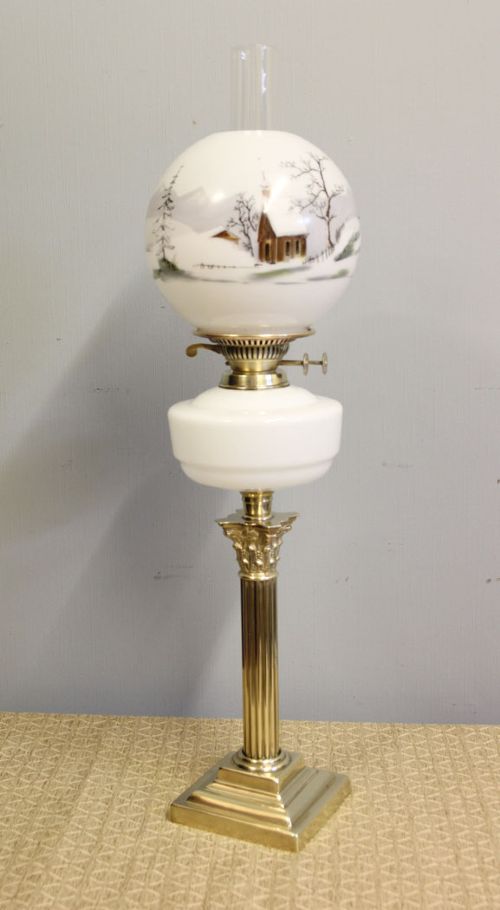
At least one winter snow scene shade managed to survive alongside a classical column, proving that even a Victorian parlour could not resist a touch of seasonal weather.
Quality differences
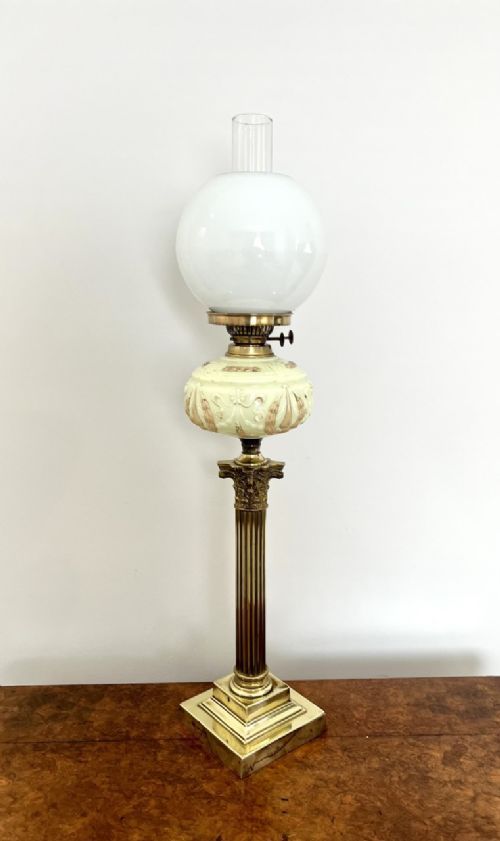
Superior examples distinguish themselves through the weight and crispness of the cast brass mounts, particularly in the detailed acanthus leaves or fluting of Corinthian capitals. Heavier gauge metalwork and thicker glass columns separate the finest production from standard commercial output.
The integration of the metal and glass components dictates overall refinement, where tight collars and secure mountings demonstrate superior workshop skill. Original patination on the bronze and brass parts, alongside undamaged gilding on the opaline glass, marks the upper tier of survivals.
Joseph Hinks·Mc Garys Patent
The White Glass Column Lamp Glossary
- Corinthian column
- An architectural order featuring an ornate capital decorated with stylised acanthus leaves. This classical motif frequently tops the vertical shafts of nineteenth-century lamps.
- Gilt brass
- Brass that has been treated with a thin layer of gold or gold-coloured wash to enhance its appearance. It provides a warm contrast against white glass bodies.
- Converted oil lamp
- A historic lighting fixture originally designed to burn paraffin or oil that has been rewired for electrical use. This process typically retains the original brass reservoir and burner assembly.
White Glass Column Lamp: Frequently Asked Questions
How do I date a white glass column lamp?
Dating relies on examining the construction methods of the brass mounts, the style of the base, and the characteristics of the glass. Victorian and Edwardian examples often feature heavier cast brass components and hand-finished details.
Later pieces from the early twentieth century show subtle shifts in proportion and manufacturing techniques, while converted oil lamps retain threaded burner galleries and fuel reservoirs from their original period of use.
Were these originally oil lamps?
Many nineteenth-century examples started life as paraffin or oil-burning lamps before being adapted for modern electrical wiring. The conversion process generally involves routing a cord through the centre without altering the historic exterior.
This heritage accounts for the heavy brass reservoirs and burner mechanisms found at the top of the glass columns on Victorian and Edwardian pieces.
What is the difference between opaline and milk glass?
Opaline glass possesses a dense, semi-translucent quality that diffuses light with a characteristic soft glow. It was widely utilised in French and English lighting during the Victorian era.
Milk glass tends to be more opaque and white, appearing frequently in later table lamps and decorative wares from the turn of the twentieth century.
How should I clean the brass mounts?
Historic brass benefits from gentle dusting and minimal intervention to preserve its natural aged patination. Aggressive metal polishes can strip away centuries of accumulated character and diminish the visual appeal.
Care should be taken around the white glass and any gilt decoration, using a soft, dry cloth rather than liquid cleaners that might seep into joints.