



Victorian Glass Chimney Lamp
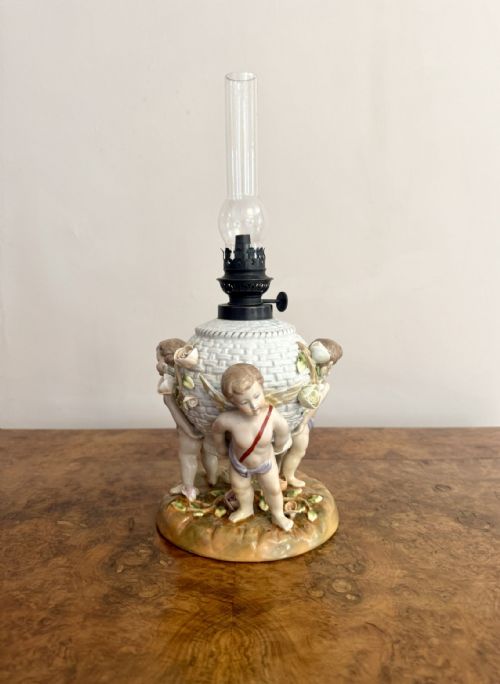
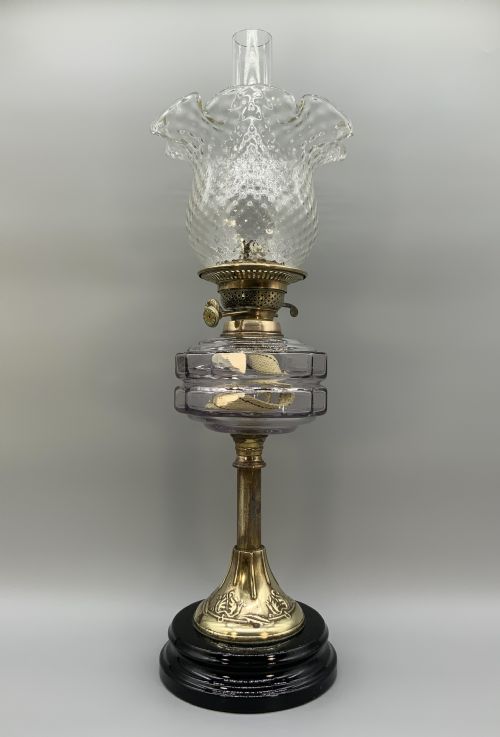
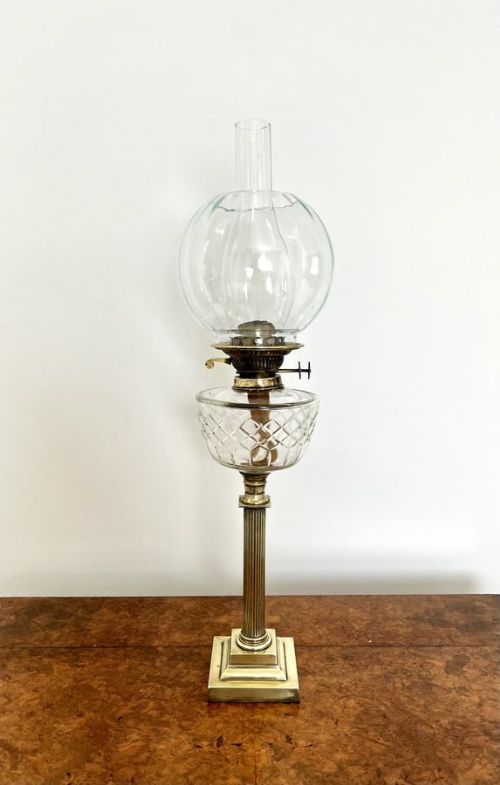
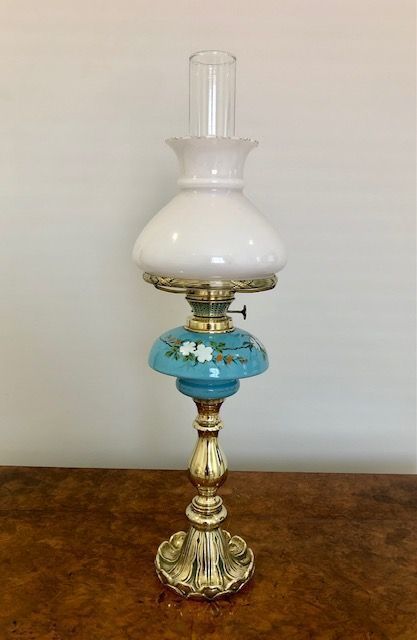
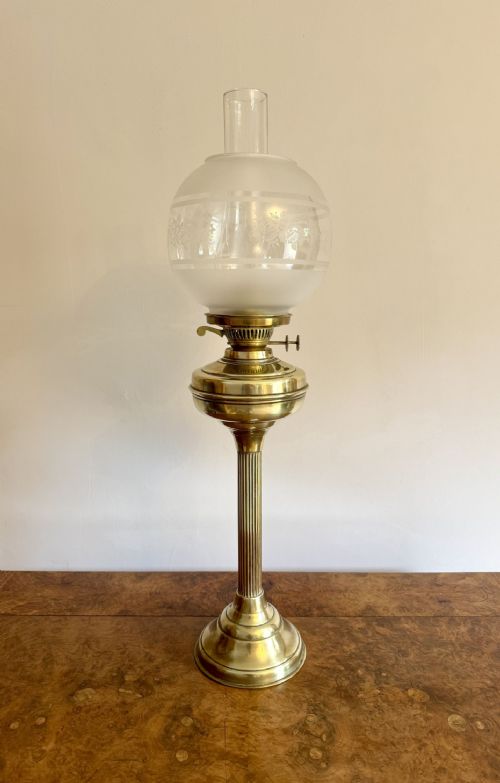
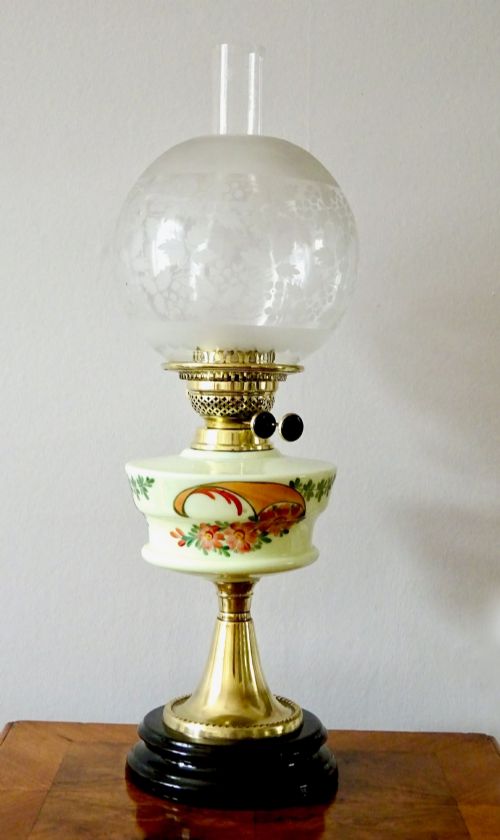
These victorian glass chimney lamp examples combine brass and ceramic bases with hand-blown shades, bringing period character to a tabletop.
Victorian Glass Chimney Lamp
A victorian glass chimney lamp combines a sturdy base of brass, ceramic, or black glass with a protective glass chimney enclosing the flame or burner. These decorative lighting pieces span the Victorian, Edwardian, and Art Nouveau periods, reflecting the domestic technology of the nineteenth and early twentieth centuries.
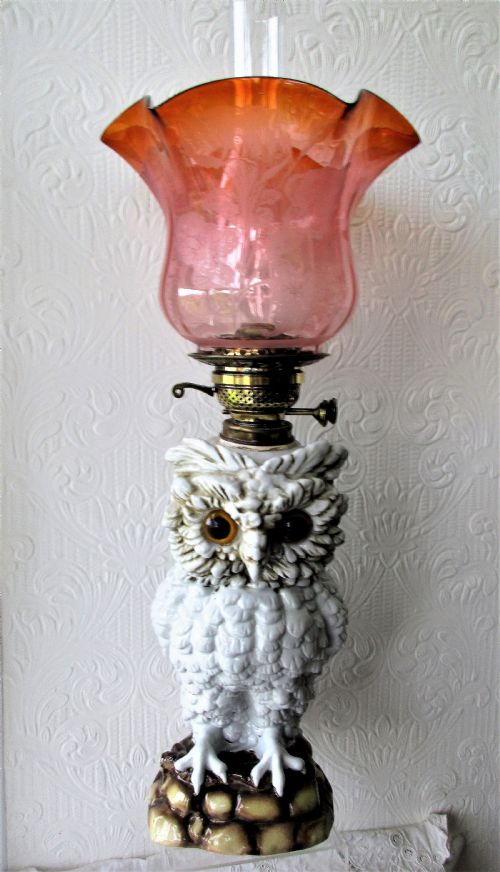
The most common formats on this page include tall table oil lamps, twin-burning variations, and standard paraffin lamps fitted with cranberry, pink, or opaline shades. Collectors also encounter ceramic figural pieces shaped as owls, alongside paired candlesticks adapted with glass chimneys.
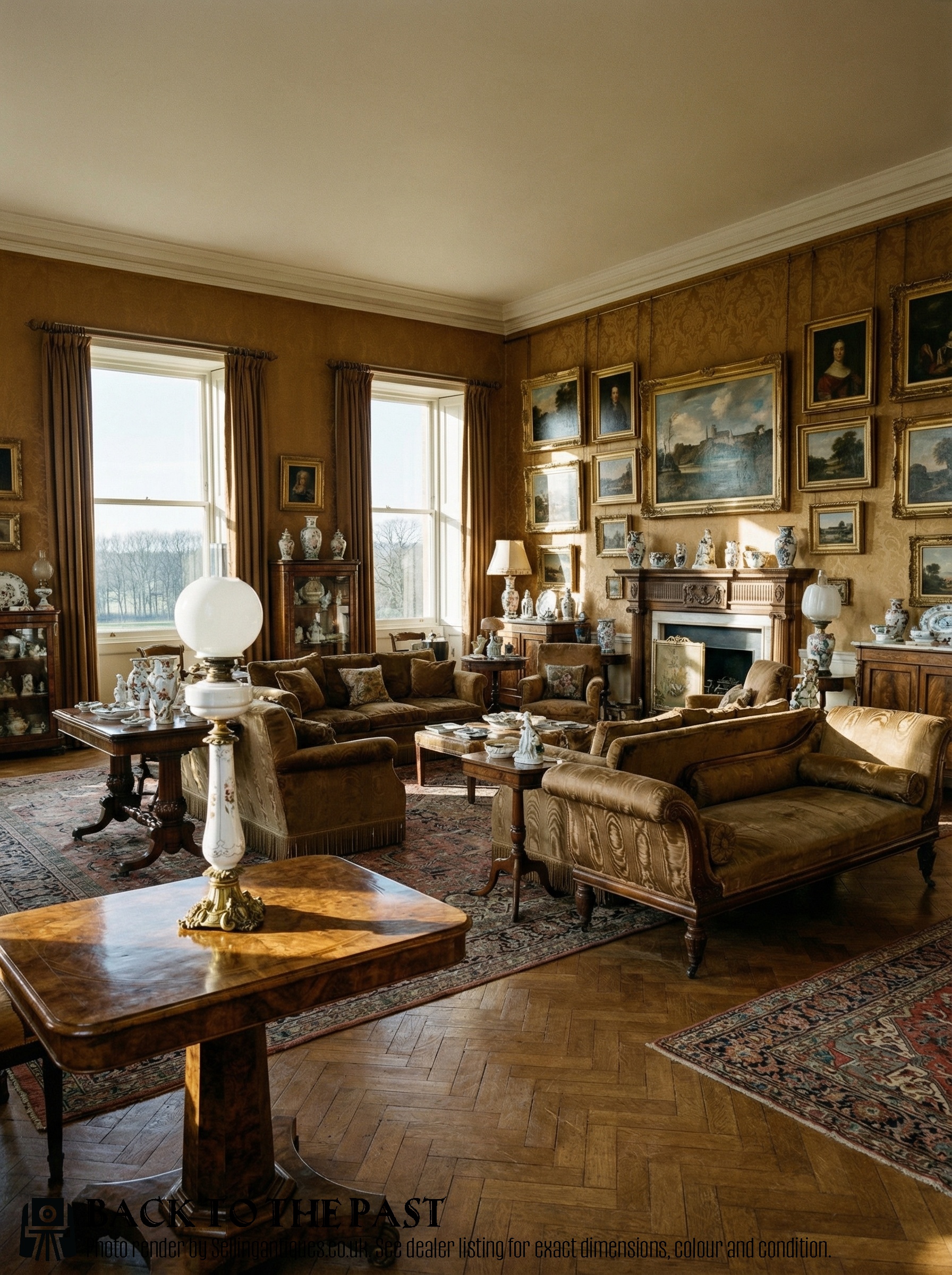
Origins range from English workshops to continental makers such as Sitzendorf, offering variety in both form and decorative detail. Buyers select these lamps for their decorative presence and historical utility in period interiors.
Materials and manufacture
Makers utilised cast brass for structured columns and metallic reservoirs, often pairing the metal with glazed ceramic bodies or black glass bases for stability. Silver plating also appears on select larger table examples.
Shades and chimneys were produced through glassblowing techniques, yielding clear glass, cut crystal, and opaque opaline or cranberry glass variants. Hand-painted porcelain details and moulded figures complete the construction of these decorative lighting pieces.
The selection spans pieces from the mid-nineteenth century through the Edwardian era.
Assessing quality
Quality rests on the crispness of the brass casting and the weight of the ceramic or glass base, where heavier, well-balanced proportions signal superior manufacturing. Finer pieces display hand-painted porcelain or deeply cut crystal elements rather than plain moulded glass.
The integrity and originality of the glass shade and chimney remain central to the piece, alongside the finesse of any figural modeling or metal chasing.
Sitzendorf·Messengers·Harrods
The Victorian Glass Chimney Lamp Glossary
- Chimney
- A tall, narrow glass tube placed over the burner to steady the flame and draw air upward. This component protects the flame from drafts and directs heat away from the fixture.
- Opaline glass
- An opaque, slightly translucent glass often tinted in soft shades of white or pink. It diffuses light evenly across the room.
- Paraffin lamp
- An alternative term for an oil lamp that burns liquid paraffin or kerosene. These domestic lamps served as primary indoor lighting before widespread electrification.
- Burner
- The metal mechanism seated atop the oil reservoir that controls the wick and flame. Different patent burners mark the mechanical progression of period lighting.
Victorian Glass Chimney Lamp: Frequently Asked Questions
How do these lamps work?
These pieces draw liquid fuel up through a woven wick via a metal burner mechanism, producing a steady flame protected by a glass chimney. The upper shade then diffuses and directs the light outward into the room.
Most examples are converted for decorative display today, though original burners and wick turners frequently remain intact on period pieces.
Can I use them for lighting?
While the mechanical burners and reservoirs are historically functional, most buyers use these lamps for decorative display rather than daily illumination. Wiring them for electricity is a common modern adaptation that preserves the antique base and shade.
If you choose to burn oil, ensure the glass chimney is free from cracks and check that the burner mechanism operates smoothly.
How do I date a lamp?
Dating relies on stylistic markers such as the flowing organic lines of Art Nouveau or the heavy proportions of Victorian brass and porcelain. Maker marks stamped on the metal burner or ceramic base also help establish the production era.
Materials provide further clues, as opaline and cranberry glass became particularly fashionable during the late nineteenth century.
Are replacement chimneys available?
Replacement glass chimneys and shades can be sourced to match historical diameters and fitter sizes. Finding an exact period match requires patience, but standard clear chimneys are widely accessible.
Matching the correct height and gallery fitting ensures the shade sits securely upon the brass burner.
How should I clean the glass?
Wash glass chimneys and shades gently in warm, soapy water using a soft cloth to avoid scratching the surface. Take care around hand-painted porcelain or gilded brass elements to preserve the original finish.
Harsh chemical cleaners should be avoided on both the metalwork and the coloured glass shades.