


Cut Glass Reservoir Lamp
A cut glass reservoir lamp is a Victorian lighting fixture that brings brilliant refraction and heavy metal support to a table.
What a cut glass reservoir lamp is
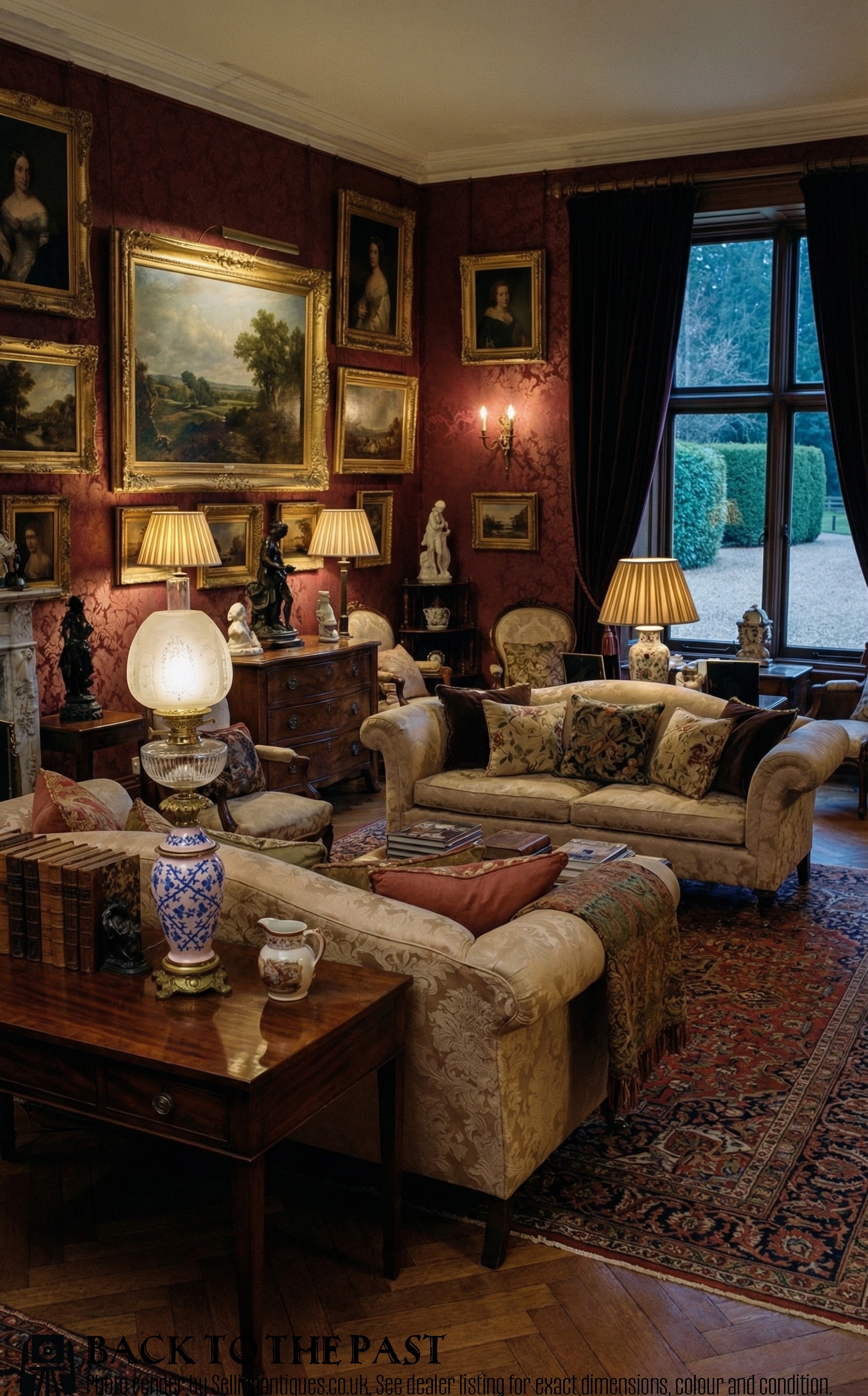
A cut glass reservoir lamp combines a heavy reflective glass bowl for oil or paraffin with a sturdy structural stand. The pieces listed under this phrase belong entirely to the Victorian period, spanning the nineteenth century up to eighteen sixty and into the Art Nouveau era.
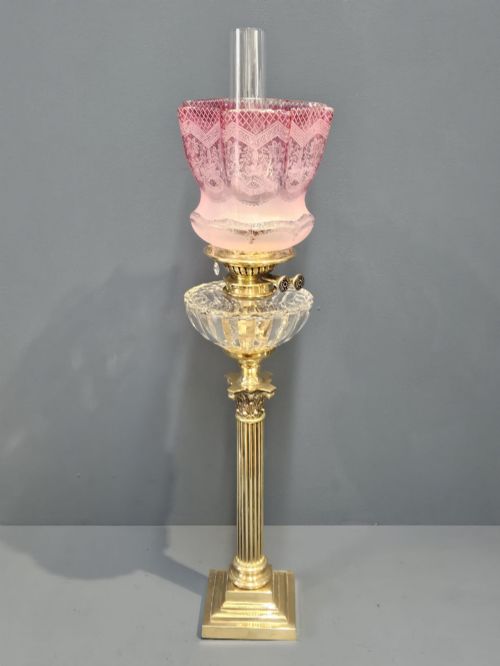
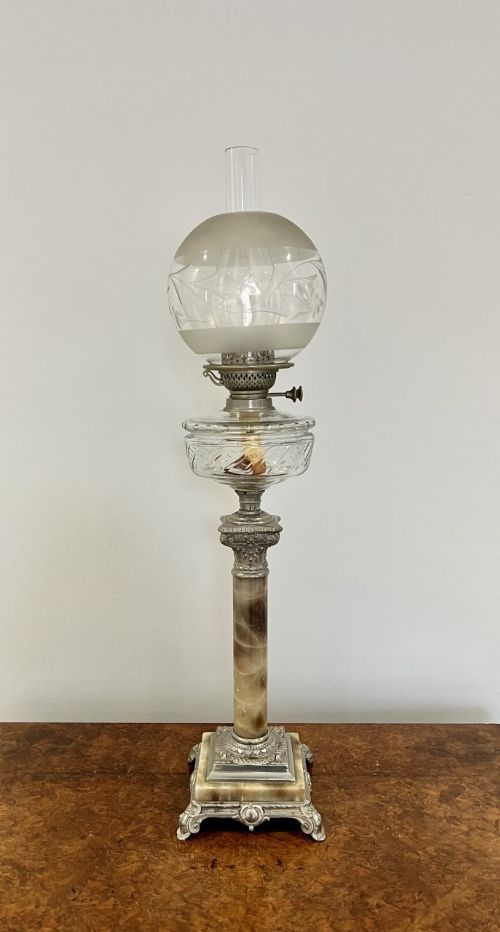
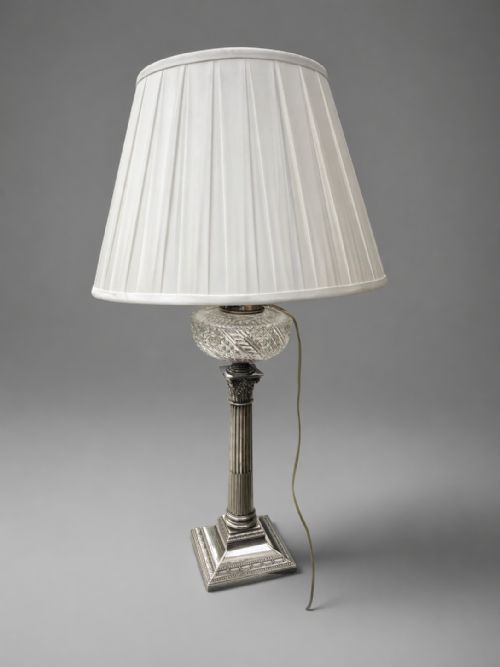
The standard form on this page pairs a clear or cranberry glass reservoir with a tall column or reeded support. Most examples function as oil or paraffin lamps, often retaining their original fabric shades or paired with contrasting porcelain and silver-plated elements.

How they were made
These lamps rely on a combination of heavy glass cutting and metal casting. Reservoirs utilise clear or cranberry glass shaped with deep facets, while columns and bases employ brass, silver plate, and occasionally porcelain.
Maker signatures and retail partnerships appear directly on the metalwork of nineteenth-century examples. Construction involves securing the glass reservoir to a weighted metallic pedestal to balance the upper weight of the burner and shade.
Retail Price Guide 2026
Typical UK retail prices for cut glass reservoir lamp, calculated from the Sellingantiques database of over a million retail prices indexed since 2003. This retail price guide relies exclusively on Sellingantiques data; no external sources or auction records are used, so the figures do not describe the wider market.
Every listed piece on this page originates from the Victorian period, utilising combinations of brass, cut glass, and cranberry glass.
What varies in quality
Quality separates ordinary production lamps from exceptional display pieces through the depth of the glass cutting and the choice of column materials. Fine examples feature crisp, sharp facets on the reservoir that catch the light intensely, alongside substantial Corinthian or reeded brass columns.
The integration of unusual materials such as cranberry glass or porcelain alters the character of the piece. Superior examples maintain balance between a heavy base and a finely finished upper bowl without relying on crude repairs or mismatched replacement components.
Messengers·Harrods
The Cut Glass Reservoir Lamp Glossary
- Reservoir
- The bowl portion of the lamp that holds the fuel. In these pieces, it is formed from cut glass, clear glass, or cranberry glass.
- Paraffin Lamp
- An alternative term for an oil lamp utilising refined petroleum as fuel. These lamps became widespread during the Victorian era.
- Cranberry Glass
- A rich red-pink transparent glass coloured with gold chloride. It appears in the upper shades and reservoirs of Victorian lighting.
Frequently Asked Questions
How do I date a Victorian oil lamp?
Dating relies on stylistic markers within the metalwork and glass form. Pieces from eighteen sixty often employ classical revival columns like the Corinthian style.
Later nineteenth-century examples incorporate Art Nouveau curves or retail branding on the burner collars. Examining the weight and method of glass cutting also helps establish the period.
Were these lamps modified for electricity?
Many surviving nineteenth-century oil lamps undergo conversion for modern electrical use. This process usually involves running a cord through the central column without destroying the original burner mechanism.
Collectors often encounter both converted lamps and those retaining their original oil-burning fittings. The presence of fabric shades or original burners indicates the current functional state.
What materials make up these lamps?
The primary materials are cut glass, brass, and silver plate. Reservoirs utilise clear glass or coloured variations like cranberry glass.
Supports are cast from brass or feature reeded columns, occasionally paired with porcelain bodies. Fabric elements appear in the corresponding shades.