


White Milk Glass Lamp
White milk glass lamp pieces bring soft, diffused light and tactile weight to a room, ranging from Victorian oil fonts to industrial pendants.

White Milk Glass Lamp
When you search for a white milk glass lamp, you are looking at items that span several decades, crossing Victorian, Edwardian, and Art Deco periods. The form alters from domestic oil lamps with brass and ceramic bases to industrial ceiling lights and opaline pendants.
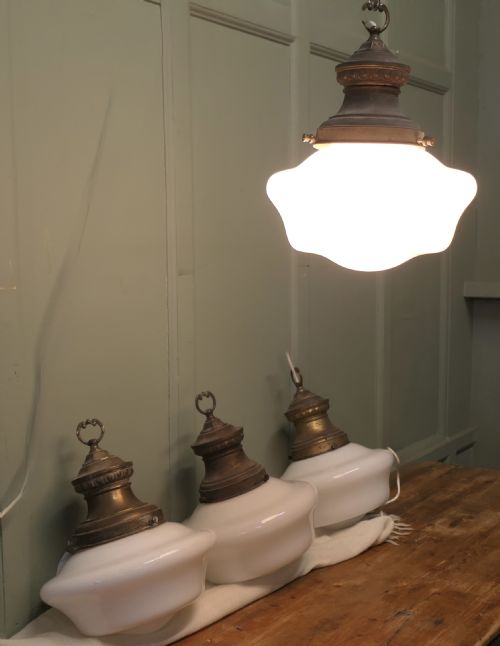
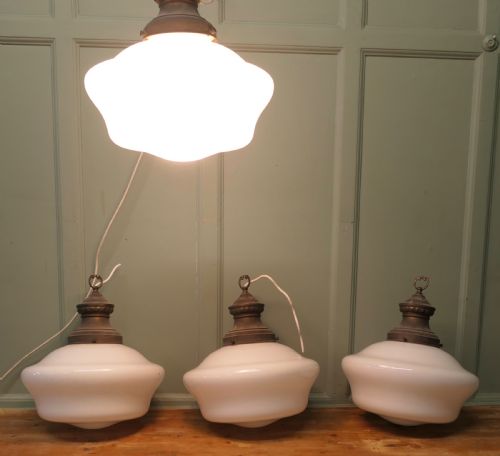
You are most likely to meet opaline glass pendants from the 1920s and 1930s on this page, alongside Victorian oil lamp shades and table lamps. These pieces use opaque white glass to soften harsh glare, creating a warm pool of illumination.
How they were made
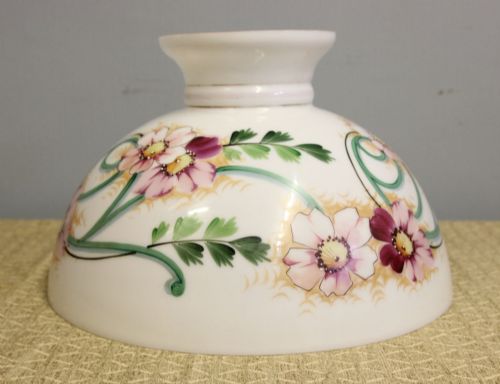
Makers formed these lamps using glass and metal together, combining brass, chrome, or gilt brass fittings with blown or moulded opaline and moonstone glass. Some components feature hand-painted details or enamelled surfaces applied directly to the glass body.
The glass itself achieves its milky opacity through mineral additives during the melting process. Metal mounts, collars, and galleries secure the glass shades to oil fonts or suspension chains.
Listings span from the 19th century through the Victorian, Edwardian, Art Deco, and mid-century periods, using brass, enamel, and opaline glass.
What varies in quality
The distinction between ordinary and superior examples lies in the weight of the glass, the depth of the metal fittings, and the finesse of any hand-painted decoration. Substantial brass work and heavy, uniform opaline glass indicate a finer manufacture.
Proportion and surface finish separate basic utility items from exceptional decorative pieces. Refined mouldings, such as reeded designs or chapel proportions, elevate a lamp beyond standard functional production.
The White Milk Glass Lamp Glossary
- Opaline glass
- A semi-opaque white glass developed to diffuse light gently without total transparency. It forms the primary material for many period shades and pendants.
- Oil lamp
- A lighting device that burns liquid paraffin or oil via a cotton wick. Many surviving examples later undergo conversion to electricity.
- Pendant light
- A hanging luminaire suspended from the ceiling by a cord, chain, or metal rod. These often utilise conical or pear-shaped glass shades.
- Gallery
- A metal ring or collar designed to hold a glass shade securely in place. It connects the shade to the burner or suspension hardware.
White Milk Glass Lamp: Frequently Asked Questions
Are these lamps safe to use today?
Period lighting generally requires rewiring to meet current electrical standards before daily domestic use.
Qualified electricians can easily adapt vintage brass and glass fittings while preserving original components.
How do I date a milk glass lamp?
Dating relies on stylistic markers, such as Victorian brass bases versus 1930s industrial pendant shapes.
Screw threads, fitter sizes, and mounting hardware also provide clues to the decade of manufacture.
Can I wash milk glass shades?
Gentle washing in warm soapy water removes accumulated dust without harming the opaque surface.
Avoid harsh abrasives, particularly on pieces with hand-painted or enamelled decoration.
Did these lamps burn oil originally?
Many Victorian and Edwardian examples functioned as oil or paraffin lamps before modern electrification.
Some retain original burners and glass globes alongside later electrical conversions.