

Pair Pendant Lighting
Pair pendant lighting brings balanced illumination to high ceilings through matching forms shaped in brass, bronze, glass, and crystal.
Pair Pendant Lighting
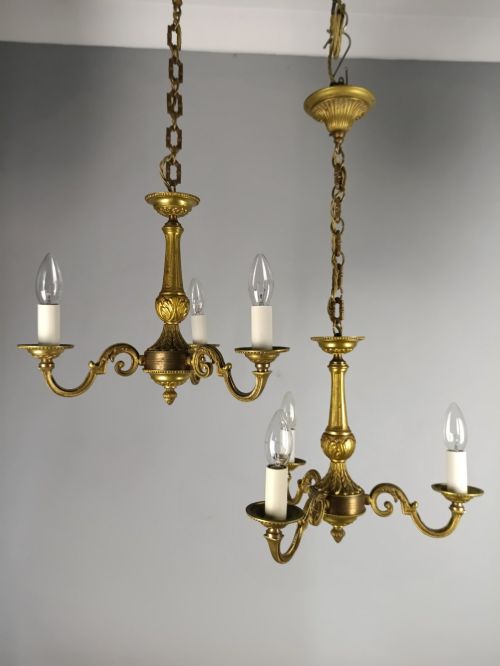
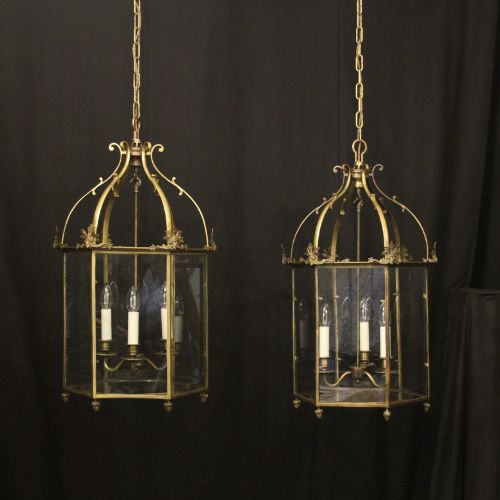
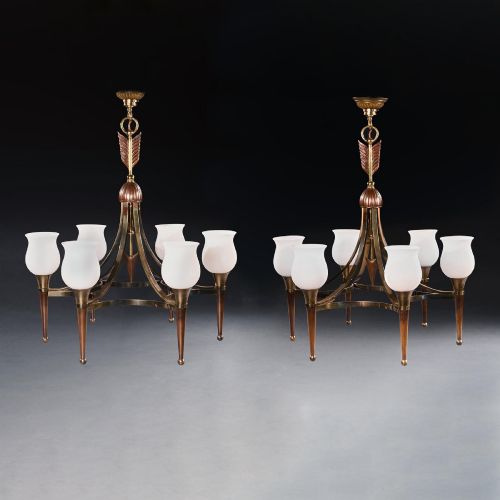
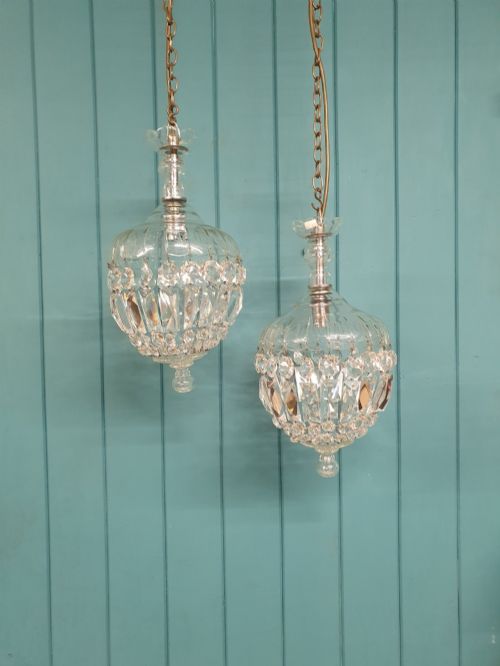
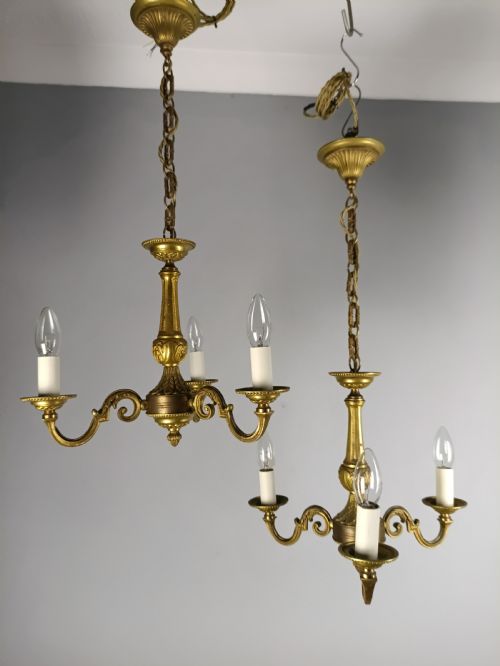
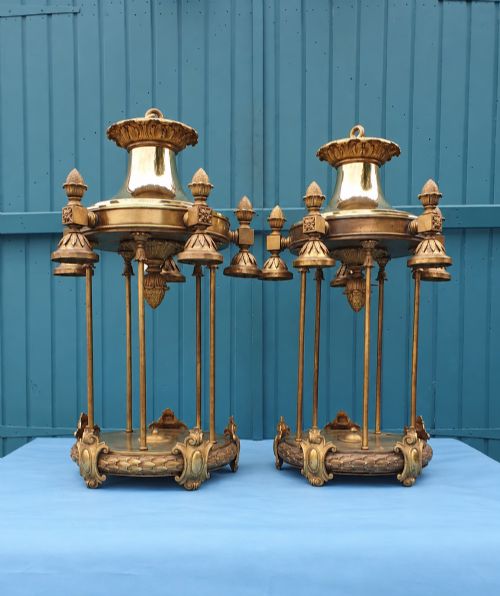
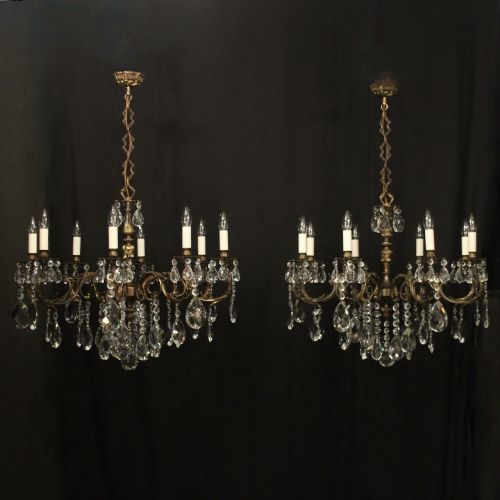
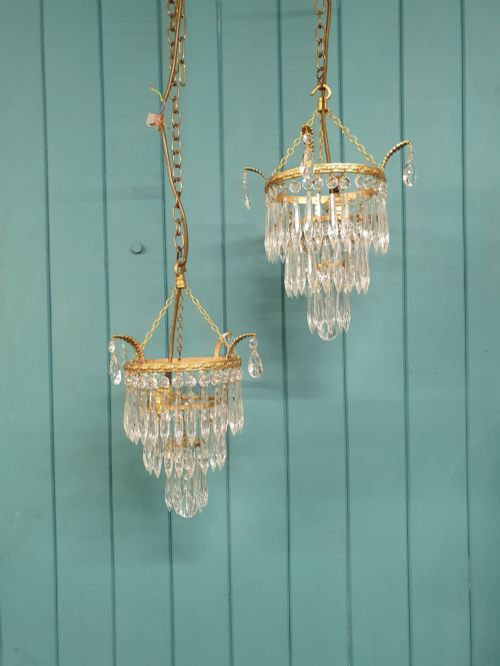
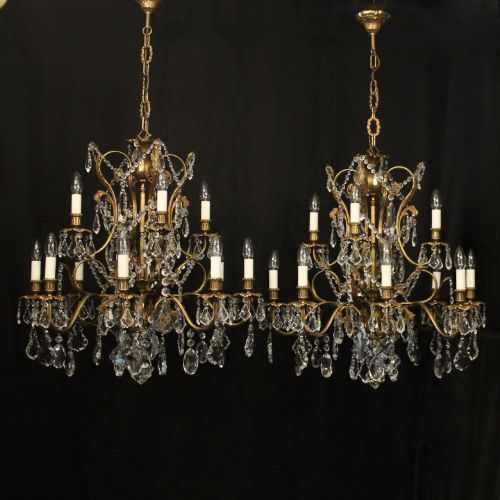
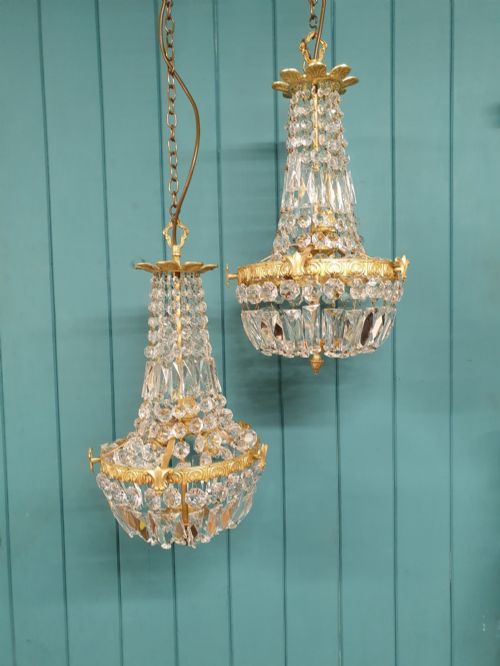
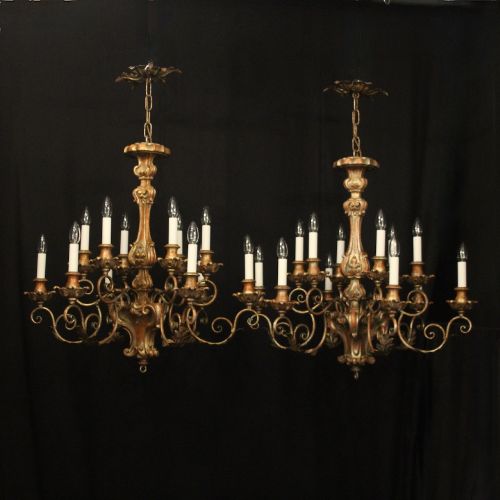
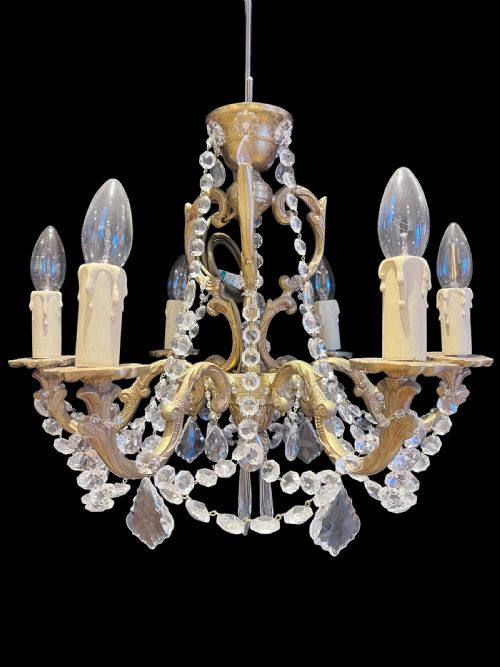
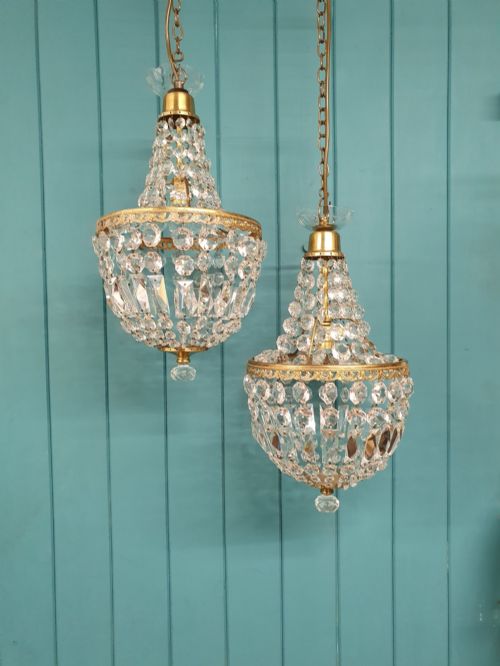
When you search for pair pendant lighting, you encounter matching sets of suspended illumination designed to hang in symmetry across a room, hall, or stairwell. These fixtures primarily take the form of chandeliers, hanging lanterns, and glass pendants dating from the Victorian and Edwardian eras through the 1920s and 1930s. The selection on this page leans heavily toward French designs alongside English and American pieces, spanning styles from Art Deco and Arts and Crafts to French Rococo and neoclassical revivals.
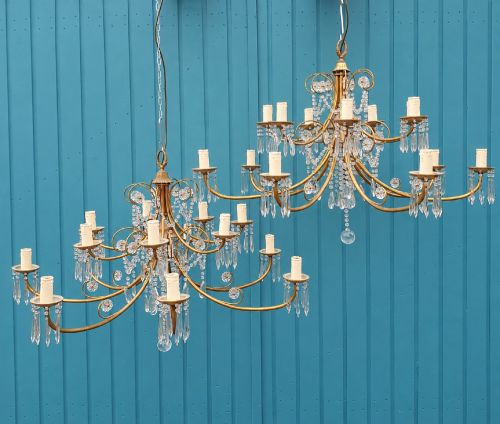
Buyers select these matched pairs to anchor large spaces where a single light source proves insufficient or unbalanced. The inventory ranges from modest glass pendants and multi-tiered crystal chandeliers to monumental bronze lanterns and church lights. Origins trace across French chateau aesthetics, Florentine workshops, and domestic English workshops, providing distinct visual anchors for period interiors.
Materials and Construction
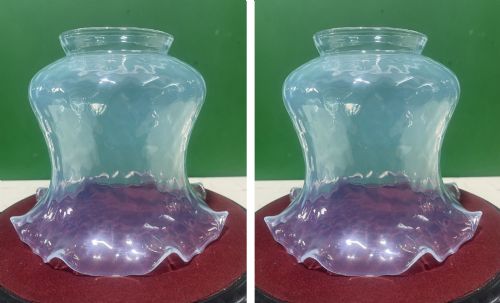
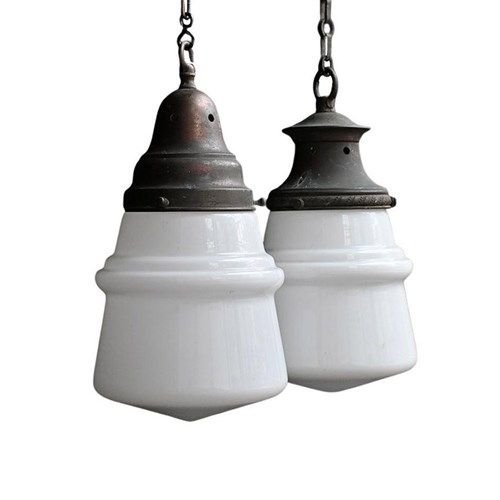
Glass and crystal complete the assemblies, appearing as cut glass prisms, tent arrangements, opaline shades, and delicate frilly glass pendants. Crystal components catch and refract light across multi-arm chandeliers, while opaline and plain glass diffuse illumination within pendants and church lights. Metalwork and glass elements combine through pinned frames, rings, and threaded rods typical of early twentieth-century manufacturing.
Pair Pendant Lighting Retail Price Guide 2026
Typical asking prices for pair pendant lighting among the pieces listed under this phrase on Sellingantiques today, from the lower quarter to the upper quarter. They describe what is for sale here now, not the wider market.
Object forms span chandeliers, pendant lights, hall lanterns, ceiling lights, wall sconces, and drop earrings.
Measures of Quality
Quality in these fixtures rests on the crispness of the metal casting, the weight of the bronze or brass framework, and the depth of the gilding or polychrome finish. Superior pieces exhibit hand-chased detail on metal mounts and substantial gauge frames that support multiple tiers without sagging. Lesser examples rely on lighter stamped sheet metal and simpler soldered joints.
The glass and crystal elements further distinguish the work, with hand-cut crystal prisms displaying sharp facets and high lead content compared to machine-pressed alternatives. Matched pairs require uniformity in both fixtures; discrepancies in glass tint, metal patina, or arm count reveal whether a pair was born together or assembled later from separate sources.
Maison Jansen·Andre Arbus·Schneider·Vestaray
The Pair Pendant Lighting Glossary
- Tent chandelier
- A style featuring upper strings of glass beads gathering into a canopy above the main body of the fixture.
- Spike chandelier
- A central vertical shaft adorned with radiating arms or crystal drops, often compact in vertical drop.
- Opaline glass
- A milky, translucent glass developed to soften light output while adding a subtle pastel or white hue.
- Hall lantern
- An enclosed hanging light, frequently hexagonal or convex, designed for corridors and entrance spaces.
- Drop earrings
- Small hanging decorative glass pendants suspended from the arms or bowls of chandeliers.
Pair Pendant Lighting: Frequently Asked Questions
How do I hang a matched pair?
Matched pairs look best hung at identical heights in large rooms, symmetrical spaces, or flanking a central architectural feature.
Ensure the ceiling hook and electrical wiring can support the combined weight of heavy bronze or crystal fixtures.
Are these wired for modern electricity?
Most antique fixtures have been adapted for modern electrical standards, though checking the internal wiring remains essential before installation.
Some early lights may require professional rewiring to meet current safety codes.
How do I clean crystal chandeliers?
Cleaning requires a gentle solution applied by hand to individual glass and crystal drops while they remain on the frame.
Avoid harsh chemical cleaners that can strip the original brass or gilded bronze patinas.
What rooms suit large lanterns?
Large hanging lanterns suit high-ceilinged entrance halls, stairwells, and grand reception rooms where vertical space allows adequate clearance.
Measure the drop and total height of the room carefully before purchasing monumental fixtures.