




Opaline Glass Pendant
Opaline glass pendant lights bring a soft, diffused glow to a room, combining milky glass with period metalwork from the Victorian era to the 1930s.
Opaline Glass Pendant
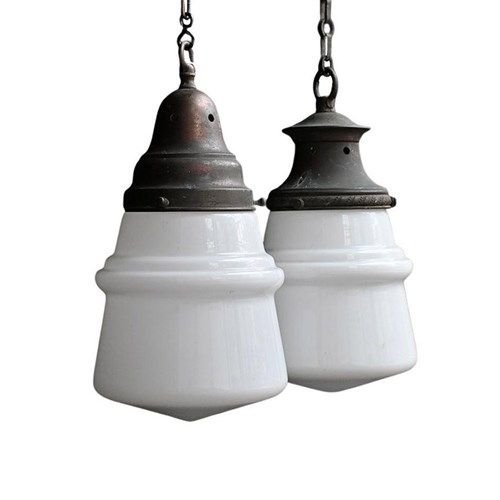
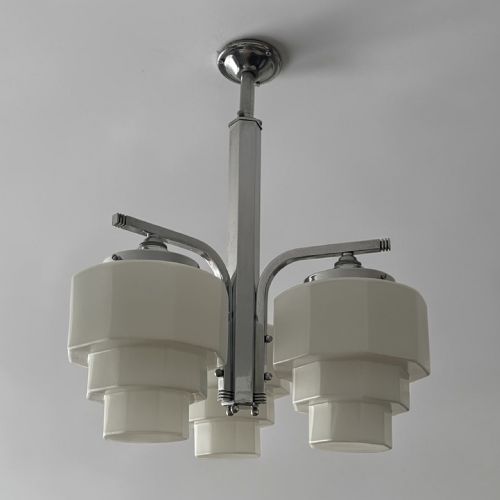
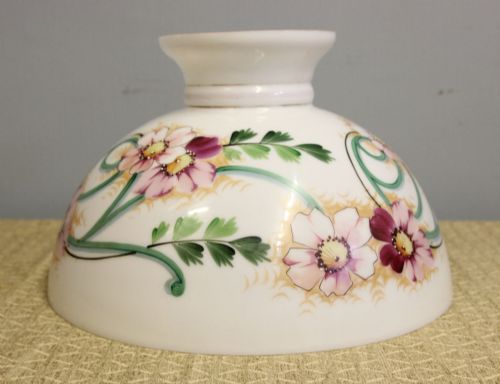
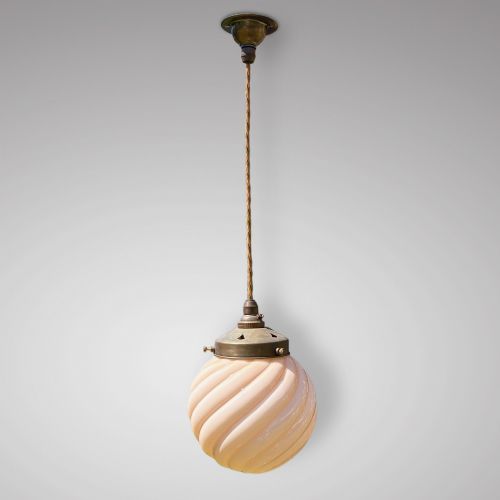
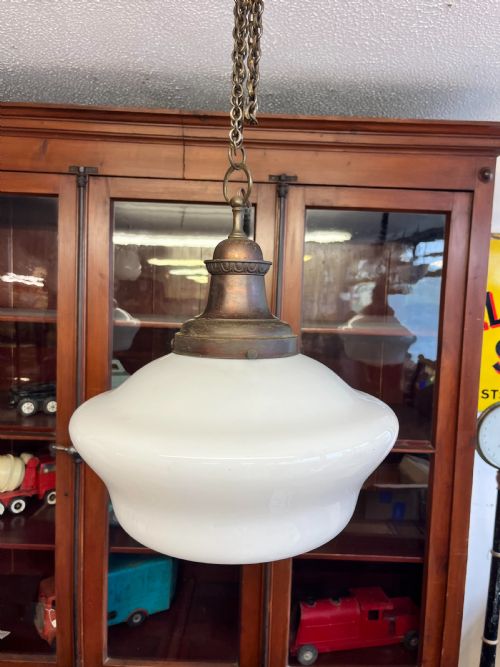
An opaline glass pendant is a ceiling-hung lighting fixture featuring a translucent or opaque milk glass shade, often paired with brass, chrome, or gilt bronze. These pieces range from simple Victorian oil lamp shades and Edwardian chapel lights to geometric Art Deco designs and industrial shades from the 1930s.
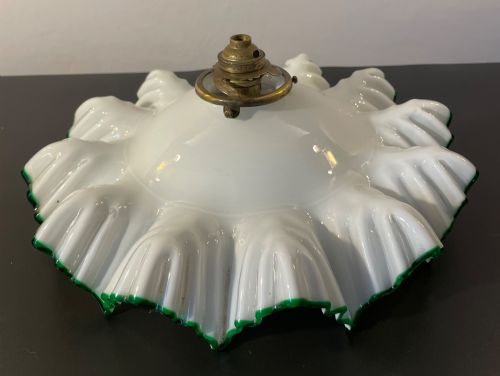
The form varies from conical and pear shapes to reeded designs, fish scale patterns, and French frill lampshades. Most examples originate from British, French, or wider European workshops operating between the Victorian period and the mid-twentieth century.
How they were made
The shades rely on opaline glass production techniques, which introduce bone ash or other agents into the molten batch to achieve that characteristic milky opacity. This diffuses light evenly without harsh glare.
Metal components such as brass, gilt bronze, and chrome provide the structural hanging mechanisms, galleries, and burners, sometimes complemented by fabric flex or enamel fittings.
Opaline Glass Pendant Retail Price Guide 2026
Typical asking prices for opaline glass pendant among the pieces listed under this phrase on Sellingantiques today, from the lower quarter to the upper quarter. They describe what is for sale here now, not the wider market.
Some Victorian households converted their hanging paraffin lamps to electricity, proving that good glass simply refuses to retire.
What varies in quality
Quality rests in the depth and consistency of the glass body, alongside the weight and finish of the metal mounts. Heavier gauge brass and crisp detailing on gilt bronze set finer examples apart from standard utility lighting.
The sophistication of the silhouette - ranging from hand-formed frills to cleanly turned conical and reeded profiles - determines the aesthetic standing of each piece.
Perry & Co
The Opaline Glass Pendant Glossary
- Opaline glass
- A type of semi-translucent milk glass that diffuses light softly, appearing white or tinted in pastel tones. It was widely used for nineteenth and early twentieth-century lighting.
- Plafonnier
- A ceiling-mounted or close-hung light shade, typically glass, designed to sit flush or near-flush to the ceiling. These direct illumination downward into a room.
- Gilt bronze
- Bronze metal treated with a fine layer of gold or gold-coloured alloy to impart a rich, metallic finish. It appears on higher-end Victorian and Edwardian mounts.
- Reeded
- A decorative surface pattern consisting of parallel, raised rounded ridges running along the body of the glass or metal. This adds texture and catches the light.
Opaline Glass Pendant: Frequently Asked Questions
How do I hang an opaline glass pendant?
Most pendants suspend from a ceiling rose using brass or metal chains, rods, or fabric flex connected to an internal lampholder. They require standard electrical installation by a qualified professional.
Ensure the weight of the shade, particularly larger chapel or gilt bronze variants, is supported by appropriate ceiling fixings rather than the electrical cable alone.
Are these lights suitable for low ceilings?
Pendant lights hang down into a room, so ceiling height dictates the ideal drop. Conical or dish-shaped shades sit closer to the ceiling plane than long pear-shaped fixtures.
Shorter flex lengths or flush-fitting plafonnier designs work well in hallways and rooms with restricted vertical clearance.
How do I clean opaline glass safely?
Wash the glass gently in warm water using mild soap and a soft cloth to remove dust and household grime. Avoid harsh abrasive pads that can scratch the surface.
Metal galleries and brass components should be wiped with a dry or barely damp cloth to preserve any patination accumulated over the decades.
How do I date an opaline pendant?
Dating relies on stylistic markers, such as the geometric lines of Art Deco pieces from the 1930s compared to the ornate gilt bronze mounts of Victorian lanterns. Burner mechanisms and collar fittings also help place pieces within the nineteenth or early twentieth century.
Materials like chrome point firmly toward later twentieth-century production, while brass and heavy glass suggest earlier Victorian or Edwardian origins.