


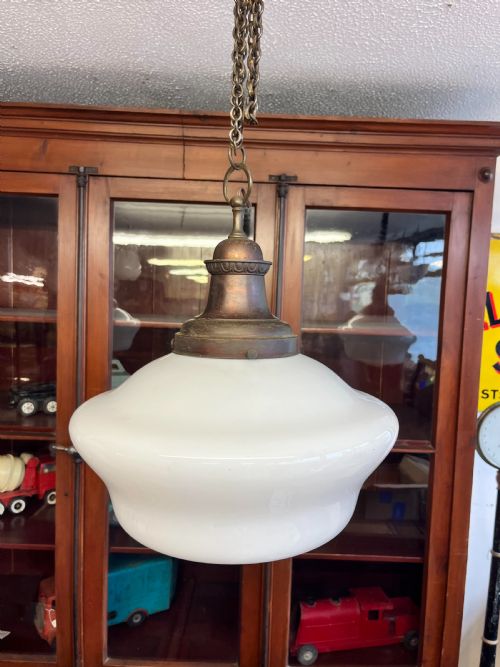


Brass Opaline Ceiling Light
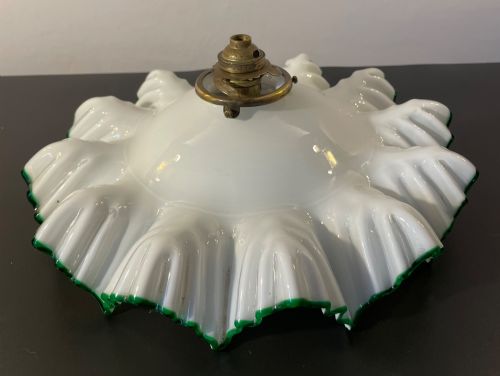
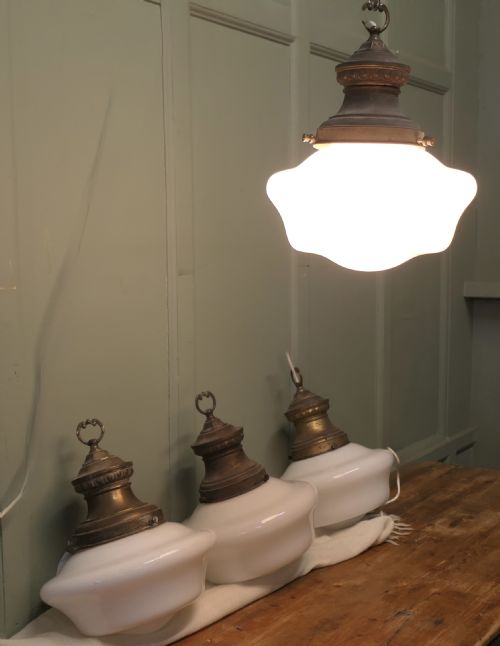
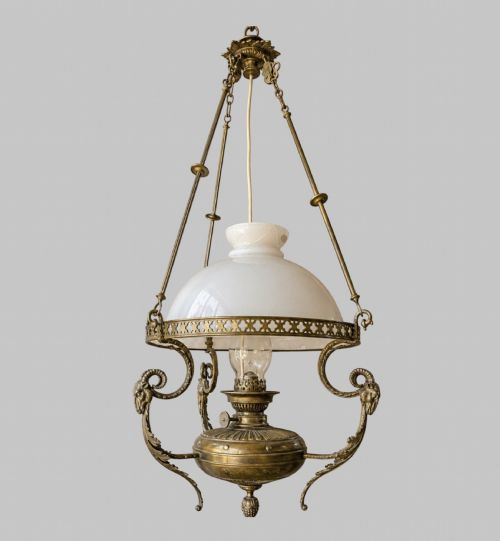
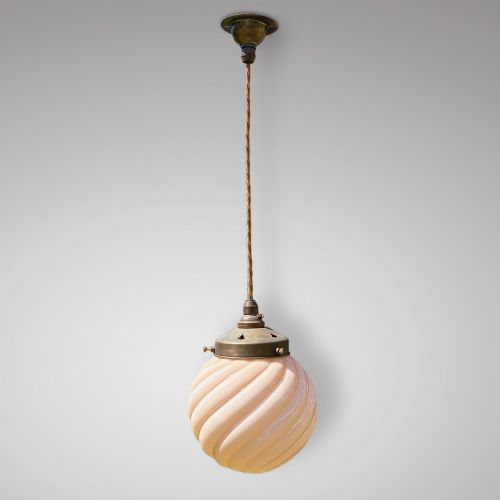
These brass opaline ceiling light pieces combine milk glass and metal to cast a soft, diffused glow over any room.
Brass Opaline Ceiling Light
A brass opaline ceiling light brings together milky translucent glass shades and metallic mounts, spanning periods from the Victorian era through to the nineteen thirties. These fittings appear in various forms on this page, including simple pendants, conical shades, chapel lights, and elaborate chandeliers.
The selection ranges from early twentieth century industrial fixtures to refined Edwardian and Art Deco designs. Buyers searching for a brass opaline ceiling light encounter French country styles, neoclassical plafonniers, and heavy brass galleries paired with domed or pear-shaped glass globes.
Many examples originate from the early nineteen hundreds and nineteen thirties, showing how domestic and institutional lighting evolved. Whether housing a simple bulb or an old paraffin burner conversion, each piece relies on the contrast between warm metal and white glass.
Materials and construction
The primary components of these lights are opaline glass and brass, sometimes supplemented by gilt bronze, crystal, and fabric flex. Glassmakers achieved the characteristic milky opacity by adding bone ash or metal oxides to the molten batch, creating a surface that softens harsh bulb glare.
Metalwork involved casting and spinning brass to form the galleries, suspension chains, and ceiling roses that secure the glass shades. Makers often incorporated detailed cast brass mounts, decorative chains, and functional galleries to clamp the glass securely in place.
Recorded object types include pendant lights, ceiling lights, lampshades, and chandeliers in industrial, Art Deco, and neoclassical styles.
Assessing quality in antique lighting
Quality in these fixtures rests on the thickness and uniformity of the opaline glass, alongside the weight and detail of the brass hardware. Finer examples display hand-blown glass with smooth contours and substantial brass galleries rather than thin, pressed metal.
The distinction between ordinary and exceptional pieces also lies in the crispness of any cast bronze detailing and the originality of the metal components. Surviving matching sets and signed maker pieces represent the upper tier of the range.
Perry & Co
The Brass Opaline Ceiling Light Glossary
- Opaline glass
- A milky, translucent glass developed to diffuse light evenly without harsh glare. It appears frequently in nineteenth and early twentieth century shades.
- Brass gallery
- The metal collar or ring that grips the upper rim of a lampshade and connects it to the suspension cord or rod. Original galleries are specific to their period.
- Plafonnier
- A ceiling-mounted light fixture where the glass shade sits flush or very close to the ceiling surface. These often feature painted or moulded glass.
- Pendant light
- A single light fixture suspended from the ceiling by a cord, chain, or metal rod. They are designed to hang downwards into a room or hallway.
Brass Opaline Ceiling Light: Frequently Asked Questions
How do I clean opaline glass?
Wash the glass gently in warm soapy water using a soft cloth, avoiding abrasive pads that might scratch the surface. Ensure the shade is completely dry before reattaching it to any electrical fittings.
Take care with antique metal galleries around the glass edge, keeping moisture away from any aged brass or wiring components during the cleaning process.
Are these lights rewired for modern use?
Many antique light fixtures have been updated with modern fabric flex and contemporary lamp holders to meet current safety standards. Listings often note whether the wiring is recent or original.
Buyers should have any historic or unverified wiring checked and installed by a qualified electrician before connecting it to a mains supply.
What rooms suit a pendant light?
Pendant lights work well in hallways, kitchens, and dining areas where direct illumination is required over a specific space. Conical and domed glass shades project light downwards effectively.
Consider the ceiling height and drop of the pendant to ensure adequate clearance beneath the fixture, especially in high-traffic walkways.
How do I date an antique light?
Dating relies on stylistic clues such as the silhouette of the glass shade, the manufacturing techniques of the brass gallery, and overall design movements like Art Deco or Edwardian industrial.
Details like threaded brass collars, heavy cast bronze mounts, and specific maker marks help narrow down the period of manufacture.