




Antique Opaline Pendant
An antique opaline pendant brings soft, diffused illumination to a room through milky glass suspended from above.
Antique Opaline Pendant
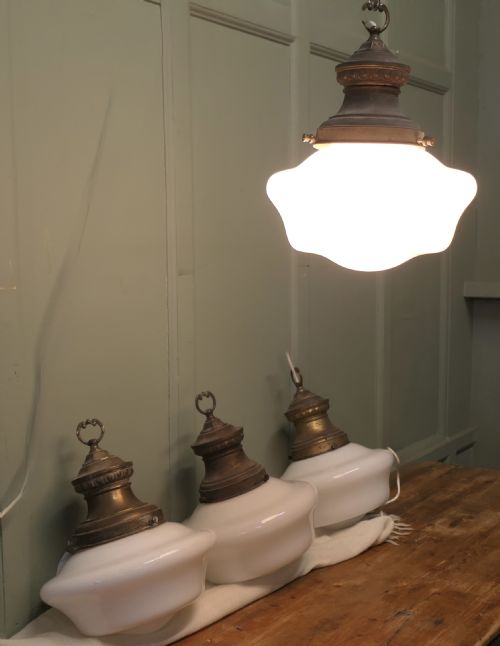
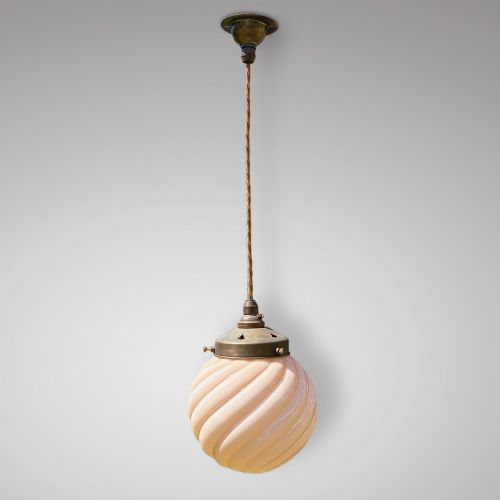
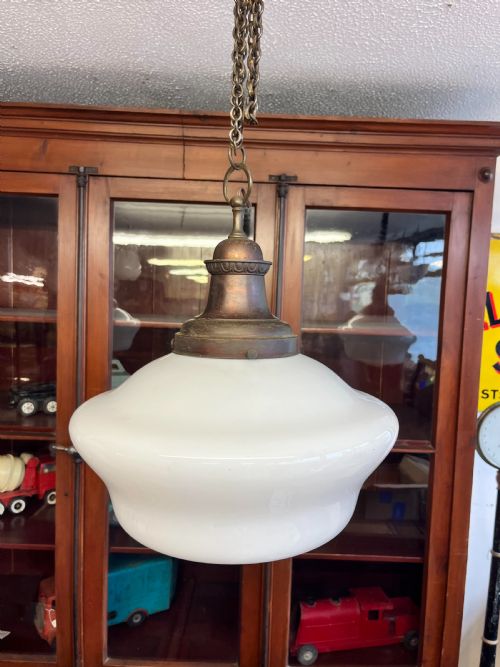
An antique opaline pendant takes the form of a ceiling-hung light fixture featuring a shade made from dense, milky-white glass. When searching for an antique opaline pendant, buyers encounter examples originating from the Victorian and Edwardian eras, through to the 1920s and 1930s. These pieces manifest in various silhouettes, including conical, pear-shaped, square, and spherical globe designs.
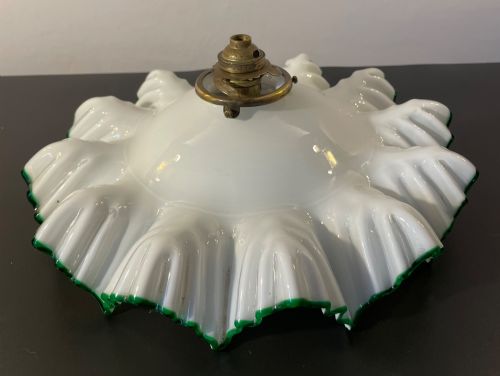
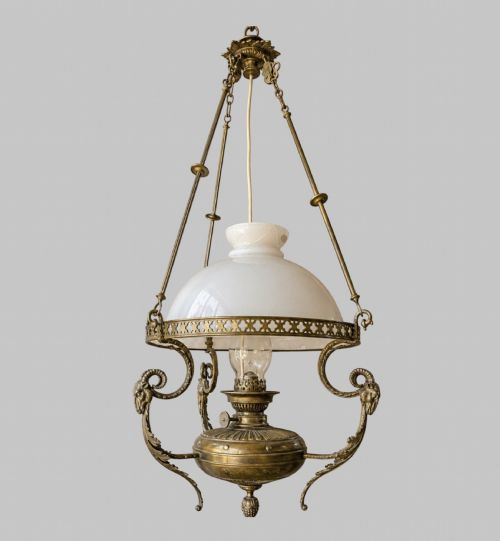
The selection ranges from simple domestic light shades to larger industrial chapel lights and French frill lampshades. Many fixtures pair the glass shade with original hanging mechanisms, such as brass, copper, or gilt bronze galleries, while others retain fabric flex or metal suspension chains.
Materials and construction methods
Makers produced these shades using opaline glass, a translucent material achieved by adding bone ash or other agents to the molten batch to create its characteristic cloudy appearance. Metal components such as brass, bronze, and gilt bronze provide the structural galleries and mounts that secure the glass.
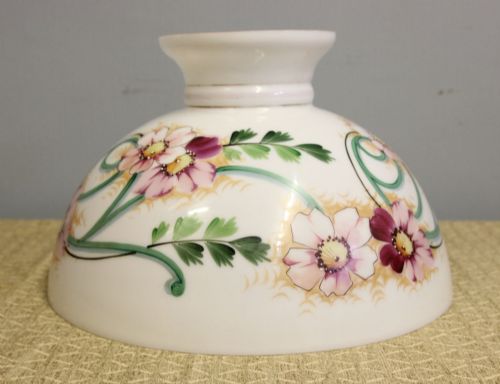
Some examples incorporate hand-painted decoration or enamel work directly onto the glass surface. Wiring methods include period fabric flex alongside metal chain or rod suspensions.
Listings feature opaline lighting spanning the Victorian and Edwardian periods, Art Deco, and Mid-Century Modern styles.
Evaluating quality in opaline lighting
Quality reveals itself in the density and purity of the opaline glass, where superior examples exhibit an even, milky distribution without heavy striations. The refinement of the metal gallery - such as detailed casting in gilt bronze or substantial copper construction - distinguishes finer pieces from standard utility wares.
The integrity of the shade rim and the presence of maker attribution or specialised hardware, like numbered burner fittings or branded galleries, elevate the standing of a fixture.
Perry And Co·Hinks
The Antique Opaline Pendant Glossary
- Opaline glass
- A translucent, milky-white glass developed to diffuse light evenly while reducing glare. It often displays a delicate blue or pink tint when viewed against direct light.
- Gallery
- The metal collar or mount that grips the top of a lampshade and connects it to the suspension wiring or chain. Galleries appear in brass, copper, and bronze.
- Plafonnier
- A ceiling-mounted light fixture where the shade sits flush against or closely beneath the ceiling rose rather than hanging on a long drop.
- Fabric flex
- Flexible electrical cable wrapped in woven textile, commonly utilised in period and vintage lighting restorations to maintain an authentic appearance.
Antique Opaline Pendant: Frequently Asked Questions
What rooms suit an opaline pendant light?
Kitchens and hallways benefit greatly from the bright, diffused downward illumination provided by these milk glass shades. Their clean aesthetic also complements dining spaces and utilities where functional overhead lighting is required.
Smaller globe or conical shapes fit well in compact entryways, while larger chapel or industrial pendants anchor open-plan areas.
How do I clean antique opaline glass?
Washing the shade in warm water with a mild, non-abrasive detergent removes accumulated dust and grime safely. Soft cloths prevent scratching the historic glass surface during cleaning.
Metal galleries require separate maintenance using appropriate polish depending on whether the hardware is brass, copper, or bronze.
How do I date an opaline pendant?
Dating relies on examining the manufacturing style, the shape of the glass, and the materials used in the gallery and suspension. Victorian and Edwardian examples often feature heavier brass mounts or decorative enamel, while 1920s and 1930s pieces lean towards Art Deco geometric lines or industrial forms.
Maker stamps on the metal fittings or burner components provide definitive chronological markers.