


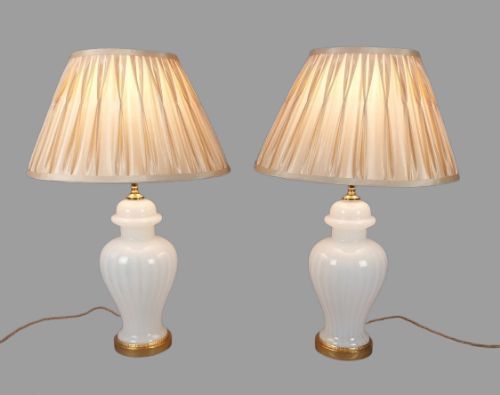


Art Deco Opaline Light
An art deco opaline light brings soft diffusion and geometric rhythm to a room, combining milk glass with metal mounts.
Art Deco Opaline Light
An art deco opaline light combines the milky translucence of opaline glass with the distinctive geometry of the period. These fixtures emerge primarily as ceiling pendants, wall sconces, and table lamps from the nineteen twenties and nineteen thirties.
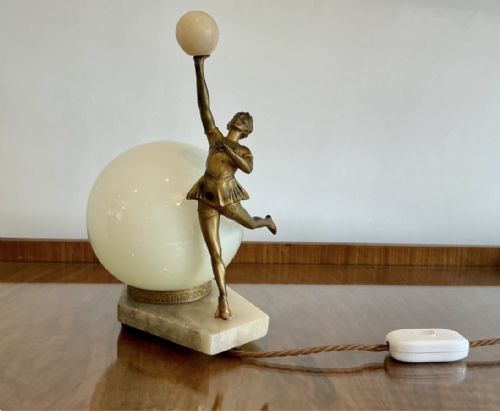
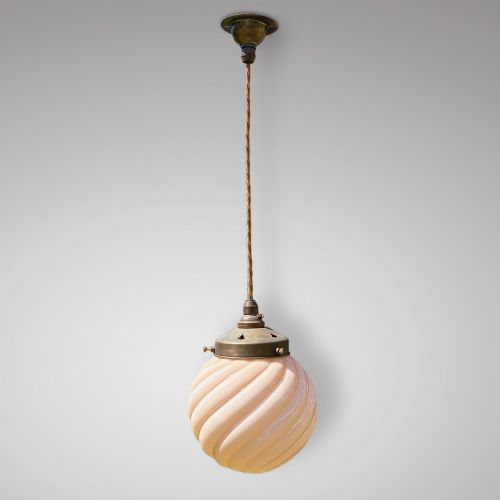
The version most commonly met on this page is the pendant light, often shaped as a globe, cone, or dish designed to hang centrally in a room. Table lamps paired with figural metal bases or marble plinths also appear frequently across the selection.
Makers working during this era utilised French and British idioms, applying clean lines and industrial forms to domestic illumination. The resulting pieces offer functional brightness while softening the glare through dense white glass.
Materials and construction
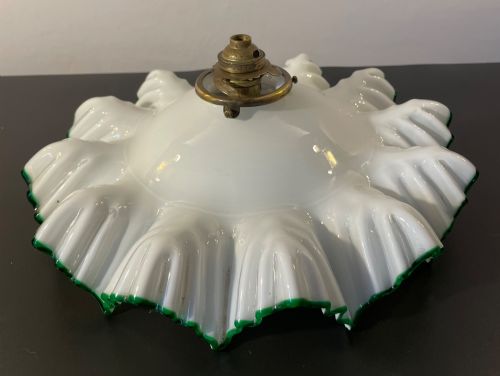
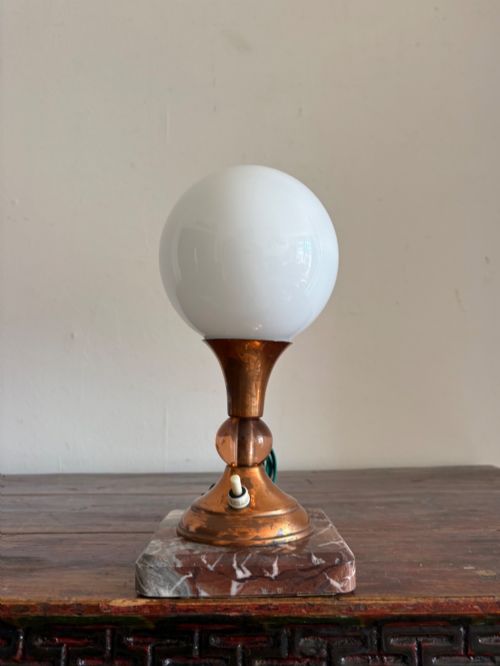
The construction centres on blown or moulded opaline glass paired with structural elements in brass, chrome, or copper. Metal galleries secure the glass shades, whilst heavier bases incorporate materials such as marble, granite, or spelter for stability.
Moulders shaped the glass to achieve specific profiles, including fish scale patterns, reeded surfaces, and stepped tiers. Metalwork components were cast or spun, then finished with plating or patination to complement the white glass.
Materials recorded across the inventory include opaline glass, chrome, brass, copper, marble, granite, and spelter.
Assessing quality and finish
Quality reveals itself in the weight and density of the opaline glass, alongside the integrity of the original metal gallery. Superior examples display even glass thickness and refined surface textures such as reeding or stepped contours.
The choice of supporting base material also differentiates the range, with solid marble, granite, or heavy brass indicating more substantial manufacturing standards compared to simpler metal stampings.
The Art Deco Opaline Light Glossary
- Opaline glass
- A type of semi-translucent white glass that diffuses light evenly without harsh glares. It gained widespread popularity in domestic lighting during the nineteenth and twentieth centuries.
- Gallery
- The metal ring or fitting that holds a lampshade in place and connects it to the suspension cord or bracket. Original galleries often bear maker stamps or specific casting details.
- Spelter
- An alloy of zinc and lead used as a cheaper substitute for bronze in decorative metal castings. It frequently forms the figural bases of period table lamps.
- Uplighter
- A lamp designed to direct illumination upward toward the ceiling rather than downward into the room. These fixtures often feature bowl-shaped glass shades.
- Reeded
- A decorative surface treatment consisting of parallel convex mouldings. This texture adds visual rhythm to glass shades and metal columns alike.
Art Deco Opaline Light: Frequently Asked Questions
How do I clean an opaline shade?
Wash the glass gently in warm water using a mild dish soap and a soft cloth. Avoid harsh chemical cleaners that might damage the surface finish.
Dry thoroughly with a lint-free towel before reattaching the shade to its metal gallery.
Can these lights take modern bulbs?
Most period fixtures accommodate standard modern screw or bayonet bulbs, provided the wattage matches the capacity of the original wiring. Check the interior clearance of the shade to ensure the bulb size fits comfortably.
Consult a qualified electrician to inspect older lampholders and wiring before installation.
Where should I hang a pendant light?
Pendant lights suit hallways, dining spaces, and central living areas where direct or diffused overhead illumination is required. Globe and conical shapes work particularly well in rooms with high ceilings.
Ensure the hanging height allows adequate clearance for people walking underneath.
How do I identify the period?
Look for characteristic design motifs such as stepped tiers, geometric metal mounts, and specific shade profiles like fish scale or tulip designs. Materials like chrome and cast spelter point firmly toward the interwar decades.
Construction methods, including threaded galleries and heavy brass fittings, also help distinguish items from nineteen twenty and nineteen thirty.