

Early 20th Century Pendants
Early 20th century pendants bring architectural presence and intricate illumination to a room, spanning lantern, chandelier and pendant light forms.
Early 20th Century Pendants
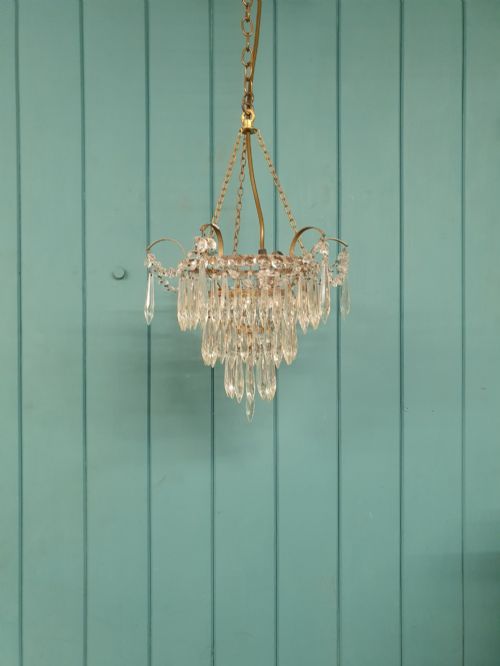
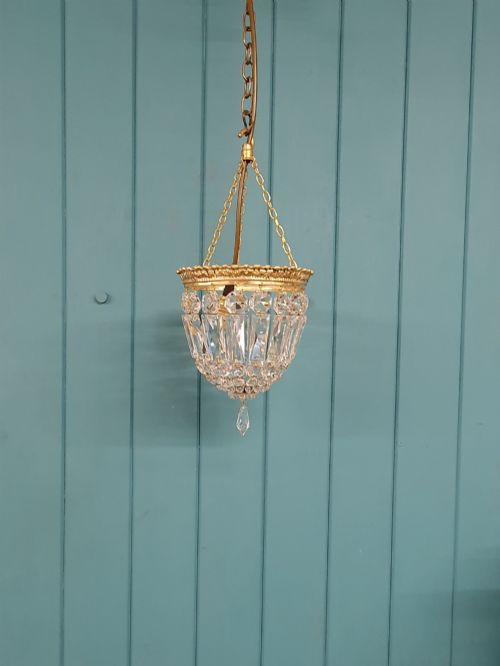
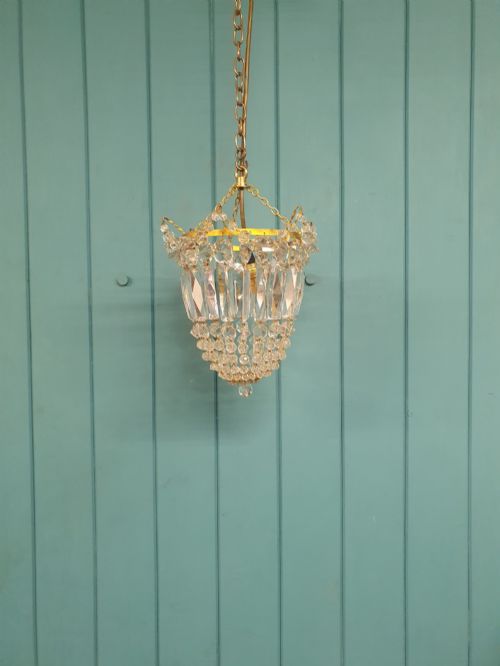
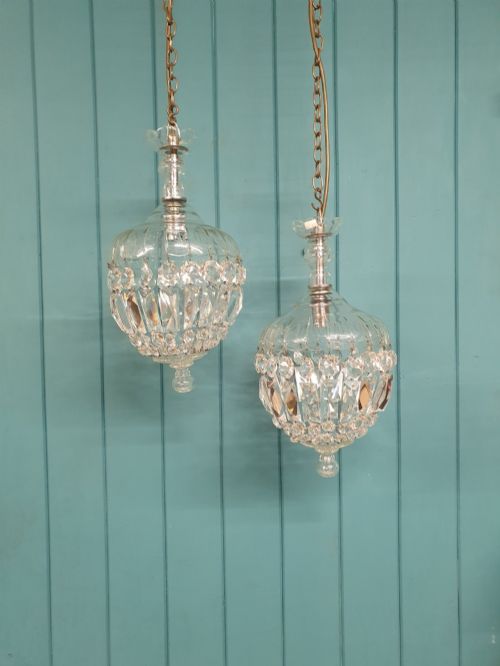
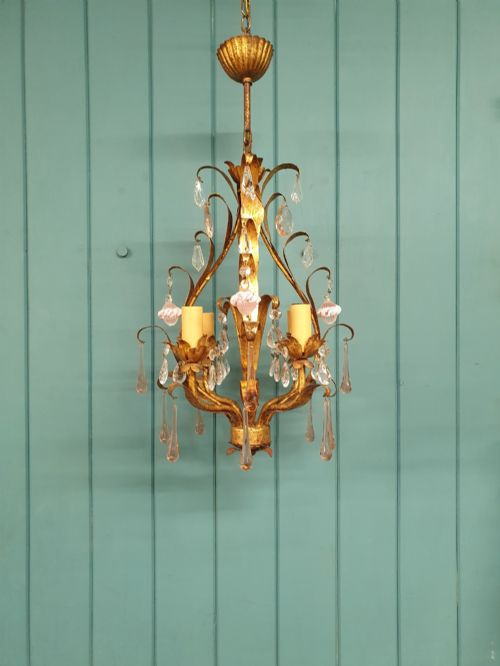
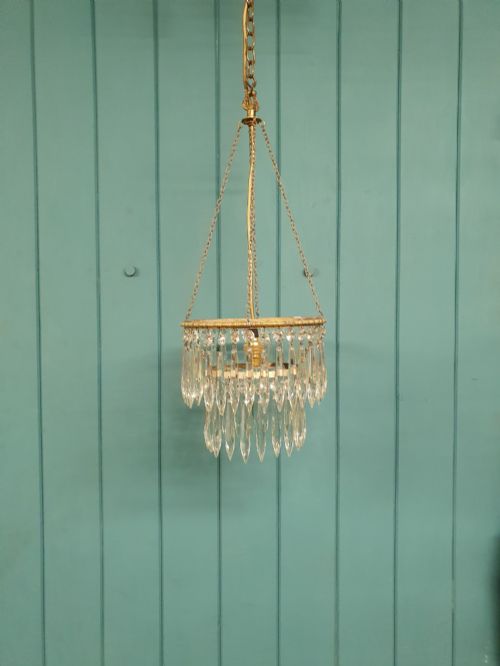
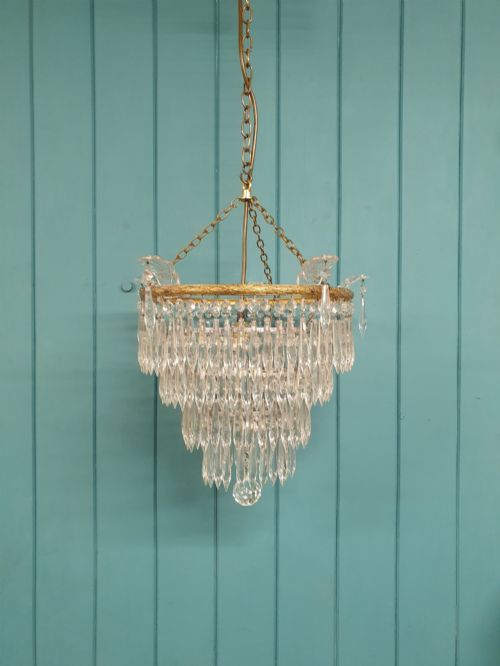
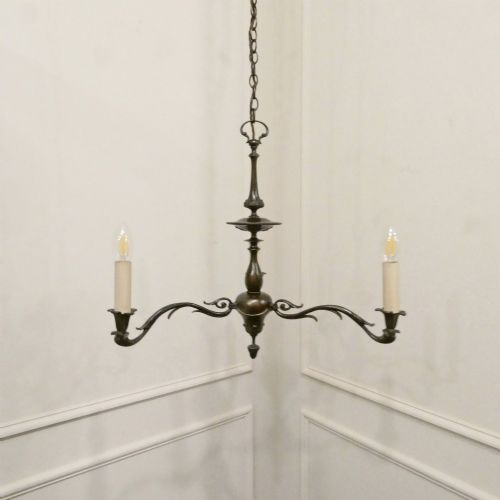
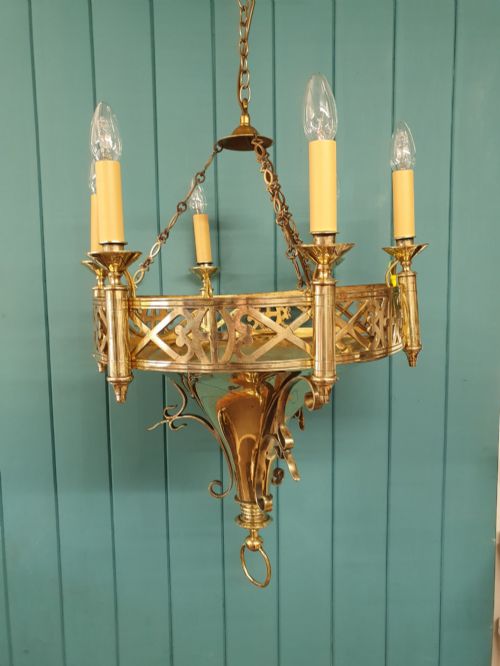
Early 20th century pendants encompass hanging lights, lanterns, and chandeliers originating from periods such as the Edwardian era, the 1910s, 1920s, and 1930s. Buyers searching this phrase encounter ceiling-suspended fixtures alongside occasional jewellery items like silver and amethyst necklace pendants.
The lighting fixtures vary significantly in scale, from compact six-inch dome top and spike chandeliers to large multi-armed chandeliers and tall brass lanterns measuring over a metre. Styles range from French Empire and Dutch Baroque to Gothic Revival and Neoclassical Revival.
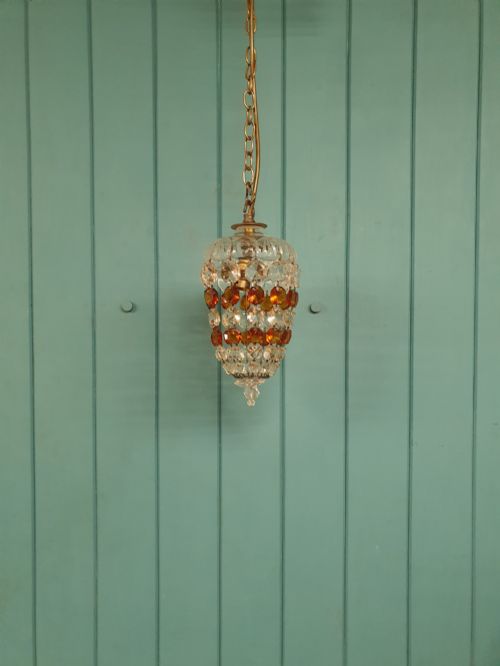
Most lighting examples combine metal frameworks with glass elements, manifesting as cut glass crystal, opaline glass, moonstone, and bevelled glass stars. These pieces serve practical overhead illumination while functioning as decorative focal points within a room.
How they were made
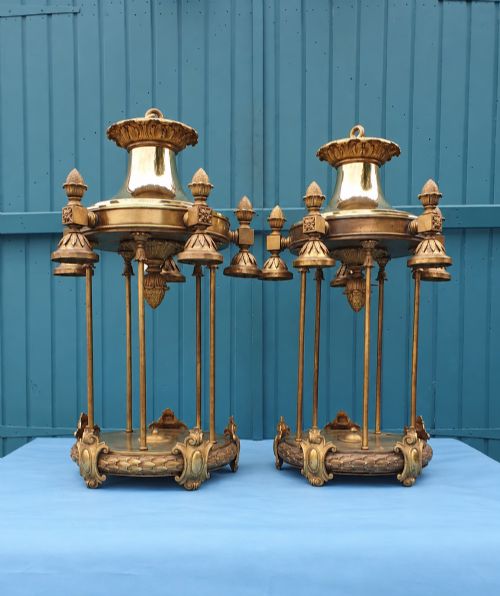
Makers constructed the metal frameworks using cast or sheet brass, gilt metal, iron, zinc, and silver plating, often shaping them into multi-branched chandeliers or geometric hanging lanterns. These structural metals support the weight of the glass components and provide secure ceiling attachment.
Glass elements were incorporated through various techniques, including lead crystal cutting, glass moulding for opaline and moonstone shades, and the assembly of prismatic drops such as coffin prisms and cut glass crystal spikes. Bevelled glass panels were fitted into framed star lanterns and hexagonal designs.
Early 20th Century Pendants Retail Price Guide 2026
Typical asking prices for early 20th century pendants among the pieces listed under this phrase on Sellingantiques today, from the lower quarter to the upper quarter. They describe what is for sale here now, not the wider market.
What varies in quality
The sophistication of the metalwork and the clarity of the glass determine the distinction between tiers of quality. Finer examples display crisp casting detail on brass and gilt metal branches, substantial frame weight, and precise joinery on lanterns.
Quality also rests in the glass components, where high-grade lead crystal, clean cut glass spikes, and unblemished opaline or moonstone shades produce superior light refraction compared to simpler pressed glass alternatives.
The Early 20th Century Pendants Glossary
- Tent chandelier
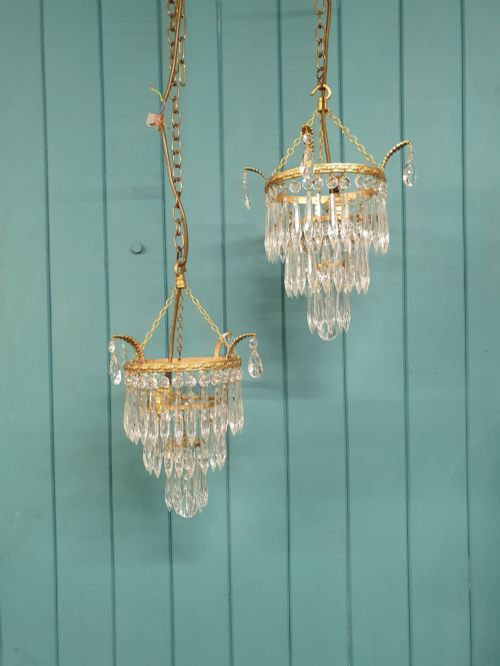
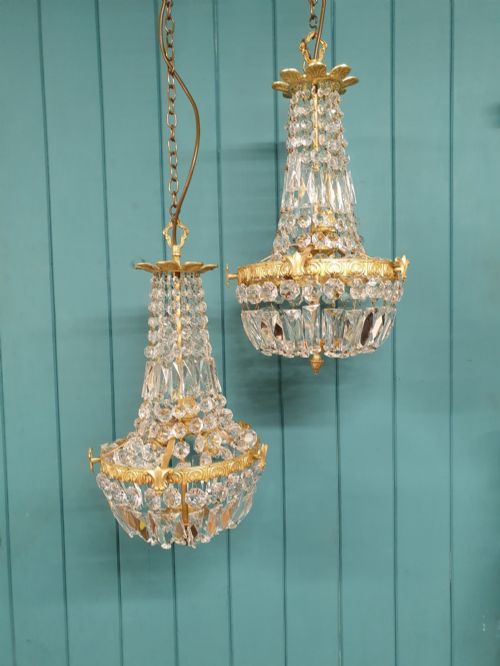
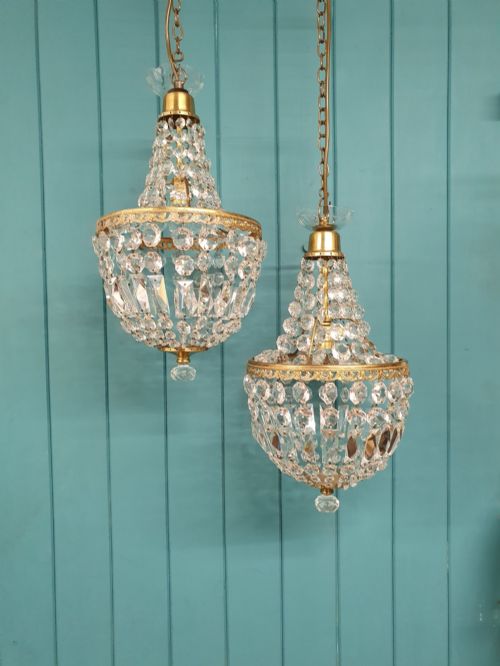
- A lighting fixture featuring rows of glass beads strung from a central crown down to a lower metal ring, forming a tent-like silhouette. They frequently incorporate hanging crystal drops.
- Opaline glass
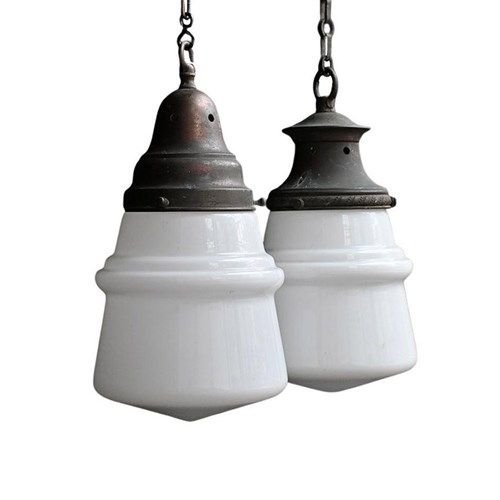
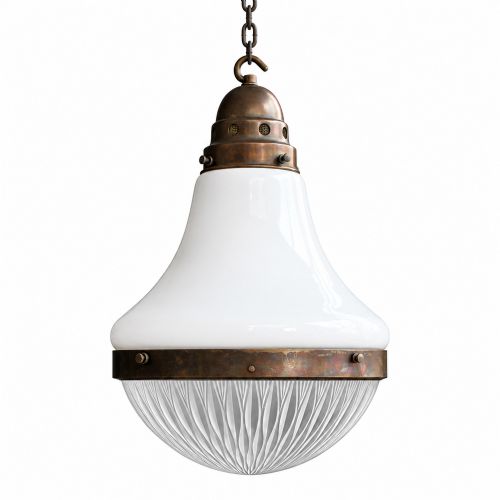
- A semi-translucent white glass developed to diffuse light softly without heavy glare. It appears commonly in mid-period pendant shades.
- Bag chandelier
- A fixture shaped like a tapered mesh or wire bag filled with cut glass beads and crystals. The design terminates in a pendant drop at the base.
- Coffin prism
- A long, flat-backed glass pendant drop with a faceted front and pointed tip, used to catch and scatter light around a room.
- Moravian star
- A multi-pointed geometric lantern construction utilising glass panels held within a metal framework. These pieces often hang in hallways or entryways.
Early 20th Century Pendants: Frequently Asked Questions
How do I clean an antique glass pendant?
Maintenance requires gentle cleaning with warm soapy water and a soft cloth for glass components and metal frames. Harsh chemical cleaners can damage silver plating or gilt finishes.
Detachable crystals and prisms benefit from individual washing and thorough drying before reattachment to maintain their reflective clarity.
Are these lights compatible with modern wiring?
Original antique lighting fixtures generally require rewiring to meet contemporary electrical safety standards. Professional electricians can safely update internal cables while preserving the external metalwork and sockets.
This rewiring process ensures the fixture operates reliably with modern household circuits without altering its historic appearance.
How do I determine the correct hanging height?
Ceiling height dictates the appropriate drop for chandeliers and hanging lanterns within a room. Hallways and entryways require sufficient clearance for walking beneath the fixture.
Above dining tables, fixtures typically hang lower to centre illumination over the furniture surface while remaining clear of eye level.
What is the difference between a pendant light and a chandelier?
Pendant lights generally suspend from a single cord, chain, or rod and utilise a single shade or enclosed lantern body. They suit smaller spaces or specific task areas.
Chandeliers feature multiple arms branching outward to support several light sources, creating a wider distribution of illumination suitable for larger rooms.