
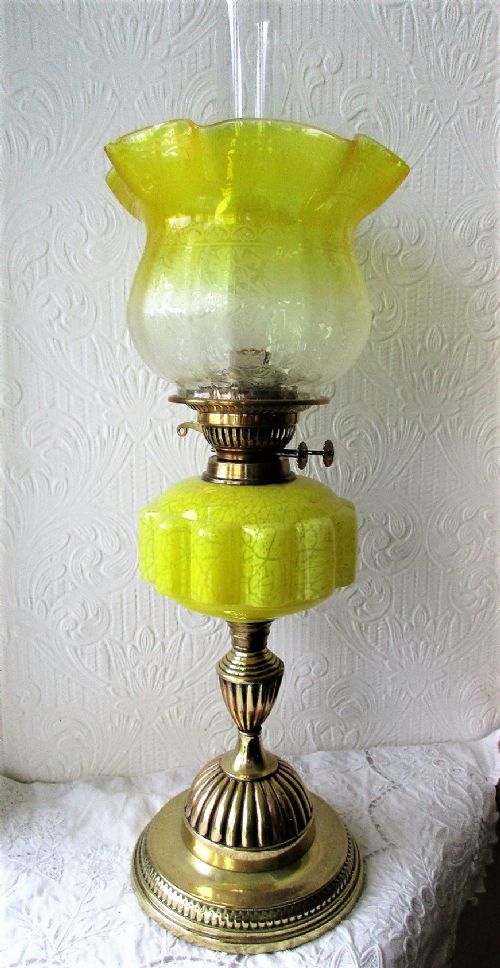
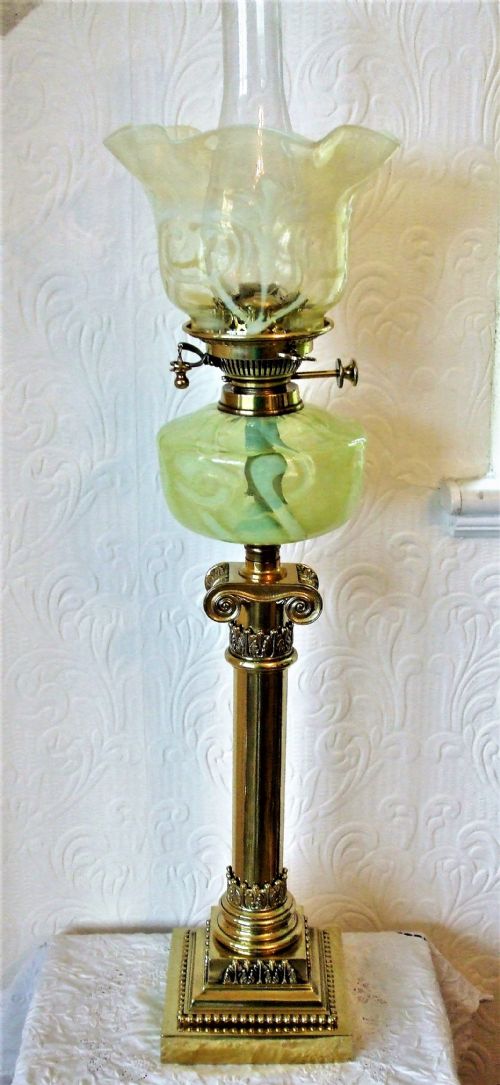
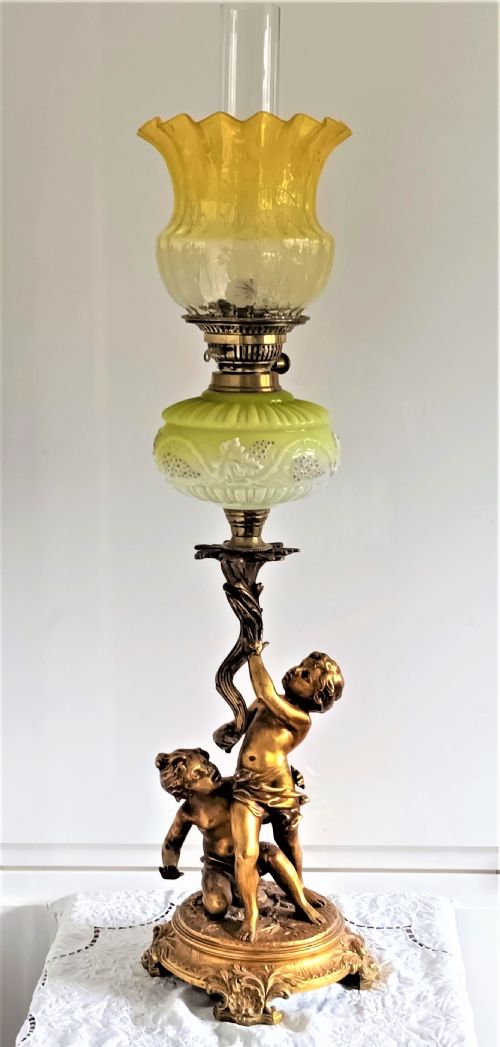


Yellow Glass Oil Lamp
A yellow glass oil lamp brings a bright Victorian warmth to a room, catching the light in a way clear glass never quite manages.
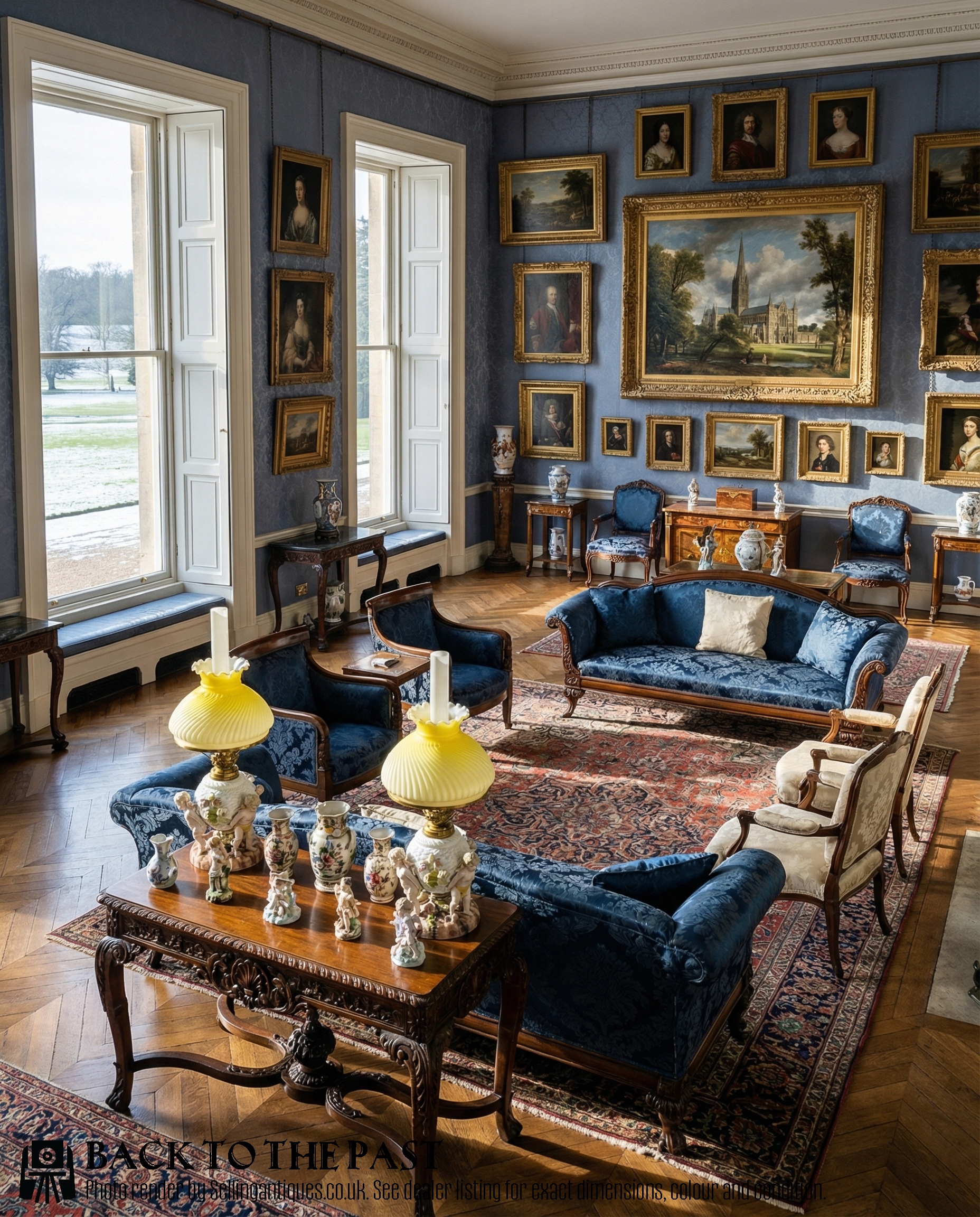
Yellow Glass Oil Lamp
A yellow glass oil lamp is a Victorian lighting piece designed to burn oil, usually featuring a vibrant body that glows when lit. When you search for a yellow glass oil lamp, you find nineteenth century examples that combine bright glass fonts with brass, porcelain, or silver plated bases.
The pieces listed here date from the nineteenth century, including specific years like eighteen-sixty and eighteen-eighty. They take the form of table lamps and peg lamps, sometimes paired with matching shades from the period.
How they were made
Maker workshops combined blown or pressed yellow glass with cast brass and porcelain elements to create these nineteenth century lamps. Metal mounts, gilt highlights, and ceramic collars were fitted carefully to secure the glass fonts.
Silver plate and satin glass techniques appear alongside standard brass work, reflecting the varied manufacturing methods of Victorian lamp makers.
Yellow Glass Oil Lamp Retail Price Guide 2026
Typical asking prices for yellow glass oil lamp among the pieces listed under this phrase on Sellingantiques today, from the lower quarter to the upper quarter. They describe what is for sale here now, not the wider market.
The site listings feature nineteenth century items spanning brass, porcelain, silver plate, ceramic, and yellow glass materials.
What varies in quality
The distinction between standard and finer examples rests on the crispness of the brass casting and the depth of colour in the yellow glass. Larger proportions and delicate gilt detailing separate ordinary utility pieces from the more ambitious Victorian designs.
Makers who integrated porcelain figures or complex rococo revival motifs achieved a higher level of decorative finish than those who produced plain column lamps.
The Yellow Glass Oil Lamp Glossary
- Peg oil lamp
- A small oil lamp designed with a tapered base or peg that sits directly inside a separate candlestick or table base rather than standing on its own foot.
- Font
- The hollow reservoir container that holds the lamp oil before it feeds up through the wick for burning.
- Opaline glass
- An opaque or semi-translucent glass type often tinted in pale or bright colours, popular for Victorian decorative objects and lighting.
- Rococo revival
- A nineteenth century decorative style drawing on ornate scrolling forms, asymmetrical curves, and natural motifs from the eighteenth century.
Yellow Glass Oil Lamp: Frequently Asked Questions
How do I use a vintage oil lamp?
These nineteenth century lamps function by filling the glass font with appropriate lamp oil and allowing the wick to absorb the liquid before lighting.
Modern users generally keep them unlit as decorative objects on a table rather than burning oil for daily illumination.
Are these lamps safe to light?
While the brass and glass components remain sturdy, antique burners require careful inspection and fresh wicks before any attempt to burn fuel.
Many collectors choose to display them as decorative lighting antiques without adding oil to the reservoir.
How do I date a Victorian oil lamp?
Dating relies on identifying the materials, styles, and maker marks stamped into the brass collars or burner mechanisms.
Pieces from the mid to late nineteenth century often display specific registration numbers or distinct aesthetic movements like rococo revival.
What rooms suit a yellow glass lamp?
The bright yellow glass tone introduces a warm Victorian accent that works well on side tables, sideboards, or mantelpieces.
They pair effectively with both traditional wooden furniture and neutral modern interiors seeking a splash of period colour.