
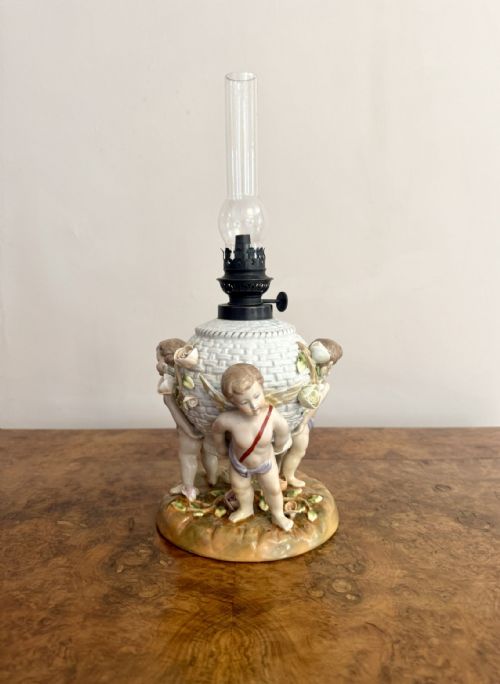


Porcelain Cherub Lamp
A porcelain cherub lamp brings sculptural charm and soft illumination to a room, combining fine ceramic figures with ornate metalwork.
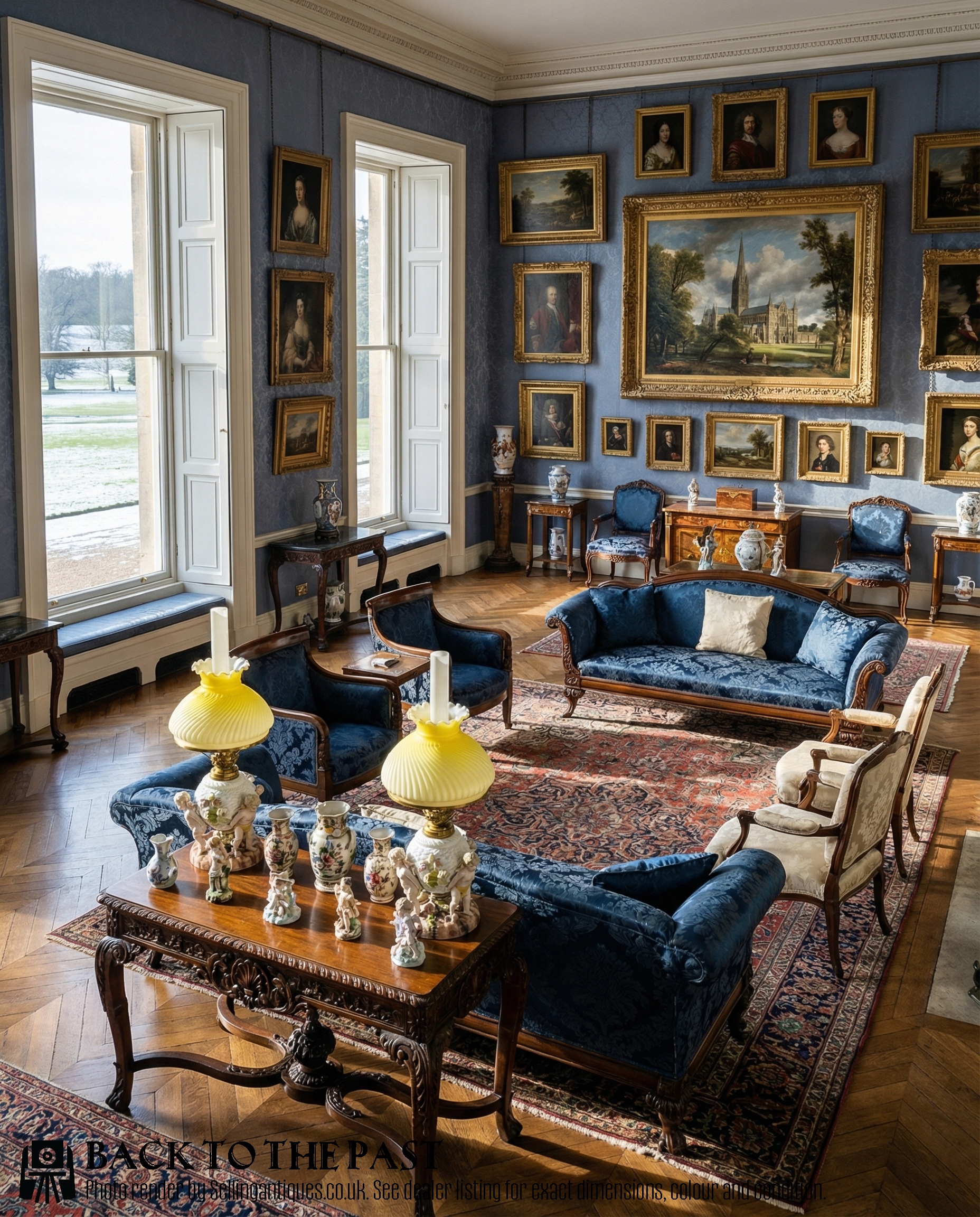
Porcelain Cherub Lamp
When you search for a porcelain cherub lamp, you find decorative lighting featuring figurative cherubs modelled in fine ceramic alongside oil lamps and electric table lamps. These pieces originate primarily from the nineteenth century and the early decades of the twentieth century, reflecting European manufacturing traditions.
The versions you meet most frequently on this page combine porcelain figures with materials such as gilt bronze, brass, or ormolu, often paired with fabric shades or beaded details. They span styles from Victorian and Rococo Revival to Louis XVI and French Chateau aesthetics.
Many examples began life as oil lamps before later conversion to electricity, while others started as vases or decorative figures adapted into table lamps. You encounter single lamps as well as balanced pairs, alongside related lighting forms like chandeliers.
How they were made
Makers shaped the figurative elements from fine porcelain, often painting details by hand and applying colour or gilding before firing the ceramic bodies. Factories such as Meissen, Sitzendorf, Sevres, and Schierholz produced these delicate sculptural components.
The ceramic bases and figures were mounted in metalwork frames utilising brass, gilt bronze, and ormolu, which provided structural stability and ornate decorative mounts. Component parts were cast, chased, and gilded to complement the smooth glazed surfaces of the porcelain.
Cherubs on these lamps appear busy holding everything from oil fonts to floral garlands while maintaining remarkably placid expressions.
What varies in quality
The quality of the metal mounts, whether gilt bronze, ormolu, or brass, determines the overall solidity and decorative harmony of the lamp. Finer mountings display crisp chasing and heavy casting that securely integrate with the porcelain body.
Sitzendorf porcelain·Meissen porcelain·Sevres·Schierholz porcelain
The Porcelain Cherub Lamp Glossary
- Ormolu
- A technique of applying finely ground high-carat gold to a bronze base object. This process creates a rich golden finish found on the metal mounts of many nineteenth-century lamps.
- Bleu celeste
- A bright turquoise blue glaze developed at the Sevres porcelain factory during the eighteenth century and revived in later nineteenth-century pieces. It provides a distinctive colourful backdrop for gilded mounts.
- Rococo revival
- A nineteenth-century design style drawing on eighteenth-century French ornamentation with asymmetrical curves, naturalistic leaf motifs, and scrollwork. It frequently pairs with cherub figures and elaborate porcelain bodies.
- Toleware
- Painted or lacquered sheet metal items often utilised in shades or decorative housing components alongside porcelain bases. The painted finishes coordinate with the colours of the ceramic figures.
Porcelain Cherub Lamp: Frequently Asked Questions
What is a porcelain cherub lamp?
A porcelain cherub lamp is a decorative lighting fixture that incorporates sculpted ceramic cherub figures into its base or body. These pieces date predominantly from the nineteenth and early twentieth centuries.
They are constructed using glazed porcelain combined with metal mounts such as brass, gilt bronze, or ormolu. Many were originally designed as oil lamps before being adapted for electricity.
How do I identify the period of these lamps?
Dating relies on examining the style of the porcelain modelling, the type of metal mounts, and factory marks where present. Nineteenth-century examples often display Rococo Revival or Louis XVI styling.
Manufacturing details such as hand-painted enamels and fire gilding help distinguish nineteenth-century production from later twentieth-century copies. The materials used, including ormolu and hand-blown glass, also indicate the era of manufacture.
Were these lamps originally electric?
Most nineteenth-century examples started as oil lamps or decorative vases and were converted to electricity later in their lives. Fittings and wiring are frequently modern updates.
When examining older lighting, burners and reservoirs often show evidence of their original function before conversion. Rewiring is standard practice to ensure modern safety standards are met.
How do I style a porcelain cherub lamp in a room?
These lamps serve as sculptural table pieces that draw the eye when placed on sideboards, desks, or mantelpieces. Their ornate metalwork and painted porcelain suit traditional and eclectic interiors.
Pairing them with appropriate shades, such as beaded fabric designs, helps diffuse light softly across the room. Single lamps work well as accents, while pairs provide symmetry on larger pieces of furniture.