
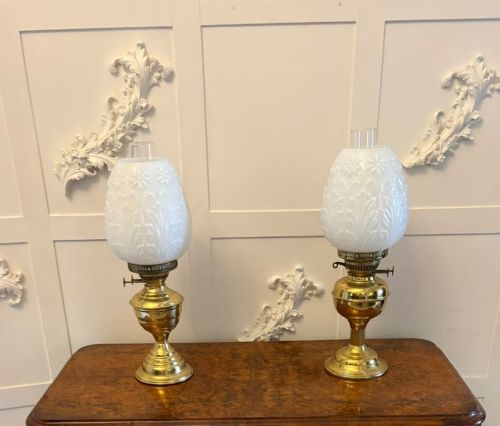


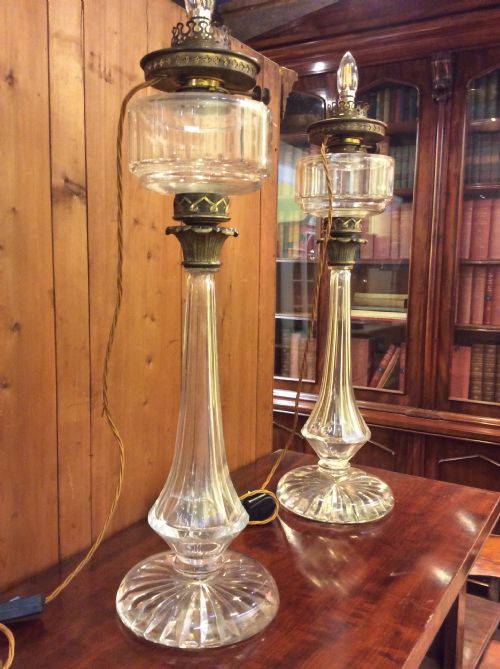

Pair of Oil Lamps
A matching pair of oil lamps brings symmetry and warm illumination to a room, drawing the eye with period craftsmanship in brass and glass.
Pair of Oil Lamps
A pair of oil lamps provides dual lighting for a mantelpiece, sideboard, or desk, originating mostly from the nineteenth century and the Victorian era. These items take the form of table lamps, desk lamps, and wall-mounted peg lamps that originally burned fuel before many were converted to electricity.
The versions met on this page include classical columns, porcelain figures, and glass fonts paired with burners. Makers utilised materials ranging from plain brass to richly coloured ruby glass and delicate opaline.
Buyers encounter diverse styles spanning from Neoclassical and Rococo Revival to Chinese Canton and Japanese cloisonne. The selection leans heavily towards matching pairs designed to sit symmetrically in a traditional interior.
Materials and construction
Metals form the structural backbone of many pieces, with brass, gilt brass, bronze, and silver-plated mounts providing sturdy pedestals and columns. Founders cast these metals before chasing the surface details by hand.
Ceramics and porcelain introduce painted decoration, seen in Meissen figures and Sevres or Chinese export vases repurposed as lamp bodies. Enamel work, notably cloisonne, adds coloured patterns to metal bases.
Owning a pair of owl-shaped oil lamps brings silent, watchful birds into the drawing room.
Distinctions in quality
Quality rests in the crispness of the casting and the weight of the metal components, where thicker brass and finely chased ormolu demonstrate superior workshop standards. Finer pairs retain matching burners and original glass shades without replacement parts.
Hand-painted porcelain details and precise enamel work separate master-executed pieces from standard production items. The clarity and depth of coloured glass, particularly in ruby and cranberry vessels, indicate the skill of the glasshouse.
Wild and Wessel·Meissen Porcelain·W Whiteley
The Pair of Oil Lamps Glossary
- Peg lamp
- A small oil lamp with a metal spigot or peg at the base designed to drop directly into a candlestick socket or wall bracket.
- Opaline glass
- An opaque or semi-translucent glass, often found in pastel shades, used extensively for lamp fonts and shades during the nineteenth century.
- Cloisonne
- An enamel technique where metal wire is soldered to a metal base to create cells filled with coloured paste and fired.
- Ormolu
- Gilt bronze mounts applied to furniture, ceramics, and lamps, providing decorative metallic contrast through mercury gilding.
- Font
- The oil reservoir of a lamp, typically fashioned from glass, ceramic, or brass and positioned above the base.
Pair of Oil Lamps: Frequently Asked Questions
How do I light a pair of oil lamps?
Traditional oil lamps burn paraffin or lamp oil drawn up through a cotton wick housed inside the burner mechanism. A thumbwheel adjusts the height of the wick to control the flame.
Many surviving pieces have modern electrical wiring installed for everyday domestic use. Conversion preserves the decorative brass and glass body while removing the need for liquid fuel.
Can I convert an oil lamp to electricity?
Many antique examples undergo professional conversion to electricity to suit modern living rooms and hallways. Electric fittings utilise the existing burner gallery or central chimney aperture without altering the outer metal or glass.
Unconverted pieces remain closer to their original factory state but require care if used with fuel. Professional electricians handle wiring to ensure safety standards match modern domestic requirements.
Where should I place a pair of oil lamps?
Matching pairs suit symmetrical placement on either end of a mantelpiece, sideboard, or console table. Tall column designs create vertical emphasis in a traditional room setting.
Wall-mounted peg lamps work well beside mirrors or reading areas where table space is limited. The matching forms provide visual balance regardless of whether the pair sits on furniture or brackets.
How do I identify a Victorian oil lamp?
Victorian pieces often feature heavy brass columns, cranberry glass, or milk glass bodies dating from the later nineteenth century. Maker marks stamped onto the brass burner mechanisms help confirm the production era.
Stylistic cues such as Corinthian capitals, Art Nouveau floral motifs, and aesthetic movement patterns point directly to nineteenth-century manufacture. Comparing the weight and construction materials against known period examples clarifies the age.