


Ornate Brass Oil Lamps
Ornate brass oil lamps bring weight, warmth and period character to a room, offering genuine Victorian engineering converted for modern living.
Ornate Brass Oil Lamps
When you search for ornate brass oil lamps, you encounter substantial lighting pieces originating mostly from the Victorian era, spanning the decades between the eighteen fifties and the end of the nineteenth century. These objects include table lamps, desk lamps and taller floor or standard lamps designed to illuminate nineteenth-century interiors.
Victorian Gothic Revival and Art Nouveau styles surface frequently, demonstrating how domestic lighting evolved from simple functional objects into elaborate decorative centerpieces for the home.
How they were made
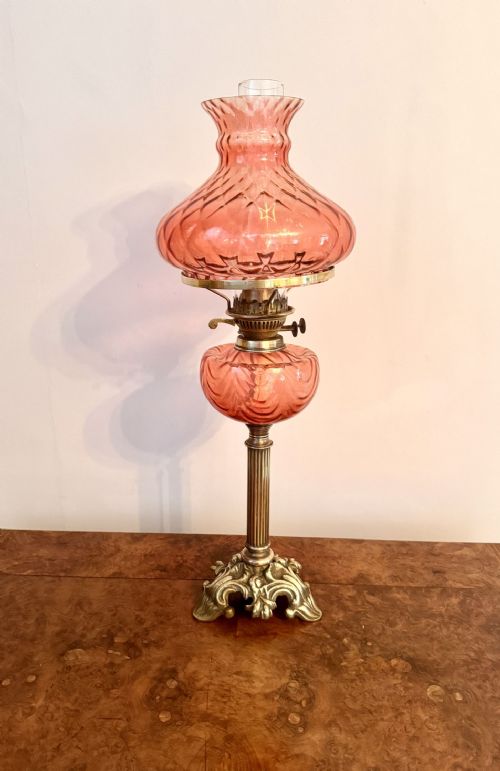
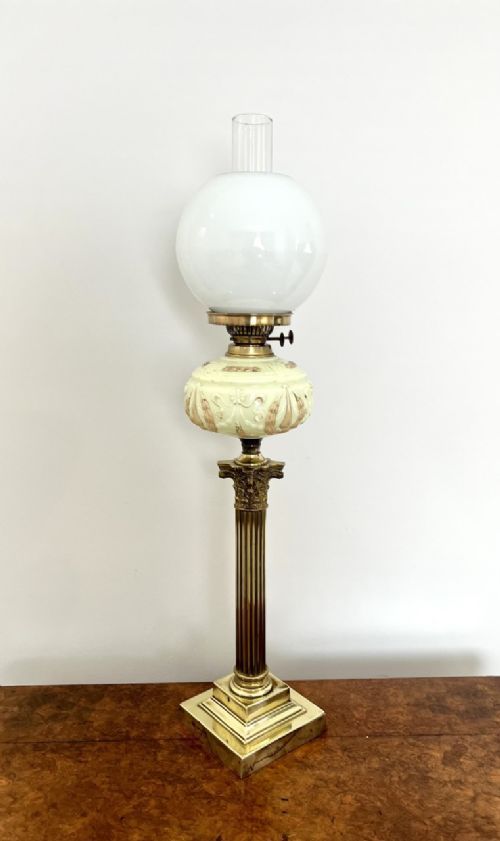
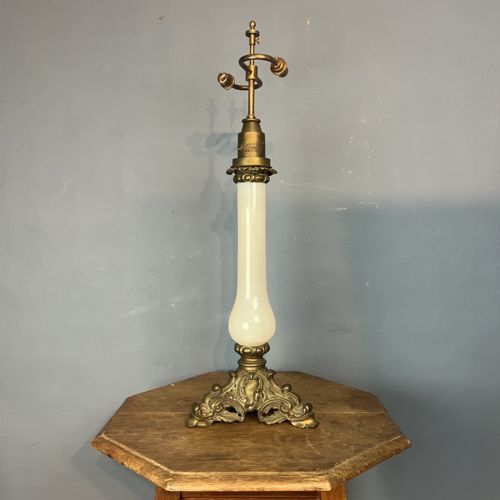
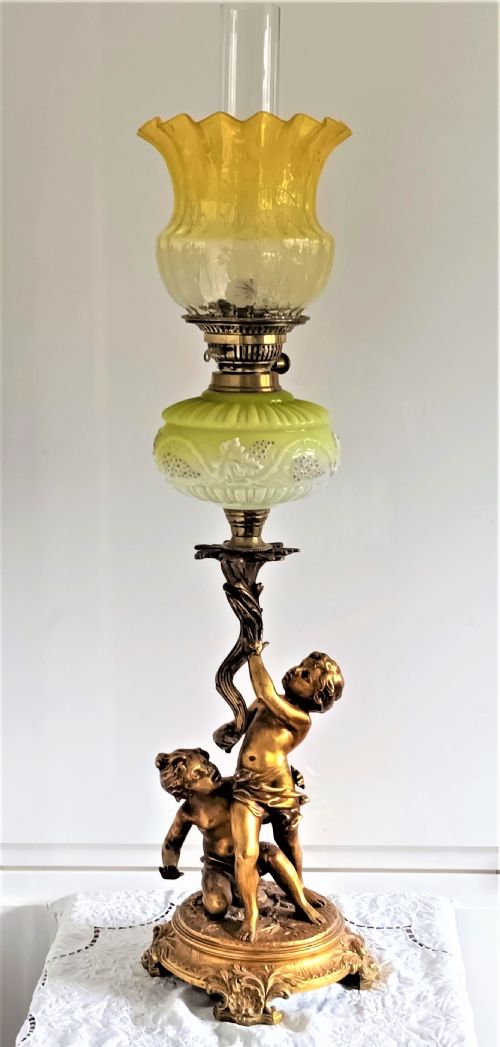
Makers utilised cast and spun brass, often combining gilt metal, ormolu and polished brass structures to achieve varied surface textures and rich metallic tones. Structural components frequently incorporate adjustable vertical standards and sturdy weighted bases.
Reservoirs showcase contrasting materials such as painted porcelain, coloured opaline glass and clear glass, paired occasionally with fabric shades. Patents and maker stamps were frequently impressed into the metalwork by firms like Mc Gary and Messenger.
Object forms include table lamps, desk lamps, and extending floor-standing standard lamps.
What varies in quality
Proportion and decorative ambition separate simple lighting from ambitious sculptural examples, particularly where Napoleon III styling or intricate Art Nouveau organic forms are fully realised across the standard and reservoir.
Wild and Wessel·Mc Gary·Messenger
The Ornate Brass Oil Lamps Glossary
- Opaline glass
- A semi-opaque glass, frequently white or tinted pastel shades, used for the fluid reservoirs of nineteenth-century lighting. It provides a soft diffused background for hand-painted floral decoration.
- Ormolu
- Gilded bronze or brass applied to decorative mounts and fittings on nineteenth-century furnishings. The technique gives a rich gold-colored finish to metallic decorative elements.
- Standard lamp
- A tall floor-standing lighting column designed to illuminate a wider area of a room. Many Victorian examples feature adjustable height mechanisms.
- Wild and Wessel
- A prominent nineteenth-century German manufacturing firm known for innovative burner systems and mechanical lamp components. Their marked pieces are sought after by collectors.
Ornate Brass Oil Lamps: Frequently Asked Questions
How do I use an old lamp today?
Most surviving pieces have been converted to electricity for safe modern use, allowing them to function as practical table or floor lighting in living spaces. Wiring is typically routed internally through the original brass column without altering the exterior appearance.
Positioning these substantial pieces on sturdy side tables or beside seating areas lets their heavy metalwork and decorative glass reservoirs become a focal point of the room.
Are these lamps difficult to date?
Dating relies on stylistic clues, registered design numbers and maker stamps found on the metal components or burner mechanisms. Victorian production methods shifted noticeably between the eighteen fifties and the end of the century.
Early pieces often display heavy Gothic Revival influences or simple classical columns, while later examples incorporate fluid Art Nouveau motifs and complex extending mechanisms.
What styles are most common?
Victorian designs dominate the selection, encompassing ornate classical revival columns, structured desk lamps and adjustable standard lamps. Art Nouveau examples introduce organic floral lines into the brasswork.
Napoleon III pieces and Gothic Revival variations also appear, demonstrating the diverse aesthetic preferences of nineteenth-century interior decoration.
How should I clean the brass?
Historic brass benefits from gentle dusting and occasional cleaning with a soft cloth to preserve the natural aged patina rather than achieving a bright polished shine. Harsh chemical polishes can strip away the historical surface character accumulated over generations.
Care should be taken around painted porcelain sections, opaline glass reservoirs and gilt metal mounts to avoid moisture damage during routine maintenance.