




Victorian Oil Desk Lights
Victorian oil desk lights are period task lamps combining heavy brass, glass reservoirs and shades to bring nineteenth-century illumination to a modern workspace.
Victorian Oil Desk Lights
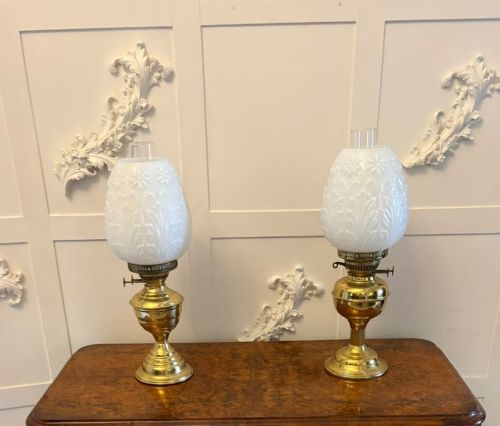
Victorian oil desk lights are practical nineteenth-century lighting solutions designed for reading and writing before the widespread adoption of domestic electricity. When exploring this selection, buyers encounter sturdy table models, student lamps complete with implements, and column designs originally fuelled by oil or paraffin.
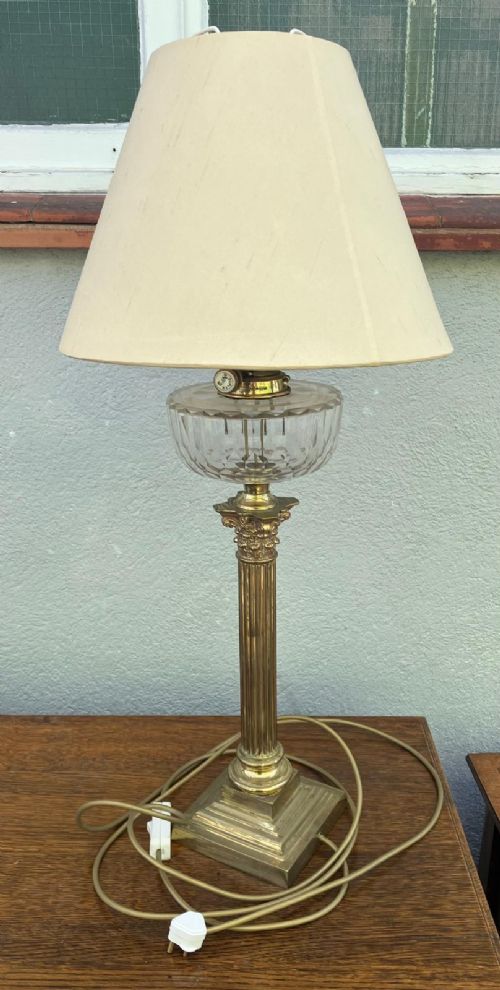
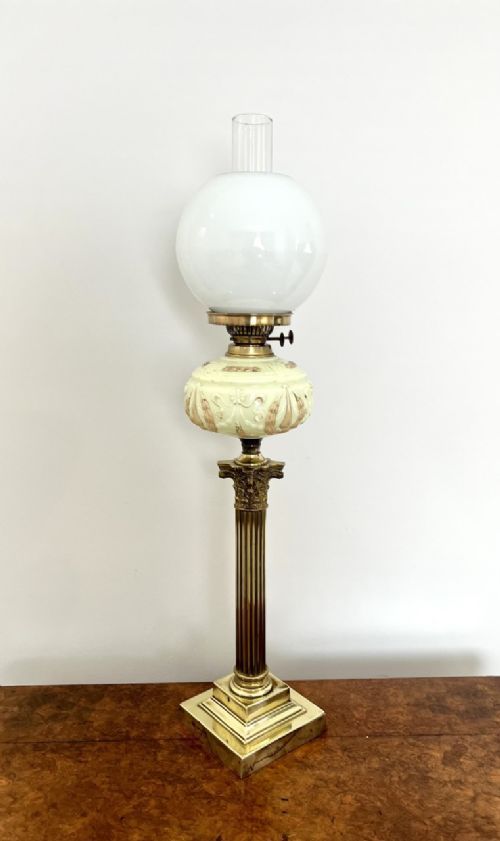
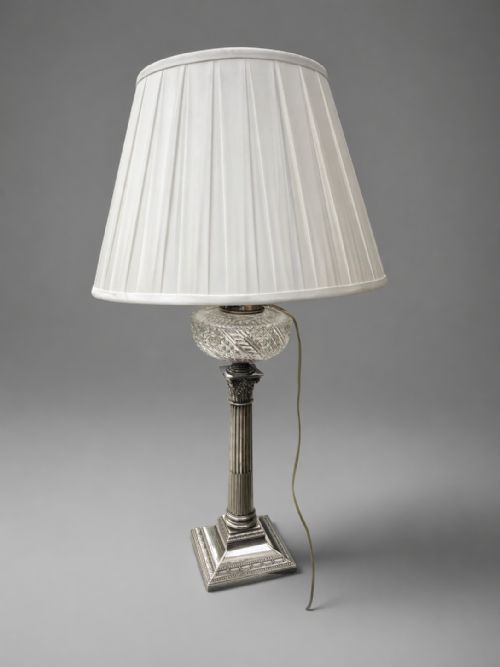
The pieces appearing here span from the mid-nineteenth century through the Edwardian era, incorporating styles such as Neoclassical Revival alongside classic Victorian engineering. Columnar forms, particularly Corinthian styles, dominate the selection, often elevated by stepped bases and metal mounts.
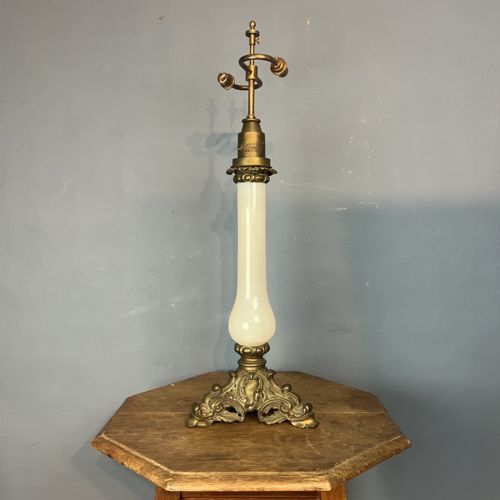
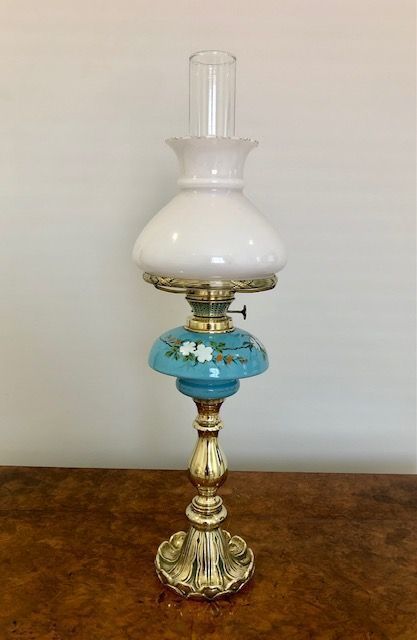
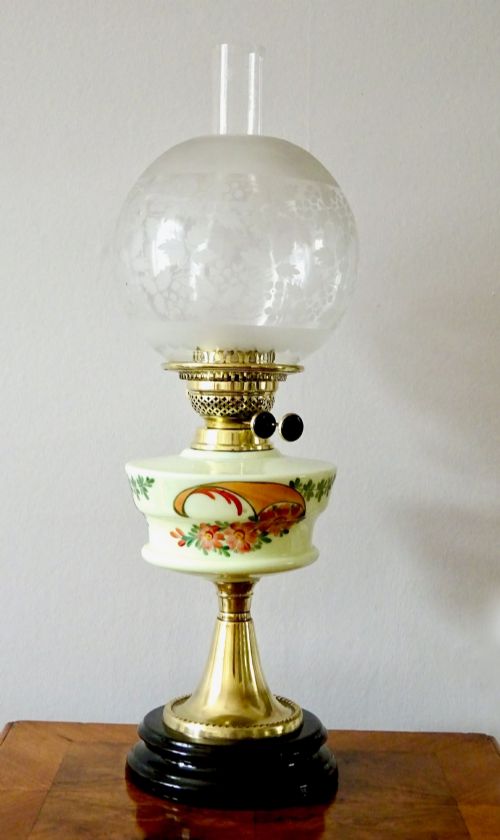
Materials range from polished brass and bronze to silver plate, paired with glass reservoirs and shades in opaline, cut crystal, and blue glass. Many retain their original configurations, whilst others show historical conversion to electricity for contemporary utility.
Materials and construction
Makers utilised cast and spun brass as the primary structural metal, frequently combining it with heavy bronze, silver plate, or solid silver for decorative stability. Heavy glass bases in black or clear crystal provided the necessary counterweight for tall columns and extended burners.
Reservoirs and shades relied on specialised glassblowing techniques, producing opaline, cut crystal, and hand-painted glass elements that diffused light effectively. Mechanical components, including burners by established makers, screw fittings, and adjustable stems, were engineered from brass and integrated directly into the metalwork.
Listings demonstrate a strong prevalence of nineteenth-century brass and opaline glass materials configured into Corinthian column table lamps.
Assessing quality
Quality rests in the weight of the metal casting and the crispness of architectural details such as Corinthian capitals and reeded columns. Superior examples display precise chasing, tight structural joints, and heavy glass reservoirs free from excessive bubbles or distortion.
The grade of the glass components separates standard production from finer workshop output, evident in the depth of hand-cut facets or the smooth opacity of opaline shades. Retaining original maker stamps, matching burners, and complete accompanying implements elevates the historical integrity of a piece.
Joseph Hinks·Wild And Wessel·Osler·Mc Gary
The Victorian Oil Desk Lights Glossary
- Opaline glass
- A type of semi-opaque glass, often white or pastel-toned, used extensively for soft light diffusion in nineteenth-century lamp shades.
- Student lamp
- A specialised desk lamp featuring an adjustable arm and a single burner designed to concentrate light over a work surface.
- Corinthian column
- An architectural column style featuring ornate, acanthus-leaf capitals, frequently adopted by Victorian lamp makers for standard pillars.
- Table lighter
- A small, portable wick-based device styled similarly to a miniature lamp, utilised in parlours for lighting cigars and pipes.
- Paraffin lamp
- A lighting device engineered to burn paraffin oil safely via a cotton wick regulated by a metal thumbwheel.
Victorian Oil Desk Lights: Frequently Asked Questions
How do I convert these lamps safely?
Conversion usually involves routing a modern fabric-wrapped cable through the existing central brass channel without altering the outer period metalwork.
Professional rewiring ensures the historic burner and collar mechanisms remain intact while meeting current electrical safety standards for desktop use.
Were these originally used on desks?
Many smaller column lamps and student configurations served specifically on writing tables and bureau surfaces to provide focused illumination.
Adjustable stems and concentrated shade angles allowed nineteenth-century writers to direct light precisely where required for paperwork.
How do I identify a Victorian period piece?
Examine the metal casting methods, weight, and component construction, as nineteenth-century pieces typically utilise heavy unlacquered brass and hand-finished parts.
Maker stamps, patent marks, and traditional burner mechanisms like those by Wild and Wessel further confirm the era of production.
Can I still burn oil in them?
Original oil mechanisms and burners remain physically intact on unconverted models, allowing them to function with modern lamp oil.
Careful inspection of the wick carrier and glass reservoir integrity is essential before attempting to light any historic piece.