


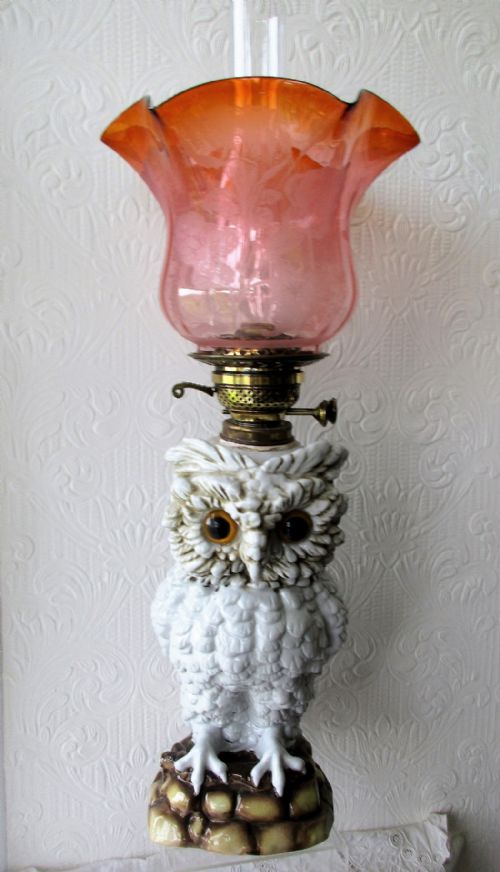
Porcelain Paraffin Lamp
A porcelain paraffin lamp brings Victorian warmth and hand-painted artistry to a room, combining ceramic bodies with brass and glass mounts.
Porcelain Paraffin Lamp
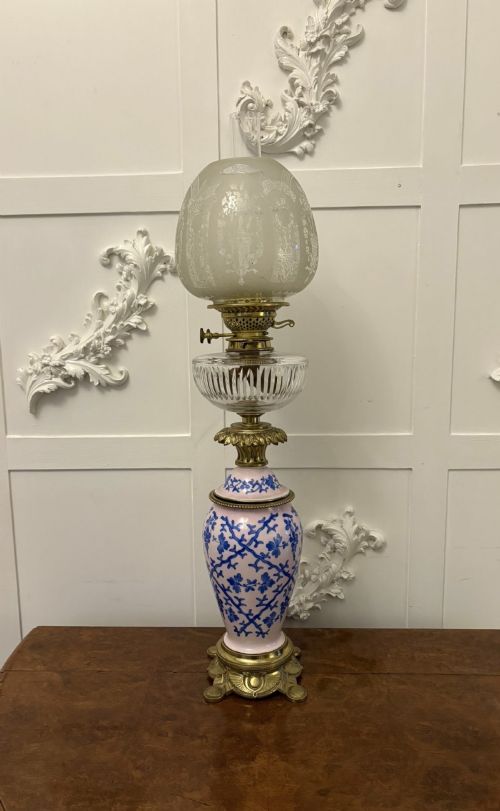
A porcelain paraffin lamp is a table light from the nineteenth century, most often seen in Victorian and Chinese Export styles. These domestic objects combine ceramic reservoirs with brass fittings and glass chimneys, serving as decorative table lights.
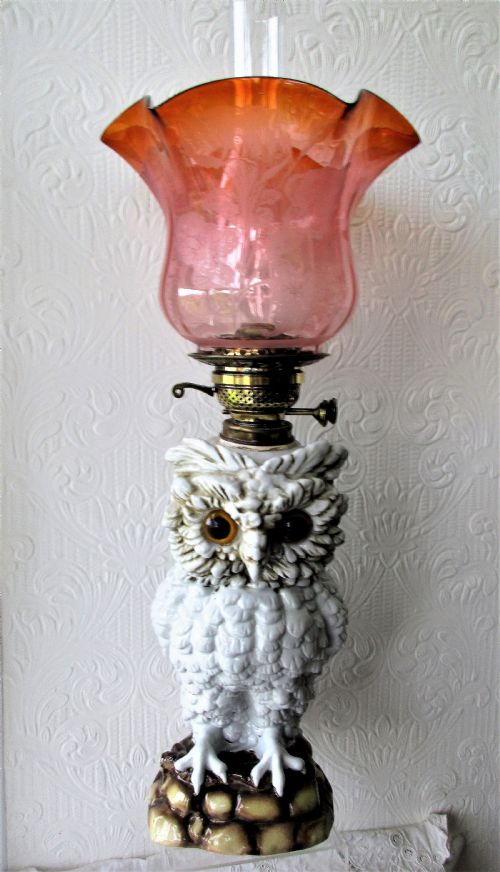
The pieces on this page span the Victorian period, including specific dates such as 1860, 1880, 1890, and 1900. Forms range from simple white porcelain bodies and figural animal designs like owls to elaborate pairs decorated in the Chinese Canton Famille Rose palette.
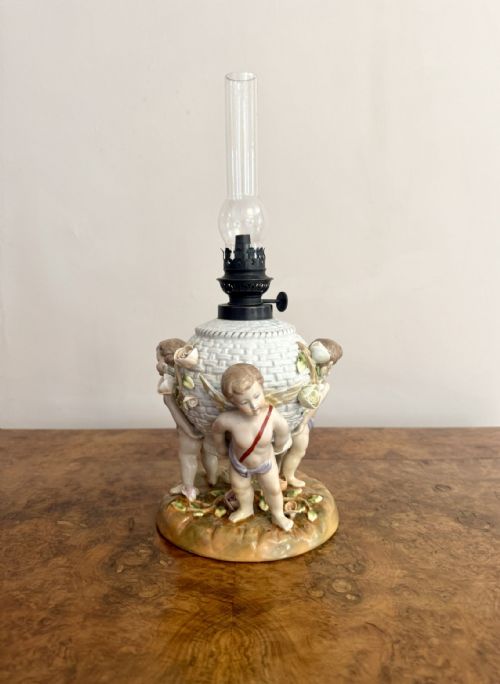
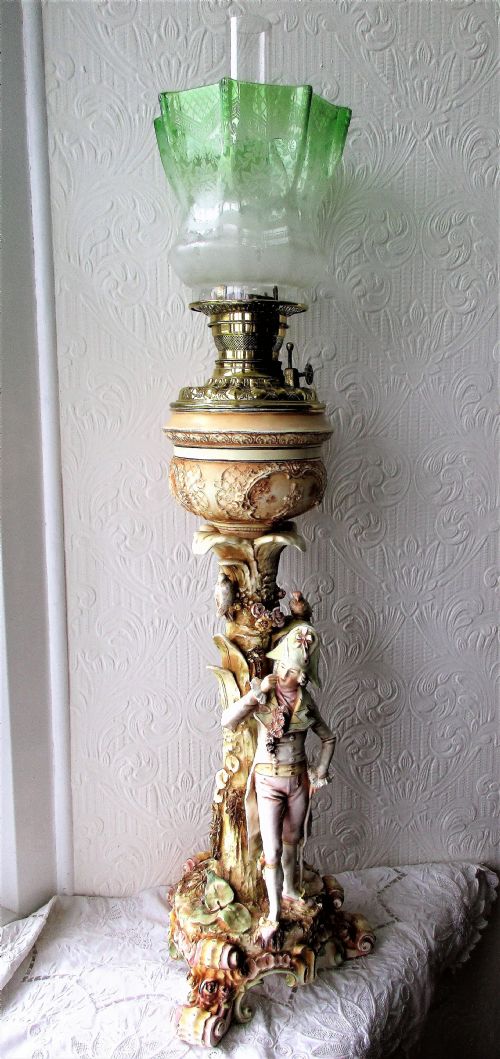
European factories contributed heavily to these designs, with German makers like Sitzendorf and Meissen producing figural and cherub-decorated table lamps. Buyers also encounter French Rococo Revival influences alongside Anglo-American examples.
How they were made
Makers shaped the central reservoir from ceramic and porcelain, often applying hand-painted glazes, floral motifs, or figural details. These ceramic bodies were combined with gilt brass mounts and sturdy brass collars to hold the burner mechanisms.
Glass and fabric components frequently complete the assembly, providing shades and chimneys that sit atop the porcelain bases. Gilt brass fittings secure the heavier ceramic elements and connect the oil container to the burner.
Listings feature nineteenth-century table lights utilising porcelain, brass, glass, and opaline glass across Victorian and Chinese Export styles.
What varies in quality
The distinction between standard production and top-tier execution lies in the fineness of the porcelain modelling and the crispness of the hand-painting. Figural pieces with detailed animal or cherub forms demand greater sculptural skill than plain glazed reservoirs.
Integration of materials also separates the range, where heavy gilt brass mounts and well-matched shades complement the ceramic body rather than overpowering it. Pieces bearing recognised factory decoration display superior control over glazes and enamels.
Sitzendorf·Meissen
The Porcelain Paraffin Lamp Glossary
- Famille Rose
- A palette of Chinese porcelain enamels dominated by opaque pink. This colouring arrived on export wares during the nineteenth century.
- Rococo Revival
- A nineteenth-century style defined by asymmetrical scrollwork, naturalistic floral motifs, and ornate curves. It heavily influenced Victorian lamp bases.
- Opaline Glass
- A pale, translucent glass often utilised for shades and secondary components on period lighting. It diffuses the light softly.
- Gilt Brass
- Brass that has been treated with a thin layer of gold or gold-coloured wash. It provides metallic contrast to the white or painted porcelain bodies.
Porcelain Paraffin Lamp: Frequently Asked Questions
How do I date a porcelain paraffin lamp?
Dating relies on stylistic clues, factory marks, and structural construction typical of the nineteenth century. Victorian and aesthetic preferences often provide a decade or broader period.
Examining the brass fittings and ceramic body helps confirm whether an item belongs to the 1860 to 1900 window seen across these examples.
Were these lamps converted to electricity?
Many surviving examples have undergone conversion to electricity for safe modern use. This process typically routes wiring through the original burner without altering the exterior porcelain or brass.
Collectors weigh the presence of untouched oil mechanisms against the practical convenience of a wired table light.
How should I clean a painted porcelain lamp?
Cleaning requires a soft, dry cloth to remove dust from the ceramic surface and gilt brass mounts. Moisture can damage delicate hand-painted enamels, particularly on nineteenth-century export wares.
Solvents and abrasive cleaners must be avoided entirely to preserve the original glazes and surface decoration.
What styles are most common in these lamps?
Victorian designs dominate the selection, frequently incorporating Rococo Revival scrolls and gilt brass accents. Figural subjects such as owls and cherubs also appear regularly.
Chinese Export pieces, notably Canton Famille Rose wares, offer an alternative aesthetic with distinct floral and figural enamel work.