
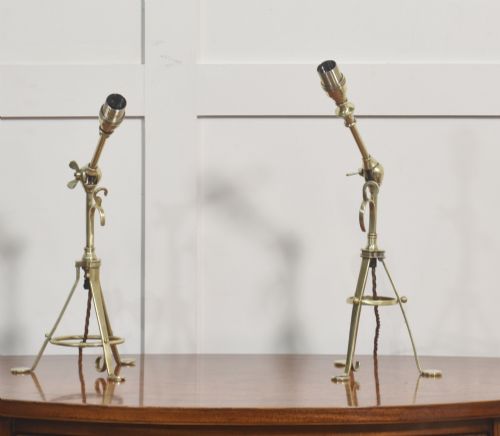
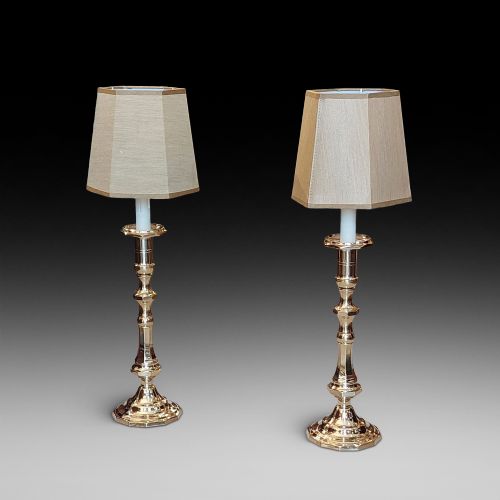
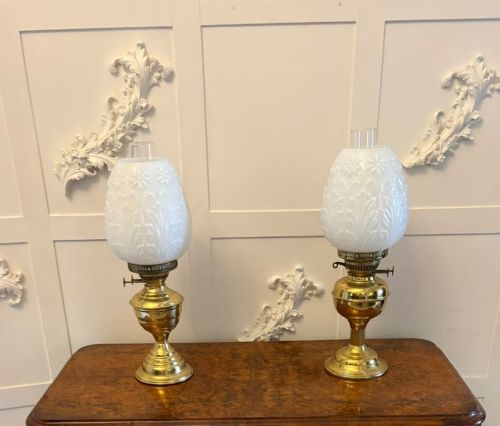
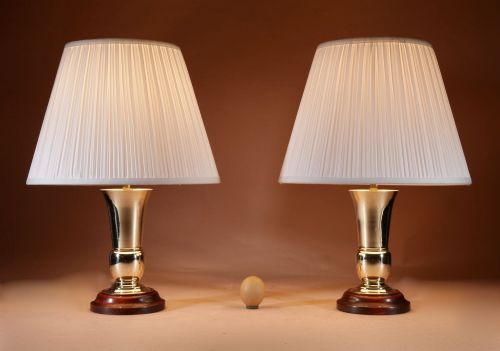
Pair of Brass Lamps
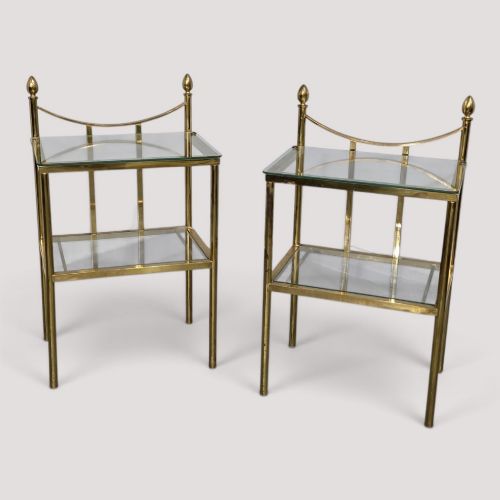
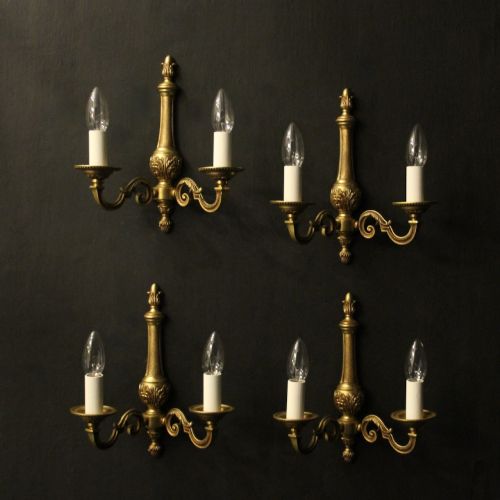
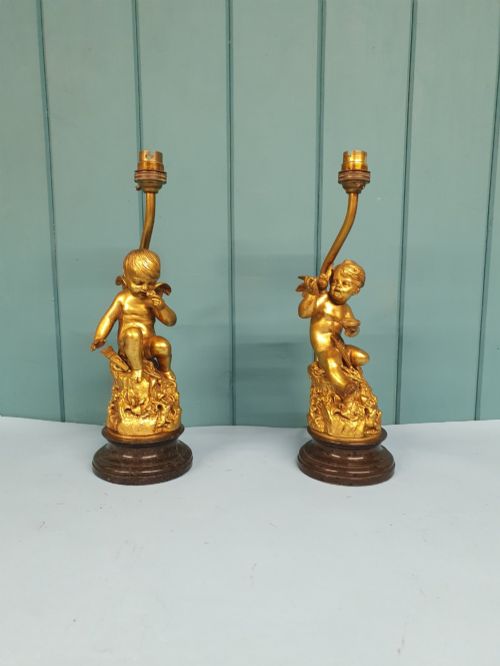
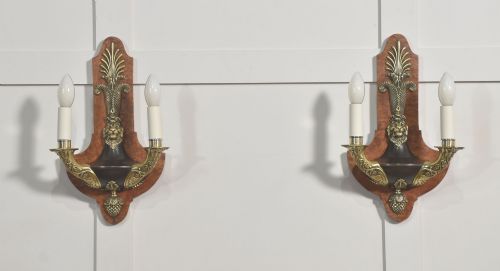
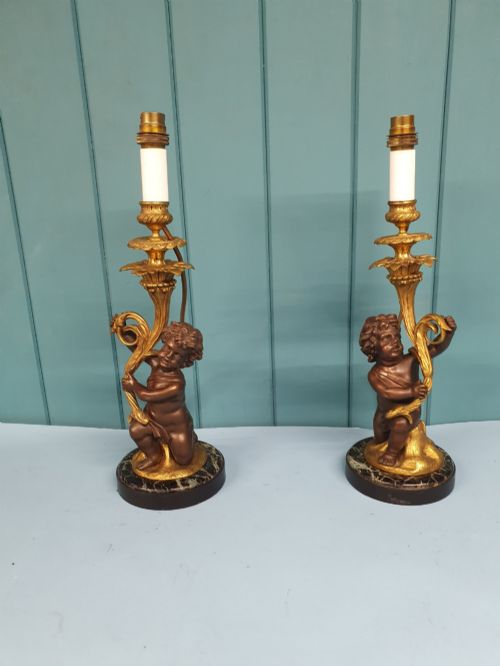
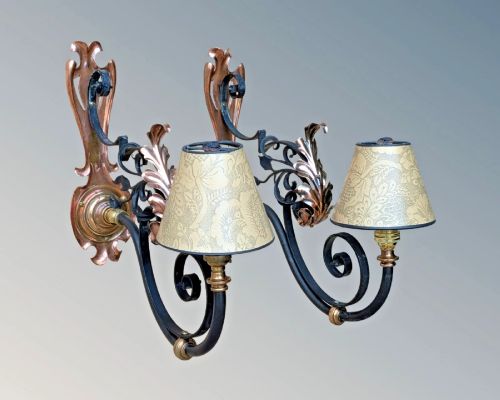
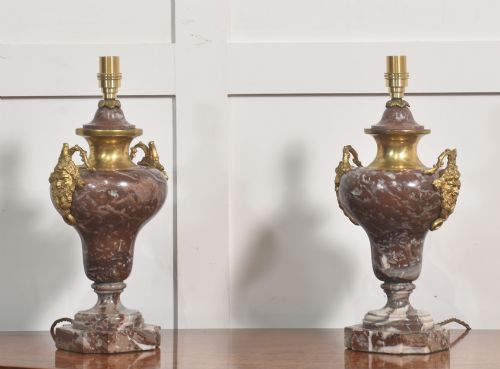
A pair of brass lamps brings balanced illumination and warm metallic reflection to interior spaces, drawing from styles spanning the nineteenth and early twentieth centuries.
Pair of Brass Lamps
Most examples originate from British, French, and Italian workshops, displaying influences ranging from strict Neoclassical revival to ornate Rococo and Arts and Crafts utilitarianism. Buyers encounter solid cast forms alongside plated metal constructions paired with glass shades, fabric elements, or marble plinths.
Assessing quality and execution
Superior examples distinguish themselves through the crispness of surface chasing, where cast ornamentation retains sharp botanical or architectural details rather than softened contours. The weight and gauge of the brass used in the base and column dictate the structural stability and longevity of the fixture.
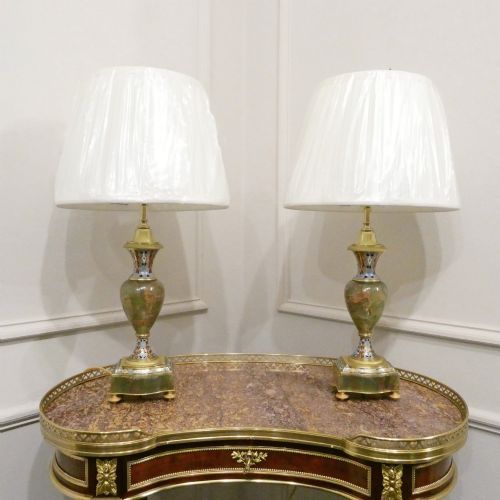
Integration of secondary materials such as matched slabs of rouge or verd antique marble, hand-cut crystal drops, or champlevé enamel work indicates higher workshop ambition. Original wiring setups converted from earlier oil or candle formats require careful handling while preserving the historical integrity of the metal body.
Pair of Brass Lamps Retail Price Guide 2026
Typical asking prices for pair of brass lamps among the pieces listed under this phrase on Sellingantiques today, from the lower quarter to the upper quarter. They describe what is for sale here now, not the wider market.
Materials paired with brass across current items include marble, glass, onyx, wood, and enamel.
W.A.S. Benson·Hinks and Sons·Angelo Brotto for Esperia
The Pair of Brass Lamps Glossary
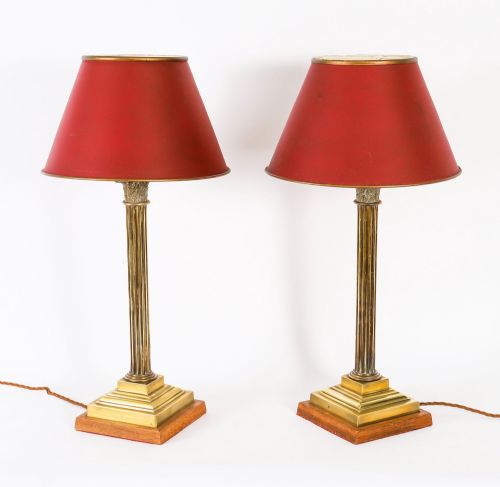
- Corinthian column
- A classical architectural column form featuring ornate acanthus leaf capitals, frequently adapted for table lamp bases in the nineteenth century.
- Ormolu
- Finely ground high-carat gold-mercury amalgam applied to bronze or brass mounts, creating a rich decorative surface finish characteristic of French luxury items.
- Champlevé
- An enamelling technique where troughs are dug into a brass surface and filled with vitreous paste before firing.
- Student lamp
- An adjustable lighting fixture originally designed to provide focused illumination for reading or writing during the nineteenth century.
- Telescopic
- A mechanism allowing the central stem of a lamp to adjust vertically, often utilising a friction collar or key.
Pair of Brass Lamps: Frequently Asked Questions
How do I date an old pair of brass lamps?
Dating relies on examining the assembly methods, switch types, and prevailing design styles present in the metalwork. Heavy sand-cast bases and converted oil mechanisms typically point toward the nineteenth or early twentieth century.
Subsequent decades introduced lighter spun brass components and altered wiring standards. Comparing the decorative motifs, such as Neoclassical fluting or Arts and Crafts simplicity, helps narrow the production era.
Can antique brass lamps be rewired safely?
Historic lighting fixtures are routinely adapted for modern electrical circuits by professional conservators. Rewiring preserves the exterior metal body while ensuring compliance with current safety regulations.
Internal conduits and lampholders are updated discreetly without altering the visible antique elements. Buyers should consult specialists to ensure the conversion respects the original structure.
Where should I place a pair of brass lamps?
Symmetrical pairs function effectively when placed on matching side tables, sideboards, or flanking a mantelpiece. Their balanced presence creates a formal focal point within a room.
They also provide functional task lighting on large desks or bedside surfaces. The reflective metallic finish interacts well with natural light from windows.
What is the difference between cast and spun brass?
Cast brass is formed by pouring molten metal into a mould, resulting in thick, heavy, and structurally rigid components with deep decorative relief. This method was preferred for high-status architectural and classical revival designs.
Spun brass is shaped rapidly on a lathe from sheet metal, yielding lighter and thinner profiles commonly found in later domestic lighting. Examining the underside and weight reveals which technique was used.