




Edwardian Brass Standard Lamp
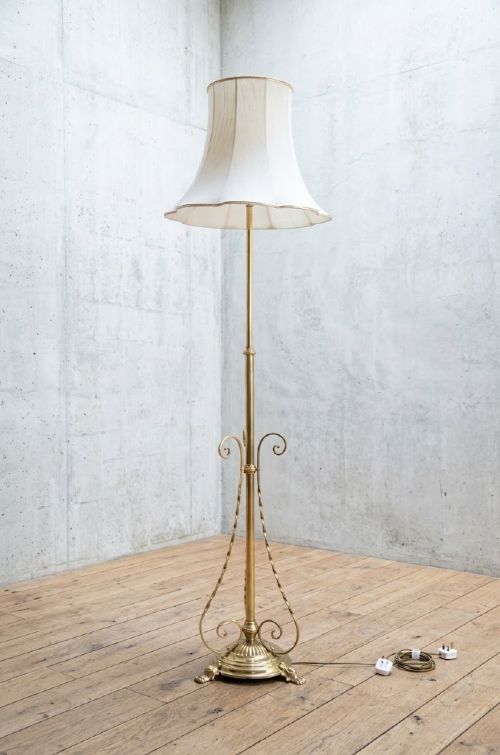
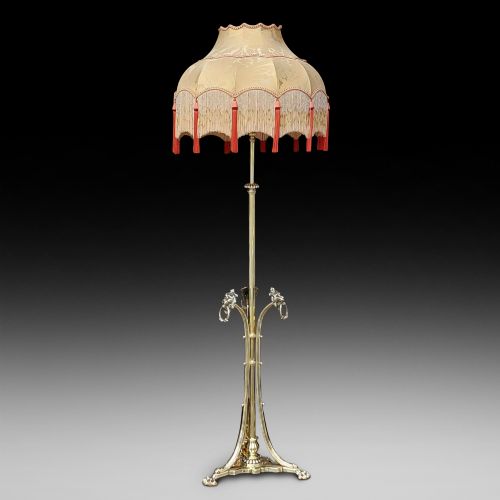
An edwardian brass standard lamp brings period character and adjustable lighting to a room, utilising telescopic columns and heavy bases.
Edwardian Brass Standard Lamp
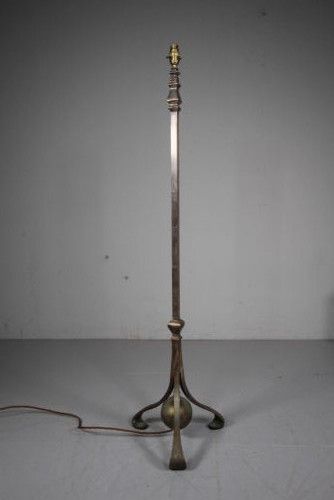
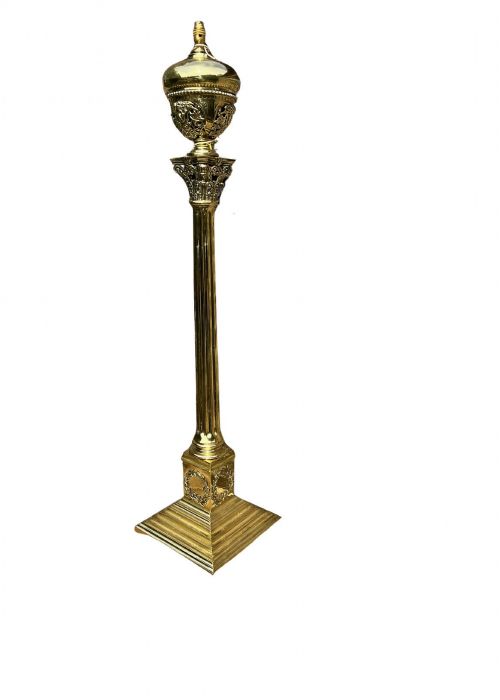
An edwardian brass standard lamp is a tall floor-standing lighting fixture designed to illuminate large spaces or provide reading light. These pieces typically date from the late nineteenth century through the early twentieth century, spanning Victorian, Edwardian, and Art Nouveau aesthetics.
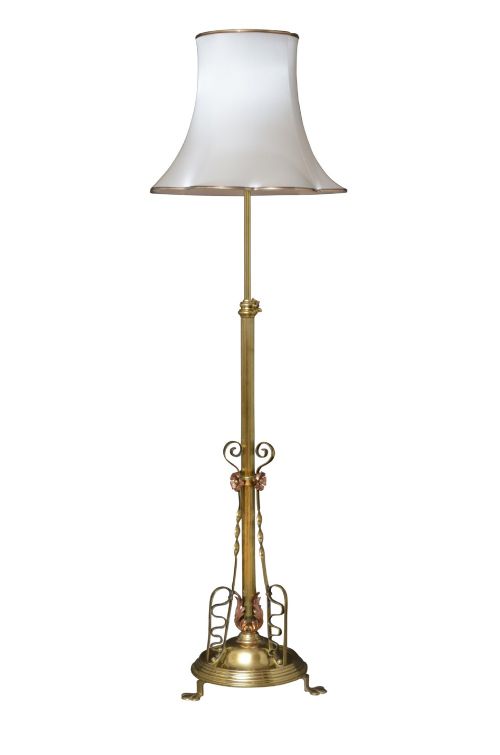
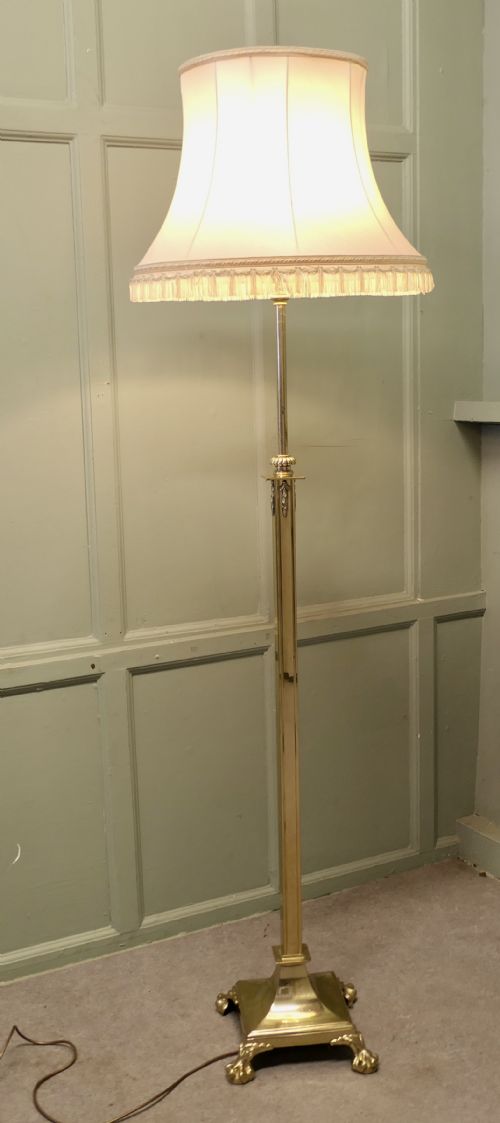
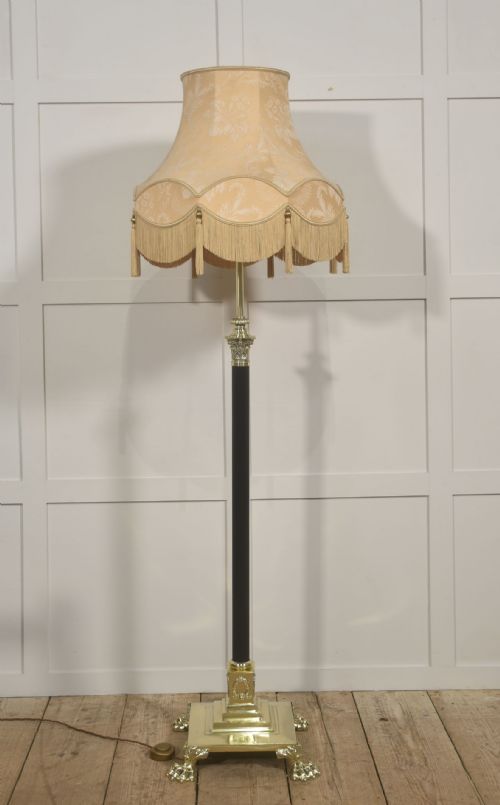
The most common form encountered on this page is the Corinthian column standard lamp, often featuring adjustable height mechanisms or telescopic stems. Many examples combine cast brass with copper trim, onyx, or mahogany elements to create a substantial vertical presence in a room.
Makers and manufacturers produced these lamps in various revival styles, including Neoclassical, Adam, and Arts and Crafts forms. A buyer will find both oil-burning conversions and early electric adaptations among the listings.
How they were made
Craftsmen utilised yellow brass, cast brass, and copper to construct the structural columns, weighted bases, and decorative mounts of these floor lamps. Heavier pieces incorporated cast iron weights inside the base to ensure stability when the telescopic stem was fully extended.
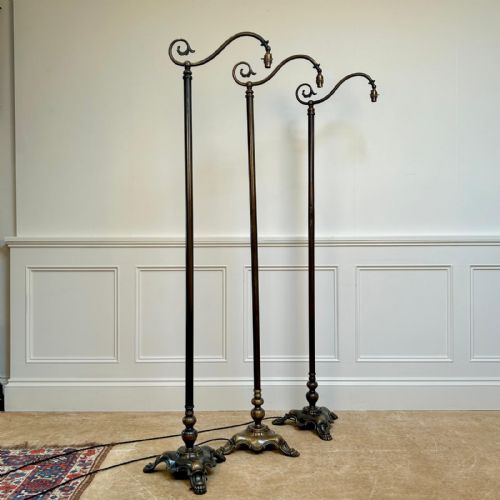
Many examples feature fluted columns capped with Corinthian capitals, alongside scroll arms, swivel joints, and rise-and-fall adjustment mechanisms. Secondary materials such as mahogany, onyx, and cranberry glass appear in specific bases and reservoir sections, matched with fabric or glass shades.
Edwardian Brass Standard Lamp Retail Price Guide 2026
Typical asking prices for edwardian brass standard lamp among the pieces listed under this phrase on Sellingantiques today, from the lower quarter to the upper quarter. They describe what is for sale here now, not the wider market.
Listings feature styles spanning Victorian, Edwardian, Art Nouveau, and Arts and Crafts periods, constructed from brass, copper, onyx, and mahogany.
What varies in quality
The distinction between standard production and higher quality execution lies in the casting definition of the brass ornamentation and the engineering of the telescopic mechanism. Crisp detailing on Corinthian capitals and solid brass construction differentiate superior examples from simpler tubular designs.
Proportion and weight distribution also determine the grade of the piece, as heavier cast bases provide better balance for extended heights. The inclusion of secondary materials like copper trim, silver plating, or integrated wine tables adds complexity to the manufacture.
The Edwardian Brass Standard Lamp Glossary
- Telescopic
- A stem construction allowing the inner shaft to slide upward and secure at various heights. This mechanical feature enabled users to adjust the downward reach of the light.
- Corinthian Column
- A classical column form featuring an ornate capital decorated with acanthus leaves. This style was frequently utilised in formal Edwardian lamp standards.
- Rise and Fall
- A counterbalanced weight or pulley mechanism allowing the lamp height to adjust smoothly. It originated in oil-burning variants before conversion to electricity.
- Steamer Lamp
- A specialised floor lamp design intended for maritime travel or compact spaces. These pieces often feature sturdy weighted bases to resist motion.
- Bouillotte
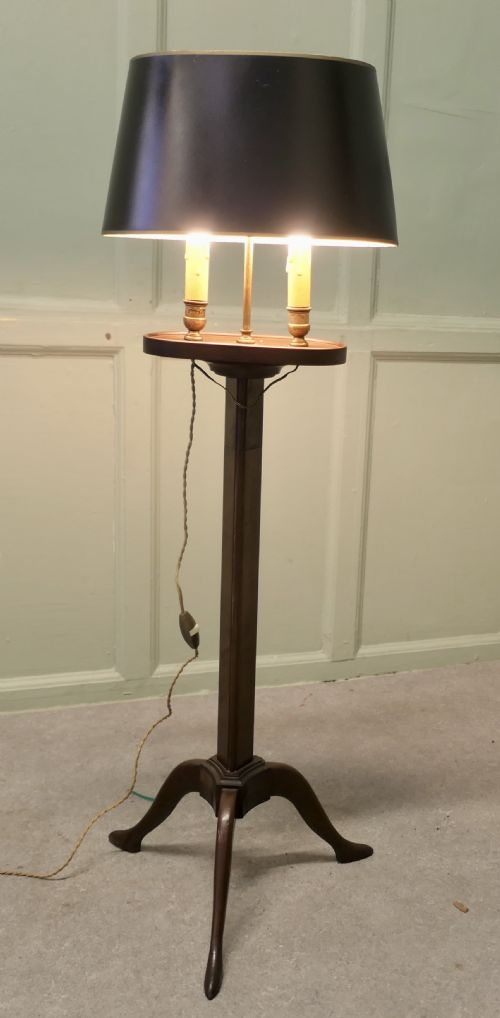
- A traditional lighting form featuring a central adjustable shade above candle arms. Examples in the records date to the nineteenth century.
Edwardian Brass Standard Lamp: Frequently Asked Questions
How do I adjust the height?
Many examples feature a telescopic inner stem secured by a thumbscrew or a rise-and-fall mechanism. Loosening this collar allows the upper shaft to slide upward.
Ensure you support the weight of the fitting while making adjustments to prevent sudden drops or damage to internal wiring.
Were these originally electric?
A significant portion of these standard lamps began as oil-burning lamps utilising brass reservoirs and cranberry glass fonts. Others were designed for gas or twin candles before later conversion to electricity.
Rewiring is common to bring older wiring standards up to contemporary safety requirements while retaining the original metalwork.
How do I clean the brass?
Dust the metal surfaces regularly with a soft, dry cloth to prevent the accumulation of grime in the fluting and cast openwork. Avoid harsh chemical polishes that strip patination and age.
Preserving the natural surface oxidation maintains the historic character acquired over the Edwardian period.
What shades suit these lamps?
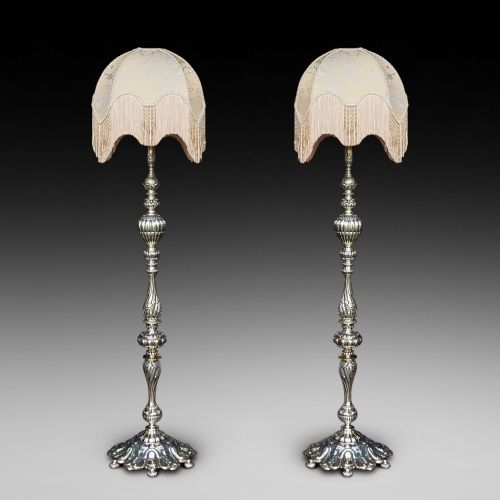
Fabric shades and pleated silk designs complement the traditional domestic aesthetic of Edwardian floor lighting. Glass shades, including cranberry glass elements, appear on earlier oil lamp variants.
The scale of the shade should balance the height and weight of the heavy brass base.