


19th Century Floor Lamp
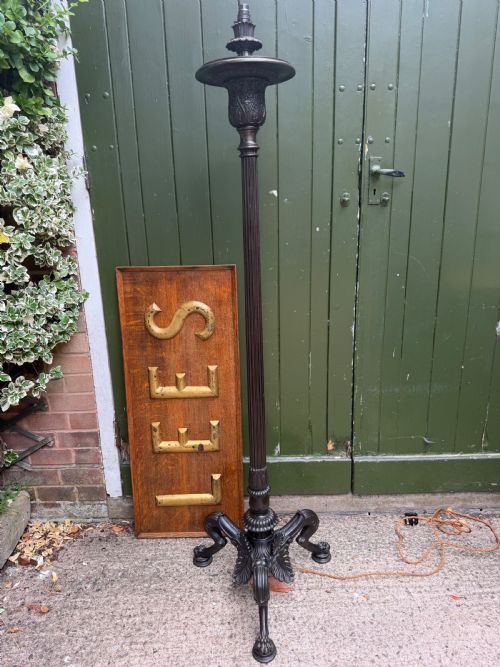
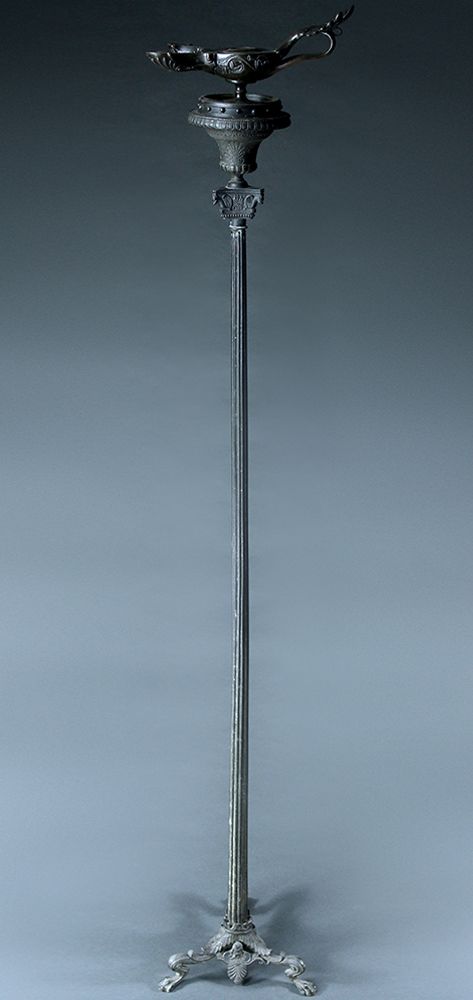
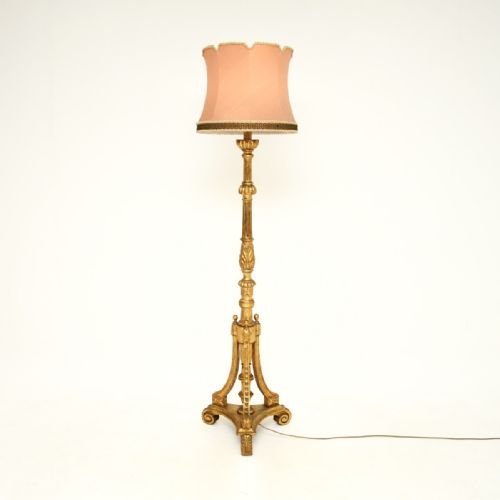
These 19th century floor lamps bring period illumination and height to a room, offering brass, bronze, and carved woods for the collector.
What 19th century floor lamps are
A 19th century floor lamp serves as a tall lighting fixture designed to illuminate large spaces from a standing position. These objects appear under various descriptions including floor standing lamps and standard lamps in the historical record.
Buyers encountering this selection will frequently meet standard forms in brass and Victorian styles. The inventory incorporates diverse origins and aesthetics, spanning from English workshops to Grand Tour pieces and Tibetan ceremonial copper horns.
Period variations include extendable mechanisms, rise and fall functions, and adapted columns such as carved oceanic wood or mahogany shafts. Finishes range from patinated bronze and silver plating to black lacquer and ormolu.
How they were made
Makers constructed these floor lamps using durable metals such as brass, bronze, copper, white metal, and iron, often combining them with fabric shades. Craftspeople also utilised organic materials, turning mahogany and oceanic wood into tall supporting columns.
Metalworking techniques involved casting, plating with silver, and applying patination to bronze and copper surfaces. Lacquering provided smooth dark finishes on wood, while specialised engineering allowed for extending mechanisms and rise and fall adjustments.
Retail Price Guide 2026
Typical UK retail prices for 19th century floor lamp, calculated from the Sellingantiques database of over a million retail prices indexed since 2003. This retail price guide relies exclusively on Sellingantiques data; no external sources or auction records are used, so the figures do not describe the wider market.
The record shows materials spanning brass, bronze, copper, iron, silver plating, and mahogany.
What varies in quality
The distinction between standard examples and superior pieces rests upon the sophistication of the metalwork and the integrity of the materials. Finely chased ormolu, heavy patinated bronze, and substantial brass castings elevate a standard lamp above simpler iron or plated alternatives.
Mechanical complexity further separates the range, where functional rise and fall mechanisms or extending frames display superior engineering. Original material choices, such as solid mahogany or detailed carved columns, denote higher craftsmanship than later adaptations.
WAS Benson·C.R.Dibben Sloane Street
The 19th Century Floor Lamp Glossary
- Standard lamp
- A traditional British term for a floor lamp, describing a tall vertical post designed to support a light fitting. This term appears frequently alongside floor standing lamp in historical records.
- Rise and fall
- A mechanical fitting allowing the height of the lamp standard to be adjusted up and down. This mechanism relies on weighted counterbalances or sliding stems.
- Grand Tour
- A term applied to objects acquired by wealthy travellers touring continental Europe during the nineteenth century. These pieces often draw upon classical antiquity and neo-Pompeian design motifs.
- Ormolu
- Gilt bronze ornamentation applied to decorative metalwork and lighting fixtures. The technique creates a rich golden surface finish on bronze castings.
- Patinated bronze
- Bronze that has developed a surface sheen or weathered colour through age and chemical treatment. This finish enhances the depth of sculptural details on nineteenth-century metalwork.
Frequently Asked Questions
What is a standard lamp?
A standard lamp is simply the traditional British term for a floor lamp. It refers to any tall lighting fixture designed to stand directly on the floor.
These pieces use a heavy base or weighted feet to support a vertical shaft and an upper light fitting.
How do rise and fall lamps work?
Rise and fall lamps feature an adjustable mechanism that lets you alter the height of the light source. This is typically achieved through a sliding inner shaft or a pulley system with a counterbalance.
Such engineering allowed Victorian users to adjust task lighting for reading or ambient room illumination.
What materials are common?
Metals form the backbone of these lighting fixtures, with brass, bronze, copper, and iron appearing most frequently. You will also find variations incorporating silver plating, ormolu, and white metal.
Aside from metalwork, some examples utilise turned timber columns such as mahogany or carved oceanic wood.
Are these lamps adapted from other objects?
Some floor lamps from this era started life as something else before conversion for electrical illumination. Historical records show items like carved wooden columns and ceremonial horns adapted into standard lamps.
This practice of repurposing decorative objects was common in nineteenth-century interiors.