



Ornate Brass Standard Lamp
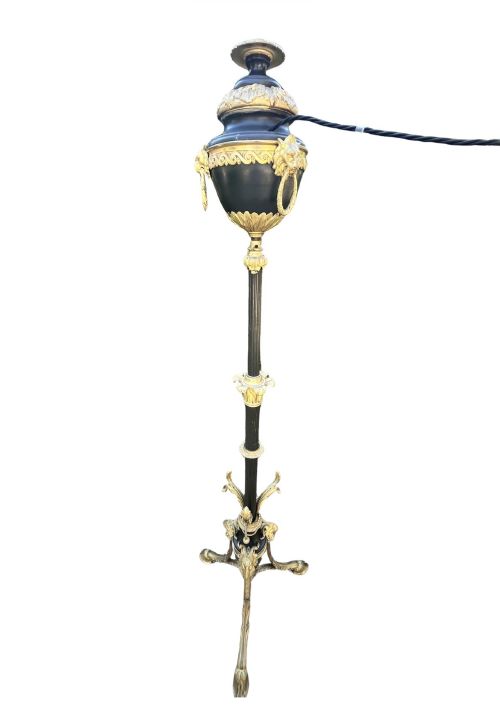
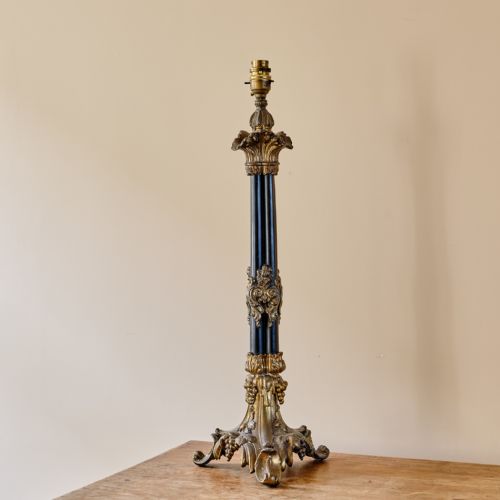
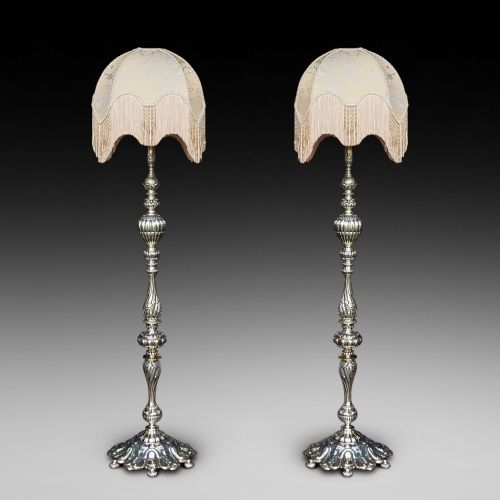
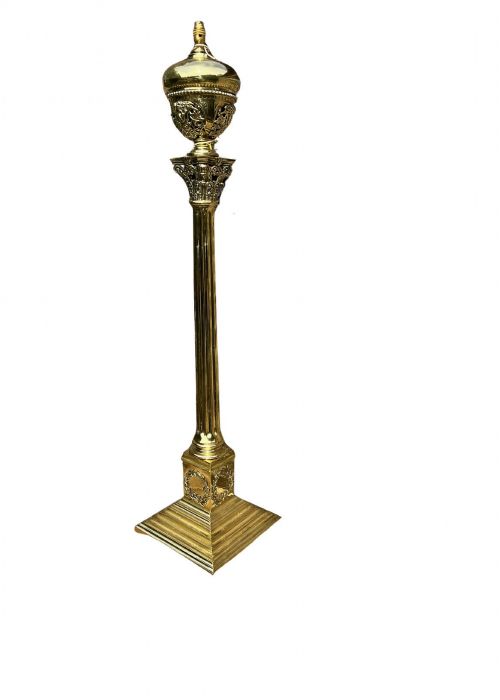
An ornate brass standard lamp brings stately height and warm illumination to a corner, drawing the eye with rich cast detail.
Ornate Brass Standard Lamp
An ornate brass standard lamp provides elevated lighting through tall upright metal columns designed to stand directly on the floor. These pieces span from the mid nineteenth century through the Edwardian era and into the nineteen-twenties.
Examples incorporate subsidiary tiers such as attached wine tables or integrated marble columns alongside traditional weighted circular bases. Many retain distinct period proportions intended to anchor large reception rooms.
How they were made
Construction relies heavily on cast and turned brass, often paired with contrasting materials like white marble, onyx, and gilded ormolu. Components are frequently threaded or bolted together to create tall, stable vertical shafts.
Decorative enrichment is achieved through floral openwork, chased scroll arms, and applied patination or gilding to accentuate relief work. Oil-era predecessors utilise complex rising and falling inner mechanisms that permitted height adjustment.
The listings feature brass combined with fabric, marble, gilt bronze, fringe, onyx, and bronze across Victorian, Edwardian, and Art Nouveau periods.
What varies in quality
The distinction between standard production and superior work rests on the crispness of the casting and the weight of the metal used in the shaft and base. Heavier gauge brass ensures stability at full extension, preventing the top-heavy tilt common in lighter specimens.
Artistry in the chased ornamentation and the sophistication of mechanical adjustments, such as smoothly operating telescopic collars, elevate certain examples. The integration of secondary materials like carved marble or fine ormolu mounts further separates simpler items from ambitious atelier pieces.
Messenger
The Ornate Brass Standard Lamp Glossary
- Standard lamp
- A tall floor-standing lighting fixture designed to illuminate a room from an elevated position. These pieces superseded smaller table-bound lamps as domestic gas and electricity became widespread.
- Telescopic
- An adjustable shaft mechanism allowing the overall height of the lamp to be raised or lowered. This feature originated to facilitate trimming and lighting oil reservoirs.
- Ormolu
- Finely ground high-zinc brass applied as a surface gilding to bronze or brass mounts. The technique creates a bright gold appearance characteristic of Louis-style revival pieces.
- Cairoware
- Metalwork decorated with intricate inlaid patterns of silver and copper on a brass ground. This aesthetic influenced late nineteenth and early twentieth-century decorative lighting.
- Rise and fall
- A counterbalanced internal mechanism permitting fluid vertical adjustment of the lamp height. Such engineering is typical of higher quality nineteenth-century standard oil lamps.
Ornate Brass Standard Lamp: Frequently Asked Questions
How do I convert an old oil lamp?
Conversion typically involves removing the original burner assembly and running modern internal flex down through the central column to a standard lamp holder.
Professional rewiring preserves the exterior aesthetic while ensuring the piece meets contemporary electrical safety standards.
Where should I place a standard lamp?
These tall floor lamps suit dark corners, beside reading armchairs, or adjacent to low sofas where their elevated reach distributes ambient light effectively.
Their substantial height and decorative bases allow them to function as sculptural elements even when unlit.
How do I distinguish Victorian from Edwardian brass?
Victorian examples often display heavier cast ornamentation, darker patination, and robust revival styles like Italianate Baroque or Rococo.
Edwardian and later nineteen-twenties pieces frequently exhibit lighter proportions, sleeker scrolling arms, and cleaner Art Nouveau influences.