
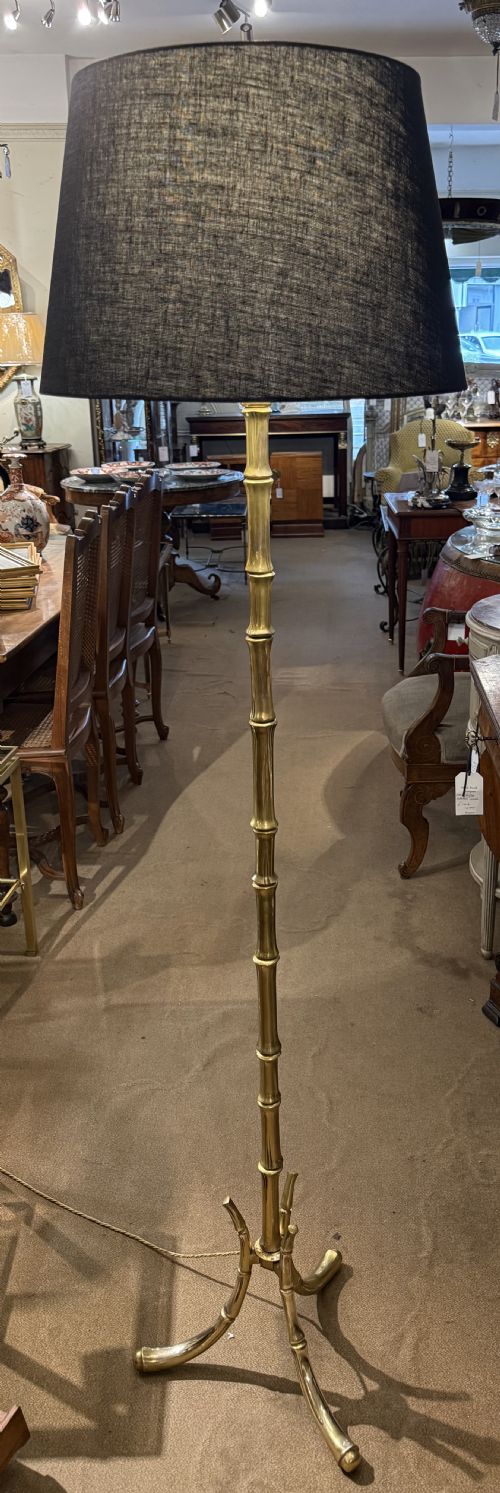

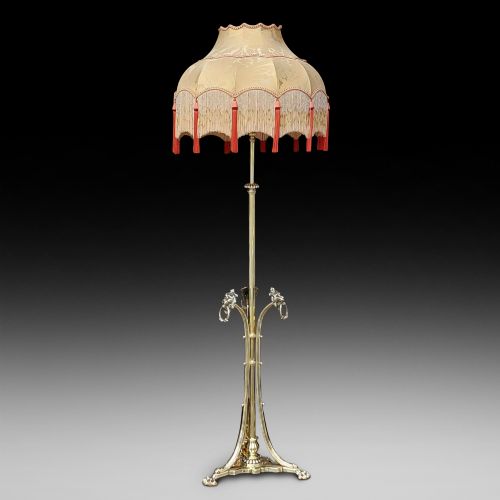
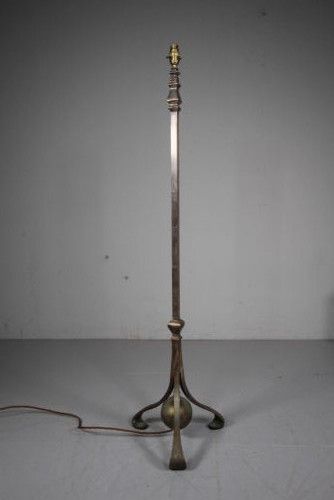
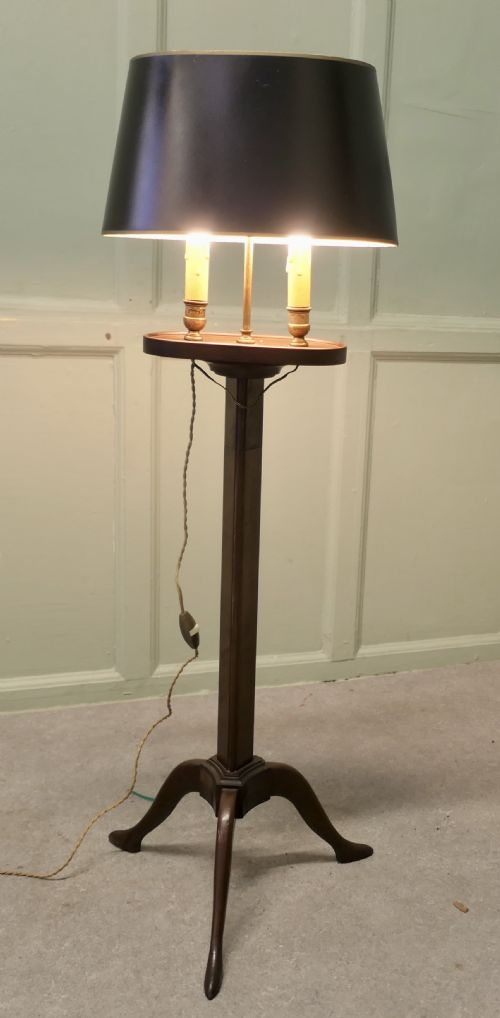
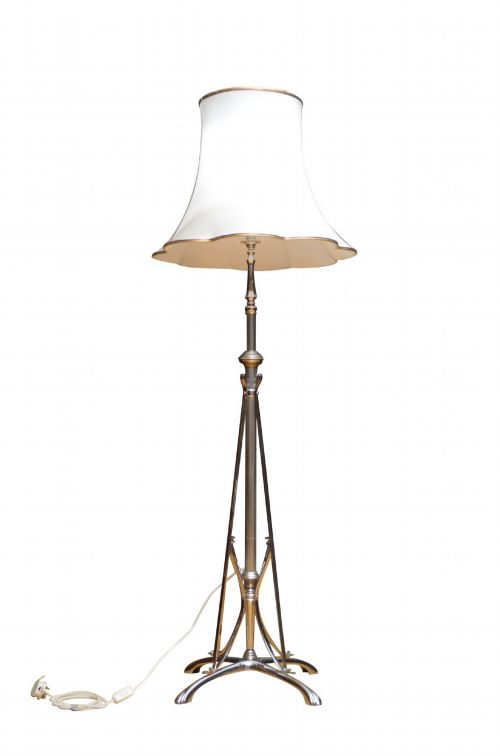


Brass Floor Reading Light
A brass floor reading light brings height, adjustable reach, and warm metal tone directly beside a reading chair.
Brass Floor Reading Light
A brass floor reading light is designed to project illumination downward over a book or desk, frequently appearing in standard lamp, oil lamp, and telescopic formats. These pieces emerge across the nineteenth century, the Edwardian era, and the 1920s and 1930s, displaying heavy metal columns and weighted bases.
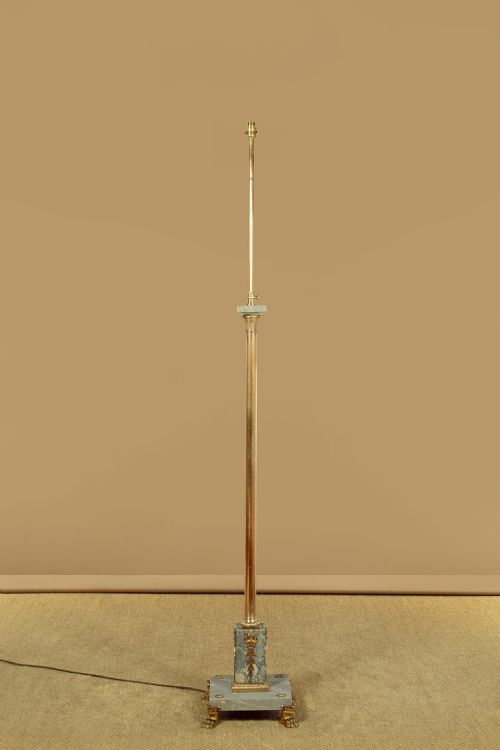
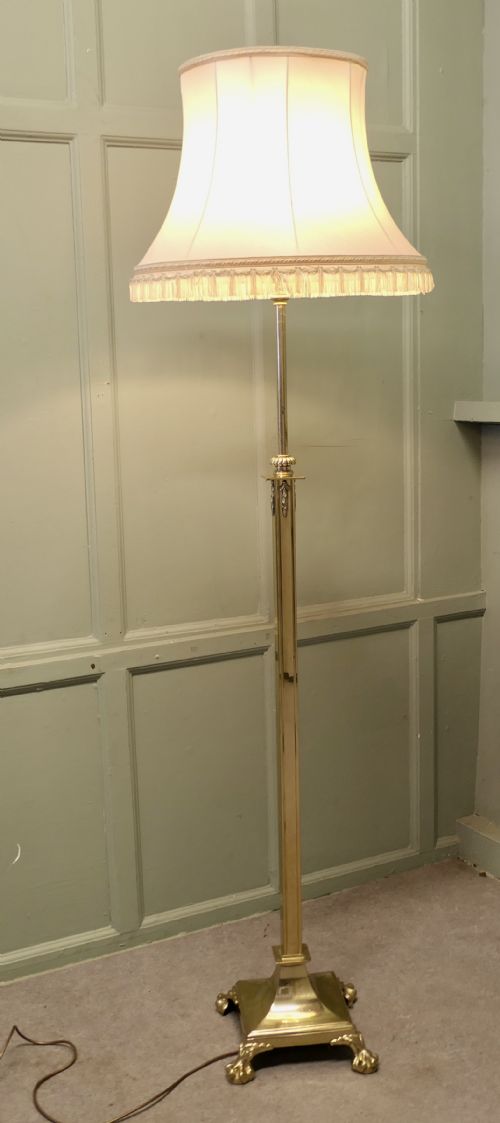
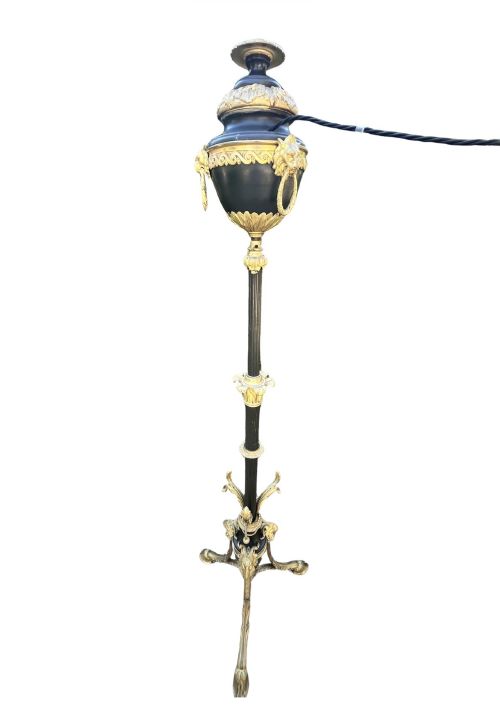
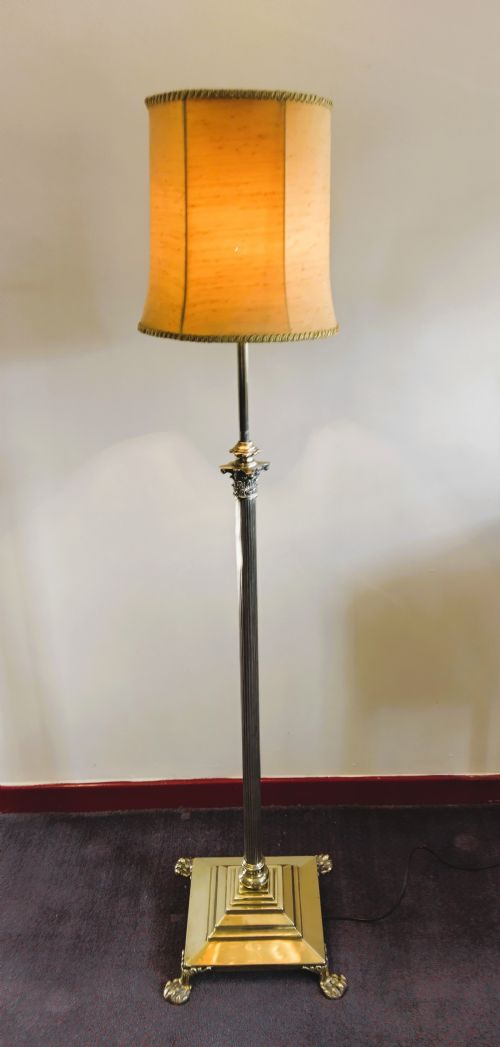
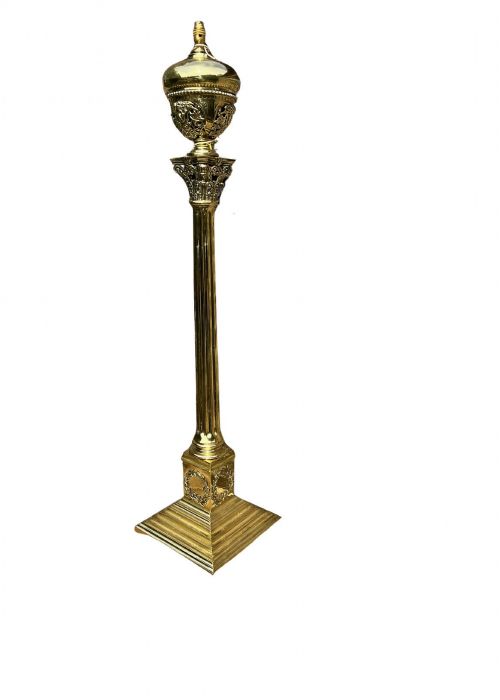
The most common examples on this page are adjustable standard lamps from the Victorian and Edwardian periods, constructed to alter in height or angle. Alongside these stand architectural Corinthian column designs and telescopic stems that allow the brass to extend upwards into a room.
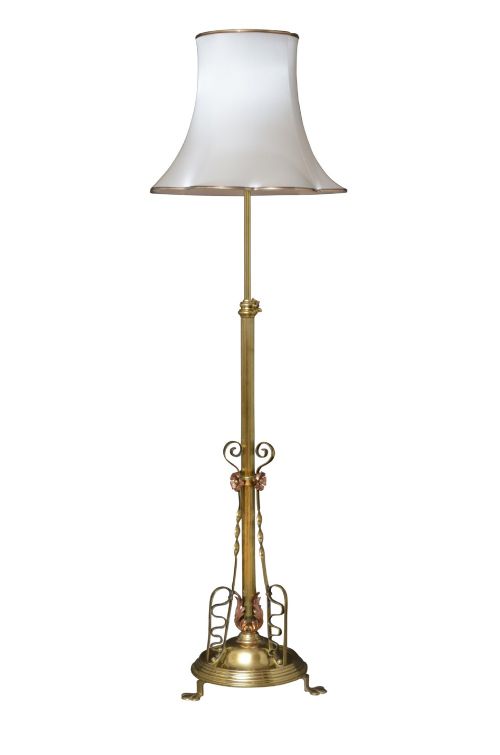
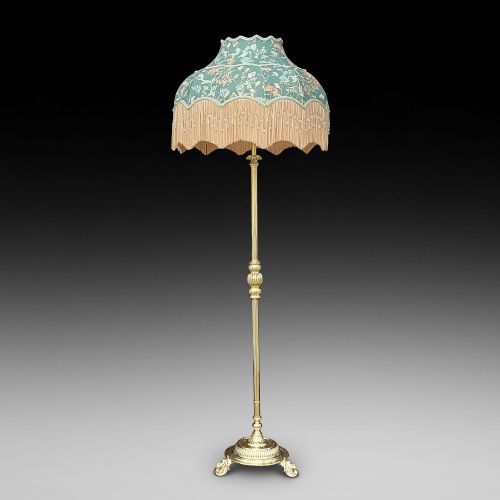
Stylistic varieties range from organic Art Nouveau floral openwork to strict Neoclassical columns and French Empire influences. Many retain functional fittings adapted from earlier oil burners or candle standards, while others incorporate fabric shades and glass elements.
Assessing construction and design
Quality rests in the weight of the casting and the precision of the telescopic mechanism, where solid brass components hold their position securely without slipping. Superior pieces demonstrate crisp chasing on Corinthian capitals, balanced tripod bases, and substantial gauge metal that resists bending.
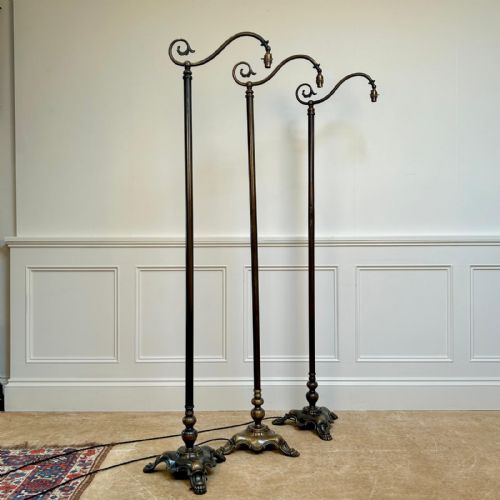
Artisanal detail distinguishes ordinary standards from finer creations, notably in organic Art Nouveau openwork, complex scroll arms, and integrated wine tables. The integrity of the original joints and the heft of the combined materials dictate the longevity of the upright stem.
Listings feature brass floor reading lights spanning the Victorian, Edwardian, and Art Deco periods, alongside 1930s telescopic designs.
Maison Bagues·Hinks
The Brass Floor Reading Light Glossary
- Telescopic
- An extendable shaft formed of nested brass tubes that allows the overall height of the lamp to be adjusted.
- Standard Lamp
- A British term for a floor-standing lamp designed to illuminate a room or provide task lighting beside seating.
- Bouillotte
- A style of adjustable multi-armed lamp originating in France, traditionally featuring candles or lights directed over a central tray.
- Corinthian Column
- An architectural support column featuring ornate acanthus leaves at the capital, frequently translated into heavy brass floor standards.
- Ormolu
- Gilded bronze or brass applied to decorative mounts and fittings, often seen alongside onyx or mahogany in French designs.
Brass Floor Reading Light: Frequently Asked Questions
How do I adjust a telescopic brass floor lamp?
Telescopic standards operate via an inner sliding tube secured by a thumbscrew, key, or friction collar near the top of the main shaft. Loosening this mechanism gently allows the upper section to rise or descend to the desired reading height.
Care should be taken to support the weight of the upper fitting while making adjustments to prevent sudden drops that can strain the internal wiring or metal threads.
Were these always electric lamps?
Many nineteenth-century examples began life as oil lamps or candle standards before being converted to electricity during later periods. Fittings often show evidence of past burners, oil reservoirs, or font galleries.
When purchasing, look for evidence of professional rewiring that respects the original structure of the brass column without compromising its historical integrity.
How do I identify an Edwardian standard lamp?
Edwardian examples tend to feature lighter proportions than their Victorian predecessors, frequently utilising slender brass columns, tripod bases, or steamer designs. The detailing often incorporates simpler neoclassical motifs or early influences from the Arts and Crafts movement.
These pieces were designed to suit domestic sitting rooms of the early twentieth century, balancing functional adjustability with domestic elegance.
What is a steamer lamp?
A steamer lamp is a specialised floor standard engineered with a heavy base and a steady, space-saving profile suited for use in restricted quarters such as ship cabins or smaller rooms.
They typically incorporate secure swivel joints and tight mechanisms to prevent excessive movement while maintaining directed light.