
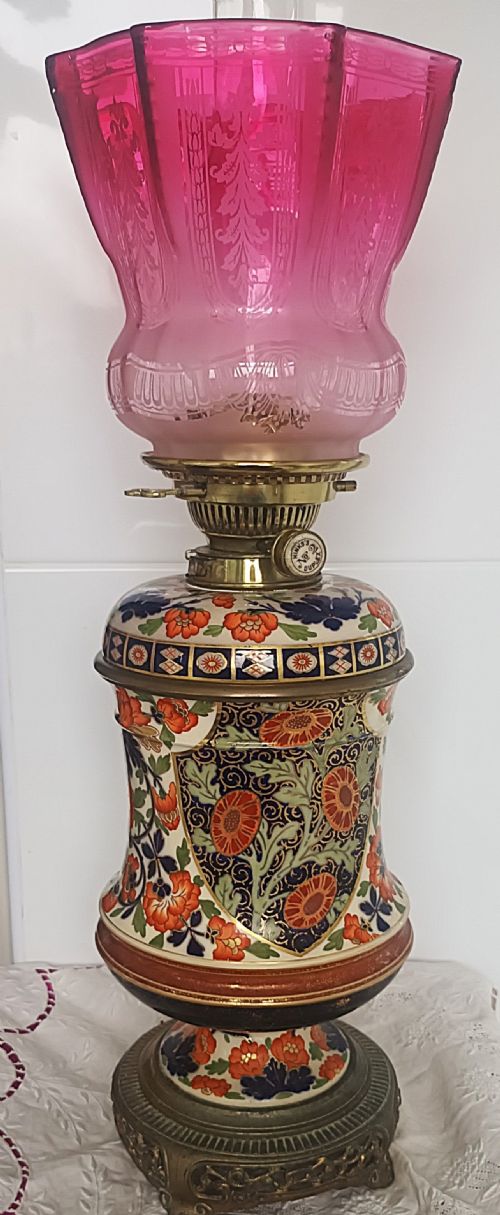


English Victorian Oil Lamp
An English Victorian oil lamp brings warm period character and working history to a room.
English Victorian Oil Lamp
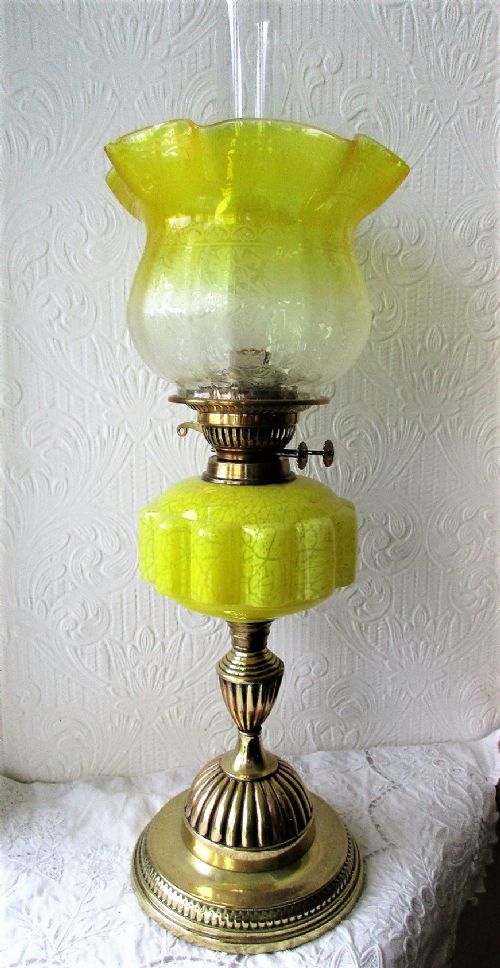
An English Victorian oil lamp is a functional domestic lighting piece from the nineteenth century designed to burn paraffin or other oils before electricity became universal in homes. The examples seen here span the Victorian era, taking forms such as column lamps, banqueting styles, and table lighters.
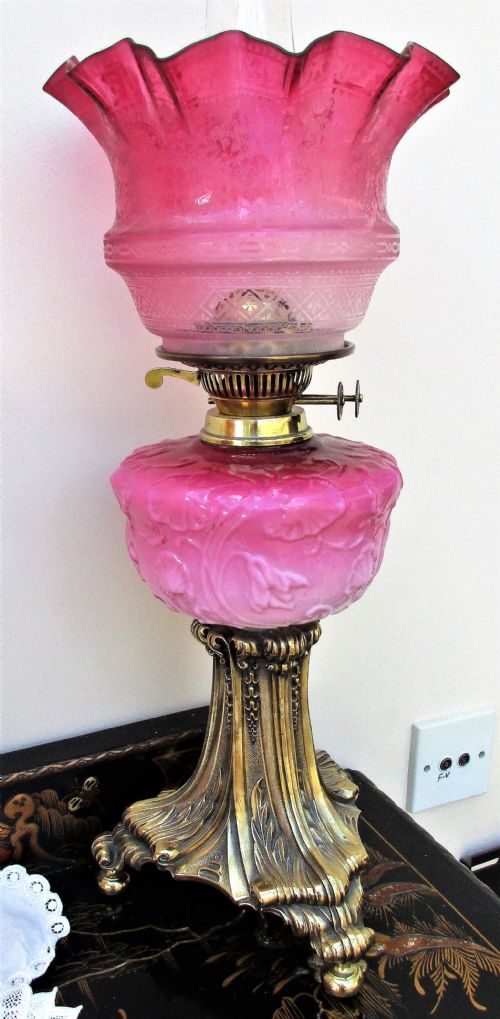
The most common versions encountered on this page are constructed with brass or glass columns, often paired with decorative shades in cranberry glass, pink crystal, or opaline glass. Makers and retailers such as Hinks, Messenger's, and Taylor Tunnicliff appear across the inventory alongside unmarked pieces.
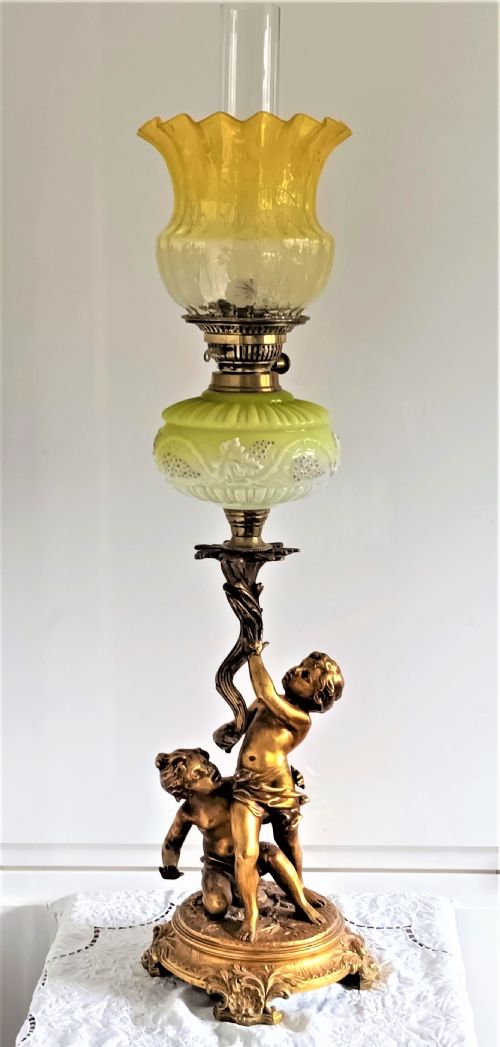
Beyond standard domestic table models, the selection includes larger column designs and novelty pieces like silver-plated table lighters. These objects combine cast metal bases with worked ceramic or glass reservoirs, reflecting the diverse manufacturing output of the period.
How they were made
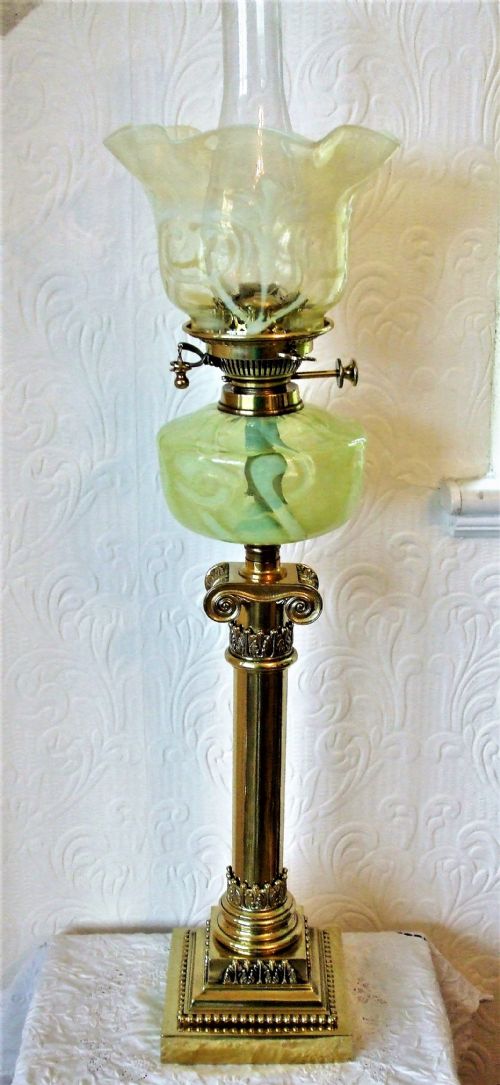
The construction of an English Victorian oil lamp relies heavily on brass casting, silver plating, and pewter work for the structural columns and bases. Metal components are often shaped into classical architectural orders, such as Corinthian or Ionic columns, or curved into flowing Art Nouveau lines.
Glass reservoirs and shades demonstrate skilled glassblowing and moulding techniques, utilising cranberry glass, opaline glass, and cut crystal decorated with gilt highlights or enamel. Ceramic and porcelain reservoirs, occasionally attributed to makers like Moore Brothers, are glazed and painted to sit atop metal or wooden bases.
Some Victorian households relied on decorative novelty table lighters shaped like golf gear to keep cigars burning brightly.
What varies in quality
The distinction between standard production pieces and finer examples rests on the weight of the metal castings and the crispness of the chasing on brass and silver-plated surfaces. Better specimens display substantial metal gauge and precise architectural detailing on column capitals and bases.
Quality also shows in the material of the reservoir and shade, where hand-cut crystal, layered cranberry glass, or hand-painted enamel outclass plain pressed glass. Named maker mechanisms, such as those by Hinks or Young's, indicate higher manufacturing standards in the burner assembly.
Hinks·Taylor Tunnicliff·Messenger's·Harrods·Elkington·Palmer and Co·Young's·Moore Brothers
The English Victorian Oil Lamp Glossary
- Banqueting lamp
- A tall oil lamp designed to stand on a floor or large table to illuminate a wider area. These substantial pieces often feature decorative brass or pewter columns.
- Opaline glass
- An opaque or translucent pale glass popular in the nineteenth century for lamp shades and bodies. It diffuses the light softly and is frequently tinted in pink or blue.
- Cranberry glass
- A rich red-pink glass coloured with gold chloride during production. It appears frequently in Victorian lamp reservoirs and shades.
- Corinthian column
- An architectural column style featuring ornate carved capitals decorated with acanthus leaves. Many Victorian metal lamps adopt this classical form for their main shaft.
- Table lighter
- A smaller tabletop device operating on similar fuel principles to an oil lamp, used for lighting pipes and cigars. These novelty pieces are often silver plated.
English Victorian Oil Lamp: Frequently Asked Questions
How do I identify a Victorian oil lamp?
Look for heavy brass or silver-plated metalwork, period burner mechanisms, and glass reservoirs made of cranberry, opaline, or cut crystal. Maker names stamped on the wick turners often confirm nineteenth-century production.
Proportions tend to follow classical architectural forms like Corinthian columns or heavier banqueting styles rather than twentieth-century electric shapes.
Can these antique lamps still burn oil?
Most buyers treat these pieces as decorative objects or convert them carefully for modern electrical use rather than burning paraffin. The original wick mechanisms and burners remain intact on many examples for display purposes.
Using them with historical fuel requires specialist restoration of the internal fonts and seals to ensure safety.
What materials are common in these lamps?
Brass, pewter, copper, and silver plate form the structural bases and columns of the majority of pieces. Reservoirs and shades utilise glass, cranberry glass, opaline glass, earthenware, and porcelain.
Gilt decoration and enamel painting frequently adorn the glass and ceramic components.
How do column lamps differ from banqueting lamps?
Column lamps feature a distinct vertical shaft modelled on classical architecture, such as Doric, Ionic, or Corinthian orders. They sit steadily on square or stepped metal bases.
Banqueting lamps are typically taller, more substantial floor or large-table pieces designed to cast light across a wider reception room.