




Etched Shade Oil Lamp
An etched shade oil lamp brings a warm Victorian glow to a room through heavy brass and patterned glass.
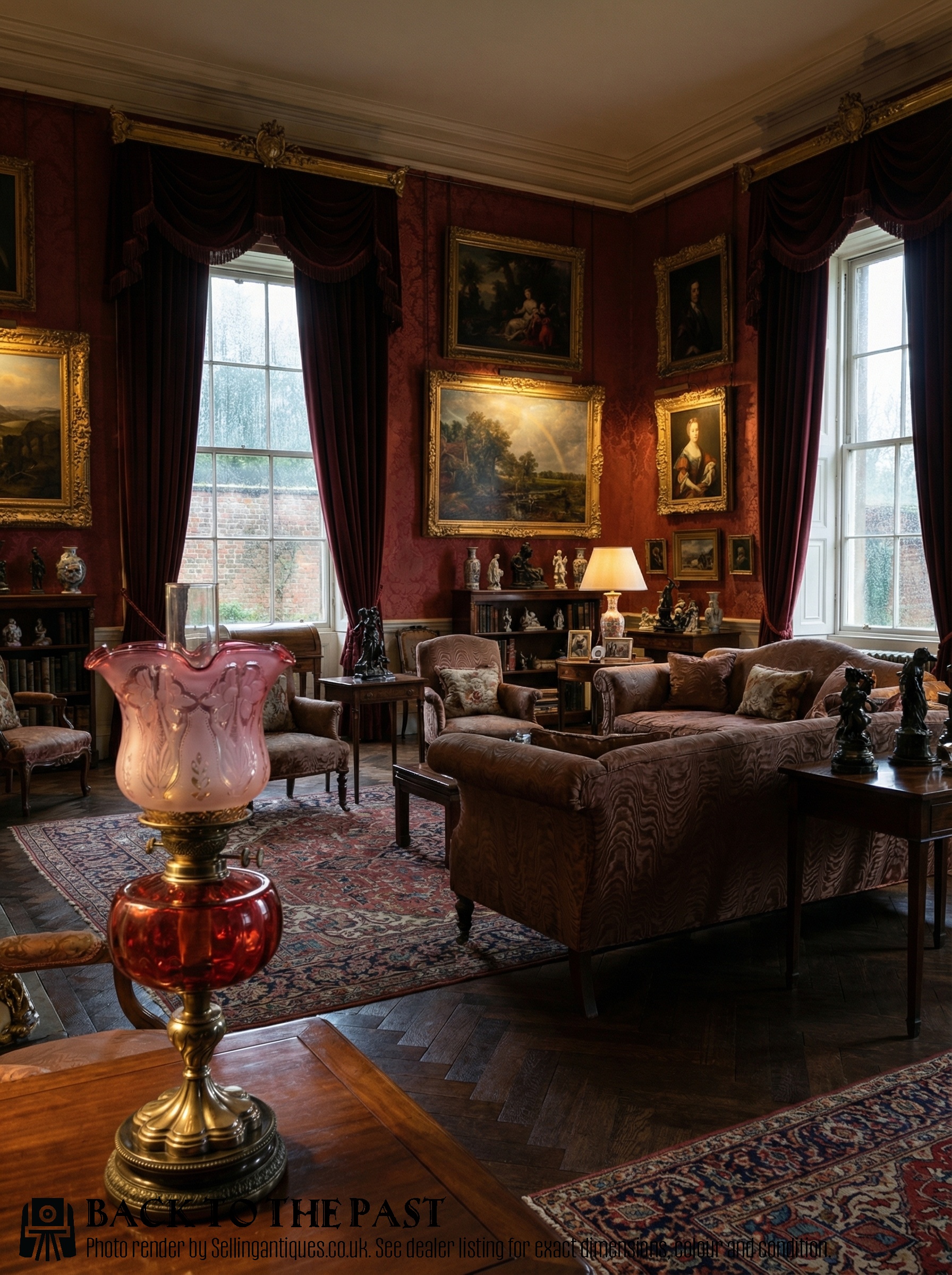
Etched Shade Oil Lamp
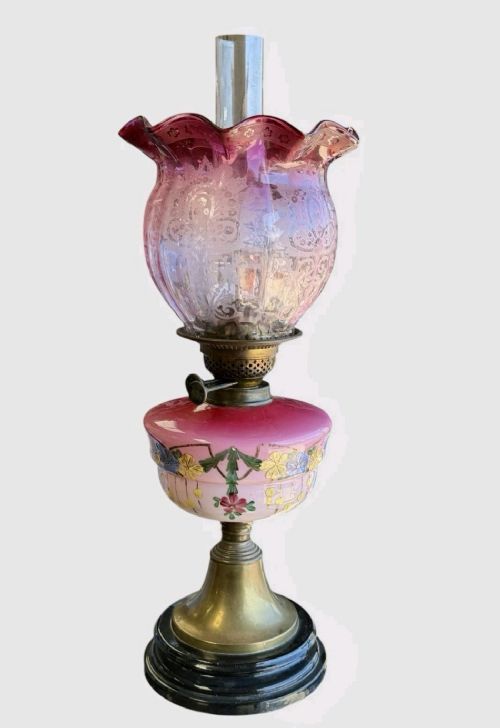
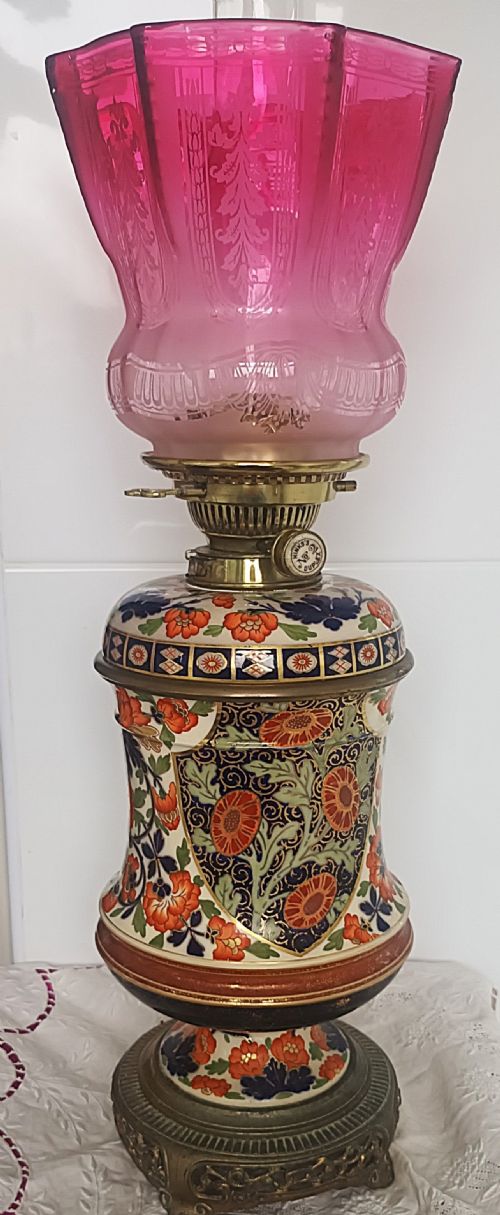
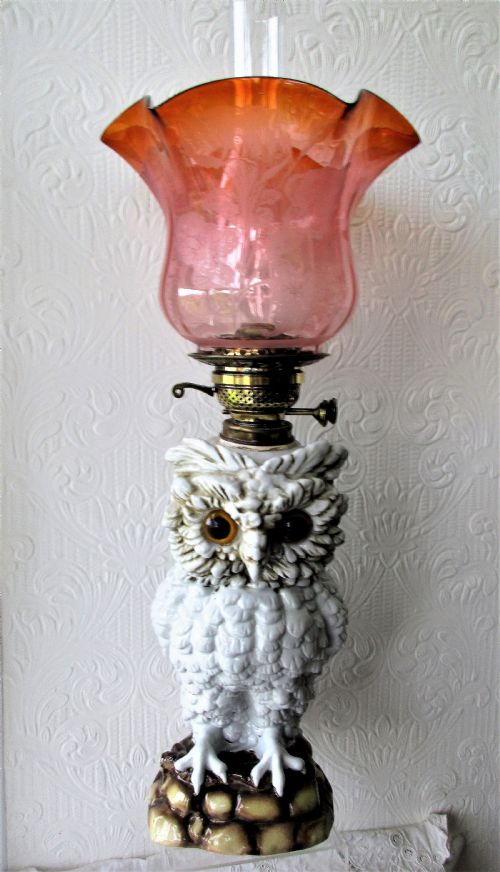
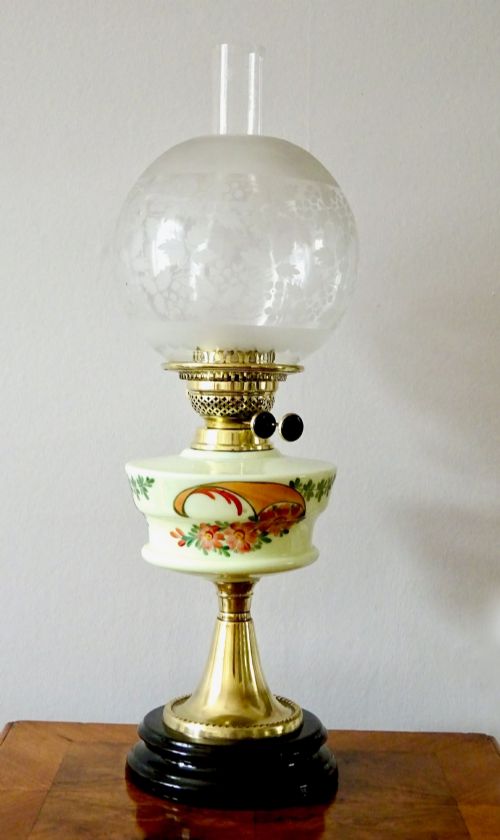
An etched shade oil lamp combines a sturdy metal or ceramic base with a decorative glass top designed to diffuse the light of a paraffin flame. The pieces found here predominantly date from the Victorian and Edwardian eras, spanning the nineteenth and early twentieth centuries.
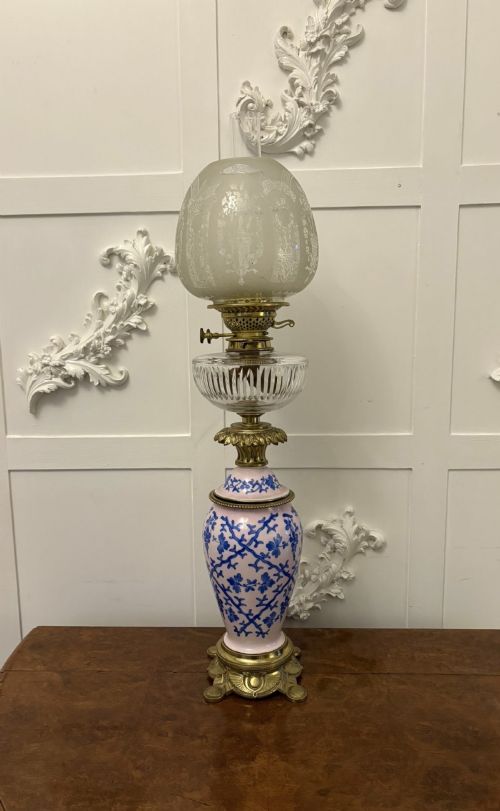
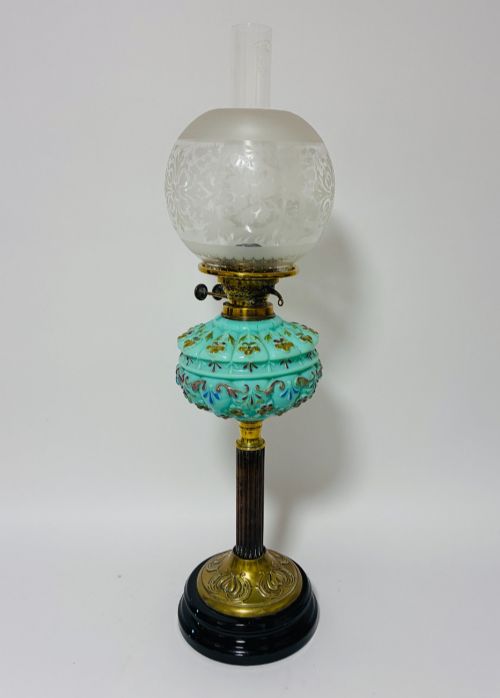
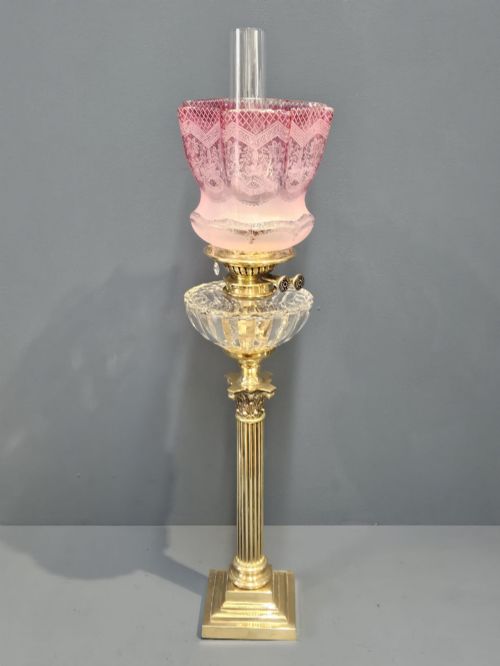
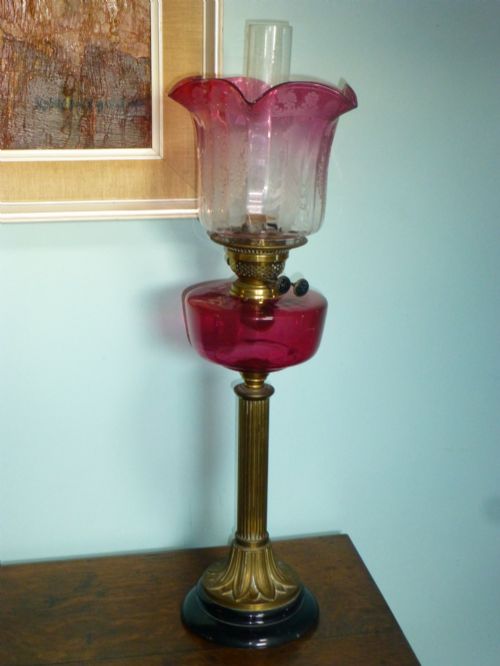
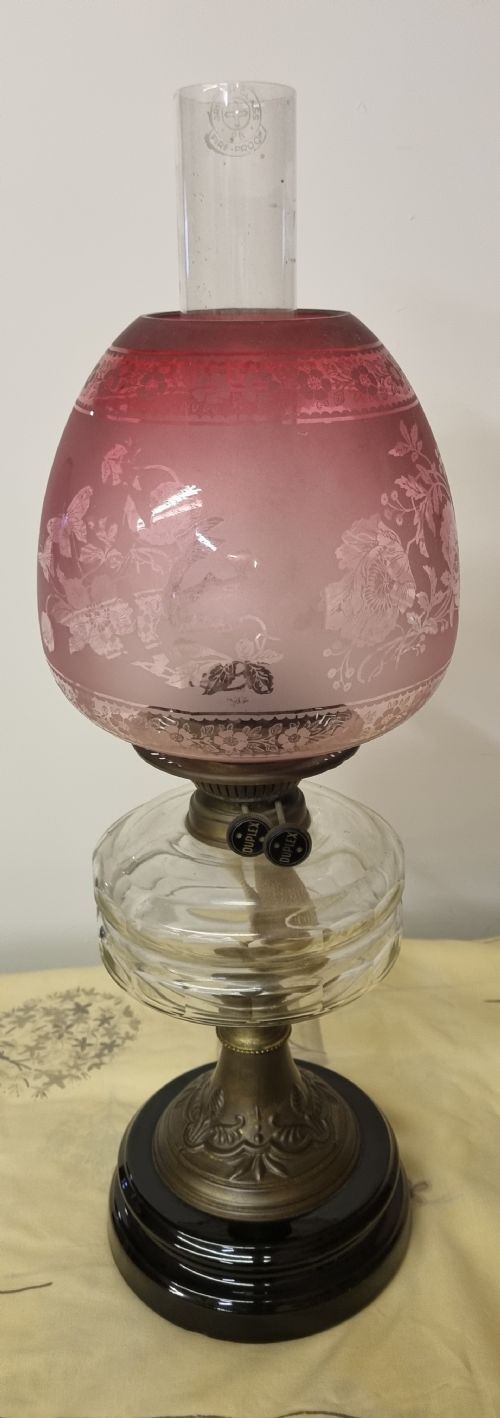
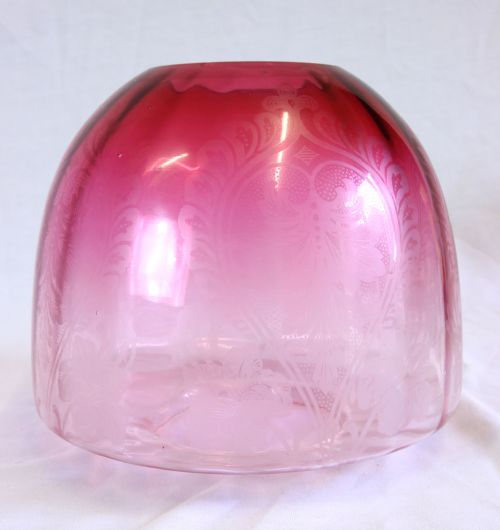
Most examples pair a polished brass column with either a clear, cranberry, or ruby glass shade carrying acid-etched floral or geometric motifs. Table lamps and standalone lamp shades make up the bulk of the selection, reflecting the domestic lighting technology of the period.
Materials and Construction
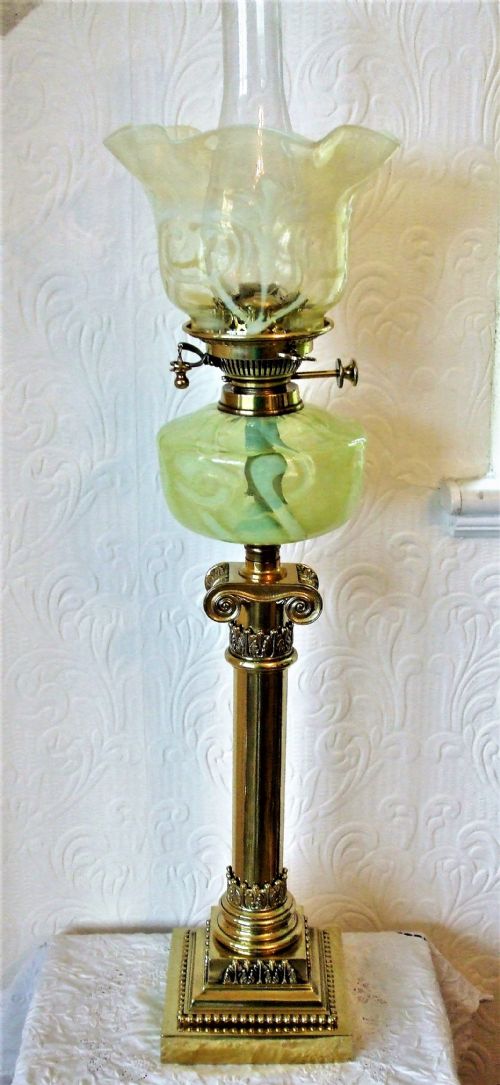
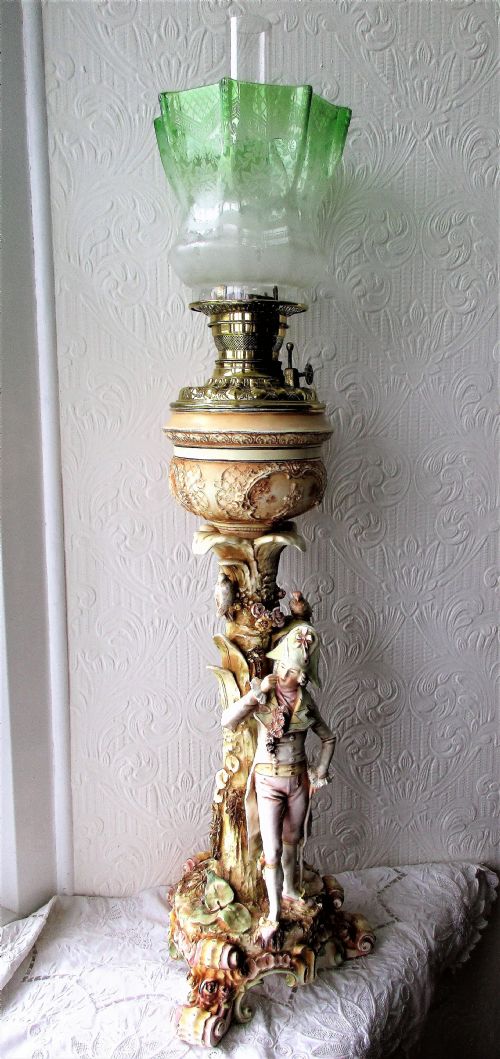
Makers constructed the columns and bases from cast brass, silver plate, ceramic, or porcelain, often incorporating classical architectural details such as Corinthian or Ionic capitals. Fonts were frequently formed from coloured glass, including cranberry and pink varieties, which added colour beneath the burner.
Glassmakers produced the shades by blowing molten glass into moulds or gathering it by hand before applying acid-etching techniques to create frosted patterns against polished backgrounds. Burner mechanisms, such as duplex systems, relied on precision brass engineering to control twin wicks and regulate the flame.
The listings on this page span the Victorian and Edwardian periods, utilising brass, ceramic, porcelain, and various coloured glasses.
Judging Quality
The distinction between standard domestic lighting and superior examples rests upon the weight of the brass castings and the crispness of the glass etching. Heavier columns with detailed Corinthian capitals and substantial crystal fonts indicate higher-grade production.
Artistic execution also separates the tiers, seen in hand-painted details on porcelain fonts, complex duplex burner assemblies by named makers, and deep, well-defined acid etching on the glass shades rather than shallow surface stencilling.
Hinks·Taylor Tunnicliff·Sitzendorf·Messengers·Harrods
The Etched Shade Oil Lamp Glossary
- Duplex burner
- A lighting mechanism utilising two flat wicks running parallel to produce a brighter flame than single-wick designs. It typically bears the maker's stamp on the thumbwheels.
- Font
- The oil reservoir sitting atop the lamp column, frequently moulded from coloured, cut, or clear glass. It holds the fuel supply for the burner.
- Acid etching
- A decorative technique where hydrofluoric acid eats into unprotected areas of glass to create a frosted, matte design. It leaves smooth, transparent lines where resists were applied.
- Corinthian column
- A classical architectural column style featuring an ornate capital decorated with acanthus leaves. It proves popular on nineteenth-century brass table lamp bases.
- Tulip shade
- A flared glass shade resembling an open flower, designed to sit securely in a brass gallery. This form helps direct and soften the light output.
Etched Shade Oil Lamp: Frequently Asked Questions
How do I operate an antique oil lamp safely?
Fill the reservoir with standard paraffin and allow the wick to absorb the liquid thoroughly before lighting. Trim the wick straight across to ensure an even flame and prevent smoke.
Keep the glass shade centered on the gallery to maintain proper airflow and prevent the glass from cracking under uneven heat. Extinguish the flame by turning the thumbwheel down until the wick drops below the burner plate.
Can these lamps still be used for lighting today?
Many period oil lamps remain fully functional for burning paraffin when fitted with a healthy cotton wick. They provide a soft, ambient glow suited to dining rooms and living spaces.
Alternatively, some owners choose to convert them for electricity by running a cord through the central column. This modification allows the use of standard bulbs while preserving the original brass and glass aesthetic.
How do I clean an etched glass shade?
Wash the glass gently in warm water using a mild washing-up liquid and a soft cloth. Avoid abrasive sponges or harsh scouring powders that can scratch the frosted etched surface.
Dry the shade thoroughly with a lint-free towel before placing it back onto the brass gallery. Take care when handling older glass, as the rims can occasionally feature minor manufacturing irregularities.
How do I distinguish Victorian from Edwardian lamps?
Victorian examples frequently display ornate details, heavy brass castings, Corinthian columns, and rich cranberry or ruby glass fonts. The aesthetic leans towards revival styles such as French Rococo and classical motifs.
Edwardian pieces, spanning into the early twentieth century, often show simpler lines influenced by Art Nouveau design. Bases become more slender, and glass shades adopt softer pastel tones or elongated tulip profiles.