


Decorative Paraffin Lamp
A decorative paraffin lamp brings period warmth and tactile weight to a room, spanning Victorian and Edwardian brass, porcelain and glass forms.
Decorative Paraffin Lamp
A decorative paraffin lamp is primarily found from the Victorian and Edwardian eras, bridging the nineteenth and twentieth centuries. These table lamps and oil lamps combine functional domestic lighting with ornate sculptural presence.
Most examples on this page date from the 1860s through to the early decades of the twentieth century. They appear in diverse material combinations, reflecting the changing interior tastes of those periods.
Materials and construction
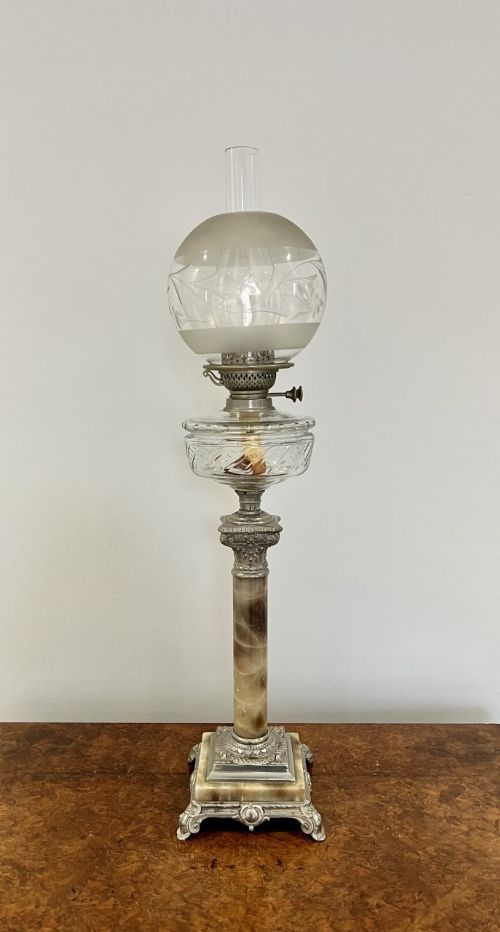
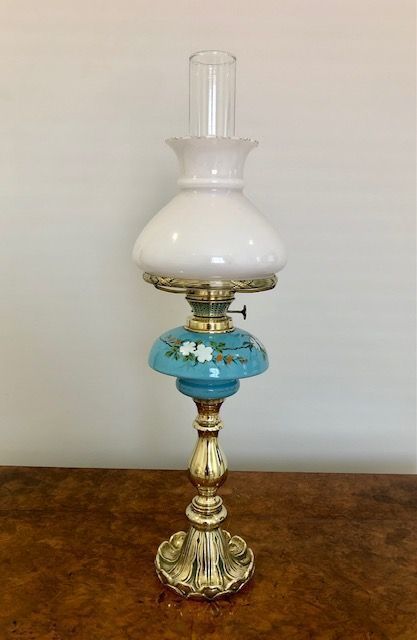
Makers utilised cast brass, copper, and ebonised wood for sturdy structural bases and columns. These metals were often paired with ceramic reservoirs or decorative columns in onyx.
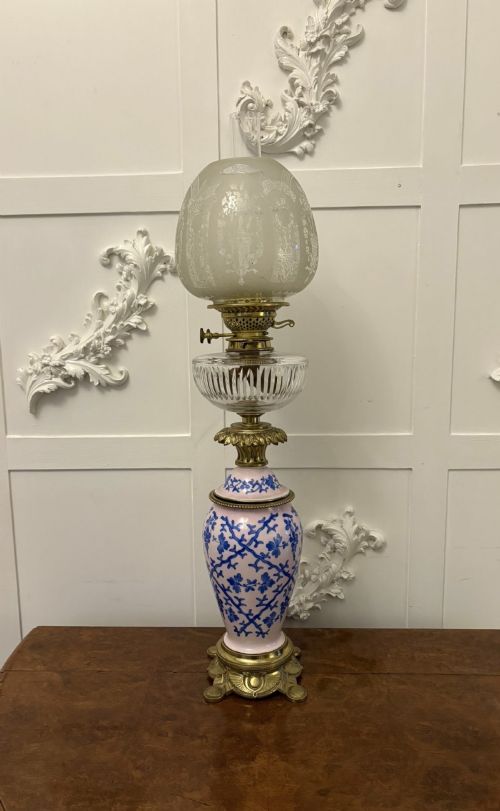
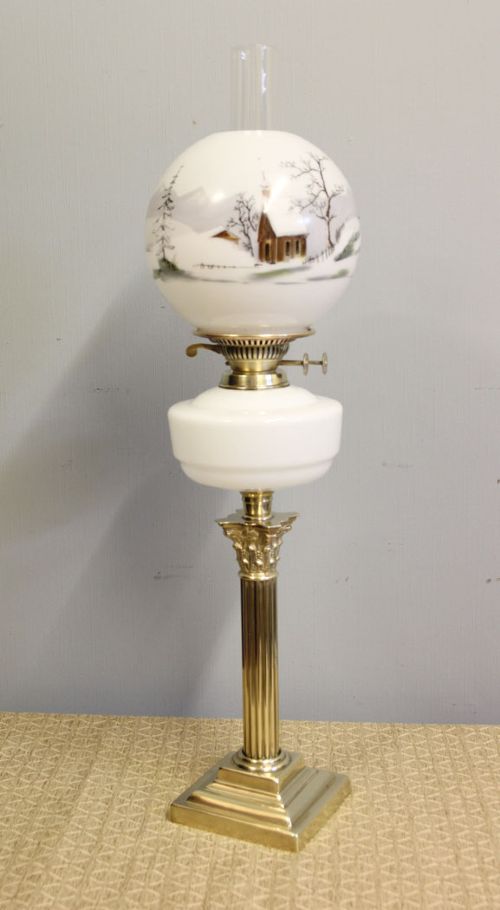
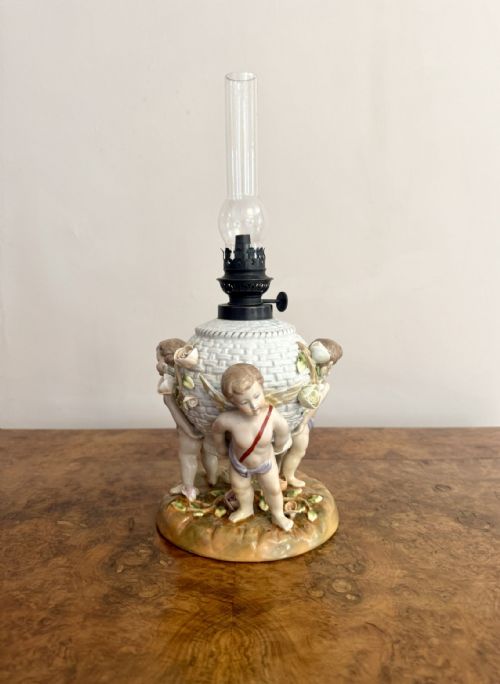
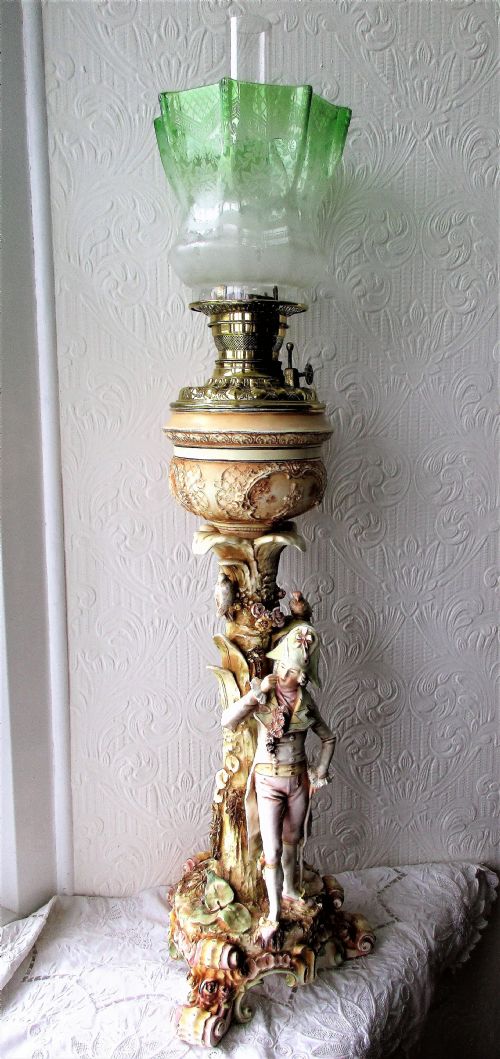
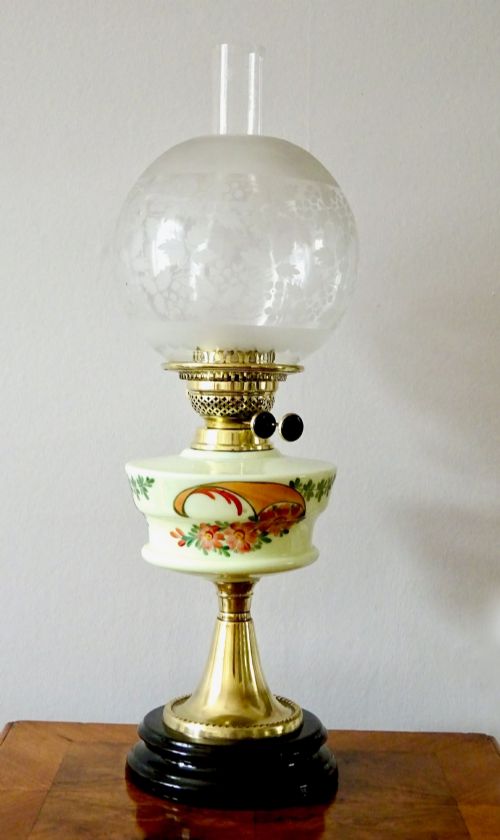
Upper components frequently feature opaline glass, milk glass, or hand-painted porcelain fonts and etched shades. Figural porcelain elements and Corinthian column designs demonstrate the period's moulded and glazed techniques.
Listings span the nineteenth century through the Edwardian period, focusing heavily on Victorian brass, porcelain, and glass oil lamps.
Markers of distinction
Quality rests upon the sculptural ambition of the base and the artistic merit of any painted porcelain or figural work. Finer items incorporate materials like onyx and detailed porcelain figures rather than plain metal alone.
The integrity of the matching shade, whether etched glass or snow winter scene motifs, elevates the overall composition. Heavier cast brass and well-preserved gilt detailing similarly separate standard utility lamps from superior decorative examples.
Sitzendorf
The Decorative Paraffin Lamp Glossary
- Font
- The oil reservoir of the lamp, which sits above the base and holds the paraffin. These are frequently formed from coloured glass, porcelain, or brass.
- Corinthian Column
- An architectural column style featuring ornate acanthus leaf capitals, often utilised for the central stem of tall brass lamps. This classical revival form was immensely popular in the late nineteenth century.
- Opaline Glass
- A translucent, milky white or pastel-tinted glass used for fonts and shades, diffusing the light softly. It gained widespread popularity during the Victorian era for decorative tablewares.
- Ebonised Wood
- Timber treated to imitate ebony, providing a dense black foundation that contrasts sharply with polished brass mountings. This material offers a dark, restrained contrast to brighter ceramic elements.
Decorative Paraffin Lamp: Frequently Asked Questions
How do I date an oil lamp?
Dating relies on stylistic clues, materials, and manufacturing techniques evident in the base, font, and shade. Victorian examples often feature rich porcelain, figural ceramics, or heavy brass casting.
Later Edwardian and early twentieth-century pieces lean towards onyx columns, simpler column designs, or painted bowls reflecting transitional domestic aesthetics.
Where were these lamps used?
These lamps were principal light sources in principal reception rooms, drawing rooms, and parlours of nineteenth-century homes. Their decorative qualities meant they sat prominently on tables as status objects.
As domestic lighting evolved, they remained prized for their ambient glow and rich material presence rather than pure utility.
How do I live with one?
Living with a period lamp involves treating it as a sculptural centrepiece on a stable surface such as a sideboard or large table. Many owners retain them purely for visual display and interior character.
Ensure the lamp is securely placed away from heavy household traffic to protect delicate glass shades and fragile porcelain components.