


Victorian Cranberry Glass Lamp
A victorian cranberry glass lamp brings a rich, warm glow to a room through its striking combination of deep pink glass and polished brass.
Victorian Cranberry Glass Lamp
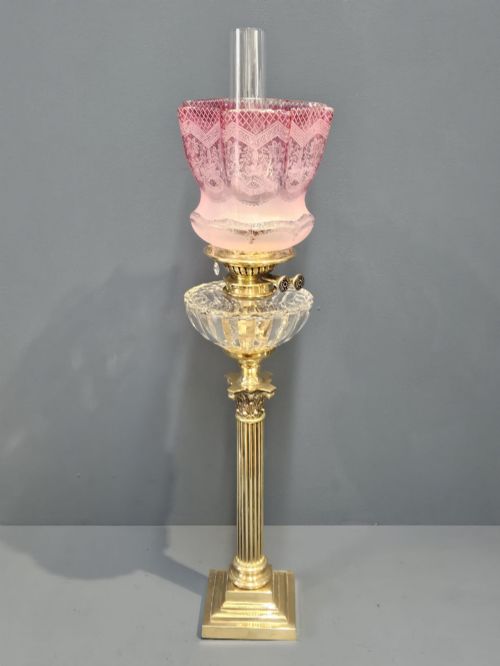
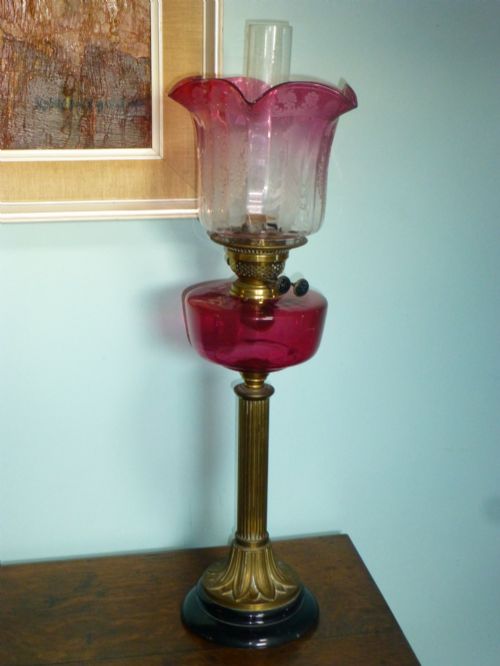
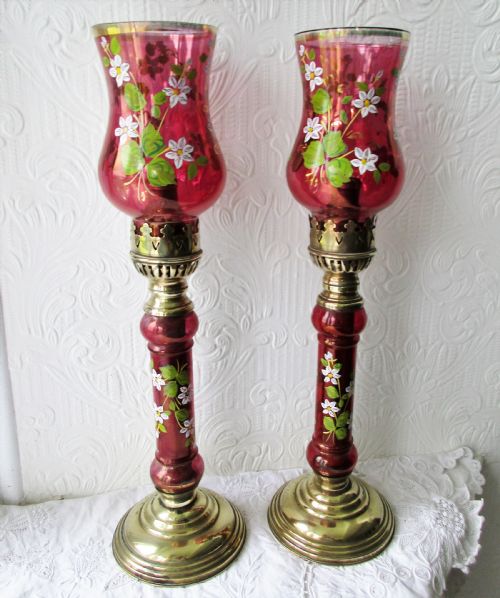
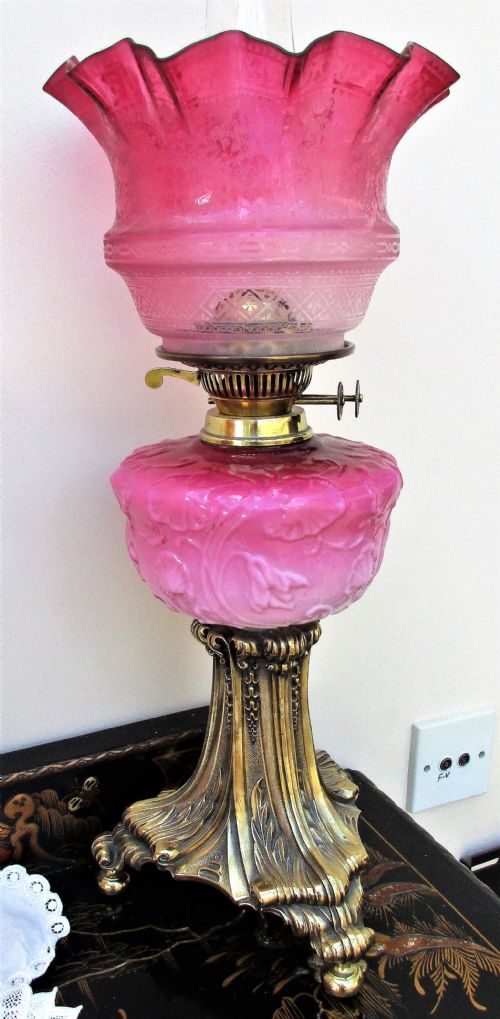
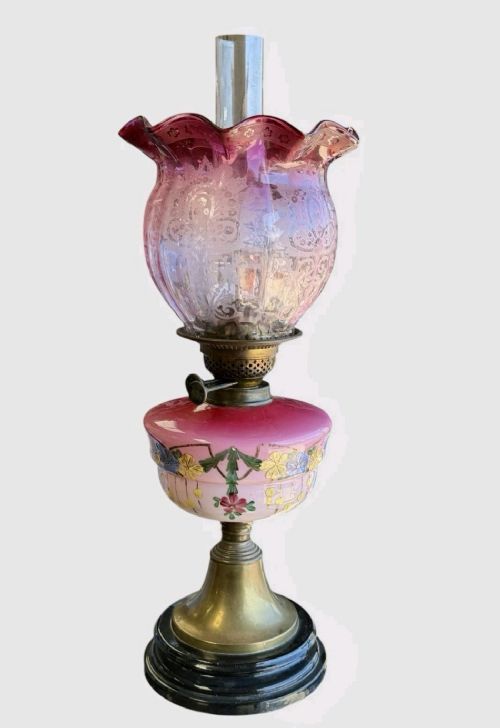
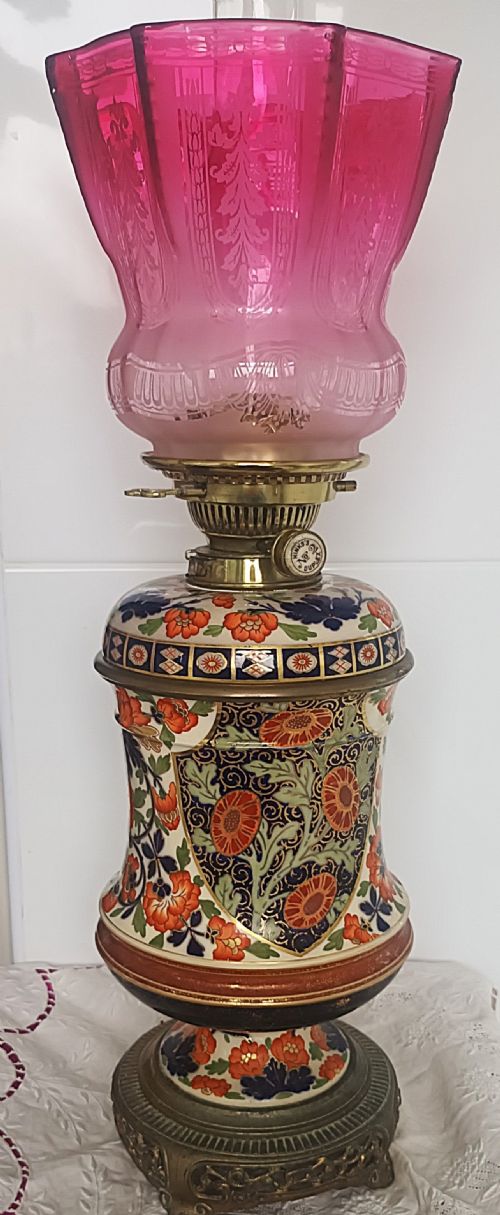
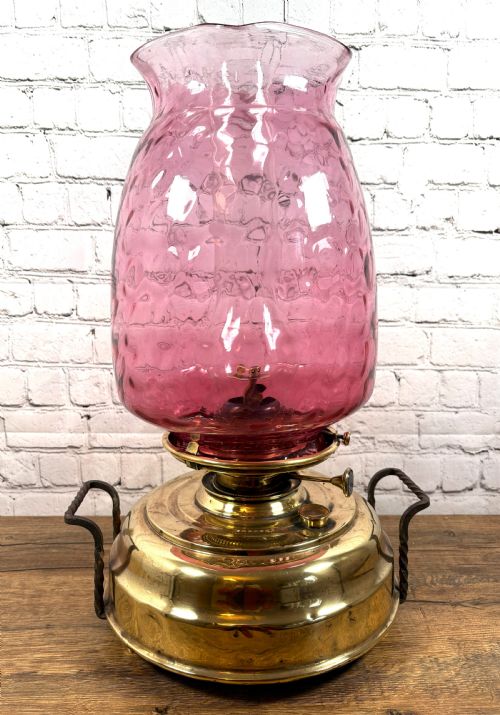
A victorian cranberry glass lamp most commonly appears as a table oil lamp, featuring a brass column supporting a vibrant glass font or shade.
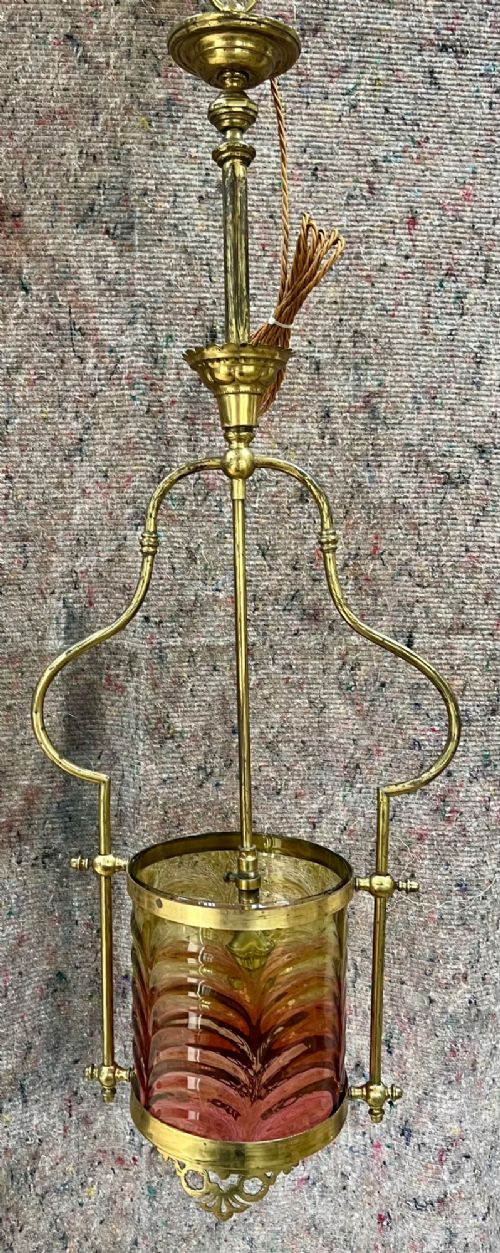
The selections on this page span the nineteenth century into the edwardian era, encompassing taller floor models, smaller bedside finger lamps, and hanging ceiling lights.
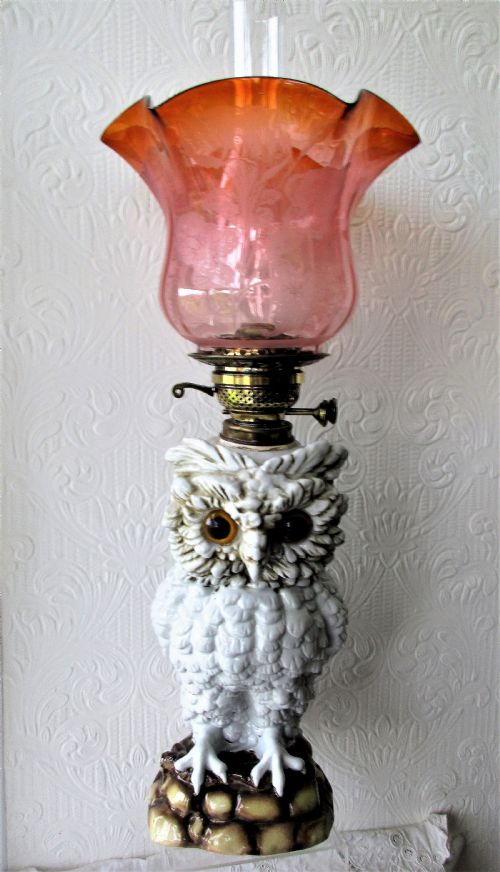
Makers utilised rich coloured glass, often combined with ceramic components or classical architectural brass columns, to illuminate domestic spaces before electricity became widespread.
Materials and Technique
The striking pink hue of the glass results from the addition of gold chloride to the molten batch during production, a traditional method for achieving cranberry tones.
Brass serves as the primary structural metal for the columns, fonts, and bases, frequently paired with heavy ceramic bases or marble stems for stability.
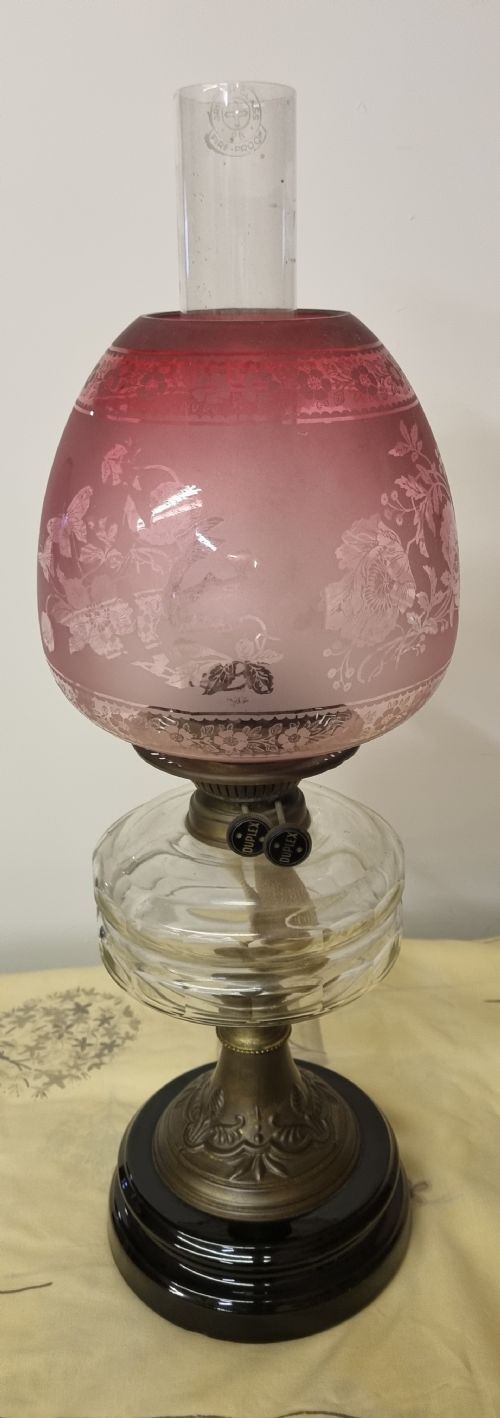
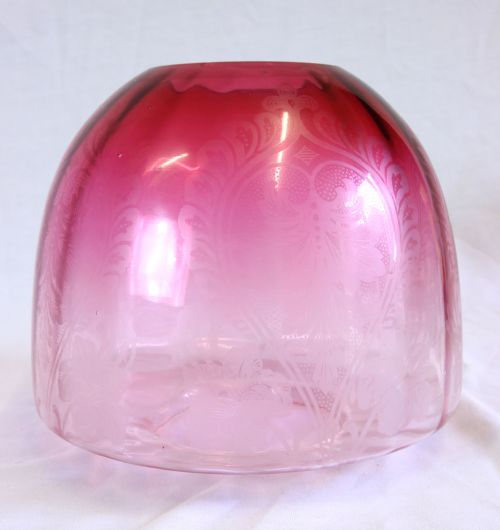
Many glass shades and fonts display hand-painted floral motifs or intricate surface etching, achieved through acid treatment or wheel-cutting techniques.
Listings feature brass, cranberry glass, porcelain, and ceramic materials across the nineteenth century and the edwardian period.
Judging Quality
The weight and solidity of the brass casting dictate the overall standard of the piece, with heavier, finely detailed Corinthian columns sitting at the upper end.
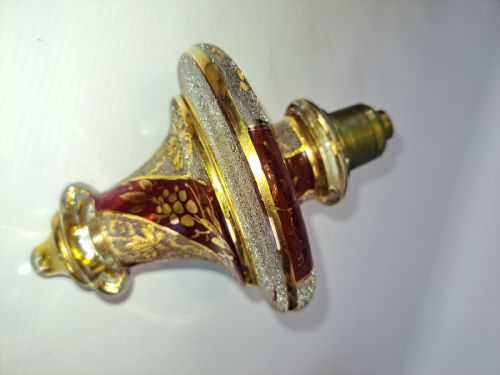
Depth and consistency in the glass colour distinguish superior examples, alongside the clarity and precision of any etched or gilded surface ornamentation.
Completeness contributes significantly to a piece's integrity, particularly when original matching burners, glass chimneys, and font shades remain intact.
Hinks·Taylor Tunnicliff·Sitzendorf
The Victorian Cranberry Glass Lamp Glossary
- Cranberry glass
- A transparent red-pink glass coloured with gold oxide. It gained immense popularity during the nineteenth century for tableware and lighting.
- Duplex burner
- A double-wick mechanism that produced a brighter illumination than single-wick variants. These systems often bear maker names like Hinks.
- Chimney
- The tall, narrow glass tube placed over the burner to steady the flame and improve combustion. They are essential for proper oil lamp operation.
Victorian Cranberry Glass Lamp: Frequently Asked Questions
How do I operate a Victorian oil lamp?
Operating an antique oil lamp requires filling the lower glass or metal reservoir with a suitable lamp oil and allowing the cotton wick to absorb the liquid thoroughly.
Lighting the wick involves raising the glass chimney slightly, applying a flame, and adjusting the thumbwheel until the flame burns evenly without smoking.
Can these lamps be converted to electricity?
Many collectors choose to convert these lamps for modern electric use to display them safely as table or floor lamps in contemporary homes.
Conversion usually involves running a cord discreetly through the central burner mechanism without damaging the original metal or glass components.
How do I clean cranberry glass safely?
Cleaning requires warm water and mild washing-up liquid applied with a soft cloth to protect the delicate surface and any painted details.
Harsh chemical abrasives and ultrasonic cleaners should be strictly avoided, as they can permanently strip away gilded highlights or delicate hand-painted motifs.
How can I tell the age of these lamps?
Dating relies heavily upon the burner patents, the weight and composition of the brass castings, and the specific manufacturing style of the glass.
Earlier nineteenth-century examples often feature heavier, hand-finished brass components, whereas pieces nearing the edwardian period show more standardised machine production.