
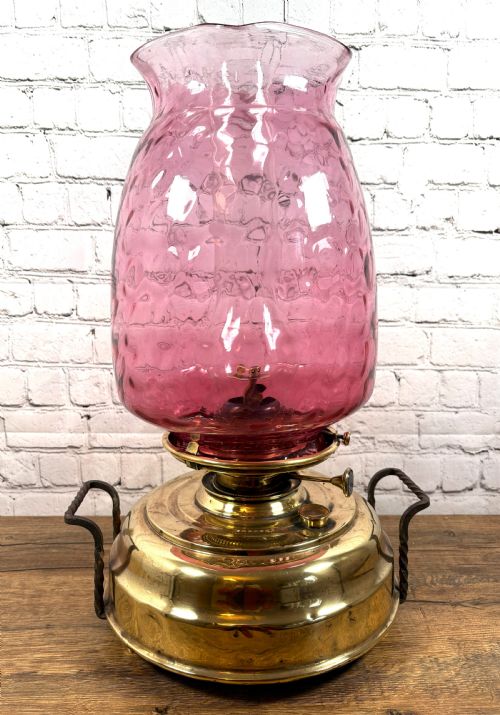




Vintage Cranberry Glass Lamp
These vintage cranberry glass lamp pieces combine deep red glass with gleaming brass bases to light interiors with rich, warm colour.
Vintage Cranberry Glass Lamp
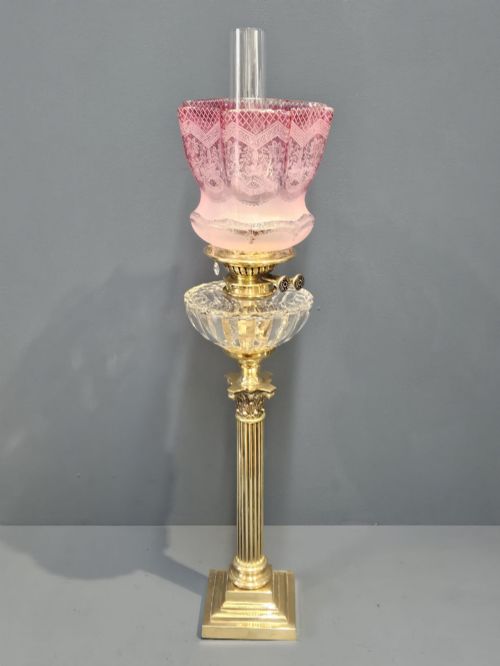
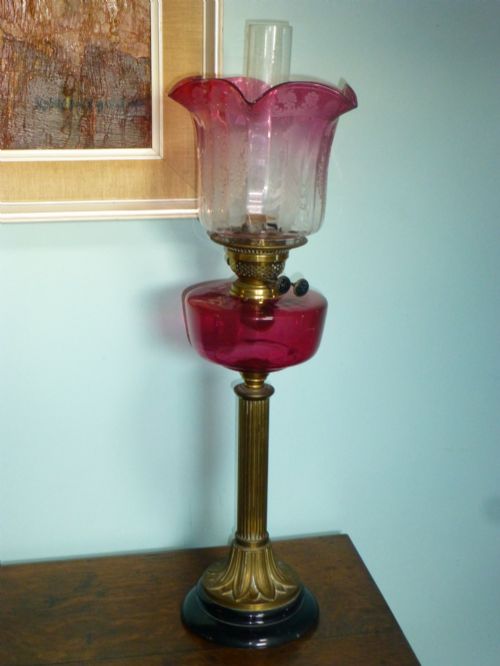
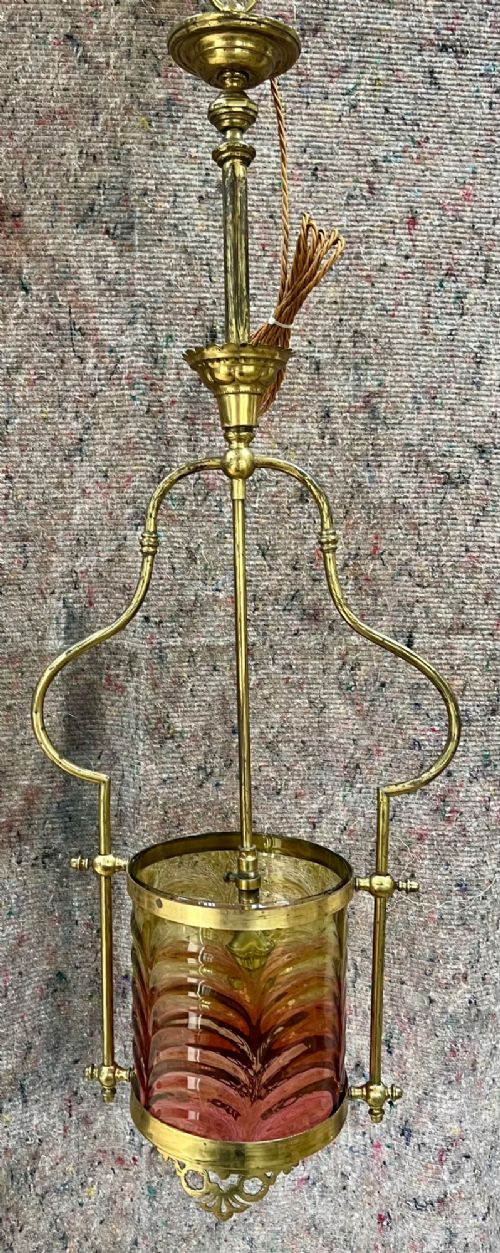
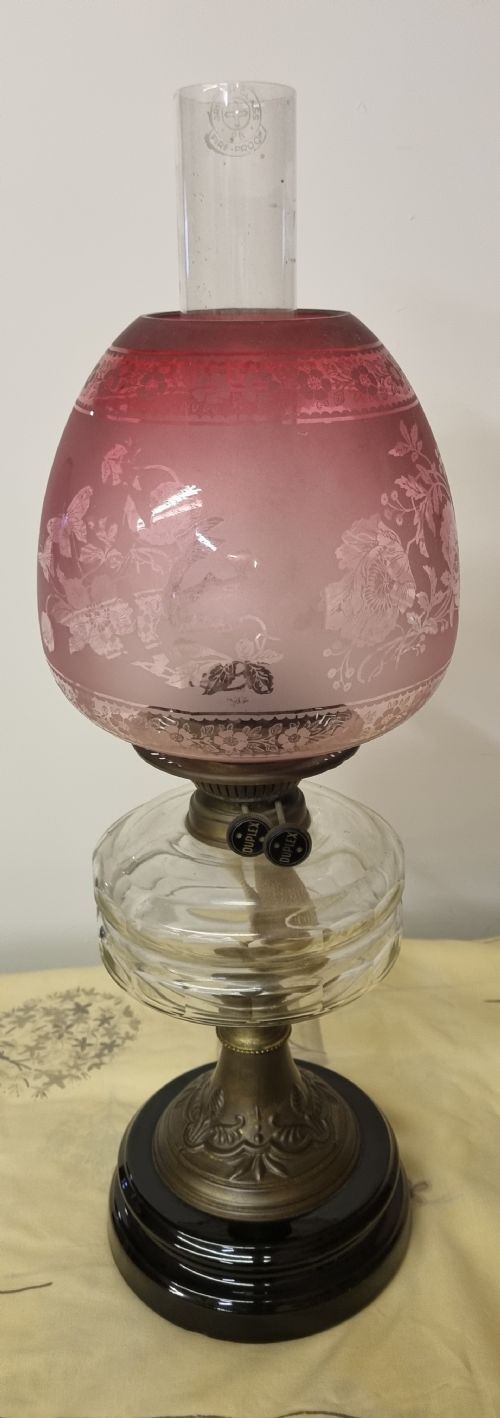
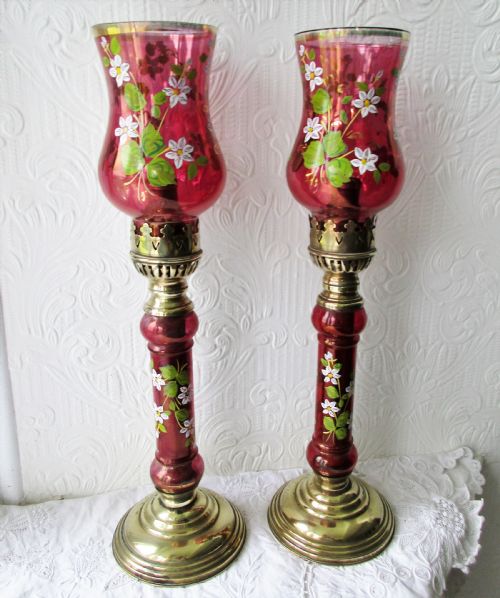
When you search for a vintage cranberry glass lamp, you are looking at domestic lighting fixtures created primarily during the Victorian, Edwardian, and late nineteenth-century periods. The selection on this page centres on functional pieces designed for burning oil, alongside later variations adapted for electricity or used as hanging lights and table lamps.
The most common forms you will meet here are tall oil lamps featuring brass columns, ceramic or glass vessels, and deep red shades. These items range from simple desk and table lamps to grand double burner models, floor lamps, and multi-branch ceiling lights.
The aesthetic bridges several periods, taking in standard Victorian designs alongside pieces touched by Art Nouveau and Arts and Crafts sensibilities. Whether you encounter a slender candle lamp or a substantial duplex oil lamp, each object carries the characteristic intense hues of cranberry and ruby glass.
What varies in quality
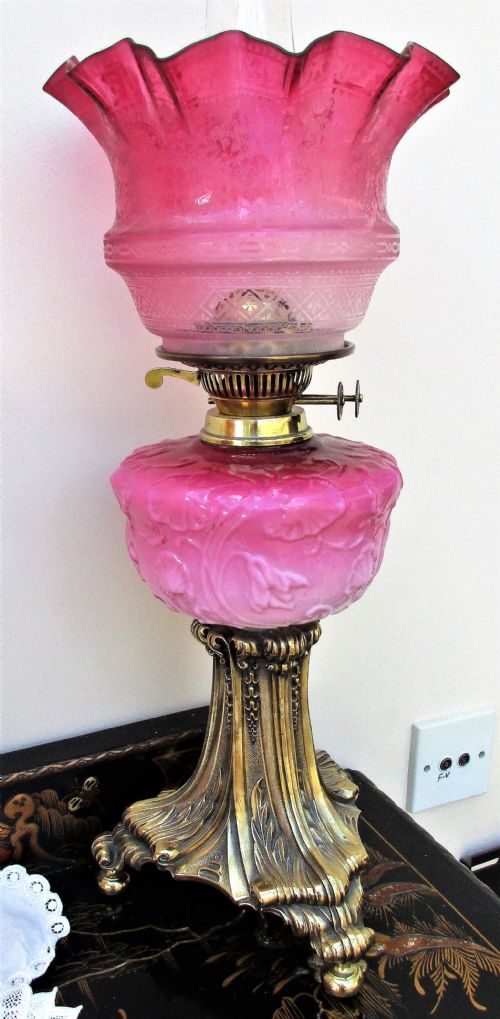
The division between standard domestic lighting and top-tier examples lies in the weight of the materials and the crispness of the casting. Superior models feature heavy, substantial brass work with deeply detailed Corinthian columns or intricate metal mounts, whereas simpler pieces rely on lighter, unadorned frames.
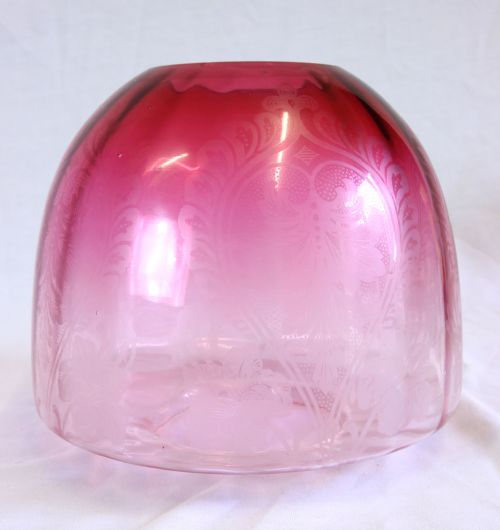
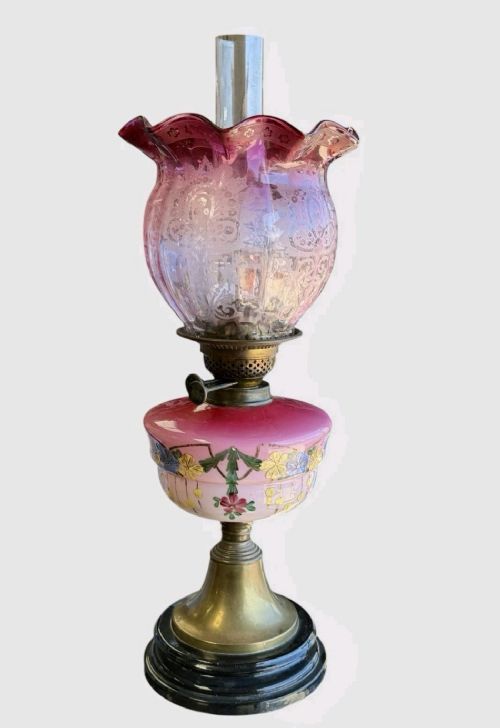
Glass quality also dictates value, with depth of colour and precision of hand-etching or gilding separating exceptional shades from plain ones. Pieces incorporating dual burners, complex mechanisms, or hand-painted font details represent the more ambitious end of period production.
Listings feature items spanning the 1860s through the Edwardian period, uniting brass, clear glass, ceramic, and enamel elements.
The Vintage Cranberry Glass Lamp Glossary
- Cranberry glass
- A type of transparent red glass produced by adding gold to the molten mixture, highly popular in Victorian lighting and tableware. Its distinctive pinkish-red shade forms the defining visual characteristic of these lamps.
- Duplex burner
- A double-wick mechanism developed in the nineteenth century to provide significantly brighter illumination than single-wick oil lamps. These burners often appear on taller, more substantial table and floor lamps.
- Corinthian column
- An architectural column style featuring elaborate, leaf-carved capitals adapted by Victorian metalworkers for tall lamp stands. This classical motif frequently appears in brass on nineteenth-century lighting.
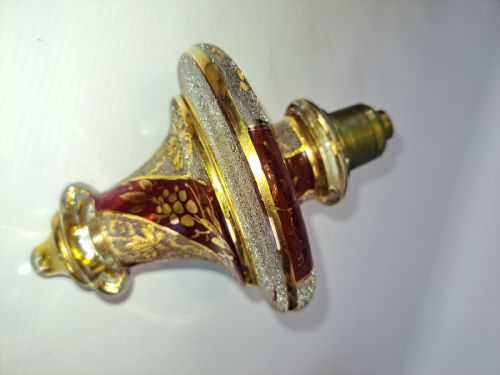
- Phinial
- An alternative spelling for finial, a decorative knob or terminal used to secure a lamp shade or burner assembly. These are often made of matching etched and gilded glass or polished brass.
Vintage Cranberry Glass Lamp: Frequently Asked Questions
How do I date a brass and glass lamp?
Dating relies on examining the construction methods of the brass components, the complexity of the burner mechanism, and stylistic cues from periods like the Victorian era or Edwardian years.
Heavier cast brass columns and hand-etched glass typically point to the nineteenth century, while simpler lines and later conversion work often suggest the early twentieth century.
Were these lamps originally for oil?
The vast majority of these pieces started life as oil-burning domestic lamps before many were subsequently converted to electricity for modern use.
Original burners, fonts, and heavy brass reservoirs remain intact on many surviving examples, bearing witness to their period function.
Can I use modern bulbs in these lamps?
Many surviving pieces have been safely adapted for electrical use, allowing them to function as standard table or floor lamps in contemporary rooms.
When working with converted fixtures, it is advisable to consult a professional electrician to ensure the vintage wiring and fittings meet modern safety standards.
What is the difference between cranberry and ruby glass?
While both are red glasses made with metallic additives, cranberry glass typically exhibits a lighter, pinker translucent quality, whereas ruby glass is often deeper and more intensely saturated.
Both terms describe distinct variations of red glass widely utilised by Victorian and Edwardian makers for lamp shades and vessels.