
Antique Oil Lighting
Antique oil lighting brings the warm glow of Victorian and Edwardian parlours into modern rooms through brass, glass and porcelain.
Antique Oil Lighting
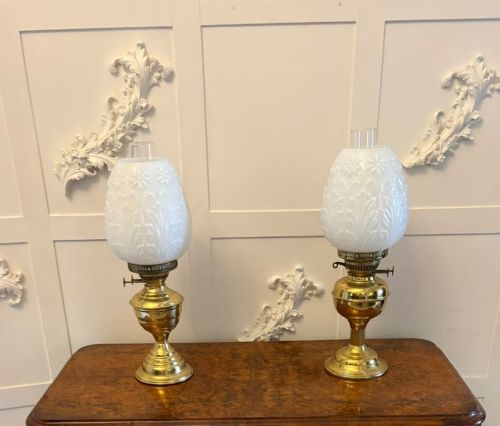
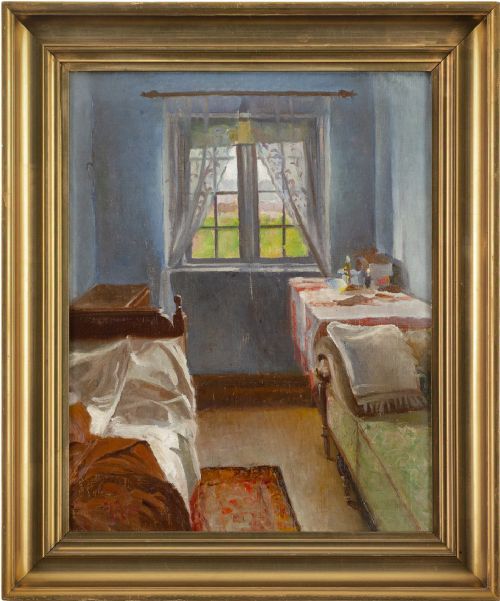
When you search for antique oil lighting, you encounter domestic lamps designed to burn paraffin or whale oil before electricity reached every home. The selection on this page centres primarily on Victorian and Edwardian table lamps, floor standards and hanging fixtures, alongside a small number of oil paintings depicting coastal scenes and interiors.
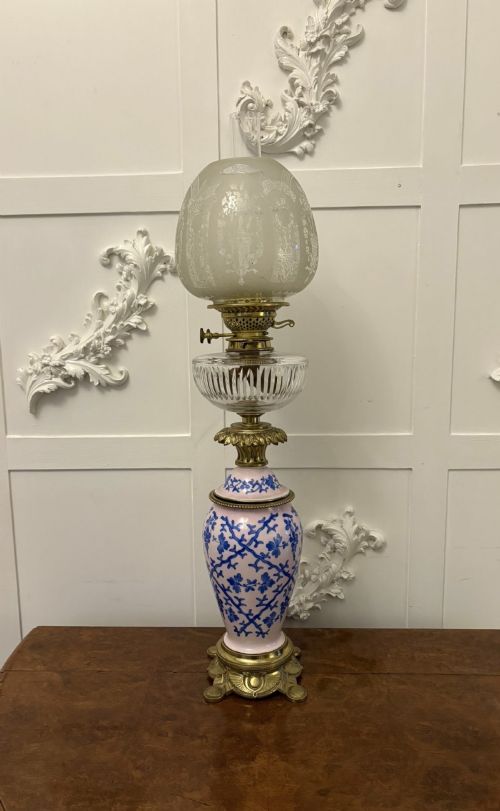
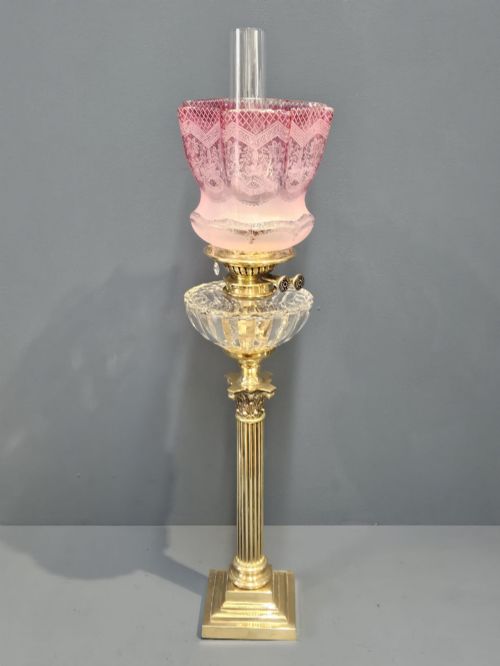
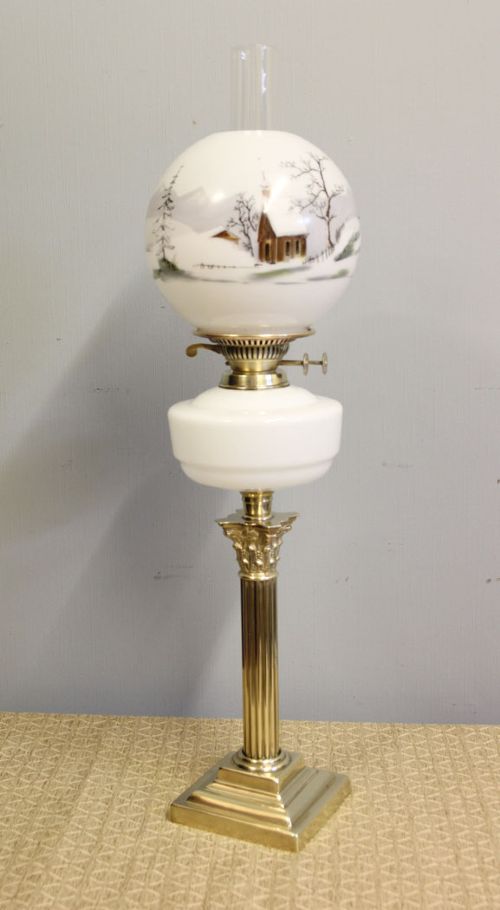
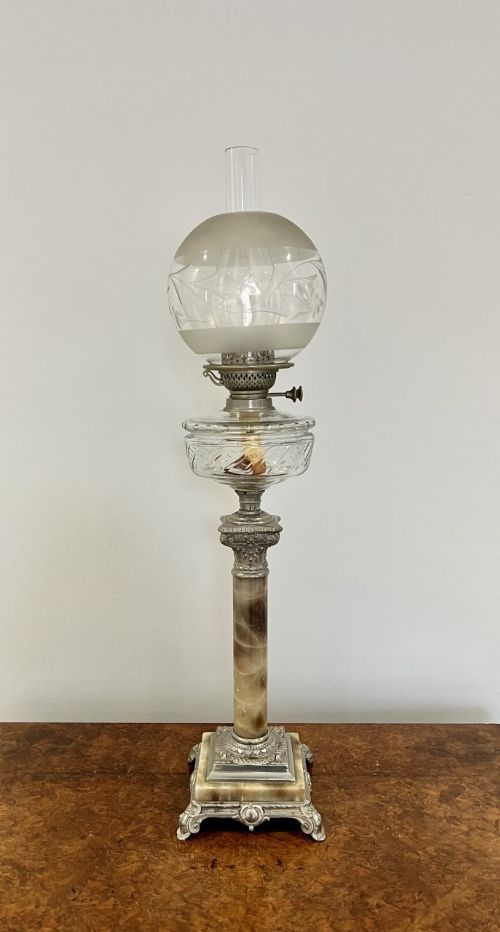
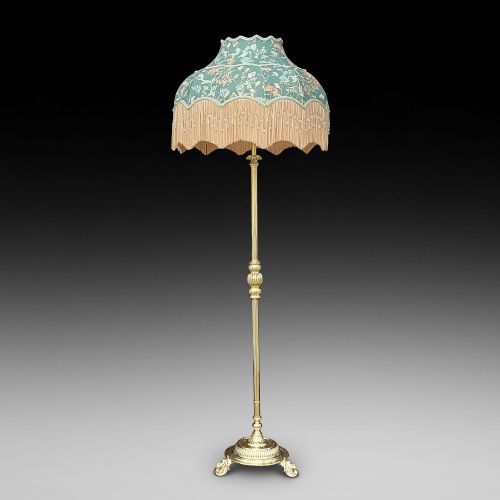
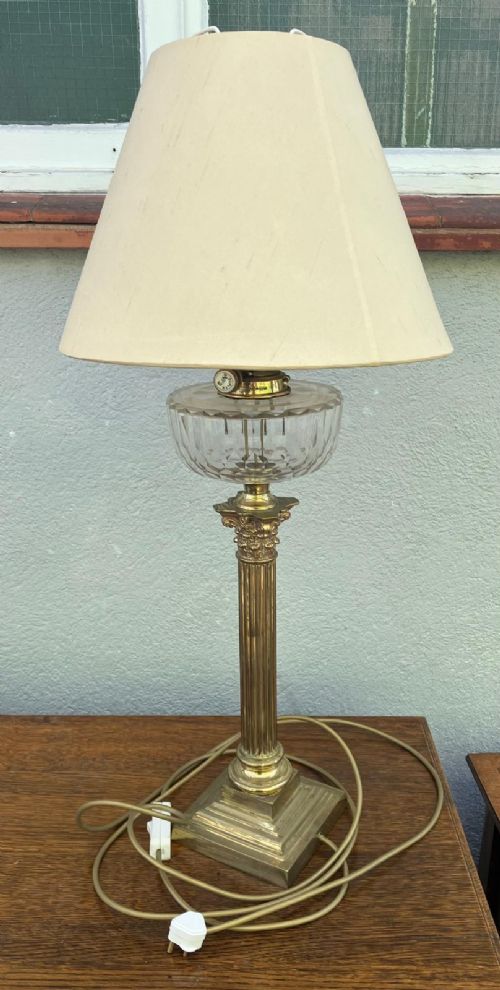
Most pieces date from the nineteenth century up to the early twentieth century, spanning eras from George III to Edwardian industrial design. You will frequently find tall brass columns, ceramic fonts and ornate glass shades designed to diffuse the flame.
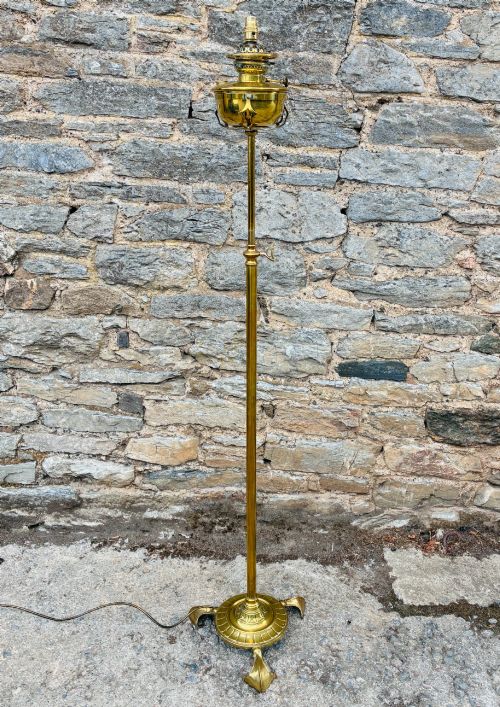
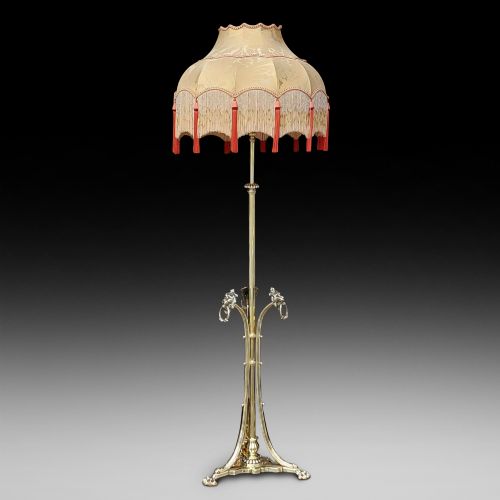
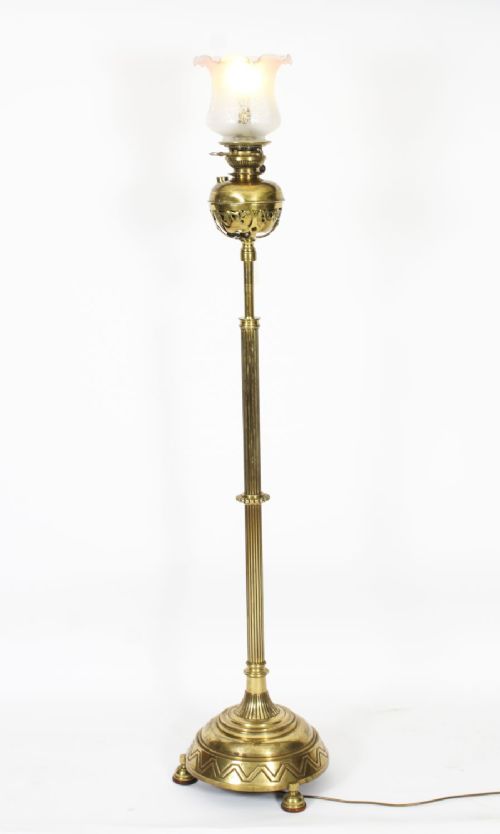
Beyond standard table lamps, the inventory includes student lamps complete with implements, adjustable telescopic standards, and ship lanterns. Occasionally, early eighteenth-century whale oil lamps and crusie lamps appear from continental workshops.
Materials and construction
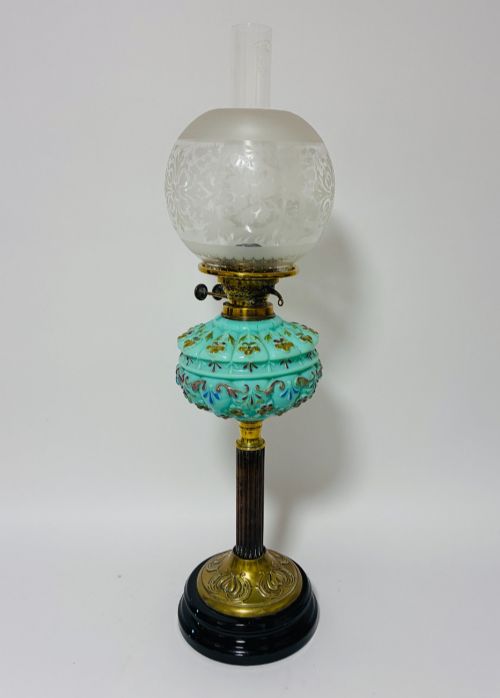
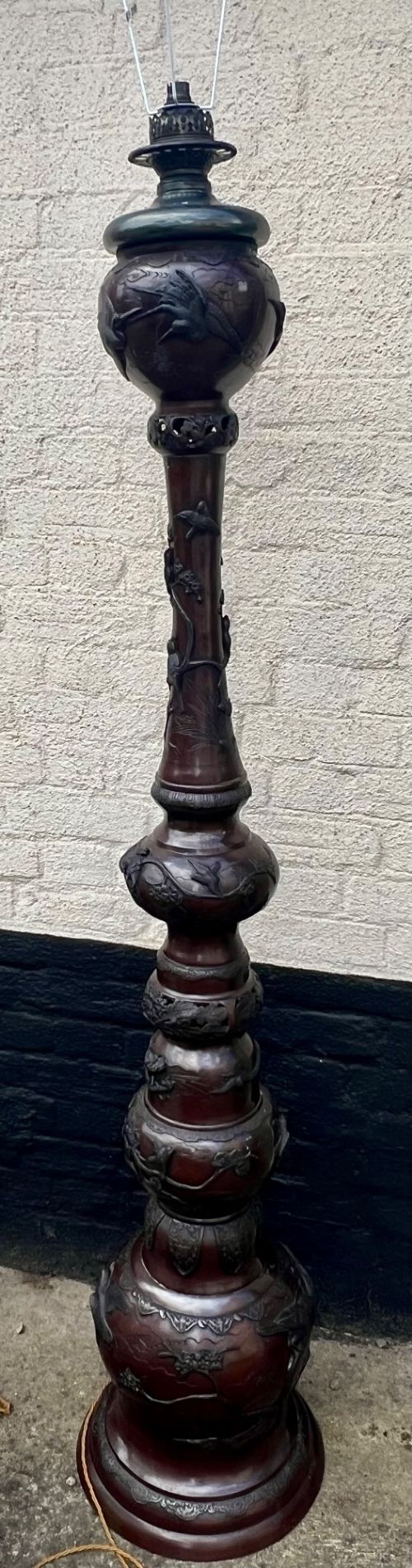
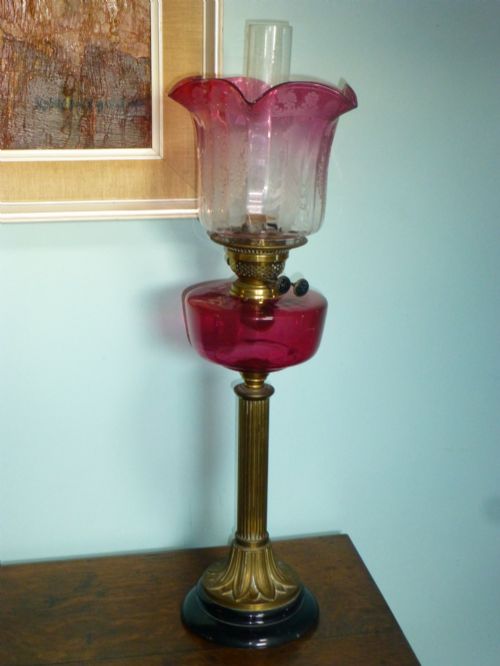
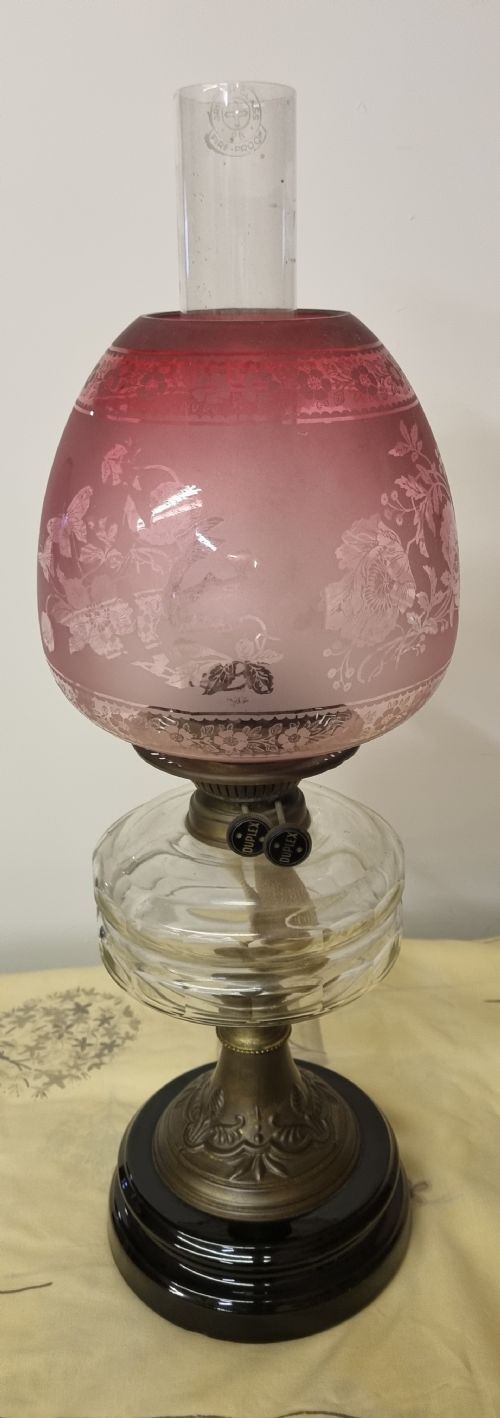
Makers utilised cast brass, bronze and copper for structural integrity, often forming tall Corinthian or Ionic columns and heavy weighted bases. Brass components frequently paired with hand-blown cranberry glass, opaline glass or painted porcelain fonts to provide visual contrast.
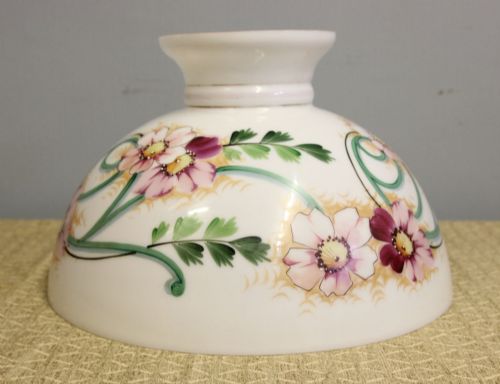
Burner mechanisms, such as those produced by Hinks, required precision engineering to control the flame and wick efficiently. Decorative elements incorporated hand-painted motifs, ormolu gilding and onyx mounts, while some standard lamps were later converted to electricity.
The listings on this page span the Victorian, Edwardian and Georgian periods, utilising brass, cranberry glass, opaline glass, porcelain and bronze.
Distinctions in quality
Quality rests upon the weight of the cast metal, the precision of the column fluting, and whether the glass components are hand-blown rather than moulded. Marked burners from recognised makers indicate higher workshop standards.
The sophistication of the decorative programme separates standard domestic lighting from exceptional examples. Hand-painted ceramic figural bases, undamaged cranberry glass shades with hand-finished details, and original mechanical adjustments elevate a piece above simpler utilitarian lighting.
Eli Griffiths And Sons·Alderson And Gyde Ltd·Mc Gary·Gustave Serrurier Bovy·Hinks·Taylor Tunnicliff·Sitzendorf
The Antique Oil Lighting Glossary
- Duplex burner
- A double-wick burner system designed to produce a significantly brighter flame than single-wick variants. These units are typically found on larger parlor and table lamps.
- Standard lamp
- A tall floor-standing lamp designed to illuminate a room from standing height rather than resting on a table. Many examples feature adjustable telescopic columns.
- Corinthian column
- An architectural column style featuring ornate acanthus leaf capitals, frequently utilised by makers for the stems of heavy nineteenth-century brass lamps.
- Opaline glass
- An opaque or translucent white glass often tinted in soft pastel shades, widely used for Victorian lamp shades and decorative vases.
Antique Oil Lighting: Frequently Asked Questions
Can antique oil lamps be used today?
Many antique oil lamps retain their original burners and fonts, though safety dictates burning appropriate fuels with care. Alternatively, numerous pieces have been converted to electricity for modern interior lighting.
Conversion is often reversible if you prefer to restore the lamp to its original paraffin-burning function.
What is a duplex burner?
A duplex burner utilises two parallel flat wicks instead of one, maximising the surface area of the flame to produce a much brighter light. This mechanism became popular during the Victorian era for larger parlor lamps.
You will often see the manufacturer's name stamped directly onto the brass thumb-wheels of these burners.
How should I clean a brass oil lamp?
Dust brass components gently with a soft dry cloth to preserve any patination accumulated over the centuries. Avoid harsh chemical polishes that strip away the historical surface character.
Glass shades and ceramic fonts can be washed cautiously in warm soapy water, taking care around hand-painted details.