


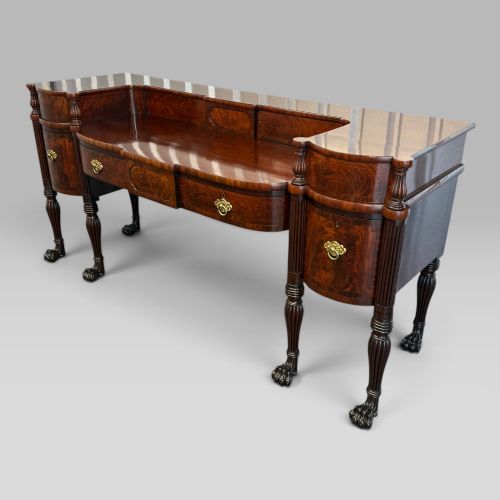
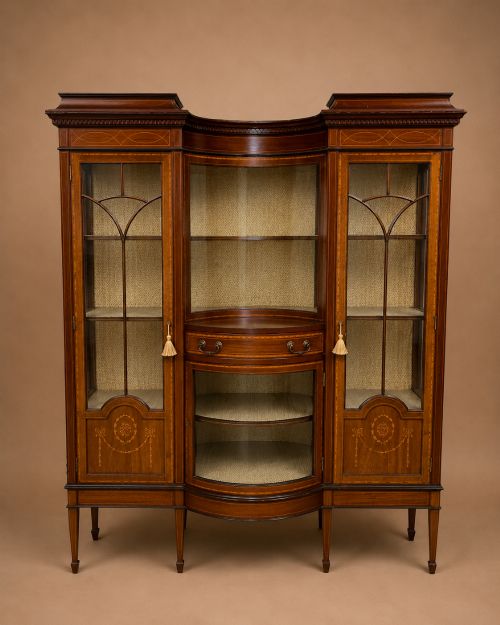
Vintage Inlaid Mahogany Cabinet
A vintage inlaid mahogany cabinet brings rich timber tones and delicate marquetry into a room, offering both practical storage and period elegance.
Vintage Inlaid Mahogany Cabinet
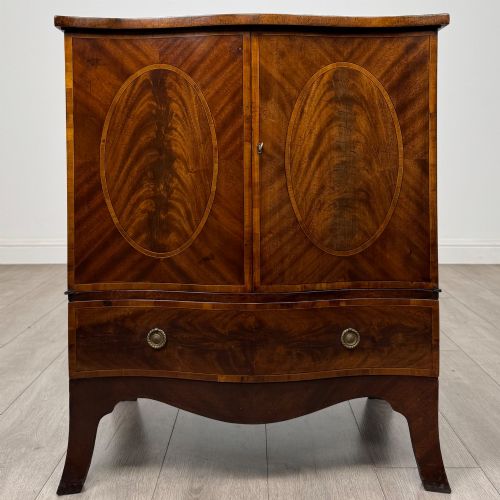
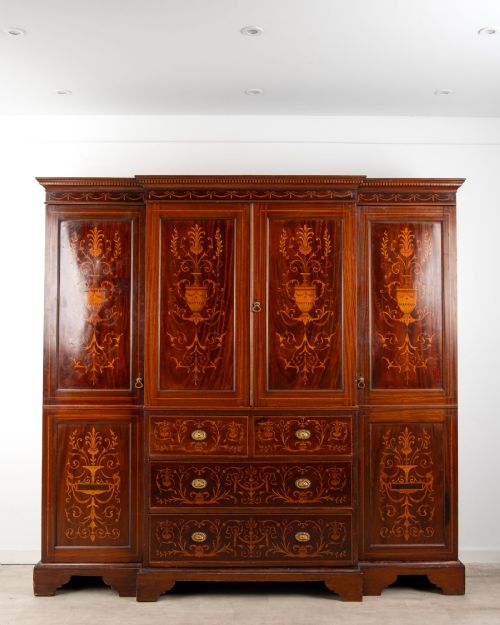
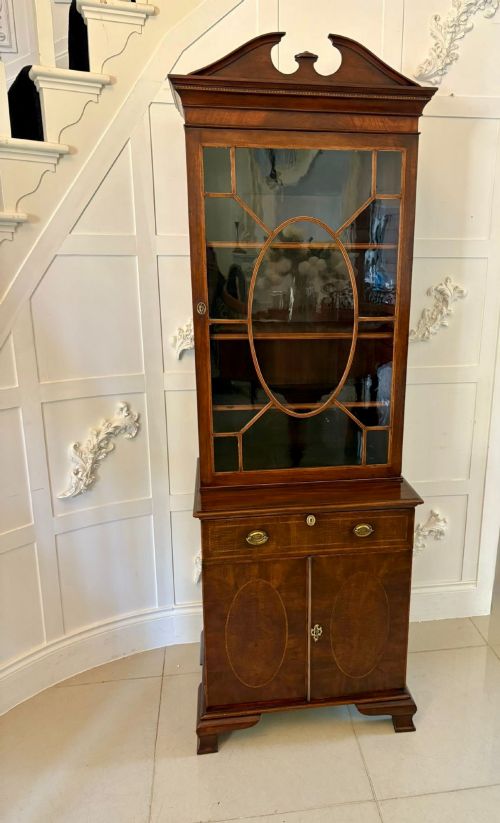
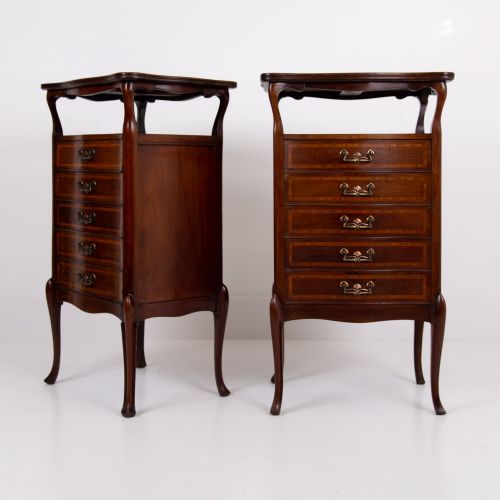
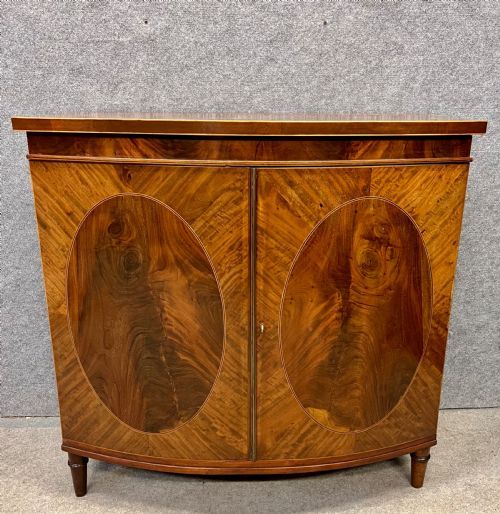
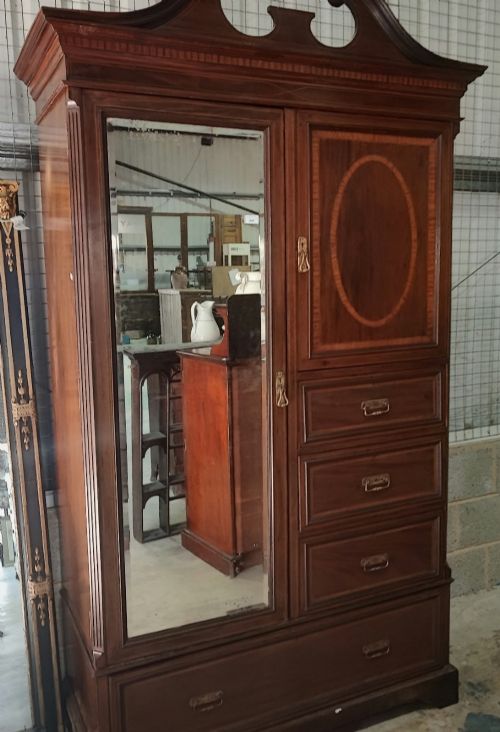
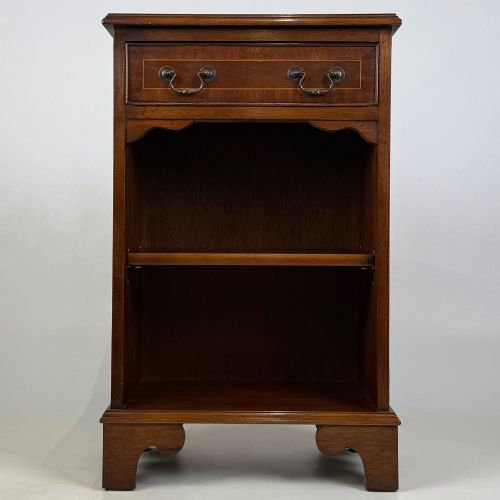
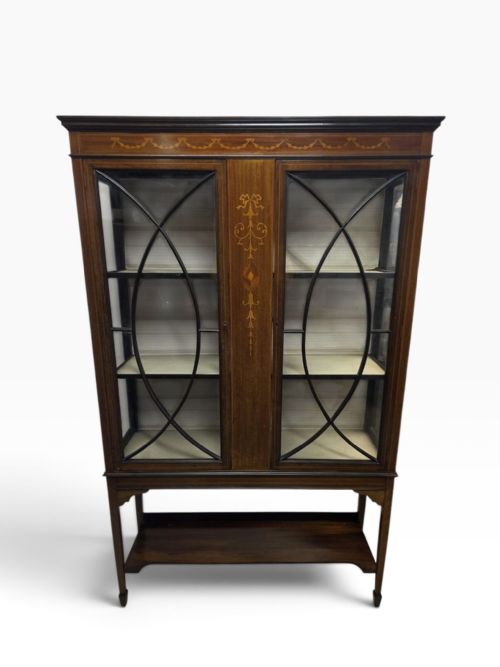
When you search for a vintage inlaid mahogany cabinet, you are looking at a diverse group of case pieces designed to store, display, or organise household goods. These items range from compact bedside units and corner cupboards to expansive linen presses and display bookcases.
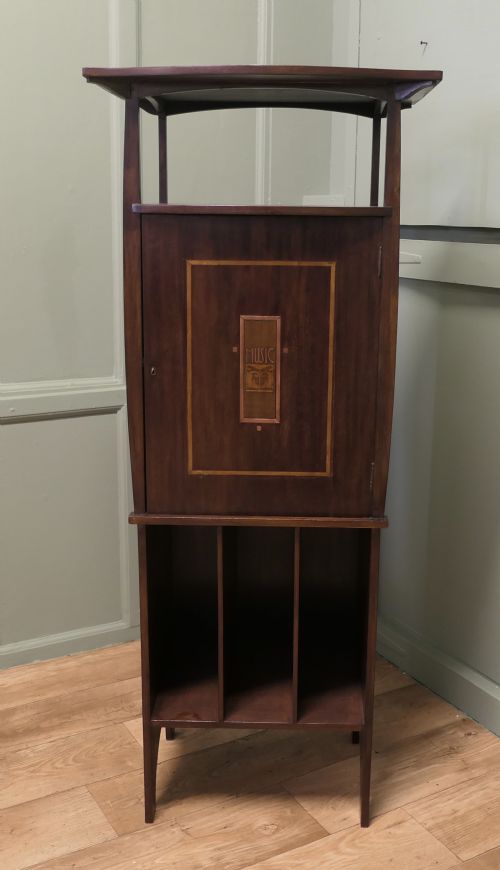
The version you are most likely to meet on this page is from the Edwardian period or the late nineteenth century, though earlier Georgian and Regency examples also appear. These pieces serve distinct roles in the home, functioning as music cabinets, sideboards, or gentleman's wardrobes.
Makers fashioned these cabinets to stand against walls, fit into corners, or serve as bedside companions. Their forms reflect the functional demands of past households combined with the decorative ambitions of their makers.
Assessing quality and finish
The standard of a piece depends heavily on the precision of the timber selection and the crispness of the inlay work. Finer cabinets display harmonious grain matching across drawer fronts and doors, whereas simpler items utilise plain timber with minimal embellishment.
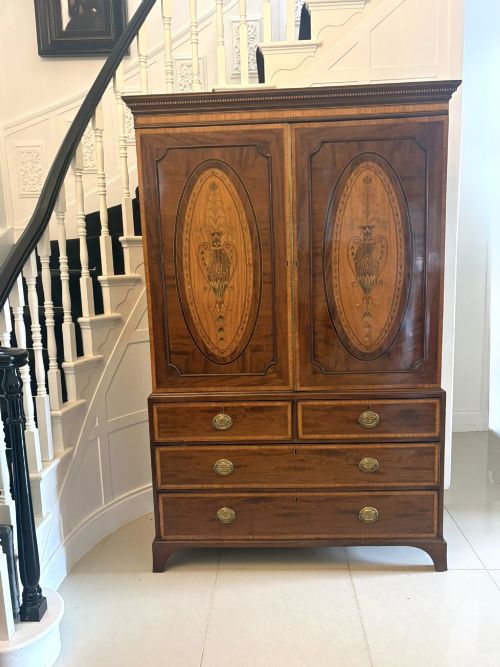
Master craftsmen invested considerable skill in creating intricate satinwood or boxwood motifs that remain tight and secure within the mahogany ground. The integration of quality hardware, such as solid brass handles and working locks with original keys, separates standard utility furniture from exceptional examples.
Listings feature Edwardian, Victorian, and Georgian periods, with materials spanning mahogany, satinwood, brass, and glass.
GM Elwood for JS Henry·maples and co·Edwards and Roberts
The Vintage Inlaid Mahogany Cabinet Glossary
- Inlay
- The technique of inserting pieces of contrasting timber, such as satinwood or boxwood, into depressions carved into the mahogany surface to form decorative patterns. This method creates a flush, smooth exterior.
- Compactum
- A large fitted wardrobe combining hanging space, drawers, and shelving within a single multi-door carcase. These substantial items provide comprehensive bedroom storage.
- Marquetry
- Elaborate pictorial inlay work composed of various veneer pieces assembled to create complex floral, geometric, or figurative designs. Artisans frequently applied this technique to high-status cabinet doors and tops.
- Linen Press
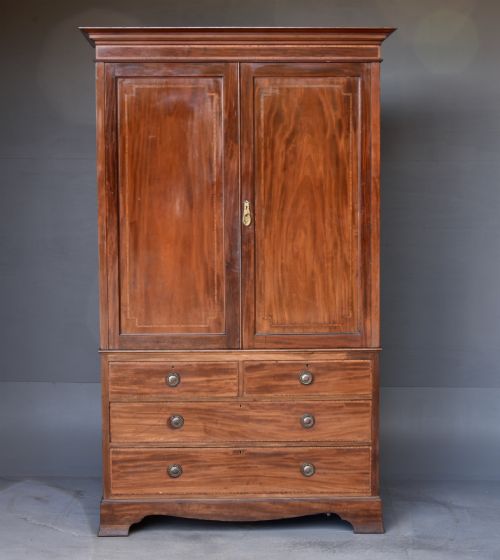
- A tall piece of furniture featuring sliding trays or shelves enclosed by upper doors, sitting above a chest of base drawers. Households originally utilised these to store household linens flat.
- Serpentine
- A curved furniture front characterised by a convex central section flanked by concave curves. This undulating shape requires advanced woodworking skill to execute properly.
Vintage Inlaid Mahogany Cabinet: Frequently Asked Questions
How do I date a mahogany cabinet?
Dating relies on examining construction methods, timber characteristics, and stylistic details. Pieces from the Georgian era often feature hand-cut dovetails and solid timber carcases, while Edwardian items may incorporate machine-sawn elements and distinctive Sheraton Revival motifs.
Secondary woods used inside drawers and back panels also provide clues to age and origin. Comparing the overall proportions and inlay styles to documented examples helps narrow down the decade of manufacture.
Where should I place a corner cabinet?
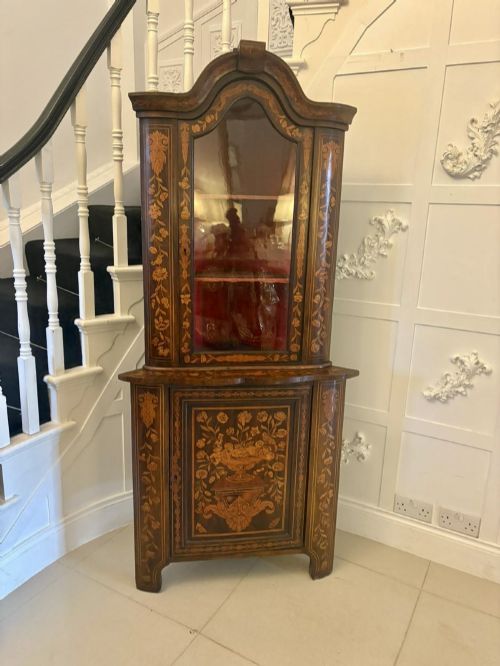
A corner cabinet fits naturally into unused room angles, turning awkward junctions into decorative focal points. Floor-standing models anchor a corner while offering display space behind glass doors.
Hanging corner cupboards mount securely to walls above desks or side tables. Both variants work well in dining rooms, studies, or hallways where floor space is limited.
How do I care for antique mahogany?
Protect antique mahogany by keeping it away from direct sunlight and strong heat sources, which can dry out the timber and fade the polish. Dust regularly with a soft, dry cloth to prevent abrasive particle buildup.
Apply a traditional beeswax polish sparingly every few months to nourish the wood and maintain its deep lustre. Avoid silicone-based sprays, as they can penetrate the finish and damage the grain over time.