

Antique Narrow Cabinet
An antique narrow cabinet offers practical storage for compact spaces, spanning tall bookcases, bedside chests, and display pieces crafted in mahogany, oak, and walnut.
Antique Narrow Cabinet
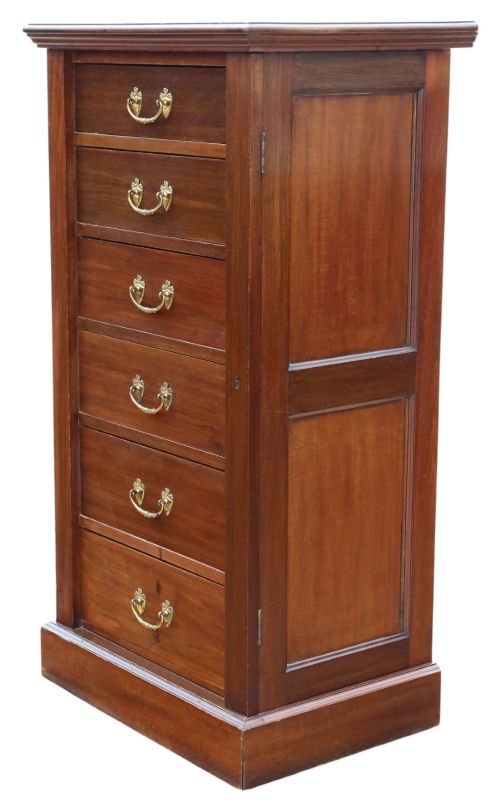
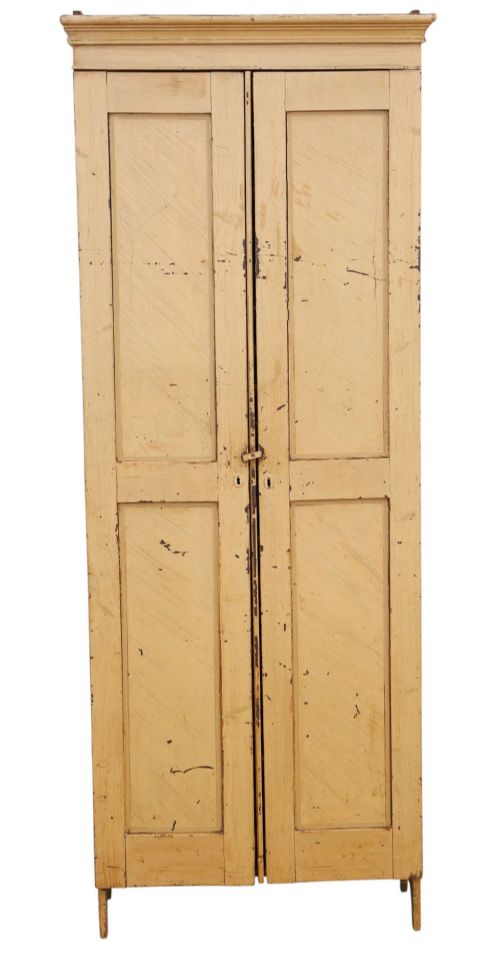
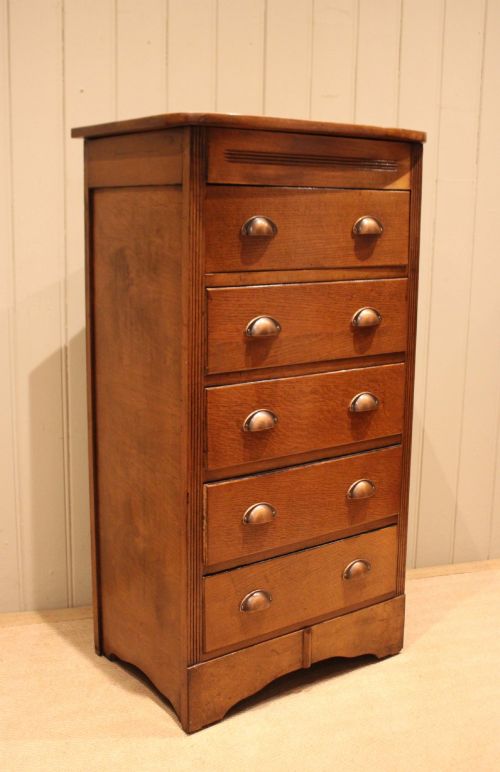
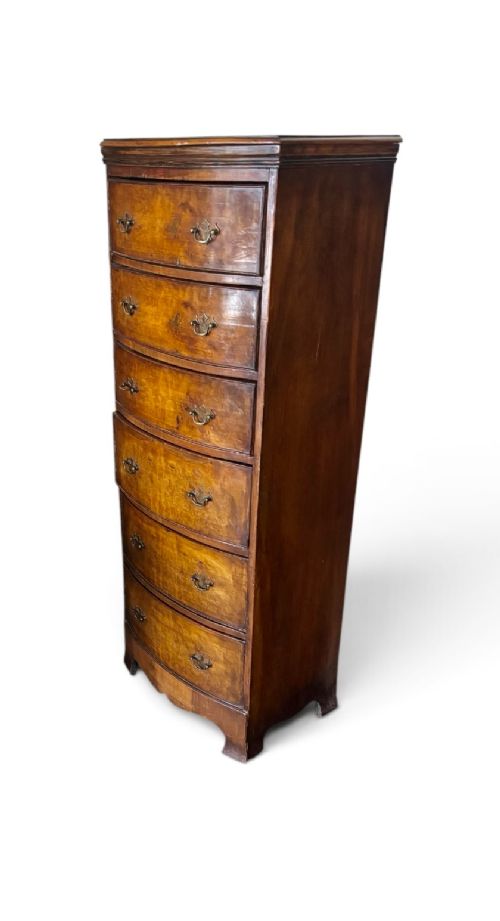
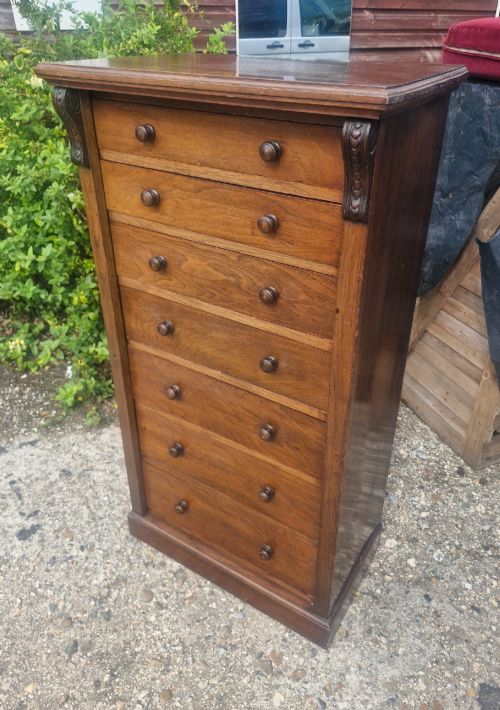
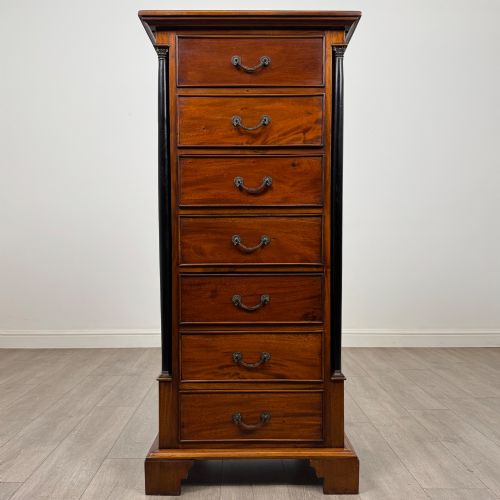
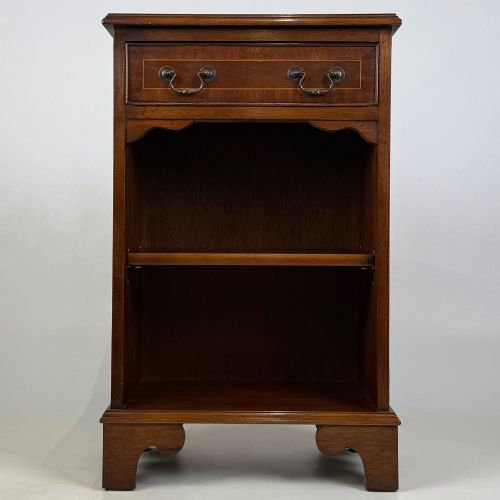
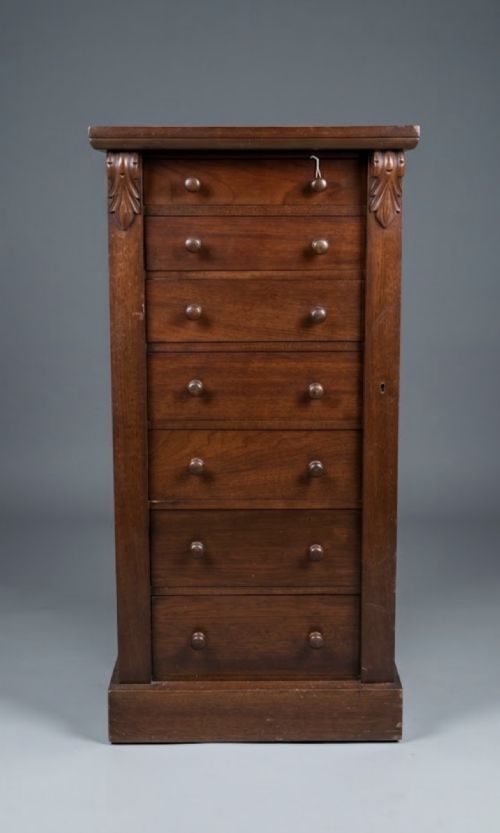
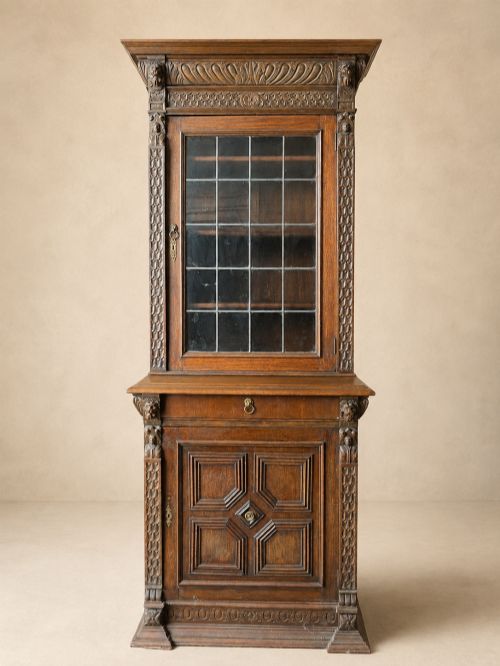
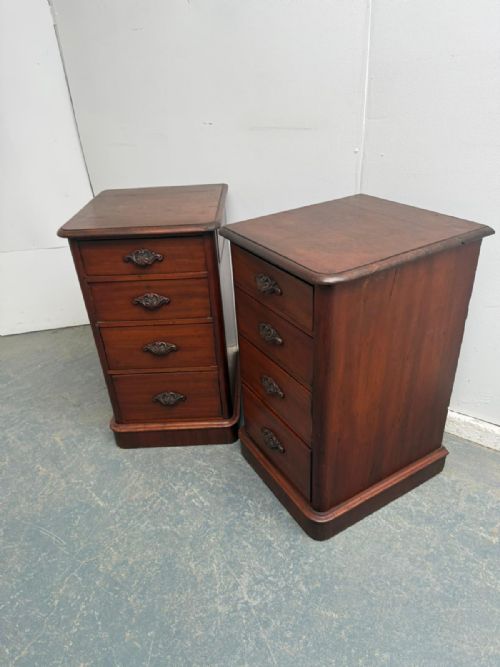
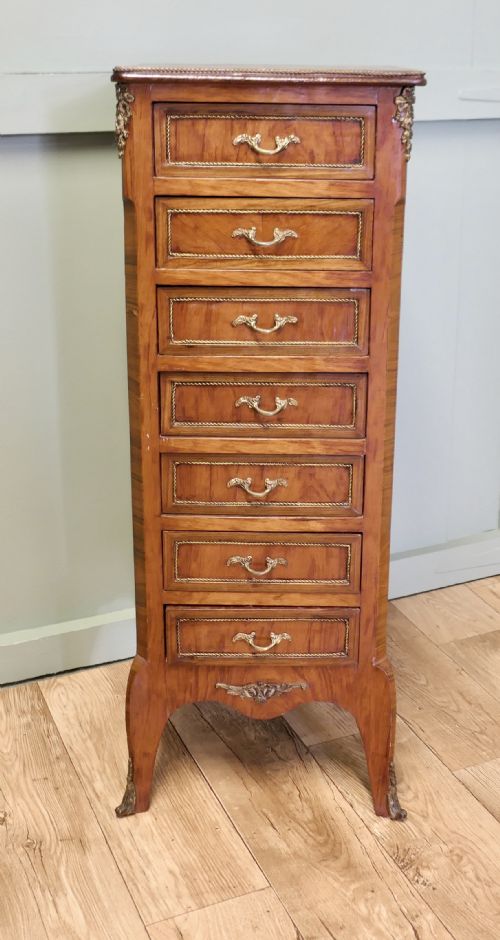
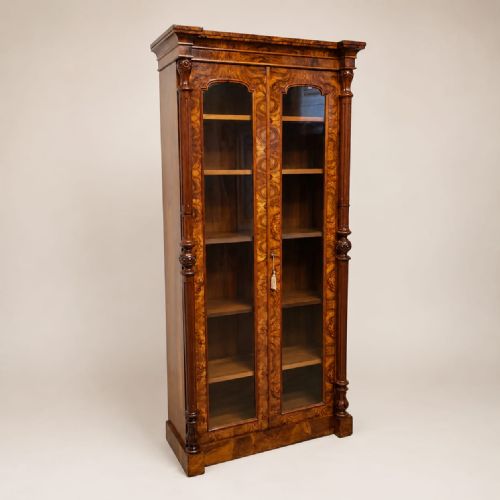
When searching for an antique narrow cabinet, buyers encounter a diverse range of vertical storage forms designed to fit confined footprints without sacrificing utility. The selection spans tall bookcases, bedside chests, Wellington chests, display cabinets, and narrow housekeepers' cupboards.
The pieces originating from the Victorian and Edwardian eras dominate the selection, alongside items from the nineteenth and early twentieth centuries. Mahogany, oak, and walnut form the core structural timbers found across these upright proportions.
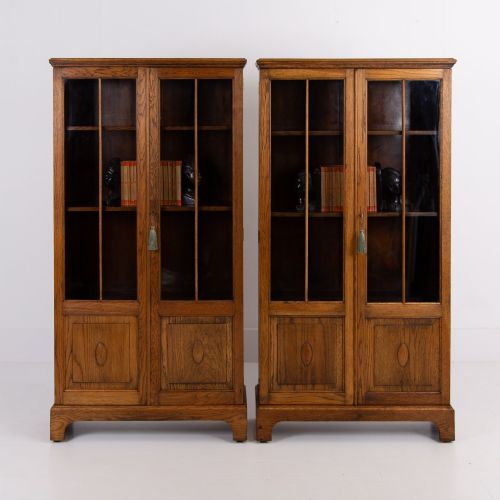
Makers utilised these dense hardwoods to construct sturdy bookcases with glazed doors, slender bedside units, and tallboys. The resulting furniture balances vertical height with reduced floor space requirements, suiting both historic and modern rooms.
What varies in quality
The choice of timber grain significantly elevates a piece, with highly figured walnut veneers and densely grained mahogany marking superior examples above plain secondary woods. Cabinet construction integrity, demonstrated by tight joinery and original brass fittings, separates standard utilitarian items from finer refined works.
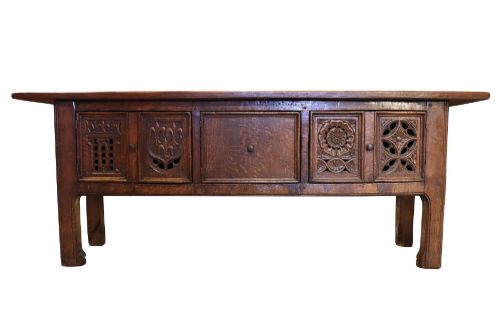
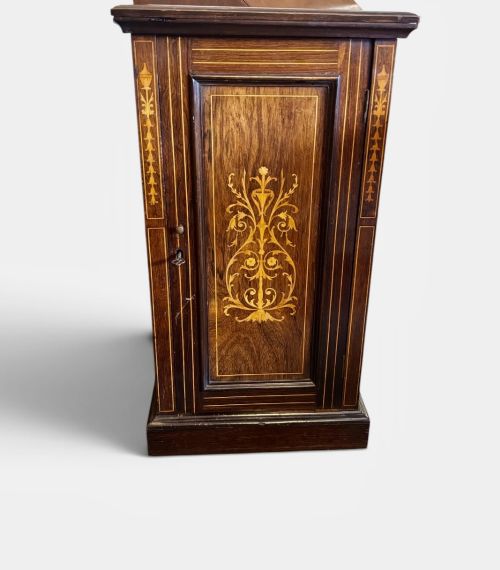
Intricate detailing such as satinwood inlay, marquetry, and well-executed wood carving denotes higher workshop standards. Original glass panels and intact surface polishes further distinguish exceptional specimens from later adaptations or heavily restored pieces.
Listings feature timbers including mahogany, oak, walnut, burr walnut, rosewood, satinwood, and brass hardware.
Warings Liverpool·S & H Jewells of London
The Antique Narrow Cabinet Glossary
- Wellington chest
- A tall, narrow chest of drawers secured by a hinged vertical locking bar on one side. This locking stile fastens with a key to secure all drawers simultaneously.
- Tallboy
- A tall chest of drawers traditionally formed by stacking one cabinet section upon another. These pieces maximise vertical storage while maintaining a small floor footprint.
- Pier cabinet
- A low, narrow cabinet designed to fit wall spaces between windows. They frequently incorporate glass doors or mirrored backs for displaying small decorative objects.
- Vitrine
- A glass-sided display cabinet utilised for showcasing collections. These pieces often feature delicate framing and interior shelving.
- Astragal
- Moulding strips fitted to glass doors to divide the panes into smaller geometric sections. They appear frequently on Edwardian and Georgian revival bookcases.
- Credenza
- A low side cabinet, sometimes fitted with display space or enclosed cupboards. Victorian examples occasionally incorporate marquetry and gilt bronze mounts.
Antique Narrow Cabinet: Frequently Asked Questions
What is a Wellington chest?
A Wellington chest is a tall, narrow set of drawers featuring a hinged locking flap down one side. This wooden stile secures all drawers at once when locked with a key.
Originally designed for secure paperwork storage, these cabinets provide deep vertical capacity without demanding excessive floor space.
Where should I place a narrow display cabinet?
These slim display pieces fit narrow wall spaces, alcoves, and hallways where standard furniture proves too bulky. Their glass panels allow them to showcase books or ceramics without darkening the room.
Matching pairs often flank fireplaces or windows to provide balanced symmetry.
How do I distinguish Victorian from Edwardian cabinets?
Victorian cabinets generally employ darker, heavier timbers like solid mahogany and rosewood with denser carvings and robust proportions. They often feature deep polished finishes and substantial brass hardware.
Edwardian pieces tend to display lighter oak or inlaid mahogany construction, favouring airier forms such as astragal glazed doors and slender tapered legs.
Are bedside chests always sold in pairs?
Many bedside chests and cabinets appear in matched pairs to flank a bed evenly. Single items also occur frequently, salvaged from larger suites or individual bedroom settings.
Matching pairs command strong interest from collectors seeking balanced bedroom layouts.