


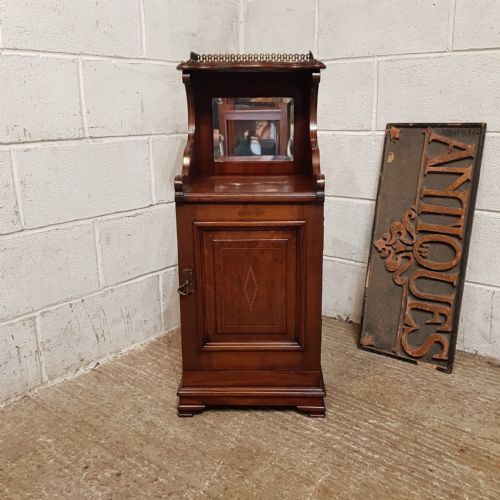

Edwardian Inlaid Bedside Table
An Edwardian inlaid bedside table brings refined timber work and compact utility to the bedside.
Edwardian Inlaid Bedside Table
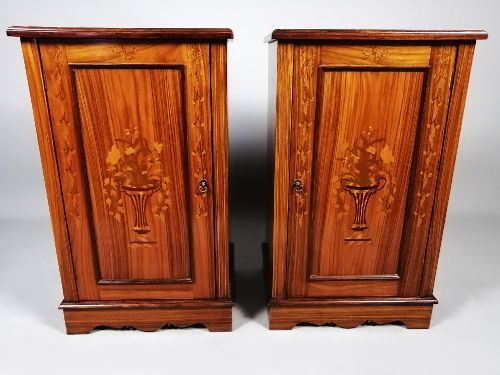
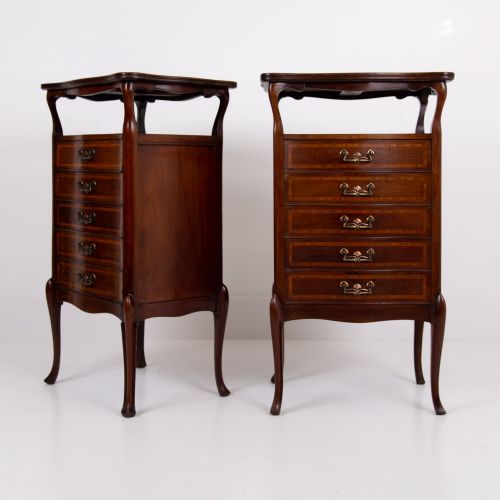
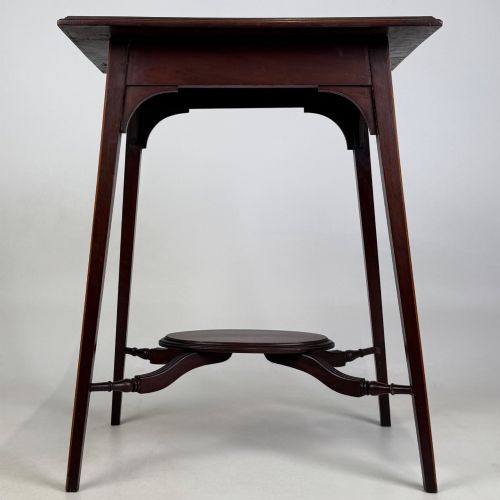
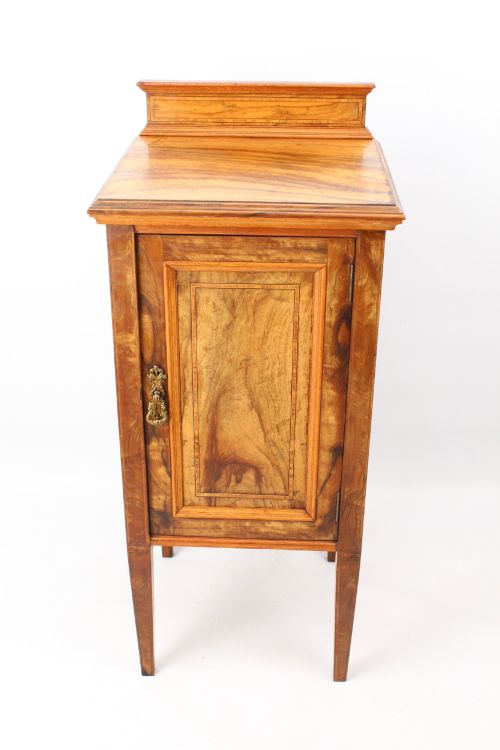
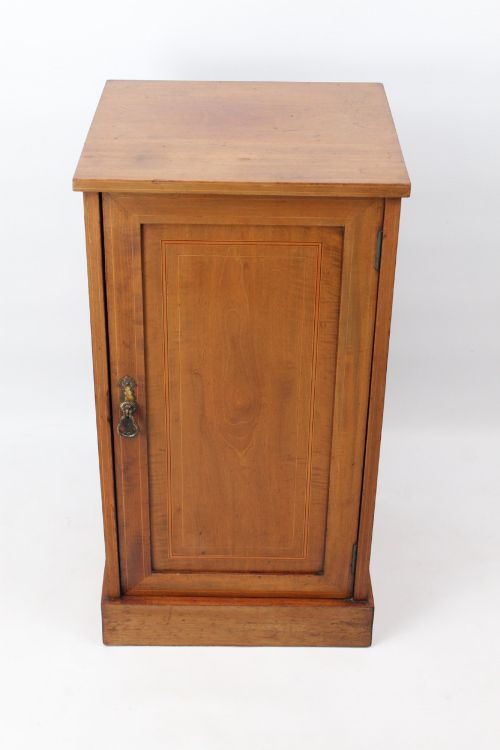
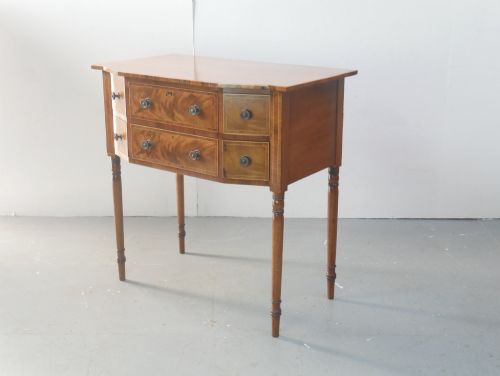
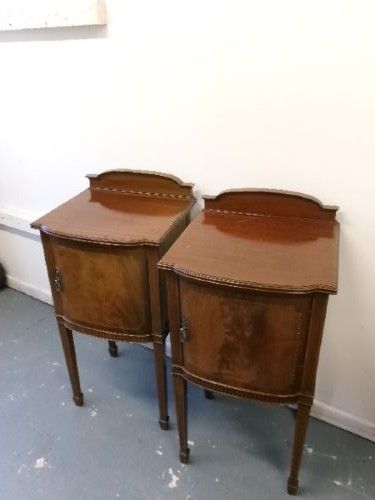
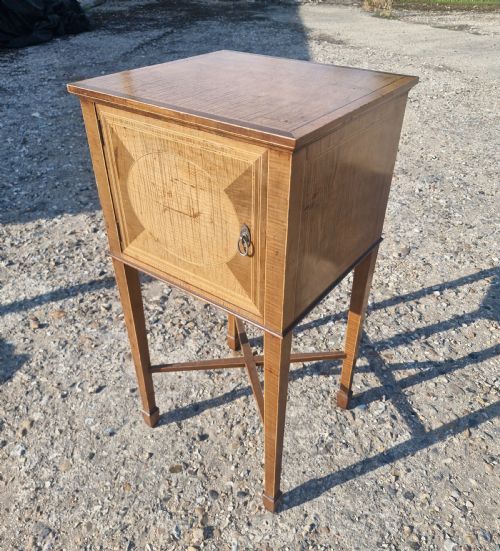
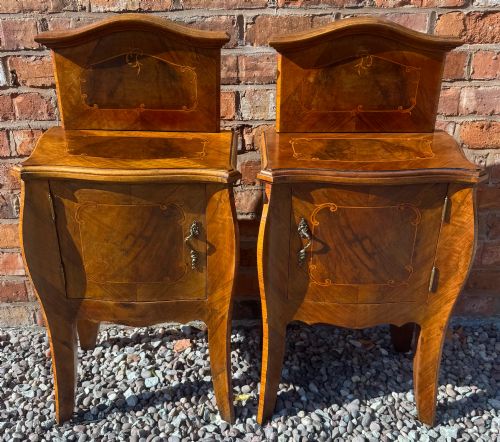
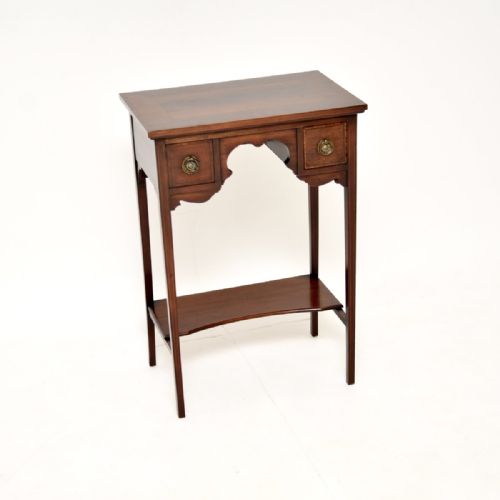
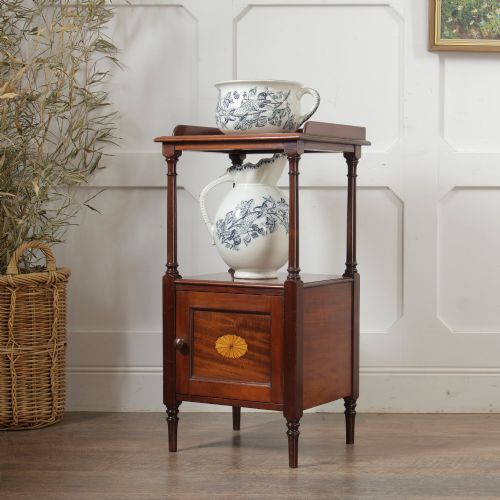
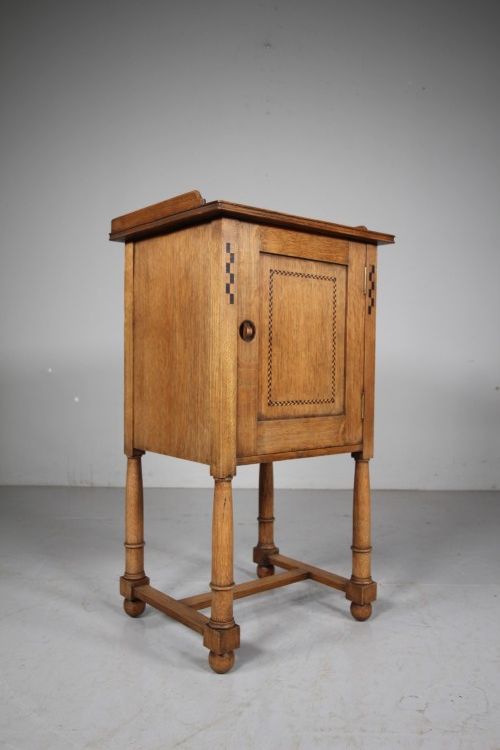
When you search for an edwardian inlaid bedside table, you encounter compact bedside cabinets, side tables, and small cupboards dating from the late nineteenth century through to the Edwardian period and the early twentieth century. The prevailing forms on this page are enclosed bedside cupboards with single doors or drawers, alongside open side tables and occasional chests.
The aesthetic draws heavily on Edwardian, Sheraton Revival, and Late Victorian design principles, often utilising symmetrical proportions and delicate stringing. While many pieces date strictly to the Edwardian era and the 1900s or 1910s, related examples stretch back into the Victorian period and forward to 1920.
How they were made
Cabinet makers constructed the carcases predominantly in mahogany, rosewood, walnut, burr walnut, and oak, frequently pairing darker woods with lighter contrasting timbers. Satinwood, boxwood, and maple supplied the pale surfaces and intricate linear stringing characteristic of the style.
Marquetry and boxwood inlay formed the decorative vocabulary, set into the timber surfaces by hand to create classical motifs, floral patterns, and geometric borders. Brass hardware such as handles and hinges completed the construction of these cupboards and tables.
Several listings include shoe cabinets disguised as bedside furniture, ensuring early twentieth-century footwear remained discreetly stowed.
What varies in quality
The standard of an edwardian inlaid bedside table rests on the precision of the cabinet work and the crispness of the marquetry. Superior examples display tightly fitted joinery, perfectly balanced grain in the mahogany or burr walnut, and finely executed boxwood stringing that remains flush with the surrounding timber.
Attribution to notable workshops elevates a piece, as demonstrated by surviving examples stamped or associated with makers such as Maple and Co, Morant and Co, Gillows, Heals, and Collinson and Lock. Lesser pieces rely on simpler construction with painted or minimal inlay rather than true contrasting wood marquetry.
Maple and Co·Morant and Co·Heals·Collinson and Lock·Gillows
The Edwardian Inlaid Bedside Table Glossary
- Inlay
- A decorative technique where pieces of contrasting wood, such as boxwood or satinwood, are inserted into recessed cavities in the main timber surface to form patterns. This provides the linear detail seen on Edwardian furniture.
- Marquetry
- The art of applying veneer pieces to a structure to form decorative pictures or ornamental designs. It differs from simple inlay by covering larger areas with assembled wooden segments.
- Stringing
- Thin lines of contrasting timber inlaid into channels cut into the surface of furniture. It frames drawers, tabletops, and cabinet doors on Sheraton Revival pieces.
- Sheraton Revival
- A late nineteenth and early twentieth century design movement that reinterpreted the light, classical furniture forms of the eighteenth-century designer Thomas Sheraton. It favours mahogany, satinwood, and delicate inlay.
- Pot cupboard
- A traditional term for a small bedside cabinet originally designed to house a chamber pot. These practical items later evolved into standard bedside tables with internal shelving.
Edwardian Inlaid Bedside Table: Frequently Asked Questions
What is an edwardian inlaid bedside table?
An edwardian inlaid bedside table is a small piece of bedroom furniture made primarily around the start of the twentieth century, featuring decorative contrasting wood details.
These pieces typically take the form of enclosed cupboards with drawers or small open side tables designed to sit next to a bed.
How were these bedside tables used?
Historically, these cabinets served to store night-time essentials, personal items, or chamber pots out of sight in the bedroom.
Today, they function as bedside storage for books and lamps while adding period character to a room.
How do I distinguish Edwardian from Victorian tables?
Edwardian tables generally display lighter, airier proportions with satinwood highlights and refined stringing, reflecting the influence of the Sheraton Revival.
Victorian counterparts tend to utilise heavier solid mahogany construction with simpler lines and deeper, darker finishes.
Are pairs common for these tables?
Matching pairs appear frequently among surviving pieces, as bedrooms of the period often incorporated symmetrical bedside furnishings.
Single tables also occur regularly, reflecting how master craftsmen produced individual pieces for smaller rooms.