


Inlaid Wooden Pot Cupboard
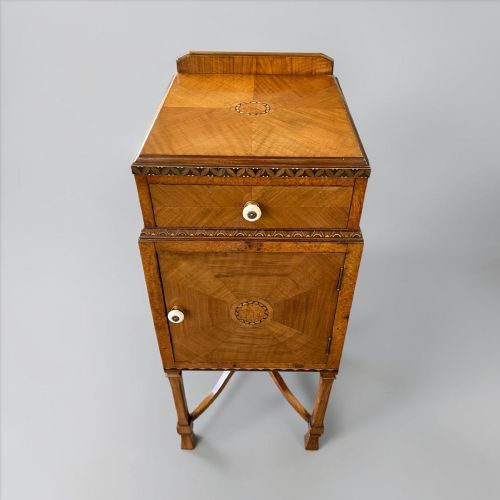
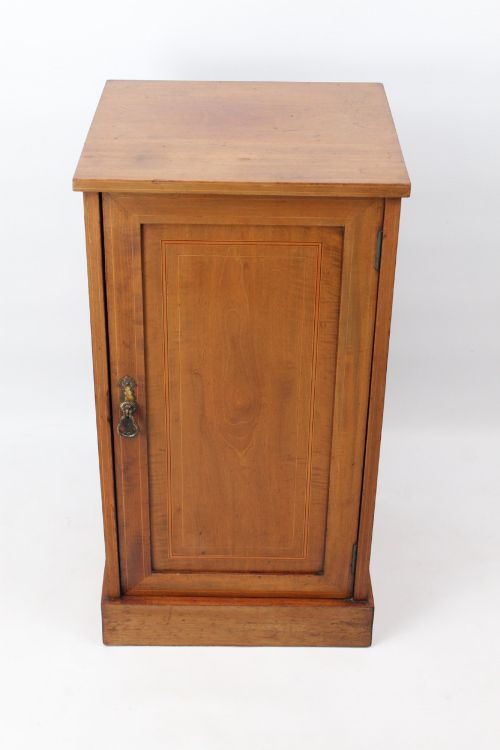
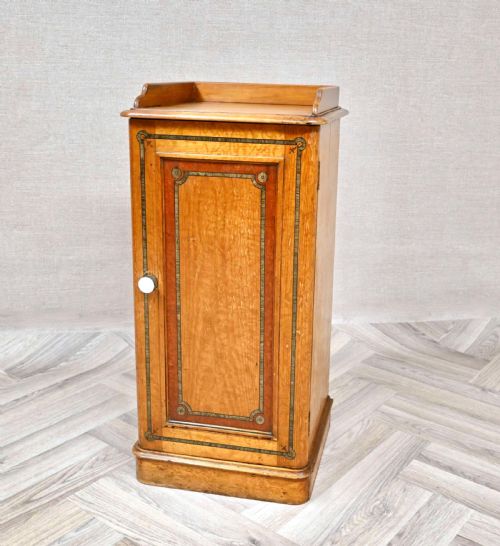
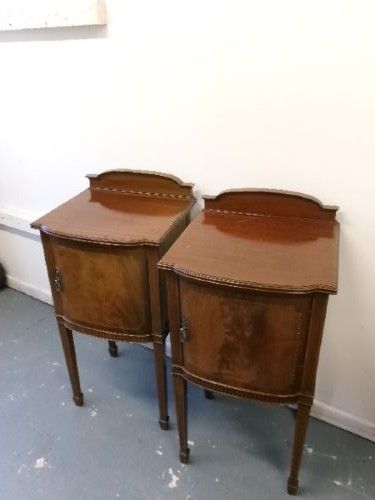
An inlaid wooden pot cupboard brings neat utility to the bedroom, combining figured mahogany, satinwood or walnut with crisp line-inlays.
Inlaid Wooden Pot Cupboard
When you search for an inlaid wooden pot cupboard, you are looking at compact bedside storage designed to hold a chamber pot behind a single door, alongside a small drawer for night-time essentials. These practical pieces range from Georgian and Regency prototypes through to abundant Edwardian examples and occasional Art Deco interpretations.
The version you are most likely to meet on this page is the Edwardian inlaid mahogany bedside cabinet. These Edwardian pieces frequently feature delicate satinwood stringing and boxwood details, standing on slender tapered legs or enclosed plinths.
How they were made
Cabinetmakers constructed these cupboards using solid timbers and fine veneers applied over secondary woods, shaping mahogany, walnut and maple into square or bowfront carcases. Surfaces often received contrasting banding and stringing using satinwood, boxwood and ebony.
Hardware played a functional and decorative role, with brass handles, knobs and hinges fitted to doors and drawers. Internal compartments sometimes incorporated bone escutcheons around keyholes or simple wooden shelves for storage.
Listings span the eighteenth, nineteenth and twentieth centuries, featuring Georgian, Regency, Victorian, Edwardian and Art Deco periods.
What varies in quality
The standard of an inlaid wooden pot cupboard depends upon the choice of timber figure and the precision of the marquetry or stringing. Finely figured mahogany and well-matched satinwood veneers elevate a simple bedside cabinet above plain utility versions.
Proportion and construction integrity also distinguish finer pieces, particularly in the crispness of edge-banding and the joinery of drawers and panelled doors. Cabinetmaking firms such as Maple and Co or Gillows applied rigorous standards to timber selection and internal finishing.
Maple and Co·Gillows
The Inlaid Wooden Pot Cupboard Glossary
- Stringing
- A thin inlay of contrasting wood, such as boxwood or ebony, set into grooves on drawer fronts and cabinet tops to create delicate linear borders.
- Marquetry
- The art of forming decorative patterns and pictures by fitting together small pieces of wood veneer of various colours and grains.
- Bowfront
- A convex, outward-curving cabinet front that softens the corners of a bedside table and demands precise curving of drawers and doors.
- Escutcheon
- A small plate of brass or bone surrounding a keyhole, protecting the surrounding wood from wear and adding a decorative accent.
Inlaid Wooden Pot Cupboard: Frequently Asked Questions
What is a pot cupboard?
A pot cupboard is a small bedside cabinet historically designed to conceal a chamber pot within its lower compartment, keeping necessary facilities close at hand.
Over time, these pieces evolved into general bedside tables and side cabinets used for lamps, books and personal storage while retaining their compact footprint.
How do I date an inlaid cabinet?
Dating relies on timber choices, construction methods and stylistic markers like stringing and leg shapes. Georgian pieces tend to be heavier and simpler in mahogany, whereas Edwardian examples often feature lighter satinwood framing and refined line-inlays.
Looking at secondary woods inside drawers and the style of brass handles helps confirm whether a piece belongs to the nineteenth or early twentieth century.
Where should I place a bedside cabinet?
These compact cupboards sit neatly beside a bed to hold a reading lamp, a glass of water and nighttime reading material. Their enclosed doors keep clutter out of sight in smaller bedrooms or guest rooms.
They also function effectively as small side tables in hallways or living rooms where floor space is limited.
What woods were used for inlay?
Cabinetmakers utilised pale woods such as satinwood and boxwood to create sharp contrast against darker grounds of mahogany and walnut. Darker accents of ebony were frequently incorporated into multi-layered stringing.
These contrasting timbers were cut into thin strips and embedded flush into the primary wood surfaces.