

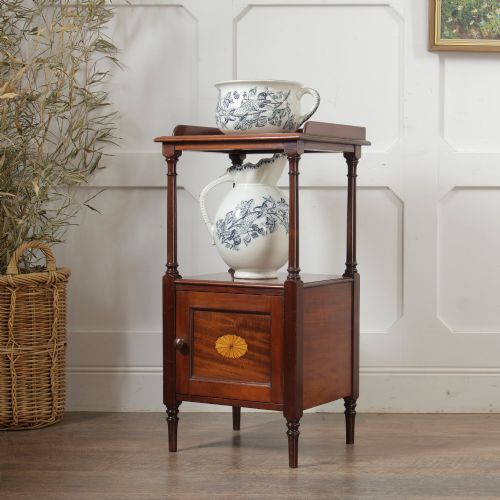
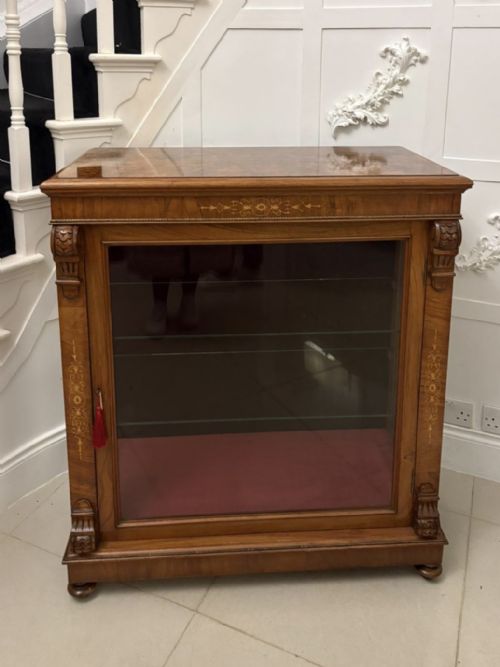
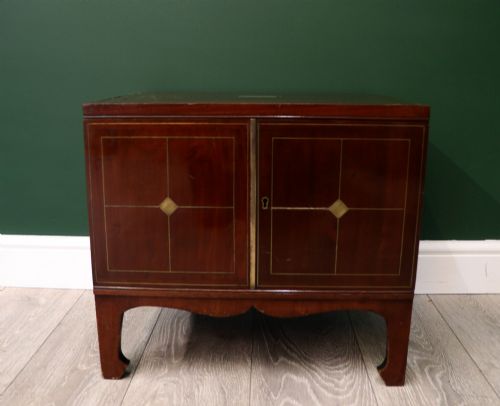
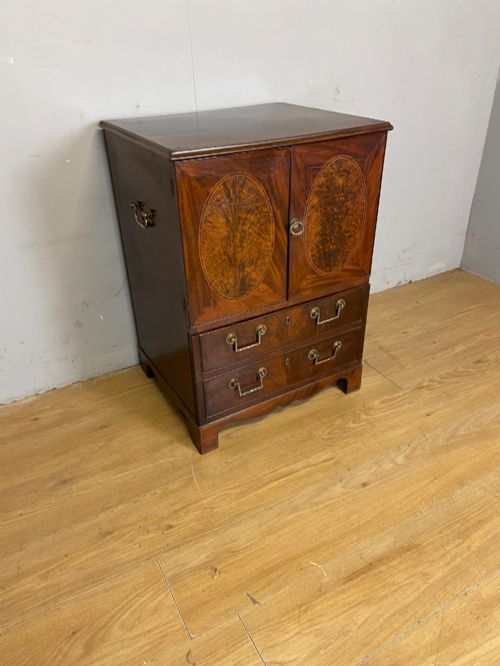
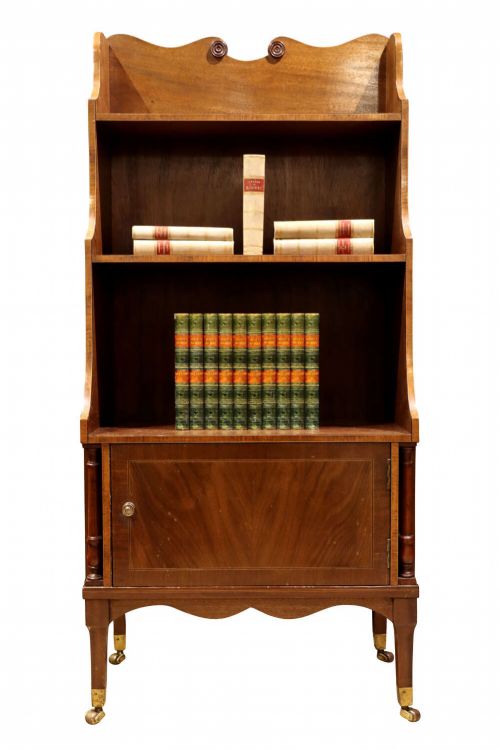
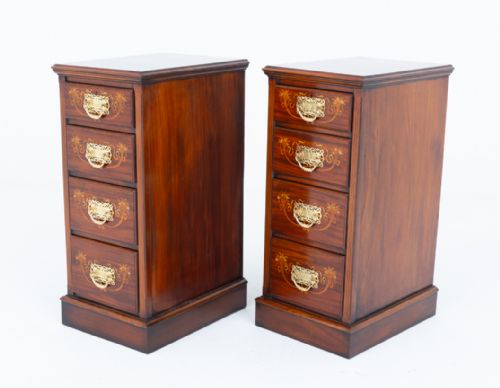
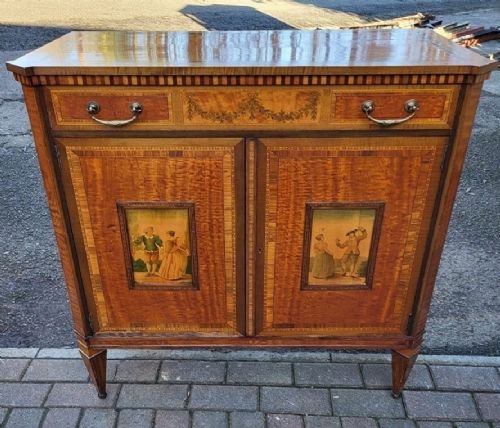
Small Inlaid Mahogany Cupboard
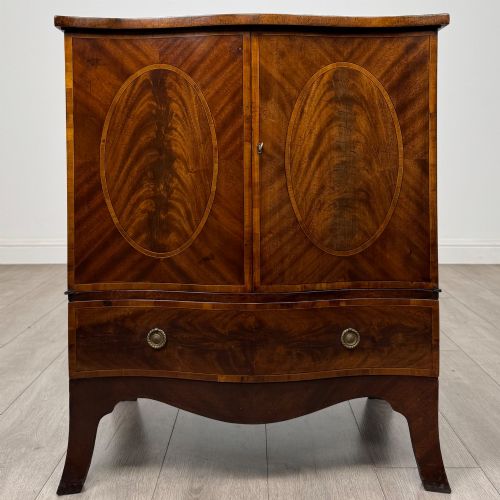
A small inlaid mahogany cupboard brings useful timber and crisp stringing into a room without dominating the floor space.
Small Inlaid Mahogany Cupboard
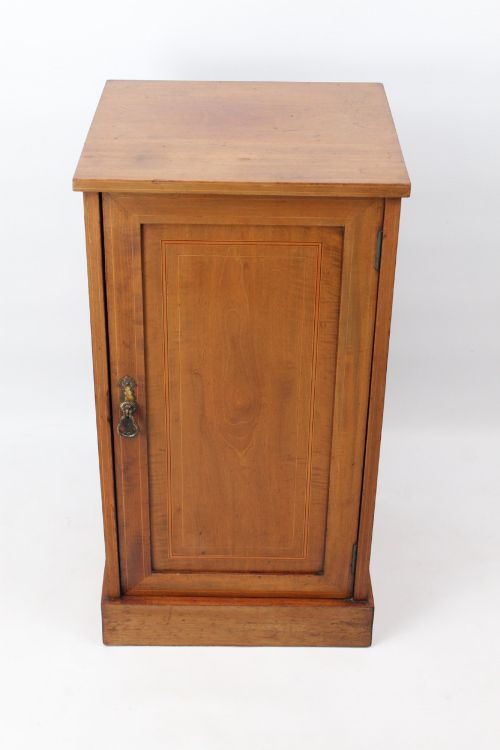
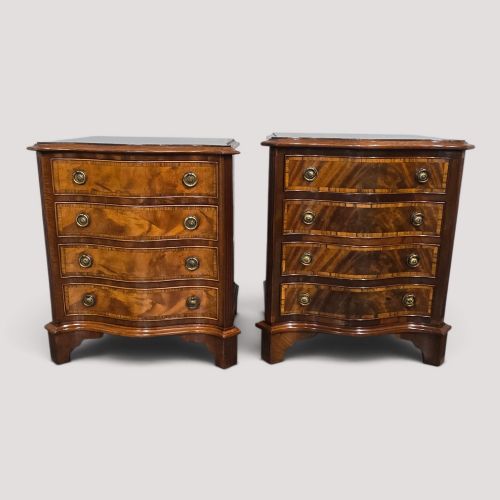
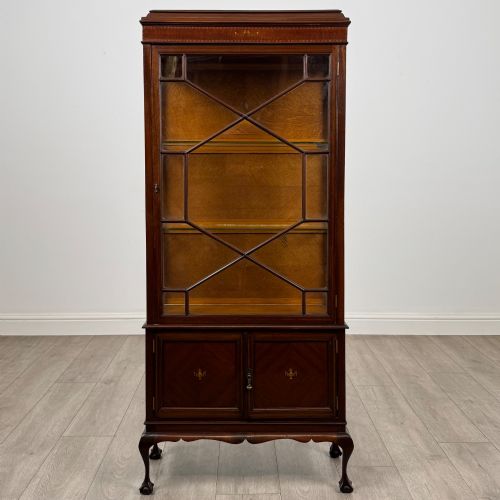
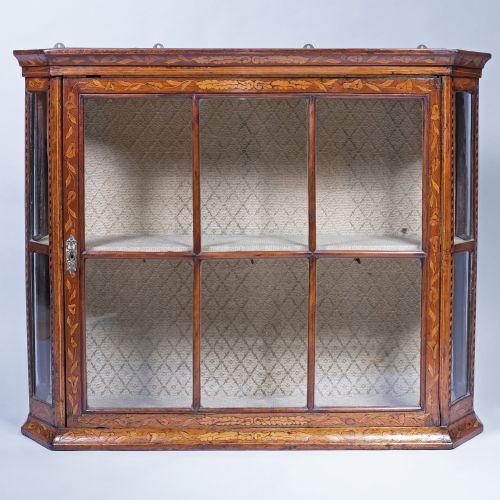
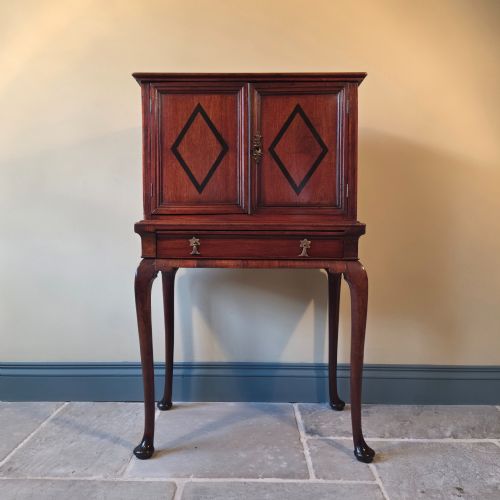
A small inlaid mahogany cupboard serves as a compact storage piece, appearing in forms such as bedside cabinets, wall-hanging corner cupboards, and side cabinets. These pieces date across several periods, with Edwardian and Georgian examples forming a large portion of the selection alongside Victorian and later interpretations.
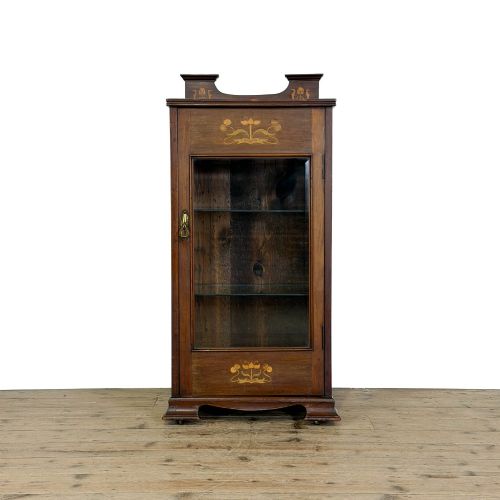
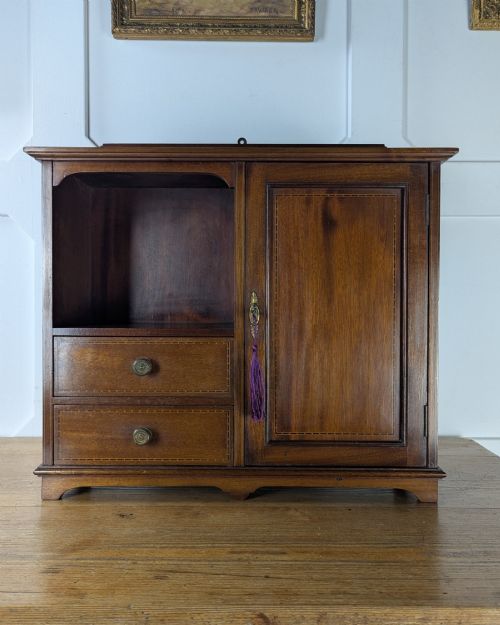
The buyer encounters various domestic formats, including bedside chests, music cabinets, and display cabinets with glazed doors. Timber surfaces combine rich dark mahogany with lighter decorative elements, maintaining the proportions needed for smaller interiors.
Materials and construction
Cabinet makers utilised solid mahogany and mahogany veneers over secondary woods, building carcases with dovetailed joints for drawers and panelled construction for doors. Contrasting timbers such as satinwood, boxwood, and maple provide the linear stringing and panel borders characteristic of the style.
Inlay techniques include marquetry and linear banding, often paired with brass hardware such as drop handles, escutcheons, and castors. Surface finishing relies on French polish to deepen the red tones of the mahogany while highlighting the grain and the paler inlaid motifs.
Smokers' cupboards kept pipes and tobacco secure behind tiny doors, proving that Victorians loved miniature architectural order just as much as we do.
Assessing craftsmanship and finish
Quality rests in the precision of the timber selection and the execution of the inlay work, where tight joints and symmetrical grain patterns distinguish finer workshop production. Crisp, sharp lines in the boxwood or satinwood stringing indicate careful hand-cutting rather than hurried assembly.
The integrity of the structural carcase, the retention of original brass fittings, and the depth of the polished surface separate standard utility pieces from finer decorative cabinets. Well-preserved interior shelving and working locks add functional merit to the visual appeal.
Maple & Co.·Shapland & Petter
The Small Inlaid Mahogany Cupboard Glossary
- Stringing
- A narrow strip of contrasting timber inlaid into the surface of the mahogany to form a delicate border. This linear detail defines Sheraton Revival and Georgian cabinet work.
- Marquetry
- The art of creating decorative patterns on wood surfaces using fitted veneers of various woods. It appears on door panels and drawer fronts.
- Serpentine
- A front line or surface curved in a gentle wave, concave in the centre and convex at the ends. This shaping requires expert timber selection and joinery.
- Carcase
- The foundational structural body of a piece of cabinet furniture before drawers, doors, and hardware are fitted. Sound carcase construction ensures longevity.
Small Inlaid Mahogany Cupboard: Frequently Asked Questions
Where should I place a bedside cabinet?
A small bedside cupboard fits comfortably beside lower bed frames, offering enclosed storage for books or nighttime items without crowding the bedroom.
The compact footprint allows the timber tones and inlaid details to add character to a guest room or master suite.
How do I distinguish Georgian from Edwardian pieces?
Georgian pieces generally show heavier timber construction with simpler, deeper mahogany figures and hand-cut dovetails. Edwardian revivals often feature lighter framing, delicate boxwood stringing, and machine-made precision.
Looking at the secondary woods inside the drawers helps confirm the period of manufacture.
Are corner cupboards difficult to hang?
Wall-hanging corner cupboards require secure fixing points into solid masonry or substantial wall studs to support the weight of the mahogany carcase.
Once anchored properly, they utilise awkward wall junctions to provide display space or concealed shelving.
How should I clean mahogany furniture?
Dust the surface regularly with a soft, dry cloth to prevent grit from accumulating in the polished grain and delicate inlay work.
Apply a quality beeswax periodically to nourish the wood and maintain a soft sheen without building up heavy residue.