




Rosewood Display Cupboard
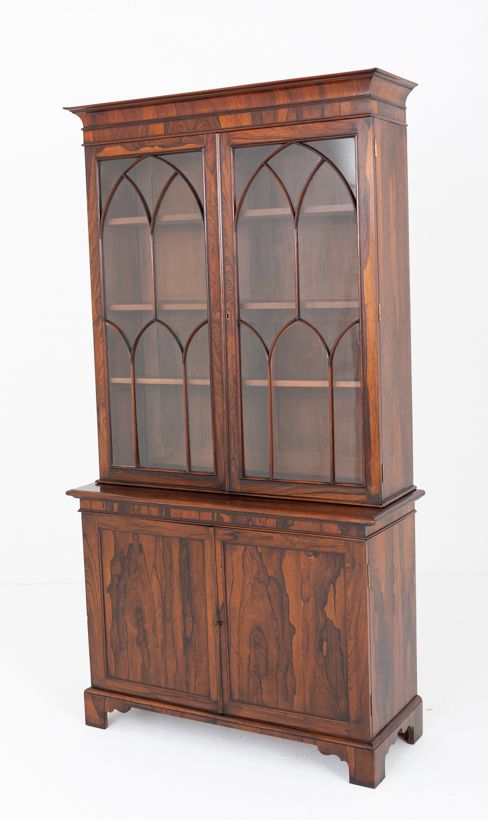
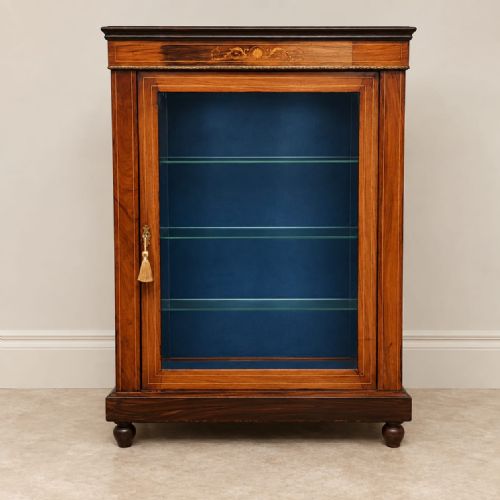
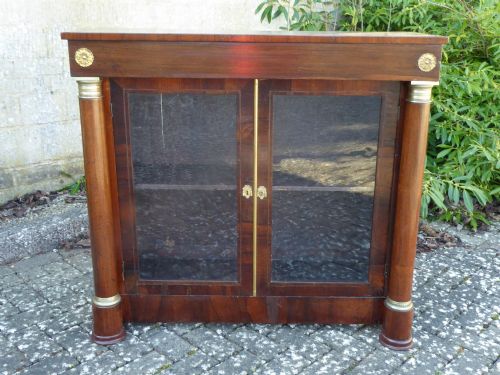
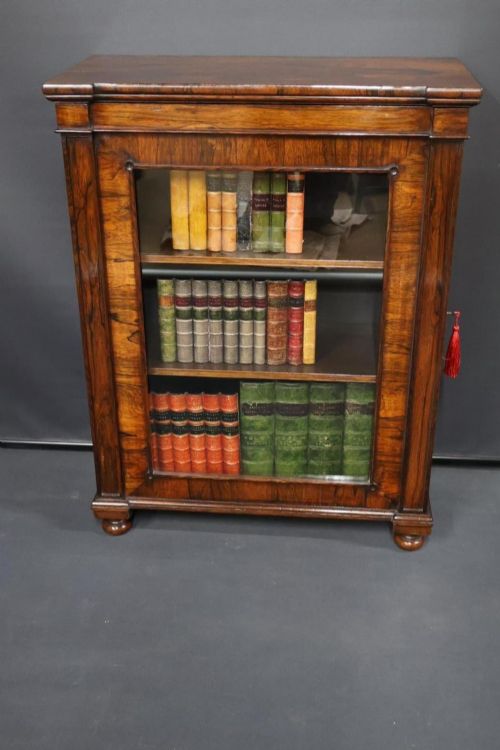
When you search for a rosewood display cupboard, you encounter glazed cabinets, pier units, and bookcases built across the nineteenth century.
Rosewood Display Cupboard
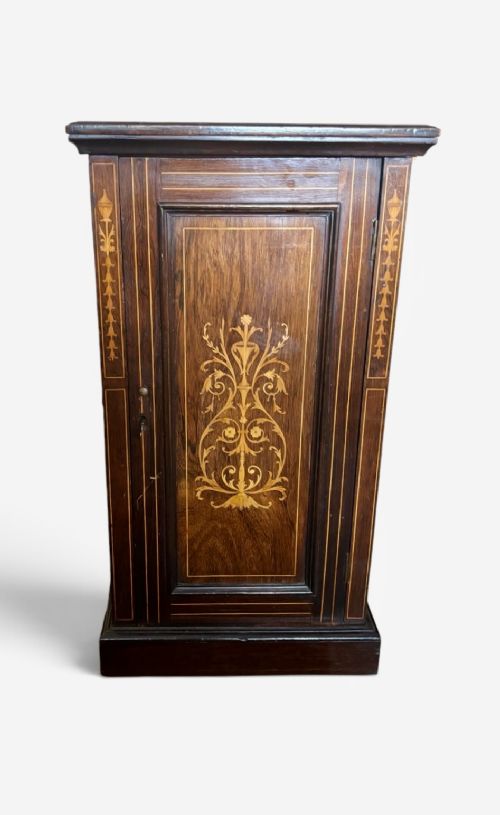
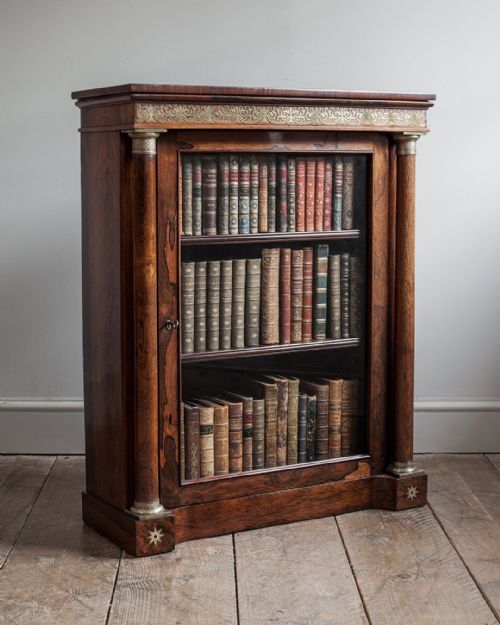
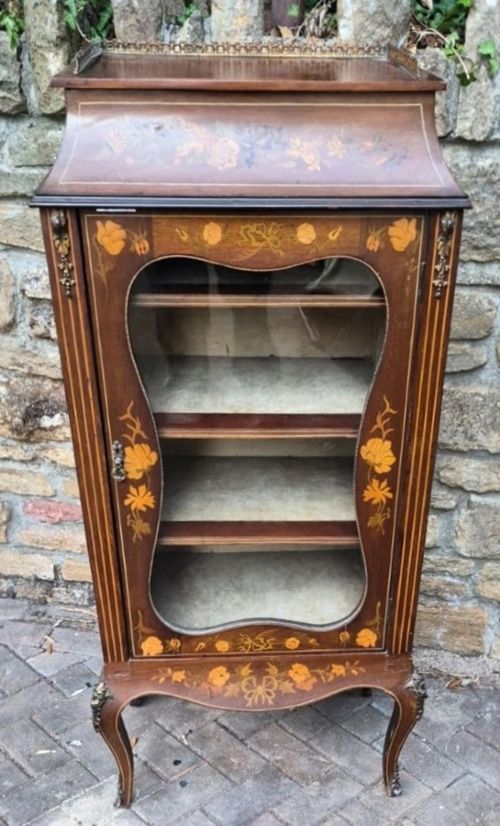
A rosewood display cupboard encompasses various forms such as pier cabinets, side cabinets, glazed bookcases, and corner units designed to showcase and store prized possessions.
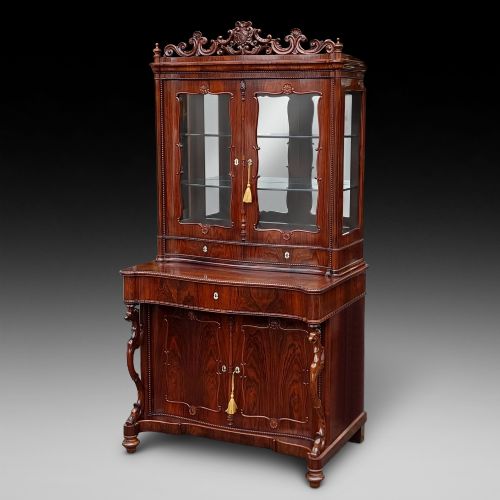
The pieces appearing on this page span several periods, most notably the Regency, Victorian, and Edwardian eras, alongside items from the William IV and Biedermeier styles.
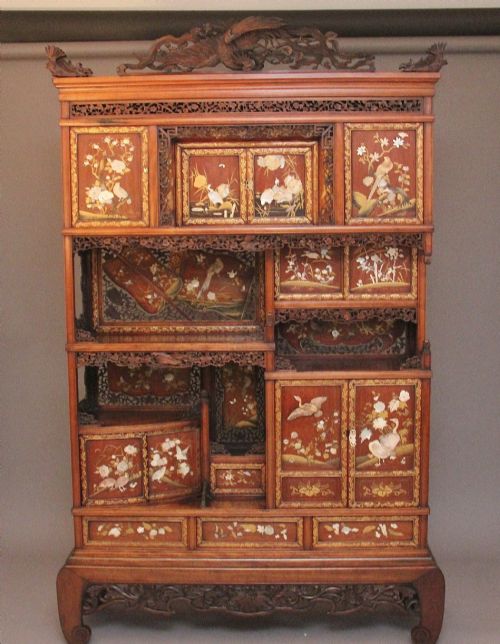
Makers and workshops produced these cabinets in differing formats, ranging from narrow hanging corner cupboards to substantial breakfront side cabinets and Japanese Meiji period shodona.

Materials and construction
Makers utilised solid rosewood and hardwood as the primary structural timber, frequently enhancing the surfaces with satinwood inlay, brass mounts, and mother-of-pearl details.
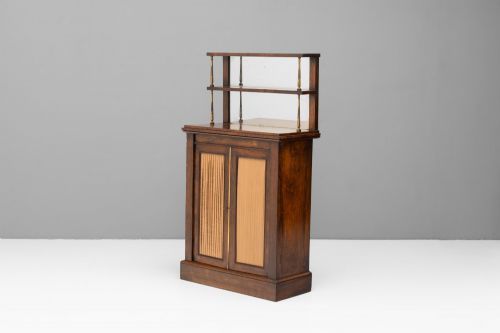
Glass panels were fitted into doors to enclose shelving, while interior mirrors and fabric backings were incorporated to reflect light through the displayed objects.
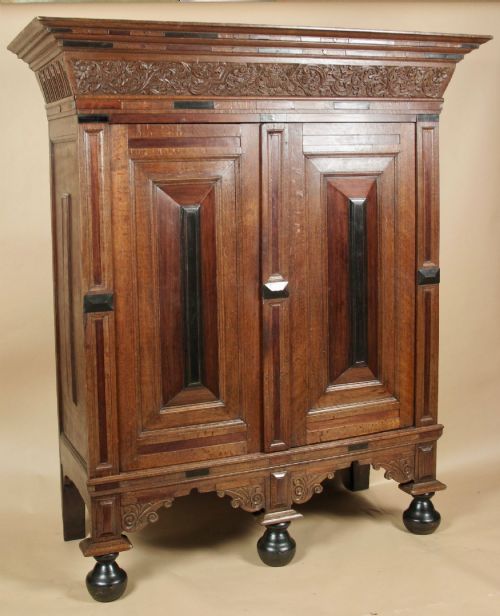
Cabinet forms on this page range from Dutch kussenkast armoires and Japanese Meiji shodonas to English Regency bookcases and Victorian chiffoniers.
Assessing quality and execution
Quality reveals itself in the precision of the marquetry and inlay work, where materials like satinwood and brass are integrated seamlessly into the rosewood ground.
The refinement of proportion and the retention of original surface patination distinguish the finest examples from standard production pieces of the nineteenth century.
Edwards and Roberts·Liberty
The Rosewood Display Cupboard Glossary
- Rosewood
- A dense, dark timber prized for its rich grain patterns and deep colour. It served as the principal material for high-status nineteenth-century cabinetry.
- Pier Cabinet
- A low cabinet designed specifically to fit the wall space between windows. These pieces often feature glazed doors and decorative brass inlay.
- Marquetry
- Decorative veneer work arranged in pictorial or geometric patterns. Craftsmen used contrasting woods such as satinwood to create detailed motifs.
- Chiffonier
- A compact sideboard or low cupboard featuring shelving or a small tier above. They gained popularity during the Regency and Victorian periods.
- Shodana
- A traditional Japanese multi-tiered display cabinet. Examples from the Meiji period utilise exotic hardwoods for organising small objects of art.
Rosewood Display Cupboard: Frequently Asked Questions
What is a rosewood display cupboard?
A rosewood display cupboard is a cabinet constructed from dense tropical timber featuring glazed doors or open shelving designed to exhibit decorative objects. These items encompass varied historical formats including pier cabinets, corner units, and bookcases.
Craftsmen produced these pieces across multiple centuries, adapting the basic storage form to suit changing domestic fashions and interior requirements.
Where were these cabinets placed at home?
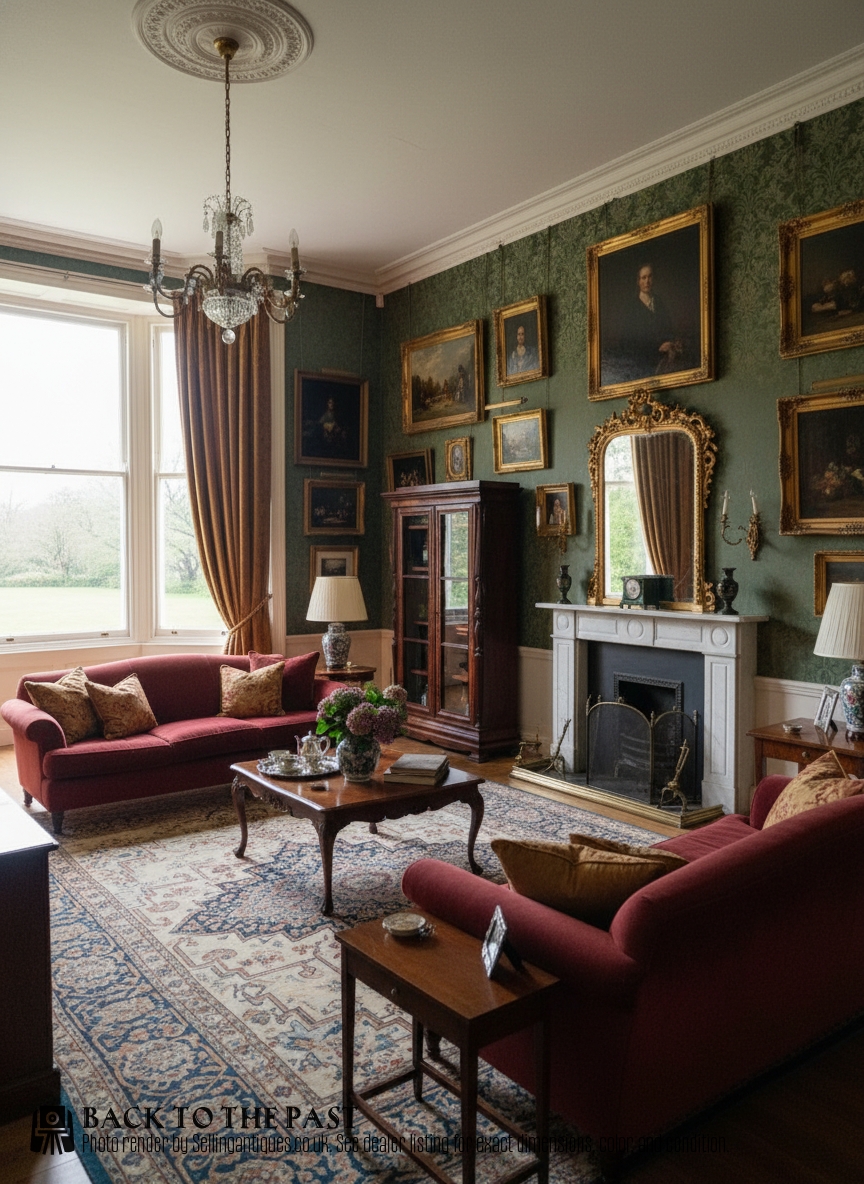
Cabinet makers designed these pieces for specific domestic locations, placing pier cabinets between windows and corner cupboards in room junctions to maximise space. Glazed variants served principally in parlours and libraries to protect books and ornaments from dust.
Smaller hanging versions allowed owners to display ceramics at eye level without occupying valuable floor space in cramped Victorian rooms.
How do I date a rosewood display cupboard?
Dating relies on examining the structural style, timber preparation, and decorative motifs characteristic of periods such as Regency, Victorian, or Edwardian. Regency pieces often exhibit classical brass inlay, while later Victorian iterations lean towards heavier proportions or revival styles.
Secondary woods used in the interior carcase and the construction methods of the drawer linings offer further clues to the manufacturing decade.
What materials accompany rosewood on these cabinets?
Makers frequently combined rosewood with satinwood for contrasting stringing and marquetry panels, along with polished brass for grilles, hinges, and escutcheons. Interior elements often incorporated mirrored glass backs and fabric linings to enhance the presentation of displayed items.
Occasional examples also feature mother-of-pearl inlay or painted panels set into the cabinet doors.