





Vintage Fusee Movement Clock
When you want a vintage fusee movement clock, you seek a reliable timepiece driven by a cone-shaped pulley that equalises the mainspring's declining power.
Vintage Fusee Movement Clock
A vintage fusee movement clock is a timepiece that employs a fusee cone and a cord, chain or wire to maintain even tension as the spring unwinds. Buyers searching for this phrase encounter a variety of forms, with wall clocks, railway dials and bracket clocks appearing most frequently on this page.
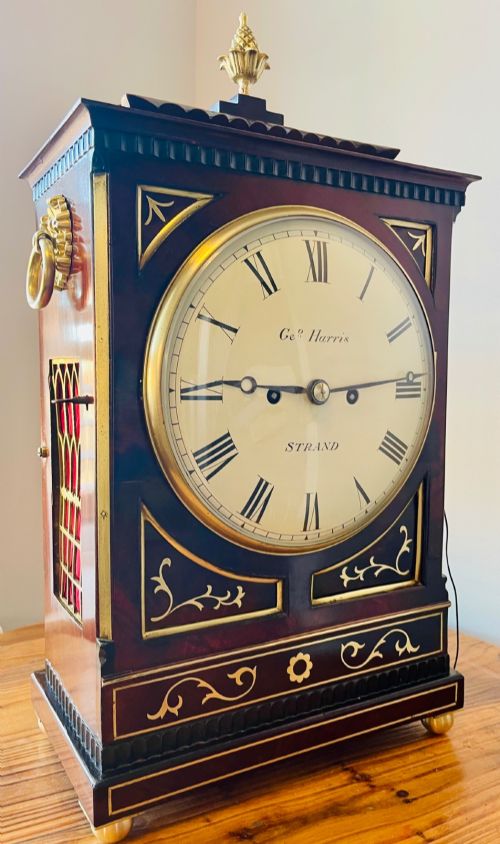
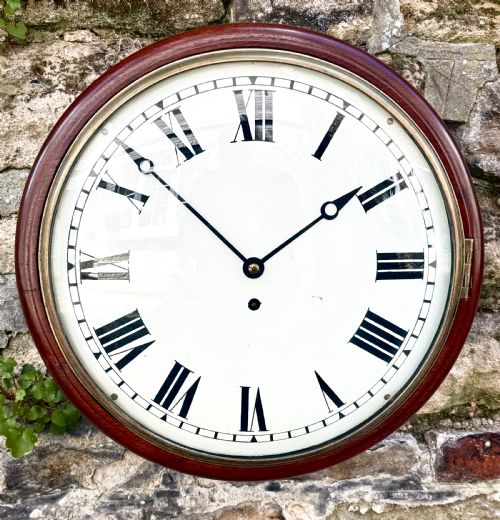
The pieces span several periods from the Regency and Georgian eras through the Victorian epoch and into the mid-twentieth century. Wall-mounted railway and dial clocks housed in mahogany or oak cases dominate the selection, alongside smaller mantel and bracket timepieces.
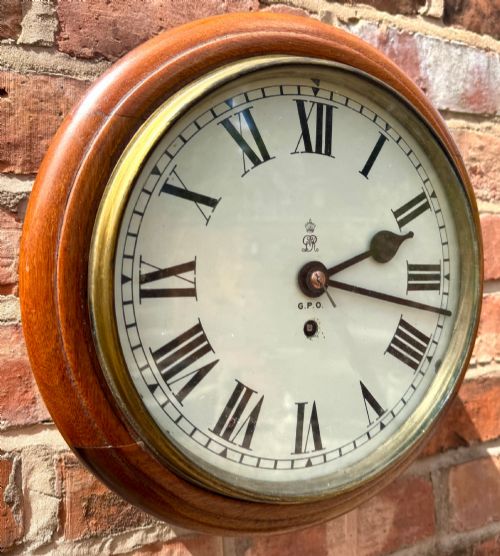
Origins are largely British, with provincial makers and London retailers both represented among the inventory. Railway companies, postal services and shipping lines commissioned many of these examples for operational timekeeping.
How they were made
Clockmakers utilised brass and steel for the complex gear trains, escapements and fusee cones that form the heart of the mechanism. Heavy timber cases in mahogany, oak and rosewood protected these delicate movements while offering a dignified exterior.
Glass protected the painted dials and convex bezels, while gilt brass and ormolu provided decorative accents on finer library and mantel models. Artisans joined these materials with traditional woodworking and metalworking techniques suited to the nineteenth and early twentieth centuries.
Some library clocks ran for an entire year on a single winding, freeing their owners from weekly maintenance.
What varies in quality
Quality in these timepieces rests upon the precision of the brass wheelwork, the neatness of the fusee cutting and the integrity of the chain or gut line. Maker reputation also elevates a piece, as work by known retailers and West End clockmakers demonstrates superior finishing in the engraving and movement layout.
The housing contributes significantly to the overall standard, with solid timber cases showing careful proportions, clean dial lettering and matched grain. Simpler utility railway clocks prioritise robust legibility, whereas domestic bracket and library examples display finer cabinetmaking and decorative detailing.
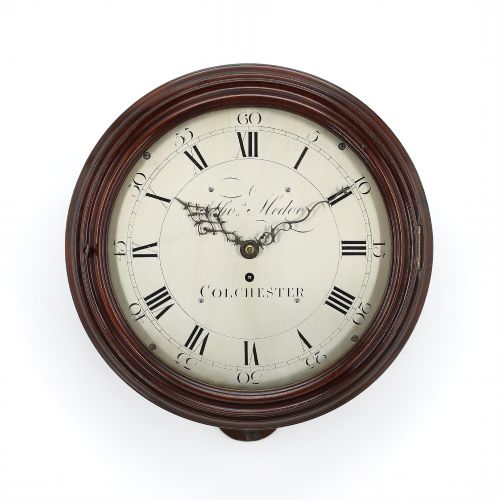
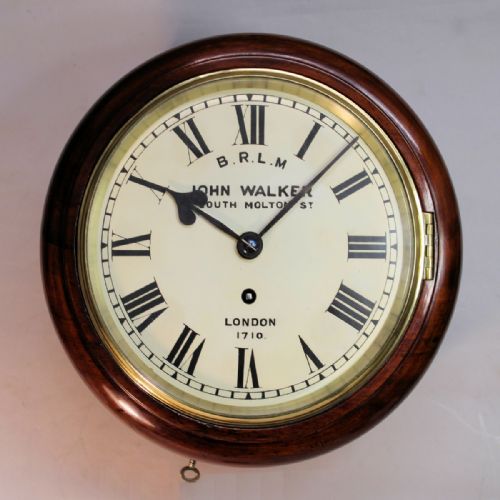
Thomas Hedge of Colchester·John Walker·Henry Berkeley Square London·Budgen Croydon·Kelvin White and Hutton London
The Vintage Fusee Movement Clock Glossary
- Fusee
- A conical pulley with a spiral groove designed to counteract the uneven pull of a mainspring as it unwinds. This ensures consistent driving force to the clock movement throughout its running period.
- Chain fusee
- A mechanism that uses a fine steel chain instead of catgut or wire to connect the spring barrel to the fusee cone. It offers greater strength and durability in transmitting power.
- Drop-dial clock
- A wall clock featuring an extended wooden case below the dial to accommodate a longer pendulum or trunk. These were widely used in public spaces, offices and railway stations.
- Bracket clock
- A portable table or mantel clock originally designed to sit on a wall bracket. They often incorporate striking mechanisms and robust wooden or ormolu cases.
- Verge escapement
- An early type of escapement mechanism that controls the release of power from the gear train. It works with a balance wheel or a short pendulum to regulate timekeeping.
Vintage Fusee Movement Clock: Frequently Asked Questions
What is a fusee movement?
A fusee movement uses a conical pulley connected by a chain or cord to the mainspring barrel. As the spring runs down and loses power, the chain moves to a wider part of the cone, maintaining constant torque.
This clever mechanical adjustment ensures the clock keeps accurate time from the moment it is fully wound until it needs winding again.
How do I wind my clock?
Winding requires inserting the appropriate key into the dial winding square and turning it gently until resistance is felt. Care must be taken not to overwind the mechanism, which can damage the spring.
Most fusee clocks run for eight days on a single wind, though some specialised library or year-going models differ in their requirements.
Where were railway clocks used?
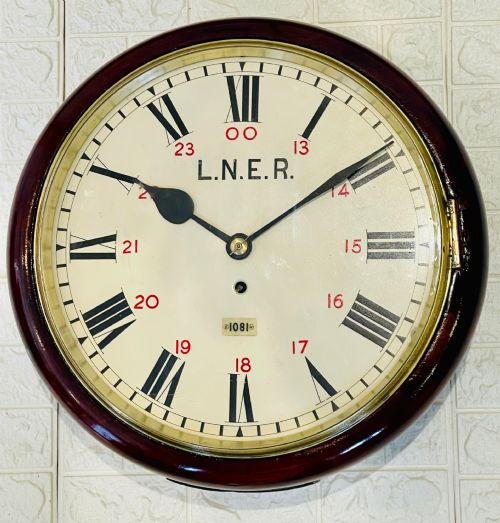
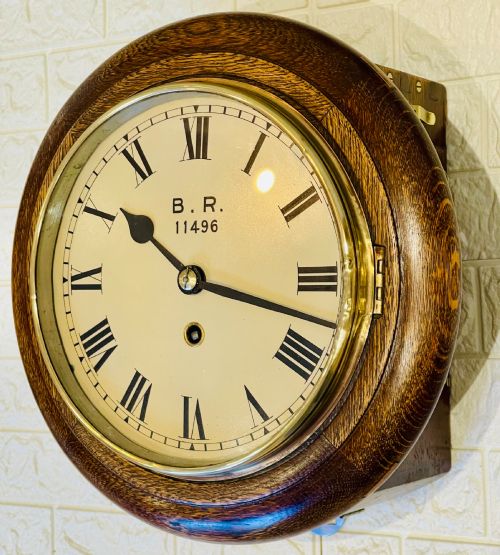
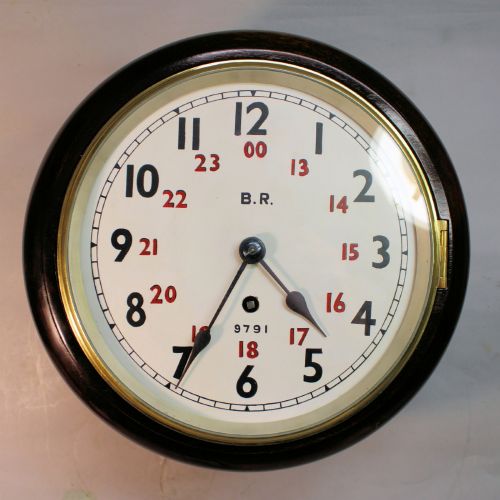
Railway clocks were placed in stations, offices and platform spaces across the transport network to maintain strict timetables. Companies such as the London and North Eastern Railway and British Railways commissioned robust dial clocks for this purpose.
Their clear painted faces and sturdy mahogany or oak cases ensured high legibility and durability in busy environments.
How do I date an English dial clock?
Dating relies on examining case timber, dial materials, edge styling and signature engraving on the backplate. Mahogany was favoured in the nineteenth century, while oak and later utilitarian designs often point towards the twentieth century.
Maker signatures and recorded trade dates provide further chronological anchors for identifying Regency, Victorian or Edwardian production.