



Dark Oak Table Clock
A dark oak table clock brings heavy timber presence and precise mechanical timekeeping into a room, spanning Victorian grandeur to Art Deco utility.
Dark Oak Table Clock
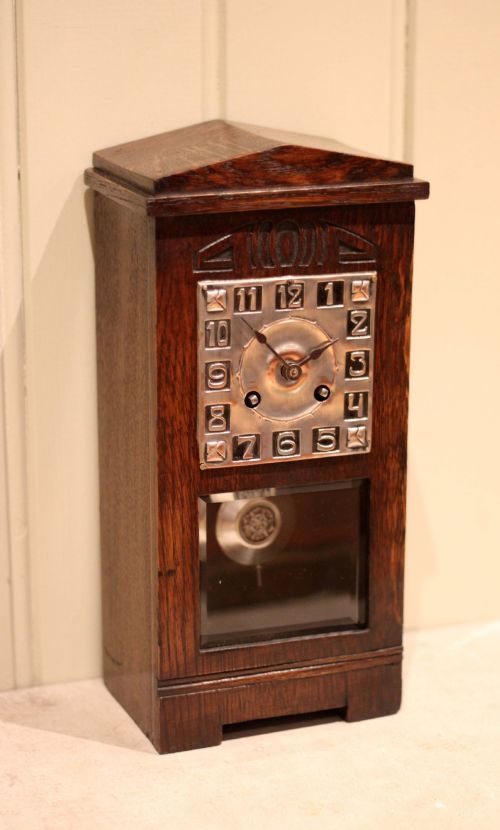
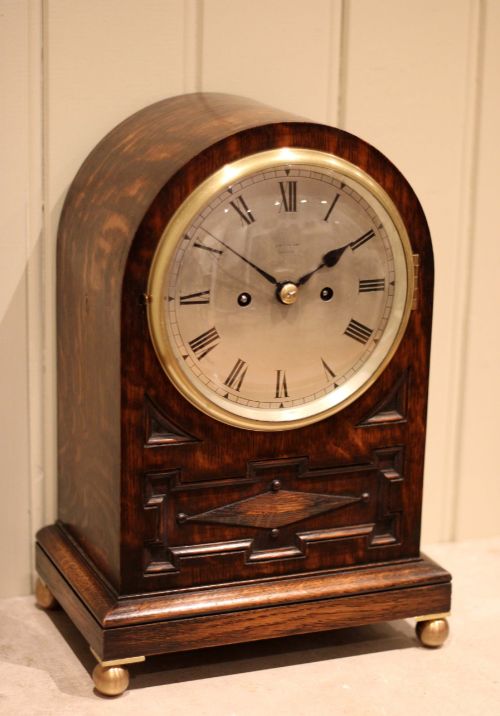
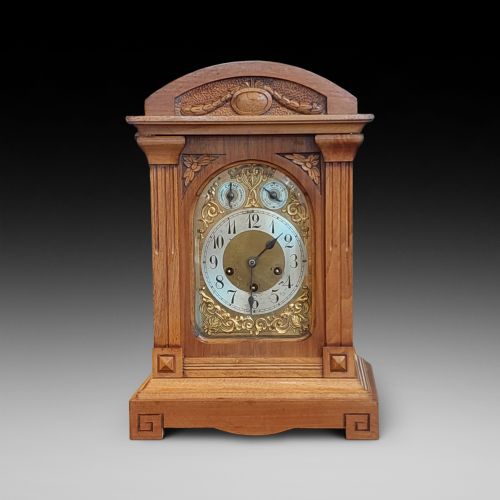
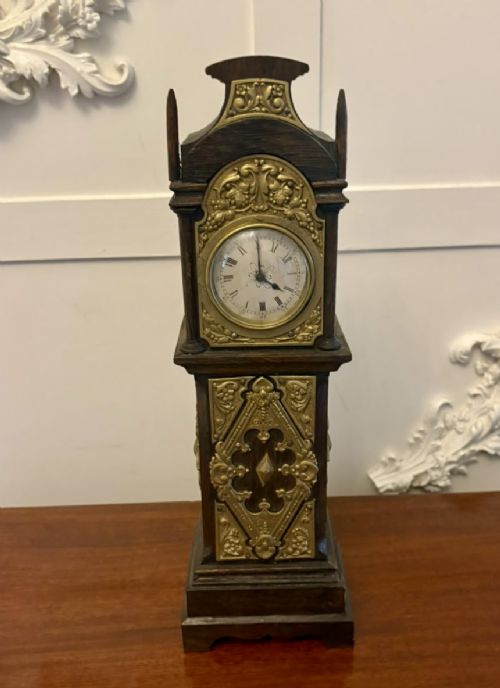
A dark oak table clock is a substantial timepiece housed in timber casing, typically designed to sit on a mantelpiece, shelf, or bracket rather than hang upon a wall. Collectors searching for a dark oak table clock encounter forms ranging from simple timepieces to musical bracket clocks with multiple trains.
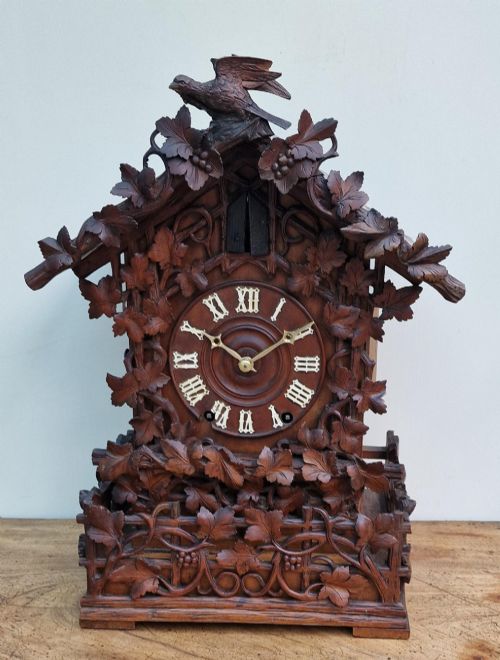
Many of these domestic timepieces incorporate striking mechanisms, chiming on bells or gongs to mark the hours and quarters. Cased variants showcase regional European traditions, particularly British workshop production and Black Forest carving.
Construction and materials
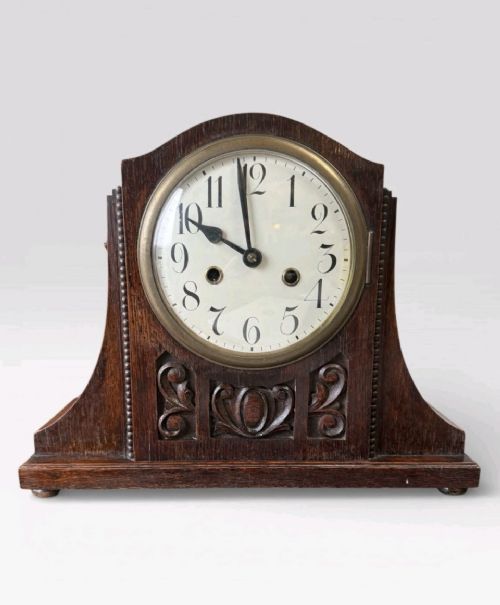
Cases are predominantly constructed from solid oak, sometimes stained or carved deeply in traditional Black Forest styles. Glazed doors protect white enamel or brass dials, while exposed brass bezels and mounts provide metallic contrast to the dark timber.
Mechanical movements drive these clocks, utilising eight-day or twin fusee mechanisms designed to maintain tension as the mainspring unwinds. Intricate gear trains coordinate striking and chiming functions, housed securely within the heavy wooden carcasses.
Dark Oak Table Clock Retail Price Guide 2026
Typical asking prices for dark oak table clock among the pieces listed under this phrase on Sellingantiques today, from the lower quarter to the upper quarter. They describe what is for sale here now, not the wider market.
Listings feature oak material combined with brass, glass, and enamel across Victorian, Edwardian, and Art Deco periods.
Factors of quality
Quality rests significantly upon the complexity of the internal movement, distinguishing simple timepieces from three-train musical bracket clocks with fusee mechanisms. Finer examples display meticulous hand-carving on the oak case rather than plain moulded surfaces.
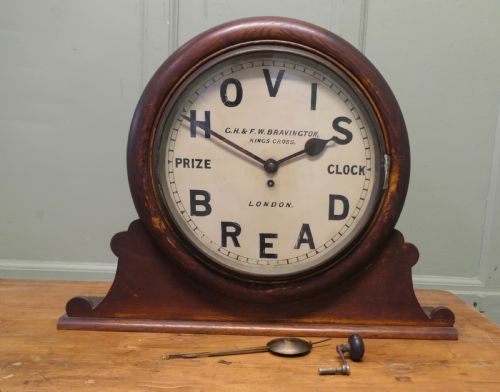
The integrity of the dial and the legibility of the numerals, whether painted enamel or applied brass, contribute to the overall merit of the clock. Maker attribution also plays a role, with established workshops commanding attention for robust engineering.
George Wadham·G.H & F.W Bravington·Winterhalder & Hofmeier·Beha
The Dark Oak Table Clock Glossary
- Bracket clock
- A portable mechanical clock originally designed to sit on a wall bracket to aid resonance. These clocks evolved to stand on tables and mantelpieces.
- Fusee
- A conical pulley used in mechanical clocks to equalize the driving force of the mainspring as it winds down. This mechanism improves timekeeping accuracy.
- Mantel clock
- A clock designed to sit on the shelf above a fireplace. They are often smaller than floor-standing longcase clocks.
- Train
- A sequence of gears within a clock movement that transmits power. Clocks may have a single train for time, or multiple trains for striking and chiming.
- Twin fusee
- A movement utilising two separate fusee cones, typically dividing the timekeeping function from the striking mechanism. This setup preserves consistent power across both trains.
Dark Oak Table Clock: Frequently Asked Questions
How do I wind a mechanical oak table clock?
Wind the movement using the appropriate key inserted into the dial winding holes, turning gently until resistance is felt. Care must be taken not to overwind the mainspring.
Ensure you do not force the key past the stopping point, as this can damage the internal gearing of the eight-day movement.
What is the difference between a mantel clock and a bracket clock?
Bracket clocks historically required a wall bracket for stability and often feature more complex musical or striking movements. Mantel clocks are generally broader and designed to stand flat on a horizontal surface.
Over time, the terms became interchangeable as bracket clocks were placed directly onto furniture.
Where should I place a dark oak table clock in my home?
Place the clock on a stable, level surface away from direct sunlight, draughts, and damp environments. Solid oak cases react to drastic changes in temperature and humidity.
Allowing adequate clearance around the clock ensures the sound from bells or gongs resonates properly.
How can I tell the period of an oak clock?
Examine the stylistic cues of the oak case, comparing the carved motifs and dial layout against known design periods like Victorian, Arts and Crafts, or Art Deco. Heavy ornamentation often points to nineteenth-century Gothic Revival or Black Forest origins.
Simpler geometric lines typically indicate early twentieth-century production.