




Vintage Embroidered Bedspread
A vintage embroidered bedspread brings tactile depth and rich colour to a room through traditional needlework.
Vintage Embroidered Bedspread
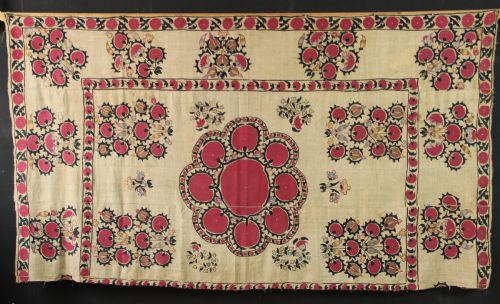
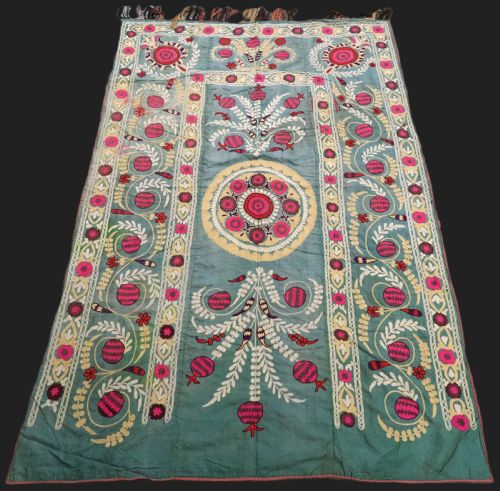
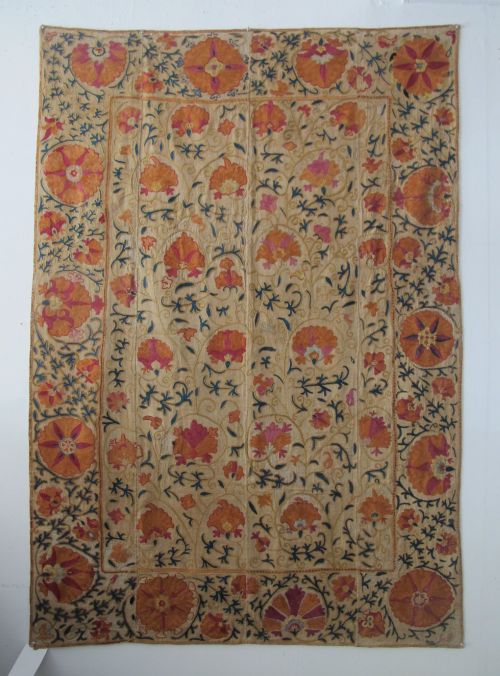
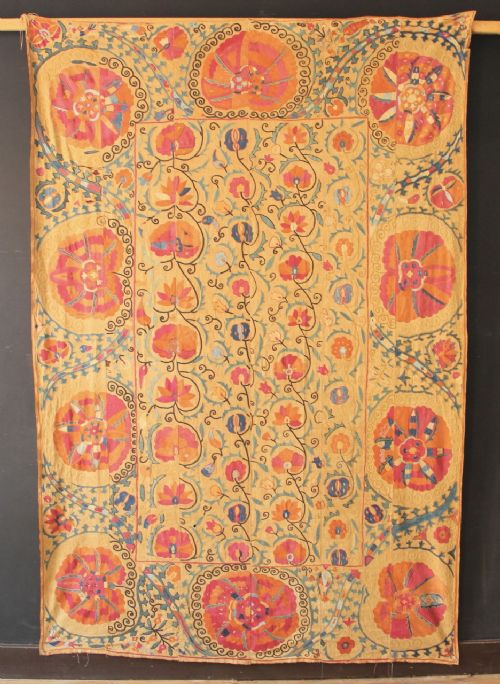
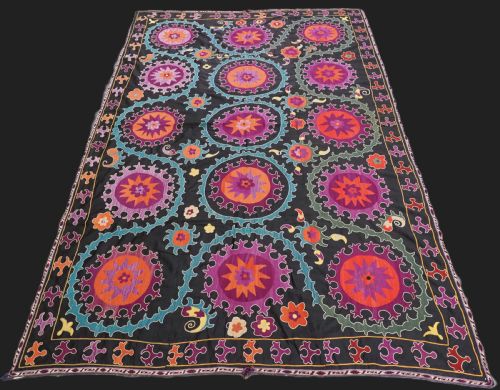
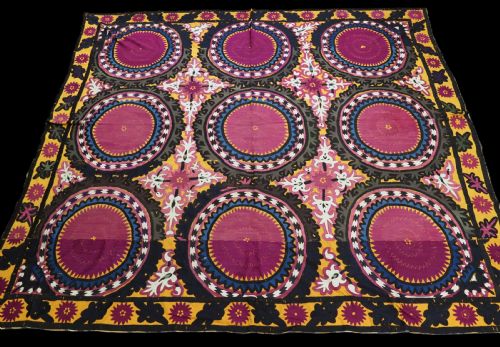
A vintage embroidered bedspread in this collection typically takes the form of a suzani originating from Uzbekistan. These Central Asian textiles span periods from the mid-nineteenth century through the early twentieth century.
Buyers will encounter regional variations including pieces from Bukhara, Samarkand, Shahrisabz, Tashkent, and Ura Tube. Traditional formats range from large medallion layouts to full work embroideries and smaller nim suzanis.
Alongside Central Asian pieces, the selection includes British examples represented by eighteenth-century flat quilted linen coverlets and linen coverlets. These diverse forms serve as both bedcovers and decorative wall hangings.
Materials and construction
Makers utilised natural foundation fabrics such as cotton, linen, and adras silk-cotton grounds. Silk thread provides the vibrant embroidery that defines these textiles.
Needlework techniques vary from fine silk-on-silk stitching to robust embroidery on cotton or linen bases. Regional workshops employed distinct stitching methods and traditional design motifs particular to their locality.
Listings span periods from the eighteenth century to the 1930s, featuring cotton, linen, and silk materials.
Factors determining quality
Quality rests upon the density of the embroidery and the complexity of the regional design layout. Full work suzanis demonstrate a higher concentration of needlework than simpler variants.
The choice of ground fabric and the preservation of the silk thread influence the visual impact of each textile. Superior condition and strong dye retention elevate the character of the piece.
The Vintage Embroidered Bedspread Glossary
- Suzani
- An embroidered tribal textile from Central Asia, traditionally made as part of a bride's dowry. These pieces use silk thread on cotton, silk, or mixed grounds.
- Adras
- A traditional Central Asian woven fabric combining silk and cotton yarns. It forms a textured foundation for silk embroidery.
- Nim Suzani
- A smaller scale embroidered textile, translating literally as half suzani. These were often utilised for specific domestic functions.
- Full work
- A description for a suzani densely covered in embroidery without exposed ground fabric. This style represents a high level of needlework labour.
Vintage Embroidered Bedspread: Frequently Asked Questions
How were these bedspreads originally used?
These textiles served primarily as ceremonial bed covers within Central Asian households, often created as part of a traditional dowry.
Families also displayed them as wall hangings on special occasions or draped them over furniture to demonstrate status and skill.
How do I care for a vintage embroidered textile?
Keep these pieces away from direct sunlight to protect the natural silk and cotton threads from fading.
Support the full weight of the textile if hanging it on a wall, and consult a specialist textile conservator for cleaning.
What is the difference between a suzani and a coverlet?
Suzanis originate from Central Asia and feature vibrant silk embroidery on cotton, silk, or adras grounds with traditional regional motifs.
Coverlets in this selection are eighteenth-century British linen pieces featuring flat quilting rather than dense coloured embroidery.
How do regional styles differ?
Pieces from Bukhara and Samarkand display distinct colour palettes and medallion structures unique to those urban centres.
Regional groups such as the Lakai tribe incorporate specific geometric interpretations and alternative ground fabrics into their needlework.