


Cream Silk Wall Hanging
A cream silk wall hanging brings tactile warmth to a room, offering centuries of textile artistry through embroidered panels and tribal rugs.
Cream Silk Wall Hanging
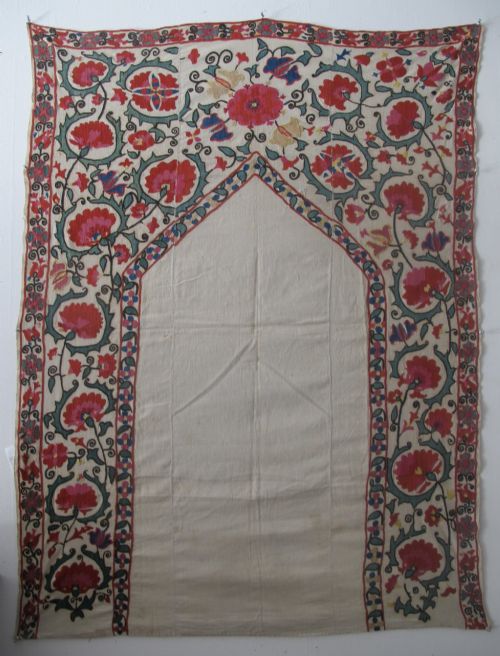
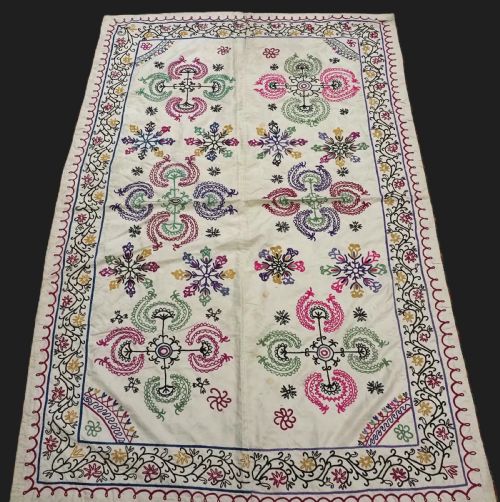
A cream silk wall hanging encompasses traditional Central Asian suzanis, Moroccan kilim rugs, and Persian or Ottoman embroideries. These textiles often display intricate botanical, architectural, or prayer formats worked in fine needlework.
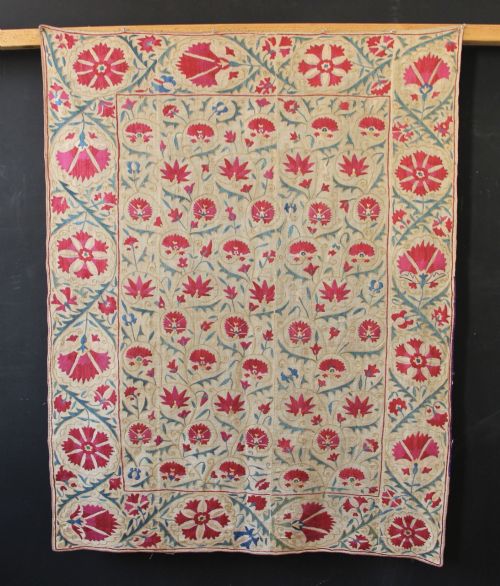
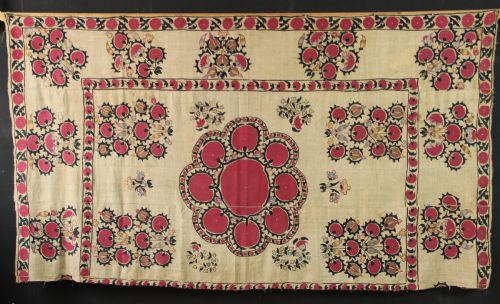
Buyers meet nineteenth-century Uzbek suzanis from regions such as Bokhara, Samarkand, and Nurata most frequently on this page. Pieces range from small mounted embroidery fragments to large wall-spanning compositions.
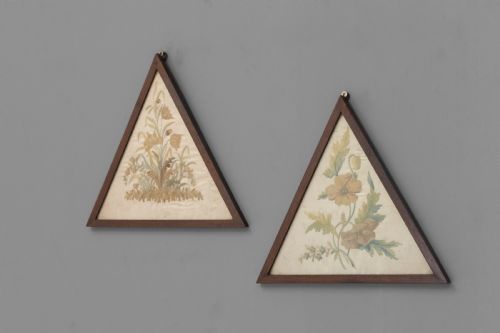
Alongside Central Asian work, the selection includes French rococo decorative textiles and English country house wall art. Each object serves as a textile focal point designed to be mounted directly onto interior surfaces.
Materials and construction methods
The foundation structures rely on natural textiles such as silk, cotton, linen, and wood for mounting frames. Embroiderers utilise silk thread to work dense needlework across the primary fabric ground.
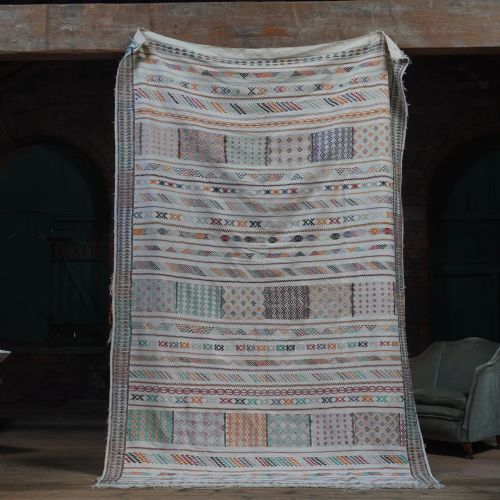
Alternative pieces incorporate cactus silk and sabra fibre within woven kilim rug structures. Artisans combine these foundational yarns with traditional dyeing and embroidery techniques native to Central Asian, Persian, and Moroccan workshops.
Evaluating textile quality
Quality differentiates by the density of the silk thread embroidery and the precision of the needlework design. Finer suzanis display tighter stitching and more intricate architectural or floral motifs across the cream silk ground.
The integrity of the foundation fabric and the complexity of regional styles also influence distinction. Pieces originating from specific workshops or established centres like Bokhara and Samarkand demonstrate superior artistic execution.
Mohtasham Kashan
The Cream Silk Wall Hanging Glossary
- Suzani
- A type of embroidered tribal textile originating from Central Asia, traditionally worked in silk on a cotton or silk ground. These panels were often created as part of a bride's dowry.
- Kilim
- A flat-woven carpet or rug produced without a pile, incorporating materials like sabra cactus silk and wool. They offer a lighter weight suitable for display as wall art.
- Nim-Suzani
- A half-sized or smaller variant of the traditional Central Asian suzani embroidery. These compact pieces suit smaller wall spaces while retaining full-scale design motifs.
- Prayer Format
- A textile design featuring a central mihrab or arch shape intended to direct spiritual focus. Such formats appear frequently in nineteenth-century Uzbek suzanis.
- Ura Tube
- A specific regional designation for Central Asian textiles featuring distinct geometric or floral border arrangements. They represent the specialised output of particular Uzbek crafting communities.
Cream Silk Wall Hanging: Frequently Asked Questions
How were suzanis originally used?
Central Asian suzanis served primarily as dowry textiles, wall hangings, and decorative bed covers within nomadic and settled households. Families commissioned skilled embroiderers to create these large panels for significant domestic celebrations.
Over time, these textiles transitioned from functional household objects into prized decorative wall art displayed within modern interiors.
What is cactus silk?
Cactus silk, also known as sabra fibre, is a natural material extracted from the leaves of desert agave cactus plants found in Morocco. Artisans spin this vegetable silk into yarns suitable for flat-woven kilim rugs and decorative panels.
The resulting textile offers a distinct sheen and texture that distinguishes it from traditional mulberry silk.
How should I hang a delicate textile?
Mounting delicate silk and embroidered panels requires professional framing behind protective glass or careful attachment to a padded wooden batten. This prevents gravity from distorting the historic fabric weave over extended periods.
Positioning the hanging away from direct sunlight preserves the natural dyes used in nineteenth-century threads.
How do I identify a Bokhara suzani?
Bokhara suzanis typically feature expansive floral roundels, intricate vine scrolls, and harmonious colour palettes set against pale cream or ivory silk grounds. Their compositions reflect the urban sophistication of nineteenth-century Uzbek textile workshops.
Comparing the stitch density and botanical motifs helps separate pieces originating from Bokhara from those of neighbouring Nurata or Samarkand.