

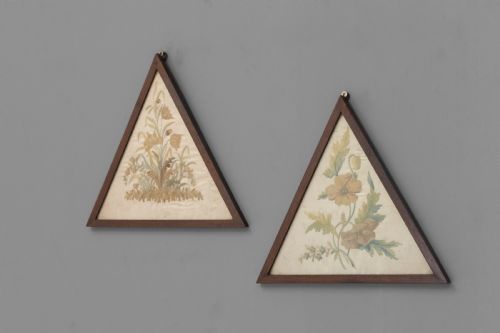


Floral Silk Embroidery Panel
A floral silk embroidery panel brings rich textile art into a room, spanning Central Asian suzanis, Ottoman fragments, and European needlework.
Floral Silk Embroidery Panel
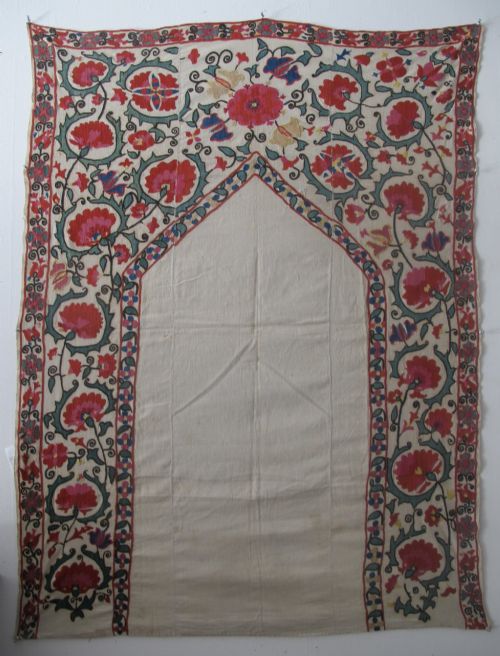
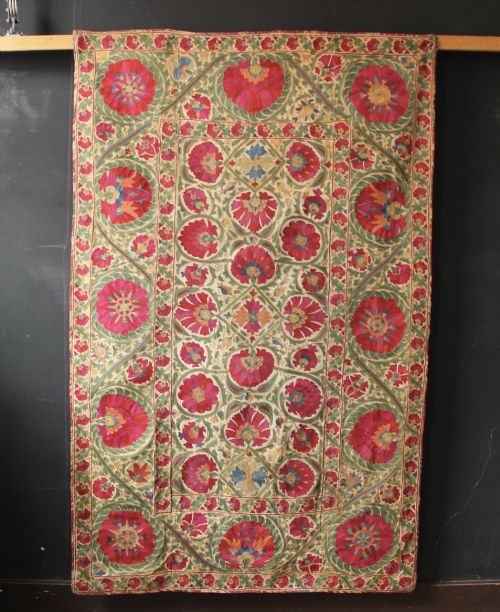
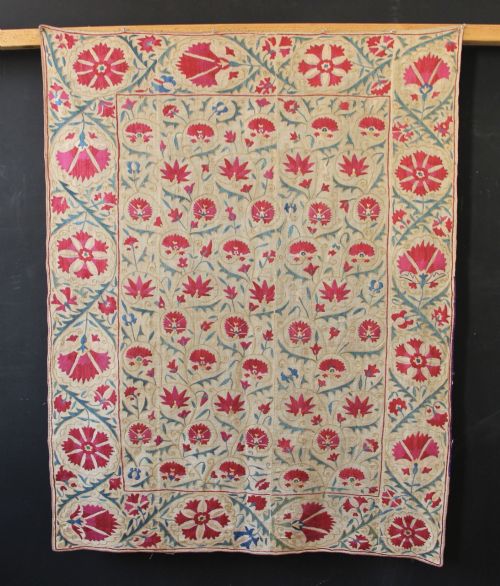
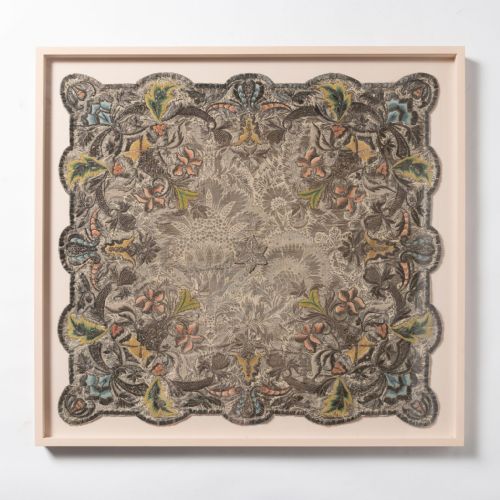
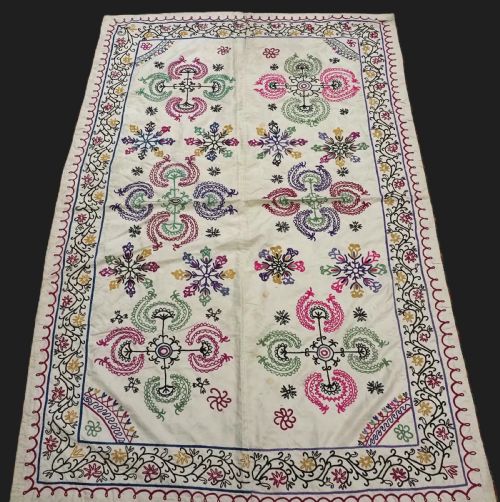
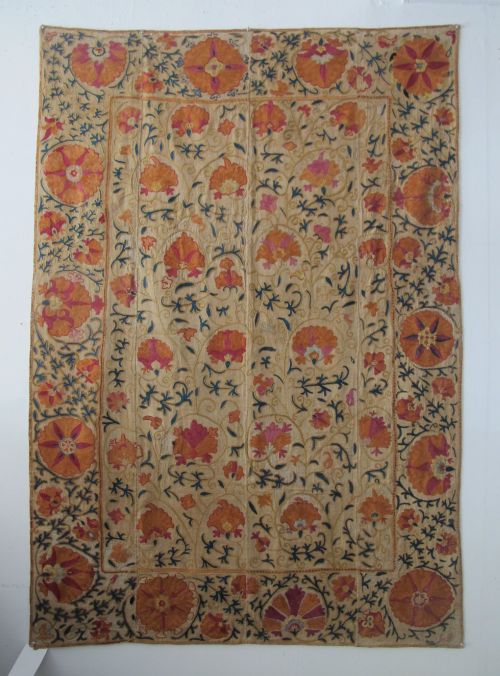
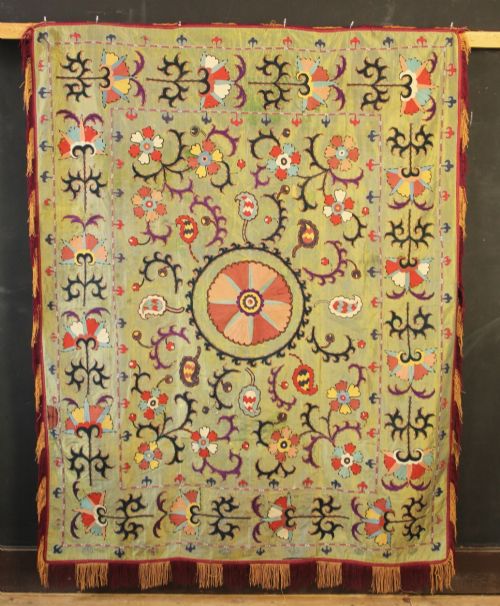
A floral silk embroidery panel encompasses diverse textile forms, from large Central Asian suzanis and Persian Rasht works to smaller framed European needlework pictures and Chinese screens. When exploring this phrase, a buyer meets pieces originating across the eighteenth, nineteenth, and early twentieth centuries, utilised historically as wall hangings, covers, and decorative displays.
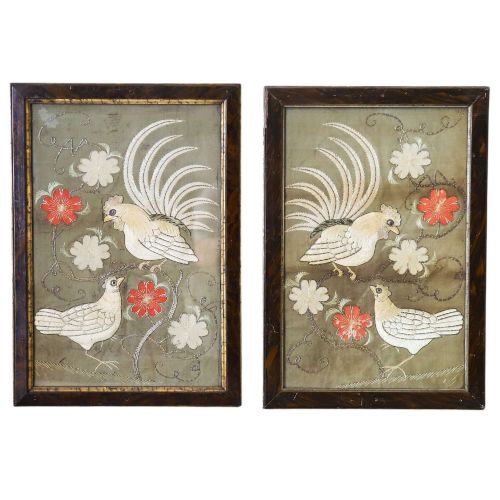
The Central Asian suzani tradition dominates the selection, featuring intricate botanical motifs stitched across cotton or linen grounds. Alongside these tribal and regional pieces, listings include English samplers, French bird studies, and Ottoman fragments, offering varied formats suitable for hanging on walls or mounting behind glass.
Materials and construction methods
These textiles rely primarily on fine silk threads worked onto woven grounds of cotton, linen, or wool felt. Makers applied various stitch techniques to create dense floral patterns, occasionally incorporating applique work to build depth and texture within the design.
Support materials vary according to origin, utilising wooden frames, glass protection, or simple fabric backings. Many Central Asian and Persian examples employ hand-spun foundation cloths dyed locally, while European needleworks often utilise taut canvas or fine linen.
The selection includes regional styles from Central Asia, Ottoman territories, Persia, China, and Europe.
Factors determining the quality of panels
The refinement of the stitchwork largely defines the standard of an embroidered panel, distinguishing densely worked compositions from simpler executions. Fine needlework displays tight, uniform tension and precise control over complex floral medallions or pictorial scenes.
Condition and completeness also influence the piece, particularly with older fragments where ground fabrics or silk threads experience natural wear over centuries. Original dimensions, intact borders, and vibrant colour retention elevate the standing of surviving examples.
The Floral Silk Embroidery Panel Glossary
- Suzani
- An embroidered hanging originating from Central Asia, traditionally worked by brides as part of their dowry. These large textiles typically feature bold botanical motifs on cotton or linen foundations.
- Nim Suzani
- A half-size version of the traditional Central Asian suzani, offering similar embroidery work on a more compact scale. These smaller pieces suit domestic wall spaces more easily than full-sized hangings.
- Rasht embroidery
- A distinctive style originating from Persia involving intricate silk threadwork applied to a wool felt ground. Pieces often showcase detailed medallion and floral arrangements.
- Sampler
- A piece of needlework produced to demonstrate a maker's proficiency with various stitches and alphabets. Georgian and Victorian examples frequently include names, dates, and decorative motifs.
- Applique
- A technique where pieces of fabric are sewn onto a larger foundation cloth to build up a design. This method appears frequently in Persian Rasht textiles to create layered visual effects.
Floral Silk Embroidery Panel: Frequently Asked Questions
How do I hang a textile panel?
Large suzanis and wall hangings generally require a discreet fabric sleeve sewn to the reverse to accommodate a slender wooden batten or metal rod. This distributes the weight evenly across the top edge without puncturing the historic textile.
Smaller framed panels, such as needlework pictures or French silk studies, utilise standard picture hooks attached to sturdy wooden frames. Ensure pieces behind glass avoid direct, bright sunlight to protect the silk threads from fading over time.
What is a suzani?
A suzani is a traditional embroidered textile originating from Central Asia, including regions like Uzbekistan and Bukhara. Makers utilised vibrant silk threads on cotton or linen grounds to create large panels dominated by floral and botanical motifs.
Historically created as part of a bride's dowry, these pieces functioned as wall hangings, bed covers, or ceremonial coverings. Their intricate designs and regional variations make them highly sought after by textile collectors.
How do I date an antique embroidery?
Dating relies on examining the materials, dyes, and stitching characteristics specific to different periods and geographic regions. Early pieces from the eighteenth century often display distinct canvas grounds and muted natural dye palettes, while nineteenth-century works show different regional styles.
Written dates on samplers or documented provenance provide direct chronological markers when available. Comparing construction methods against established museum examples helps confirm the likely era of creation.