


Antique Suzani Tapestry
An antique suzani tapestry brings bold Central Asian embroidery, historic textile wall art and traditional tribal needlework into modern interiors.
Antique Suzani Tapestry
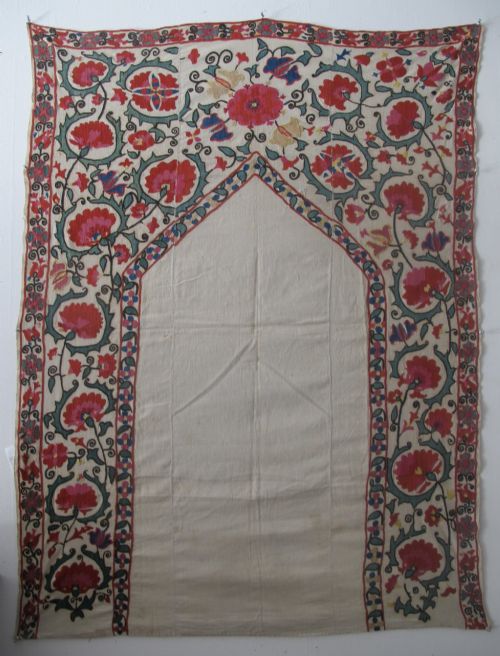
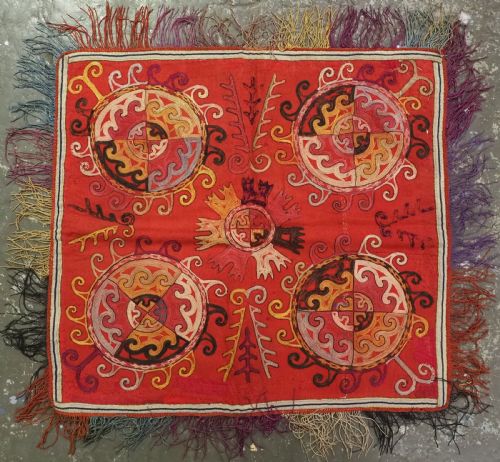
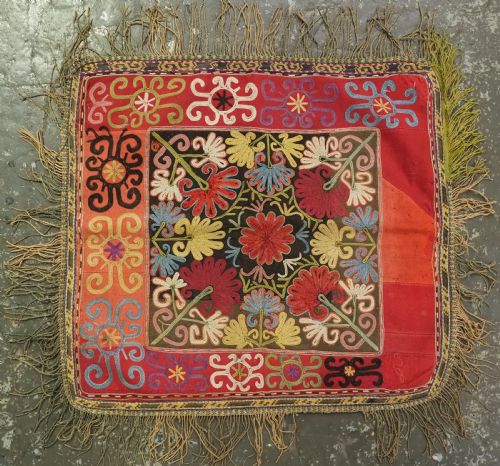
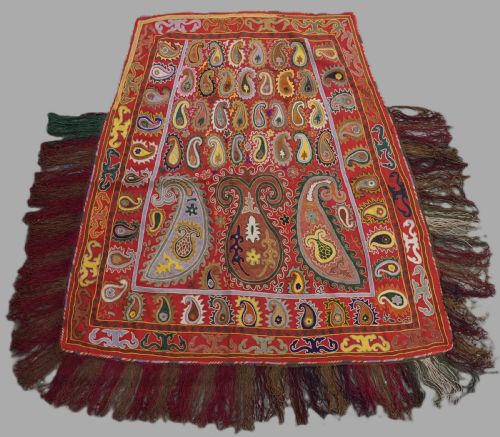
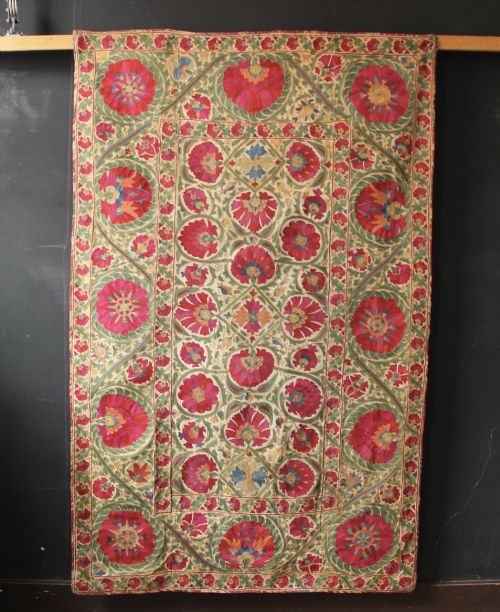
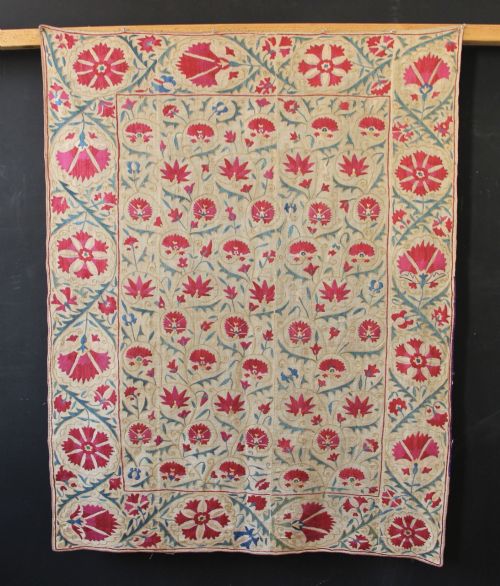
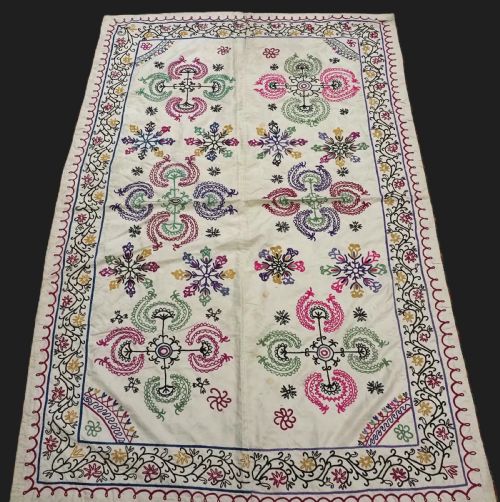
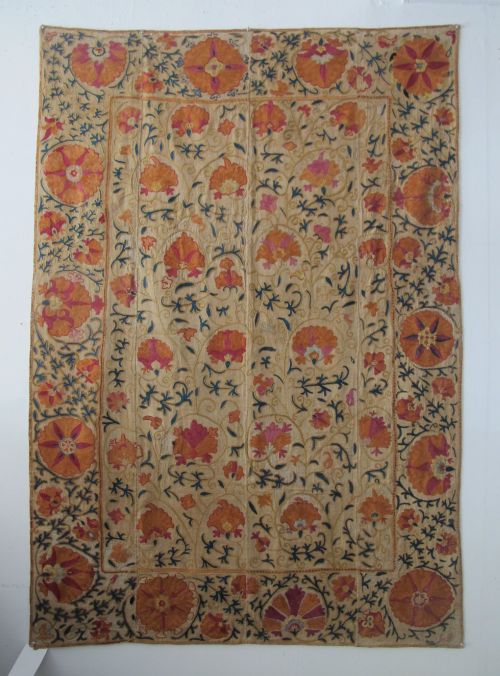
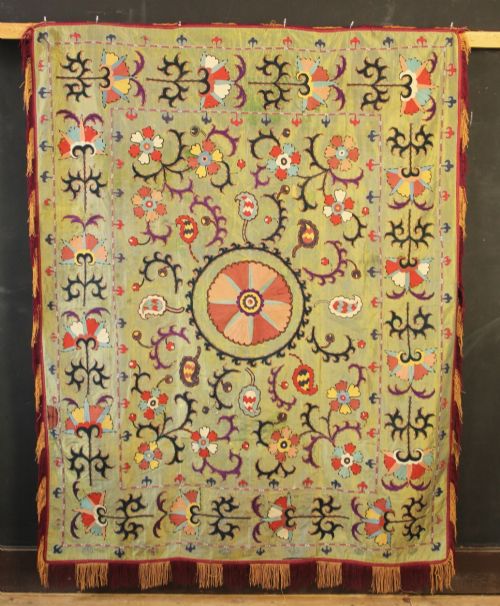
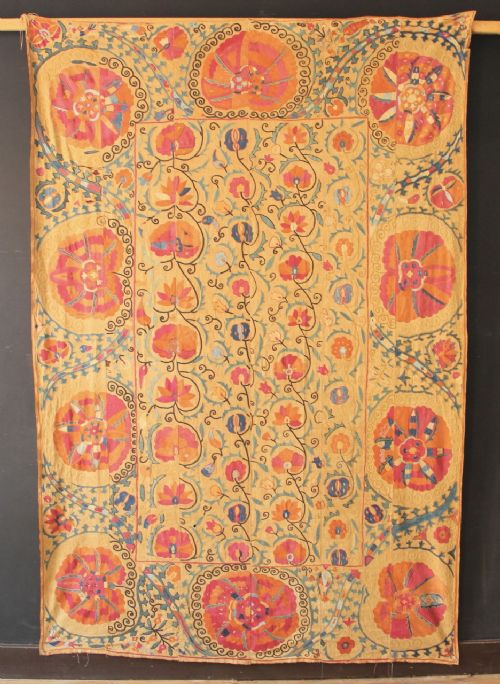
When searching for an antique suzani tapestry, collectors encounter richly embroidered Central Asian textiles originating mainly from nineteenth and early twentieth century Uzbekistan. These pieces span wall hangings, dowry embroideries, bed covers and ceremonial horse covers created by various regional traditions including Bokhara, Tashkent, Samarkand, Shahrisabz and the Lakai tribe.
The selection ranges from large medallion variants and architectural designs to smaller nim suzanis and prayer formats. Common formats include full work palak designs densely covered in silk embroidery alongside tribal ilgich wall art executed on cotton grounds.
What varies in quality
Quality rests upon the density of the needlework and the complexity of the design layout, distinguishing full work palak pieces from simpler formats. The vibrancy of the natural dyes and the overall condition of the silk thread and ground fabric strongly influence visual impact.
Regional execution also plays a part, with finely detailed Bokhara and Tashkent works showing distinct mastery compared to folk art variations.
Antique Suzani Tapestry Retail Price Guide 2026
Typical asking prices for suzani tapestry among the pieces listed under this phrase on Sellingantiques today, from the lower quarter to the upper quarter. They describe what is for sale here now, not the wider market.
Material evidence on this page includes silk thread embroidery on cotton, wool and silk grounds, spanning yellow, red, green and black colourways.
The Antique Suzani Tapestry Glossary
- Suzani
- An embroidered tribal textile originating from Central Asia, traditionally made as part of a bride's dowry. These pieces were utilised as wall hangings, bed covers or ceremonial hangings.
- Nim Suzani
- A smaller half-scale version of a full-size suzani embroidery. These compact formats were often easier to produce while maintaining traditional floral or medallion motifs.
- Palak
- A fully embroidered suzani design style typically associated with Tashkent. These striking textiles feature dense needlework covering almost the entire ground fabric, often centred around a large star or medallion.
- Ilgich
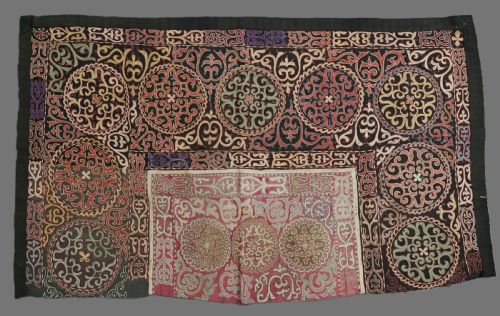
- A specific type of dowry embroidery used as a wall hanging, frequently linked to the Lakai tribe. They display bold geometric and tribal motifs executed in vibrant silk threads.
- Tush Kyiz
- A traditional embroidered yurt wall hanging originating from Kyrgyzstan. These large decorative textiles celebrated domestic life and marriage within nomadic communities.
Antique Suzani Tapestry: Frequently Asked Questions
How were antique suzanis used originally?
These embroidered textiles served primarily as dowry items created by brides and female family members for wedding ceremonies. Families utilised them as wall hangings, bed covers, and ceremonial horse or saddle covers.
In nomadic and settled Central Asian households, they functioned both as decorative displays of status and practical soft furnishings within traditional interiors and yurts.
How do you hang an antique suzani safely?
Mounting requires weight to be distributed evenly across the textile rather than pulling on a single point. Specialists often sew a cotton sleeve to the reverse and slide a padded wooden batten through.
Alternatively, conservation-grade Velcro or gentle stitching to a stretched backing fabric protects fragile cotton grounds and delicate silk embroidery threads from strain.
How are regional suzanis told apart?
Distinct regional workshops relied on specific colour palettes, ground fabrics and compositional arrangements. Tashkent pieces often show dense palak layouts, whilst Bokhara examples frequently display fine floral or architectural motifs.
Tribal groups such as the Lakai employ smaller formats like ilgich wall art and nim suzanis with distinct geometric and dynamic nomadic patterns.
What is a nim suzani?
A nim suzani is a smaller variation of the standard Central Asian embroidery piece. The term translates roughly to half suzani, indicating dimensions that are more compact than large ceremonial wall hangings.
These pieces offered versatility for domestic spaces while retaining the same silk thread embroidery techniques and traditional motifs found in full-scale works.