


Red Floral Suzani
These red floral suzani wall hangings and textile panels bring rich Central Asian folk art traditions into modern interiors.
Red Floral Suzani
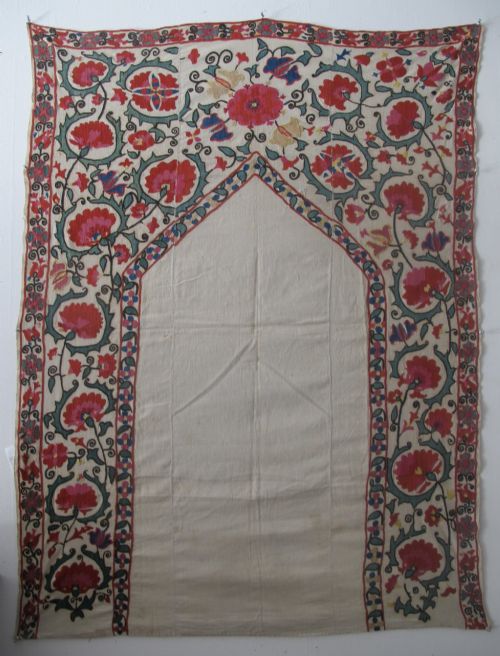
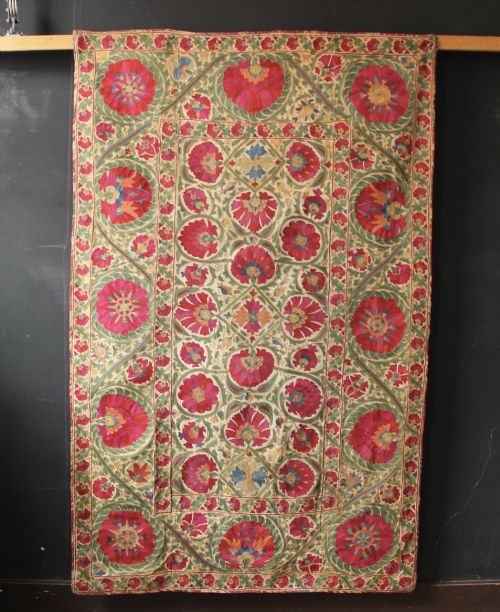
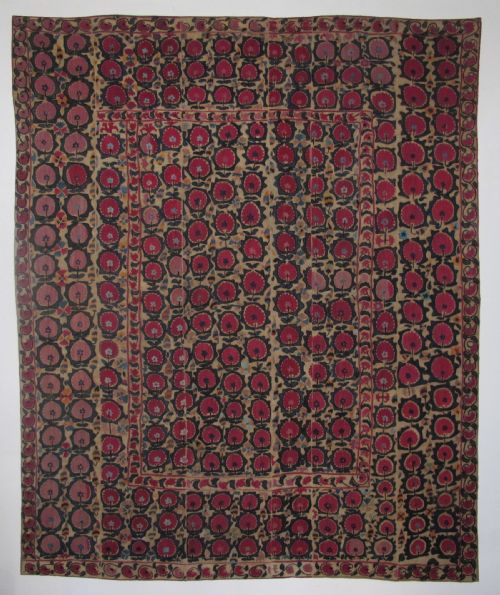
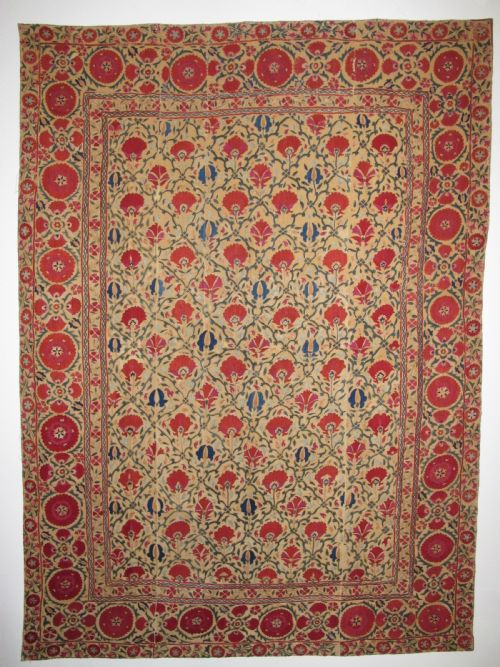
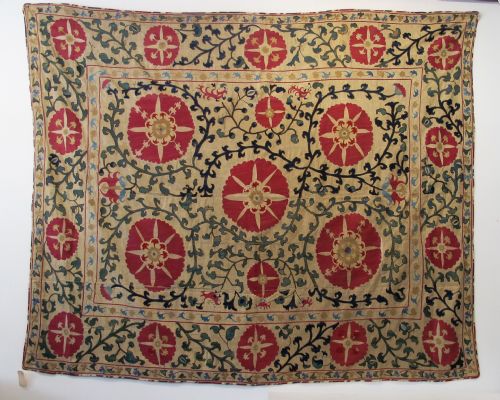
A red floral suzani is a traditional embroidered textile originating from Central Asian regions such as Uzbekistan. These decorative wall hangings and panels display intricate botanical motifs worked in vibrant coloured threads across a striking red ground.
The pieces available here encompass various traditional formats, including full-sized covers and smaller nim suzani panels. Dating from the nineteenth century into the twentieth century, they reflect the distinctive heritage of specific regional centres including Bokhara, Nurata, and Shakhrisabz.
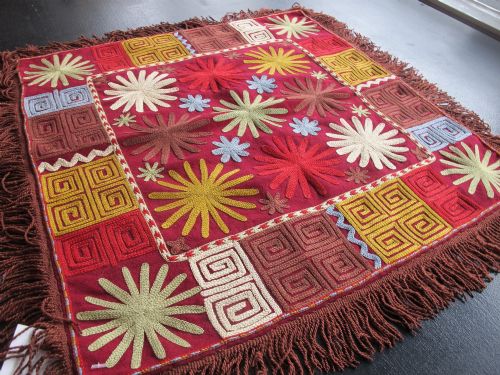
Makers utilised traditional styles associated with Uzbek and Lakai artisans, producing domestic furnishings that functioned as ceremonial dowry items or decorative room adornments. Each surviving textile panel offers a direct connection to historic nomadic and sedentary stitching traditions.
Materials and construction
Artisans constructed these textiles by working fine silk embroidery threads onto a foundational cloth of cotton, linen, or wool. The red ground fabric typically provides a bold contrast to the multicoloured floral and architectural designs worked across the surface.
Needlework techniques involve specialised stitches, most notably the tambour hook or various surface laid and couched stitches, which allow for sweeping curves and dense botanical fills. Makers completed these elaborate compositions by hand, often joining multiple narrow loom widths together to achieve larger wall hanging dimensions.
Listings feature pieces spanning from the mid-nineteenth century through the early twentieth century, utilising silk embroidery on cotton, wool, and linen grounds.
Distinctions in quality
The refinement of the needlework and the complexity of the botanical layout separate standard examples from finer works. Superior panels display exceptional precision in the execution of intricate floral motifs and harmonious colour distribution across the red ground.
The integrity of the base fabric and the preservation of the original silk embroidery threads significantly influence the overall standard of a piece. Finer antique examples retain vivid dye colours and dense stitching that demonstrate the high skill of the regional maker.
The Red Floral Suzani Glossary
- Suzani
- A type of embroidered tribal textile originating from Central Asia, traditionally made as part of a bride's dowry. These large decorative panels typically feature botanical and floral compositions.
- Nim suzani
- A half-sized or smaller variant of the standard suzani textile panel. These compact pieces were often utilised for specific domestic placements or smaller wall spaces.
- Bokhara
- A historic city and major cultural centre in Uzbekistan renowned for distinctive embroidery styles and fine textile production. Pieces associated with this region often display architectural or complex floral elements.
- Lakai
- A Central Asian tribal group known for bold, geometric, and energetic embroidery interpretations. Their work frequently utilises distinct colour combinations and spirited design layouts.
- Ground
- The foundational fabric cloth upon which the embroidery threads are applied. In these pieces, the material is commonly woven from cotton, linen, or wool and dyed red.
Red Floral Suzani: Frequently Asked Questions
How were suzanis originally used?
These textiles served primarily as ceremonial furnishings in traditional Central Asian households, functioning as wall hangings, bed covers, or doorway curtains. Families also created them as essential components of a bride's dowry.
Over time, these embroidered panels became prized decorative elements within homes, valued for their vibrant colour and intricate needlework.
How do I hang a suzani on the wall?
Mounting a textile safely requires distributing the weight evenly across the entire upper edge to prevent strain on the antique fibres. Professional framers often use a conservation mounting method involving a supportive backing fabric.
Alternatively, a sleeve can be gently hand-stitched along the top reverse side to accommodate a thin hanging rod for display.
What is the difference between a full suzani and a nim suzani?
A standard suzani is a large-scale embroidered panel designed to cover significant wall areas or large furniture pieces. These full compositions display expansive floral and architectural layouts.
A nim suzani is simply a smaller version, roughly half the dimensions of a standard piece, which allows for easier placement in more compact domestic spaces.
How should I care for an antique silk suzani?
Protect antique textiles from direct sunlight to prevent the natural silk embroidery threads from fading over time. Gentle surface dusting with a soft brush helps maintain the fabric without causing fibre damage.
Professional textile conservators should handle any necessary cleaning rather than attempting standard washing methods at home.