



Central Asian Folk Art
Central Asian folk art brings vibrant textiles, rugs, and wall hangings into a room, offering rich cultural history and tactile warmth.
Central Asian Folk Art
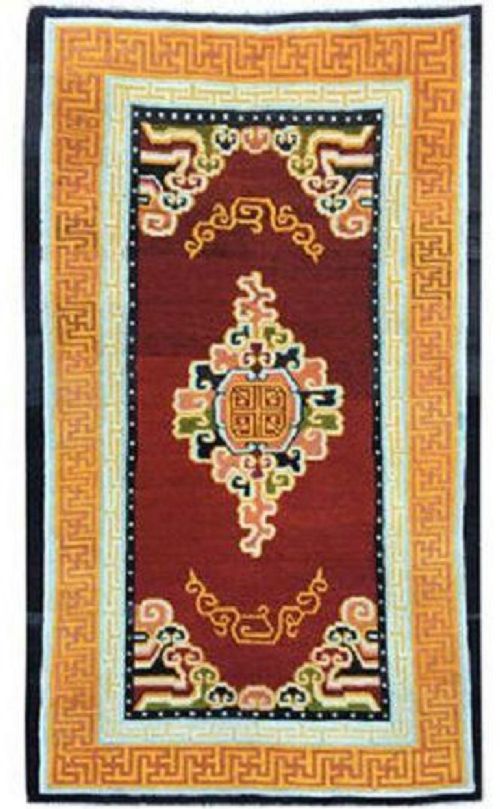
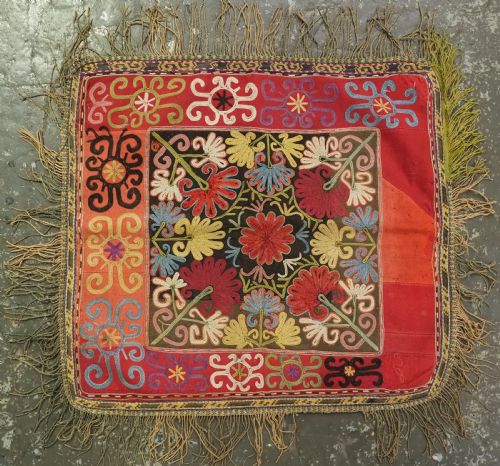
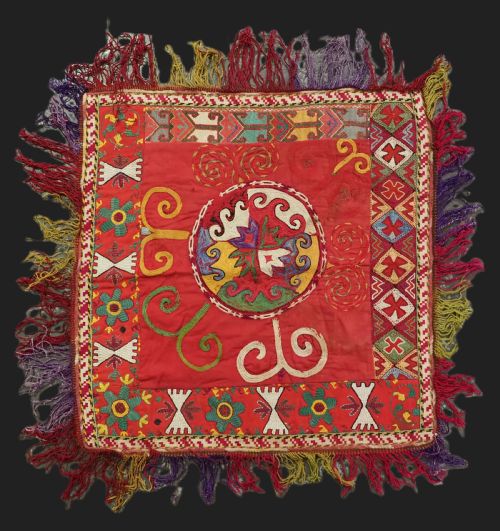
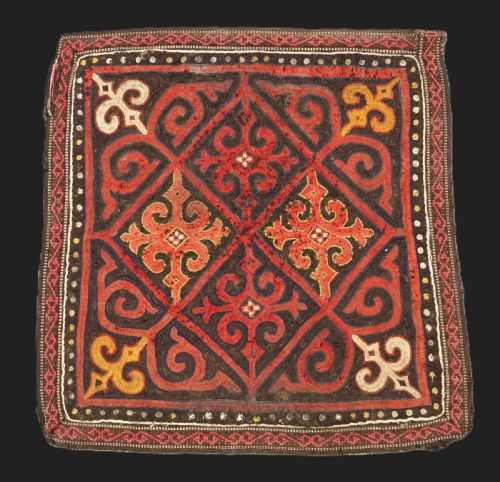
When searching for central asian folk art, buyers encounter a rich assortment of antique textiles, including Uzbek suzanis, embroidered felt panels, yurt wall hangings, and traditional Tibetan rugs. These items originate predominantly from the nineteenth and early twentieth centuries, reflecting nomadic and tribal traditions across the region.
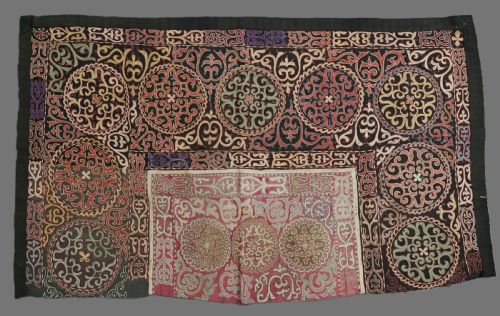
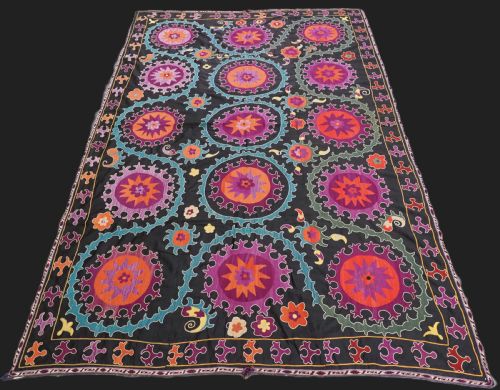
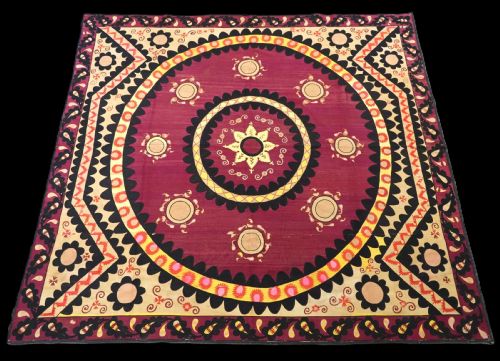
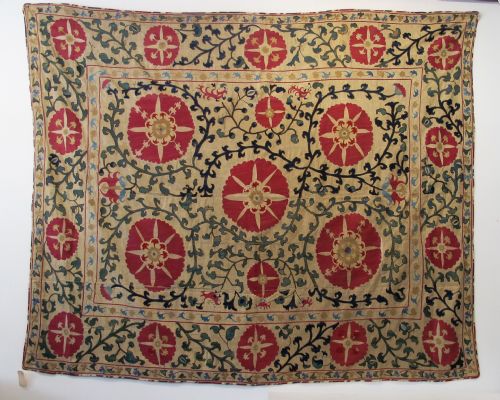
The most common examples on this page are silk-embroidered suzanis and tribal dowry embroideries like lakai ilgiches, typically created for domestic decoration or ceremonial use. They present striking geometric and floral motifs that served both symbolic and practical functions in traditional households.
How they were made
Artisans constructed these textiles using foundational grounds of cotton, wool, or felt, onto which they worked intricate designs using silk thread. Embroidery techniques varied by tribe and region, utilising diverse stitches to build dense patterns and textured surfaces.
Dyes derived from local plants and minerals provided the deep reds, blacks, and contrasting tones seen on these grounds. Makers combined hand-weaving and needlework traditions passed down through generations within nomadic and settled communities.
Nomadic makers sometimes stitched deliberate minor asymmetries into their embroideries to ward off the evil eye.
What varies in quality
Quality rests upon the density of the embroidery work and the complexity of the design layout across the textile ground. Fully embroidered palak suzanis and finely detailed tribal pieces demonstrate superior skill compared to sparsely worked examples.
The condition of the original ground fabric and the vibrancy of the remaining silk threads also distinguish finer pieces. Surviving textiles that retain their structural integrity and original dimensions command greater appreciation among collectors.
The Central Asian Folk Art Glossary
- Suzani
- An embroidered tribal wall hanging or textile panel from Central Asia, traditionally stitched with silk on a cotton ground. These large decorative pieces were often made as part of a bride's dowry.
- Ilgich
- A specific type of dowry embroidery produced by the Lakai tribe in Uzbekistan, characterised by bold geometric motifs and energetic needlework. They served as decorative wall hangings inside nomadic dwellings.
- Palak
- A large suzani variety where the cotton ground is fully covered in dense silk embroidery, creating a rich and opulent visual field. The Tashkent examples are particularly noted for this comprehensive coverage.
Central Asian Folk Art: Frequently Asked Questions
How were suzanis used originally?
Nomadic and settled families in Central Asia used suzanis primarily as decorative wall hangings, bed covers, or ceremonial wrap items during weddings. They formed an essential component of a bride's dowry.
Over time, these textiles became central focal points within traditional yurt interiors and brick homes alike, displaying the status and artistic skill of the maker's household.
How do I care for antique textiles?
Antique embroideries require careful handling, protection from direct sunlight to prevent silk fading, and occasional gentle dusting. Displaying them away from moisture preserves the integrity of the cotton or wool grounds.
Mounting them correctly on a supportive backing distributes the weight evenly if hung on a wall, preventing strain on the historic fabric.
What is the difference between a suzan and a rug?
Suzanis are primarily decorative embroidered textiles featuring silk thread stitched onto woven cotton grounds, designed for vertical display or ceremonial use. Tibetan rugs are heavy, pile-woven floor coverings made from wool.
While both fall under Central Asian folk art, their production techniques and structural purposes differ entirely.
How can I tell the period of an embroidery?
Dating relies on examining the types of dyes used, the weave of the cotton or wool ground, and the specific tribal motifs present in the needlework. Earlier nineteenth-century examples often display distinct natural dye palettes and idiosyncratic regional stitching styles.
Comparative analysis with documented museum pieces helps narrow down the decade of production.