


Traditional Uzbek Embroidery
Traditional uzbek embroidery brings textile panels, wall hangings and garments worked in rich threads from Central Asia into modern rooms.
Traditional Uzbek Embroidery
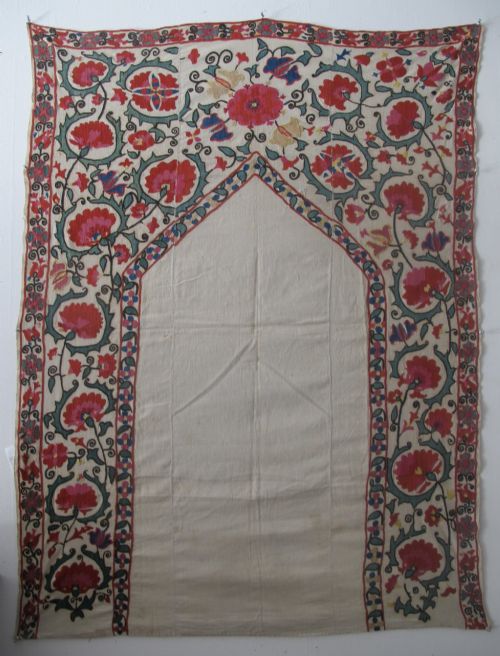
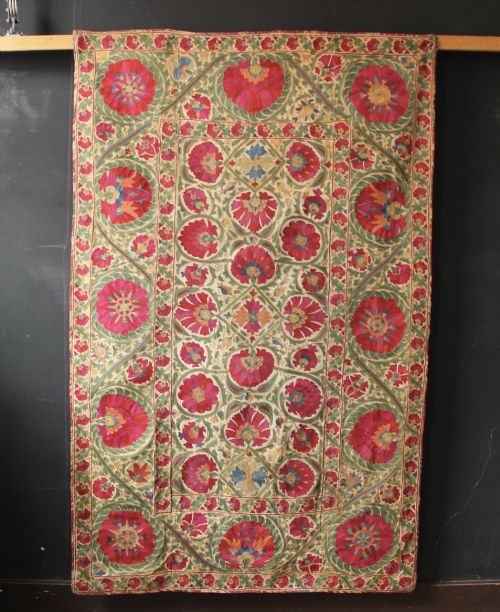
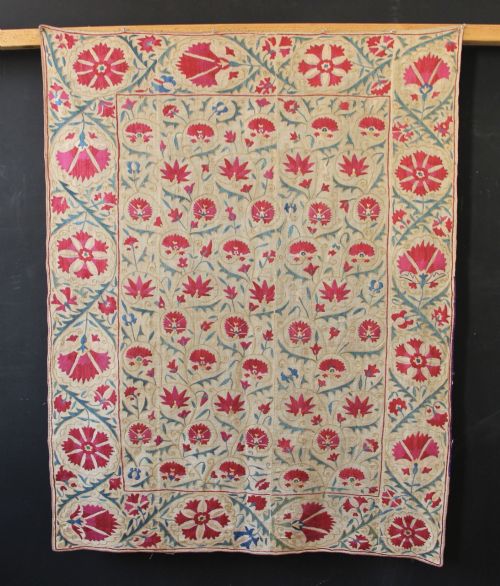
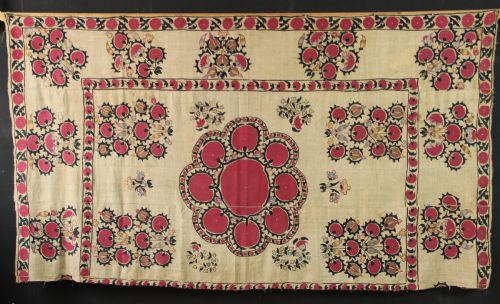
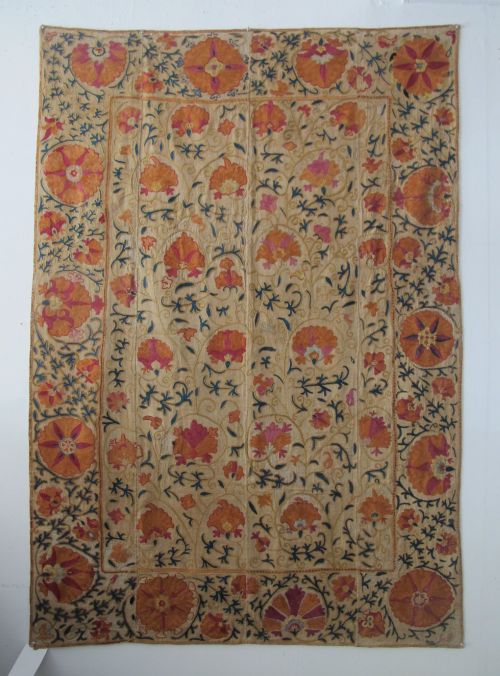
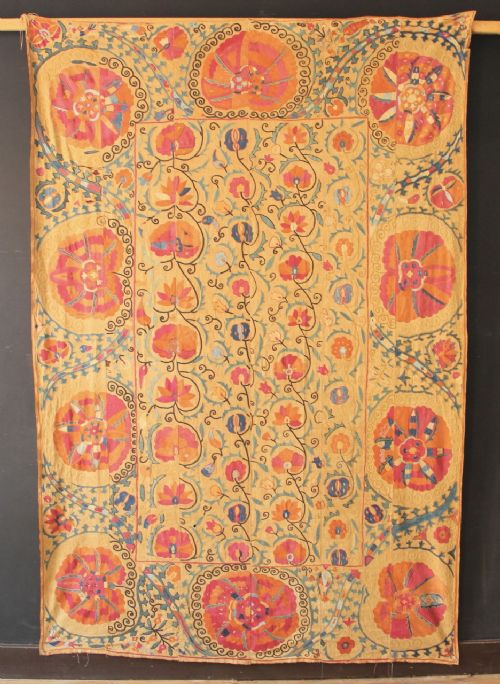
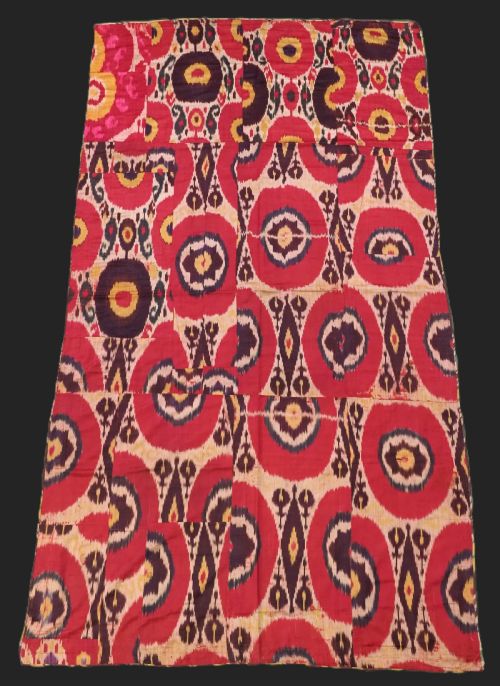
Traditional uzbek embroidery encompasses large wall hangings, smaller nim suzanis, mirror covers, bed covers and traditional garments originating from Central Asia. These textiles span periods from the early nineteenth century through to the early twentieth century, reflecting distinct regional designs.
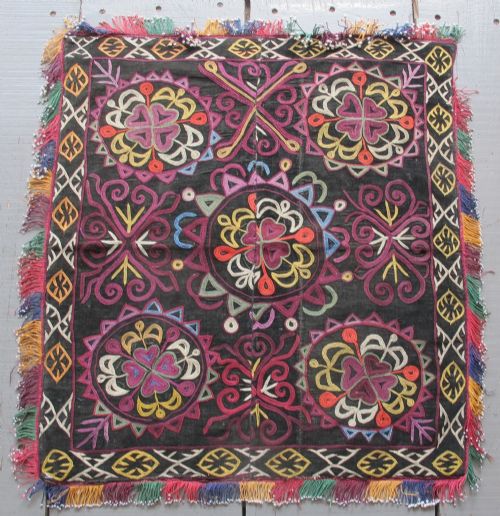
The pieces on this page include specific regional formats such as Bokhara, Nurata, Tashkent, Ura Tube and pieces attributed to Lakai and Tajik makers. Forms range from full-work palak designs to architectural patterns, prayer formats and medallion variants.
Buyers encounter panels mounted for display or left unmounted as flexible wall hangings and covers. Each regional type employs specific floral, geometric or figurative motifs worked onto varied textile foundations.
Materials and construction methods
Ground fabrics comprise cotton, linen, wool, adras silk-cotton mixes and velvet, providing stable foundations for heavy needlework. Silk thread forms the primary embroidery medium, supplemented in specific pieces by silver metal thread brocade work and glass beads.
Execution involves dense needlework applied directly to the textile ground, covering entire surfaces in full-work examples or framing central motifs on lighter grounds. Stitching techniques secure intricate floral vines, medallions and border arrangements across the textile panel.
Traditional Uzbek Embroidery Retail Price Guide 2026
Typical asking prices for traditional uzbek embroidery among the pieces listed under this phrase on Sellingantiques today, from the lower quarter to the upper quarter. They describe what is for sale here now, not the wider market.
Brides stitched secret protective motifs into hidden corners of their dowry textiles to ward off the evil eye.
Assessing quality in needlework
Quality rests upon the density of the needlework and the complexity of the ground fabric, ranging from light cottons to heavy red velvet and adras silk grounds. Full-work panels that cover the entire textile ground require significantly greater labour than open designs.
The vibrancy of the silk thread and the precision of the regional design execution separate standard examples from superior pieces. Architectural elements, architectural structures and finely articulated floral motifs indicate high workshop capability.
The Traditional Uzbek Embroidery Glossary
- Suzani
- A large embroidered tribal hanging from Central Asia, traditionally made by brides as part of their dowry. These textiles served as wall decorations, bed covers or ceremonial cloths.
- Nim Suzani
- A smaller version of the standard suzani wall hanging, generally measuring around half the surface area. This format allowed for easier placement in domestic interiors.
- Palak
- A fully embroidered suzani variant where the design covers the entire ground fabric without leaving open background space. Tashkent examples frequently utilise this dense layout.
- Adras
- A traditional Central Asian fabric woven from a mixture of silk and cotton yarns. This material often serves as the supportive ground for intricate silk embroidery.
- Torba Ilgich
- A specialised hanging or bag panel associated with Lakai Uzbek tribal groups. These items display distinct geometric and nomadic design traditions.
Traditional Uzbek Embroidery: Frequently Asked Questions
How were suzanis used originally?
Traditional uzbek embroidery panels served primarily as dowry items created by brides and female family members. They functioned as wall hangings, bed covers and ceremonial wrappers within domestic spaces.
Over time, these textiles became central elements of Central Asian home decoration, marking important family milestones and celebrations.
What is a nim suzani?
A nim suzani is a smaller variation of the standard large wall hanging, offering a more compact format for display. These pieces retain the same intricate silk embroidery and regional designs as their larger counterparts.
Collectors often choose this format when wall space is limited while still seeking authentic nineteenth-century needlework.
How do regional styles differ?
Different towns and tribal groups across Uzbekistan developed distinct decorative vocabularies and colour palettes. Nurata pieces emphasise fine floral sprays, while Tashkent palaks feature dense, all-over coverage.
Lakai and Tajik works introduce specific geometric interpretations and unique ground fabrics like red wool or velvet.
How should textile wall hangings be hung?
Mounting traditional uzbek embroidery requires distributing the weight evenly across the textile rather than suspending it from isolated points. Professional framing behind conservation-grade glass or stitching the textile to a padded, fabric-covered support board protects the fragile silk threads.
Keeping pieces away from direct sunlight preserves the natural dyes used in the cotton and silk grounds.