
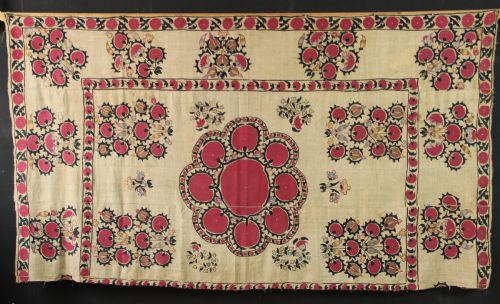
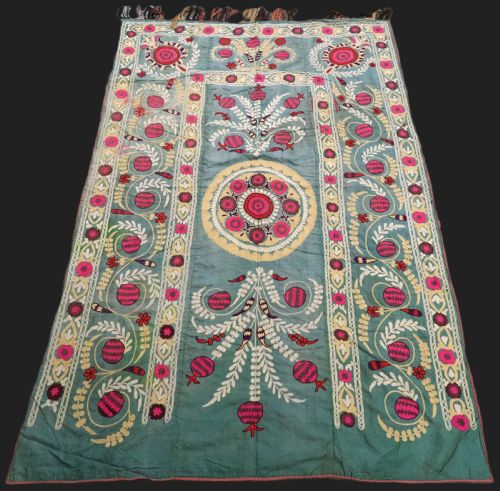
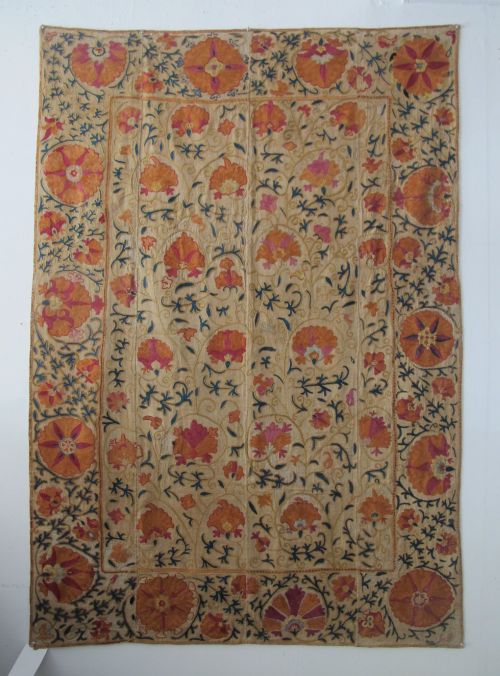
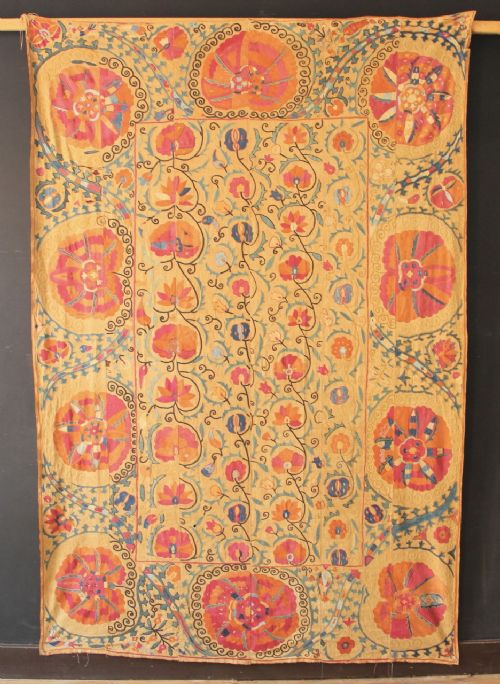


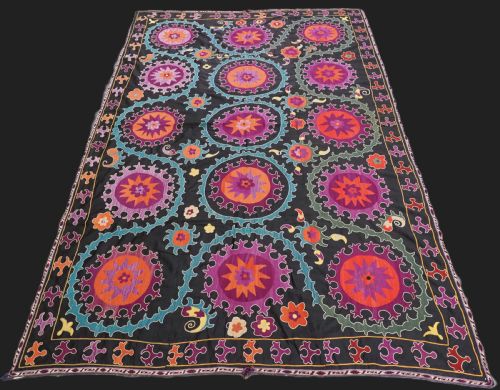


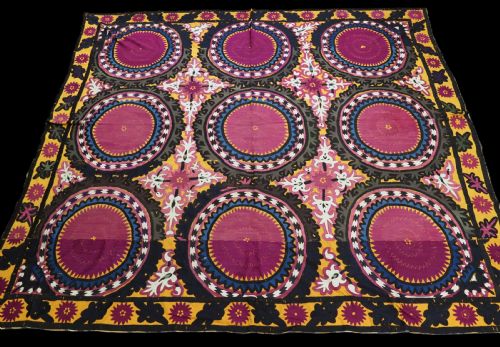

Antique Suzani Bedspread
An antique suzani bedspread brings heavy Central Asian needlework into a modern room, carrying centuries of nomadic and settled craft in every silk stitch.
Antique Suzani Bedspread
These textiles are large embroidered panels originating from Uzbekistan and surrounding regions, often used traditionally as bed covers or wall hangings. When searching for an antique suzani bedspread, you encounter pieces spanning from the early nineteenth century through the early twentieth century.
The objects take several distinct regional forms, including large medallion variants, nim suzanis, and specific formats like the Tajik ru-i-jo bed cover. Stylistic traditions range from classical urban workshop designs to bold folk art patterns associated with groups such as the Lakai tribe.
Most examples on this page hail from established textile centres like Bukhara, Samarkand, Shahrisabz, Tashkent, and Ura Tube. Each region contributes distinct palette choices, floral motifs, and compositional layouts that define its specific provenance.
How they were made
Makers stitched vibrant silk thread onto woven foundation fabrics using tambour hooks or fine hand needles. The ground cloth itself typically consists of hand-woven cotton, plain silk, or adras, which is a traditional ikat-dyed fabric woven from a combination of silk and cotton yarns.
Embroidery styles vary from delicate partial work to dense full work that completely covers the foundation cloth. Artisans frequently worked separate panels on narrow looms before stitching them together into a single expansive decorative hanging or cover.
Antique Suzani Bedspread Retail Price Guide 2026
Typical asking prices for suzani bedspread among the pieces listed under this phrase on Sellingantiques today, from the lower quarter to the upper quarter. They describe what is for sale here now, not the wider market.
Current listings feature textiles spanning from the early nineteenth century to the early decades of the twentieth century.
What varies in quality
Quality rests heavily on the density of the needlework and the complexity of the design layout. Full work embroidery covering the entire ground cloth demands significantly more labour and skill than lighter, open compositions.
The vibrancy and condition of the natural silk threads dictate visual impact, alongside the structural integrity of the original cotton or adras foundation. Pieces demonstrating precise execution and balanced regional motifs command greater attention from collectors.
The Antique Suzani Bedspread Glossary
- Suzani
- An embroidered textile panel originating from Central Asia, taking its name from the Persian word for needle. These pieces serve primarily as decorative covers or wall hangings.
- Adras
- A traditional Central Asian fabric woven with a silk warp and a cotton weft. It provides a sturdy yet lustrous foundation for heavy embroidery.
- Nim suzani
- A half-size or smaller embroidered panel format. These compact pieces were often utilised for specific domestic functions rather than full beds.
- Ru-i-jo
- A traditional bed cover format associated with Tajik makers. These textiles are designed specifically to adorn sleeping quarters.
- Full work
- An embroidery style where the silk thread completely obscures the foundation cloth. This technique represents the highest tier of needlework density.
Antique Suzani Bedspread: Frequently Asked Questions
How were antique suzanis used?
These textiles served practical and ceremonial roles within Central Asian households, functioning as bedding, wall decorations, and dowry items.
Families displayed them proudly during celebrations to signify status and artistic heritage.
Where do these textiles come from?
The pieces originate primarily from historical centres across Uzbekistan, including Samarkand, Bukhara, and Tashkent.
Nomadic groups like the Lakai also produced distinct regional styles with unique folk art motifs.
What is an adras ground?
An adras ground is a woven foundation cloth made from a mixture of silk and cotton yarns.
This material combines the strength of cotton with the soft lustre of silk to support heavy embroidery.
How do I care for an old suzani?
Protect the fragile silk threads and older cotton grounds by keeping them out of direct sunlight.
Gentle vacuuming through a mesh screen helps remove dust without disturbing the historic needlework.