
Silk Embroidery Wall Hanging
A silk embroidery wall hanging brings texture and colour into a room, drawing the eye with intricate needlework from Central Asia and beyond.
Silk Embroidery Wall Hanging
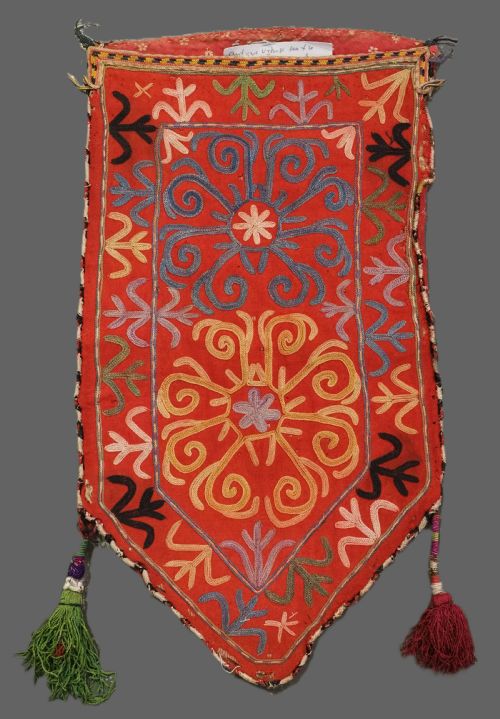
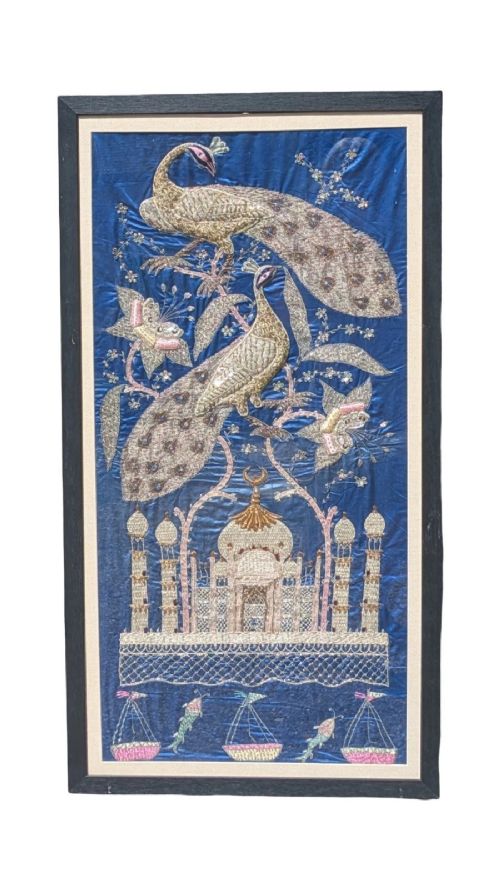
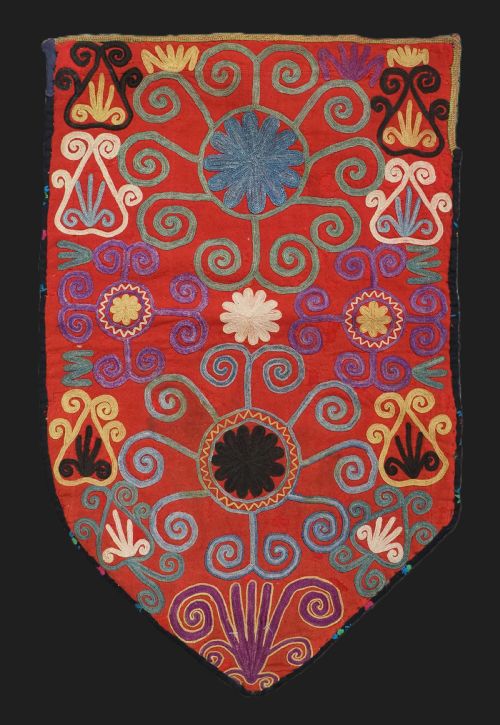
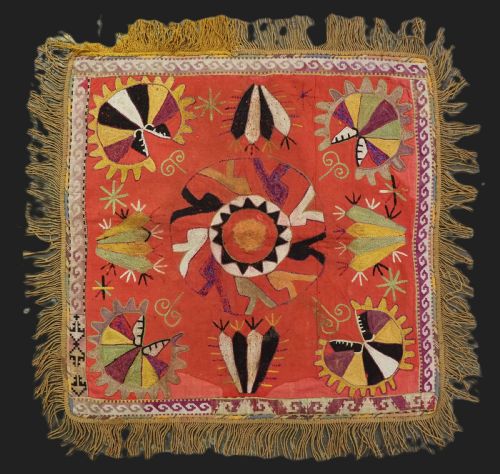
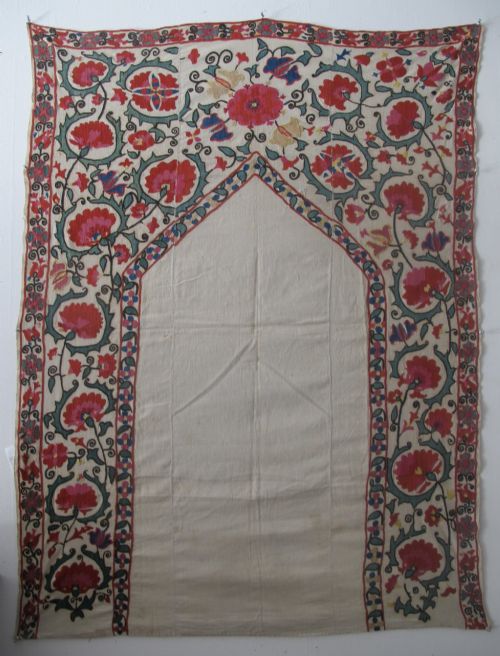
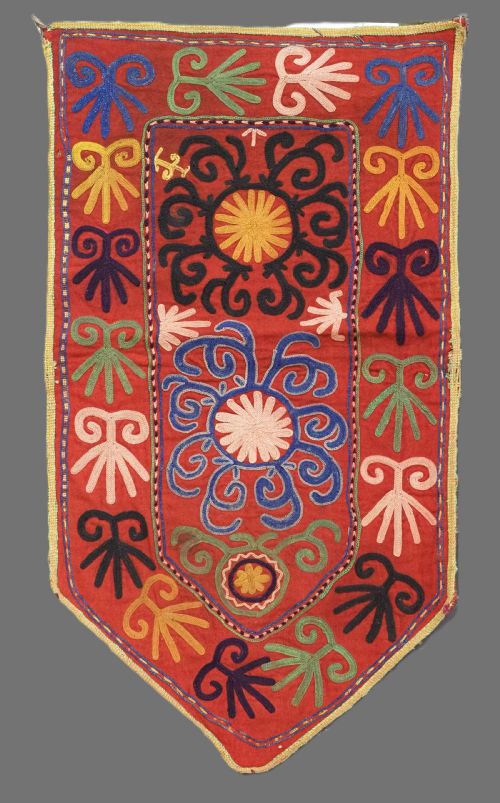
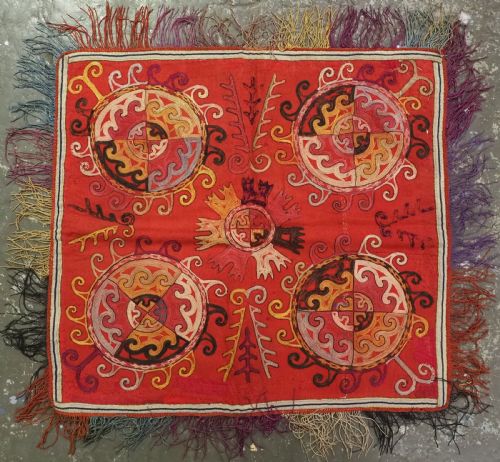
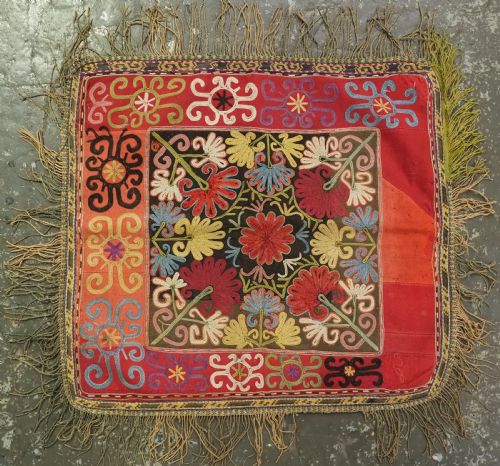
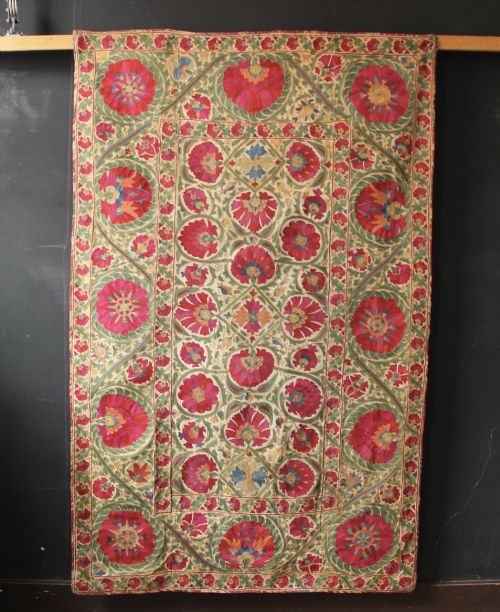
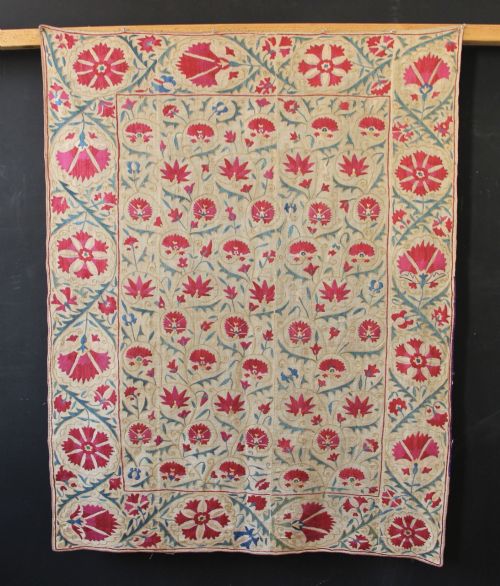
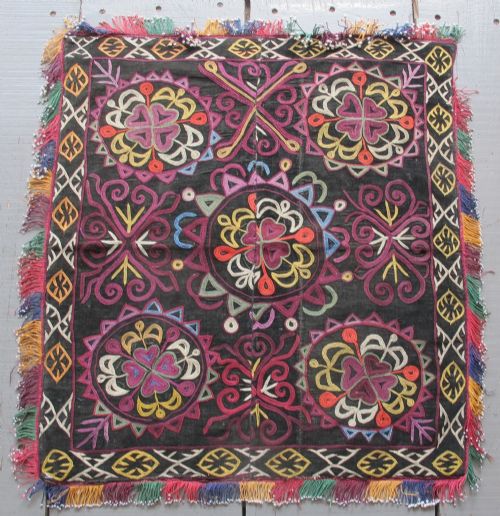
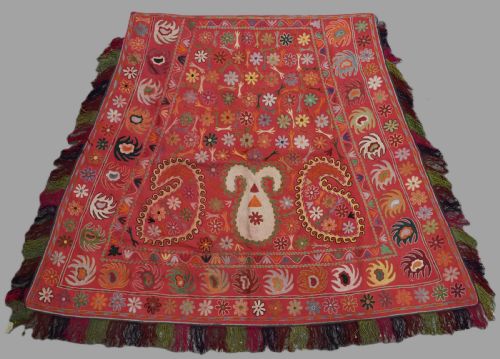
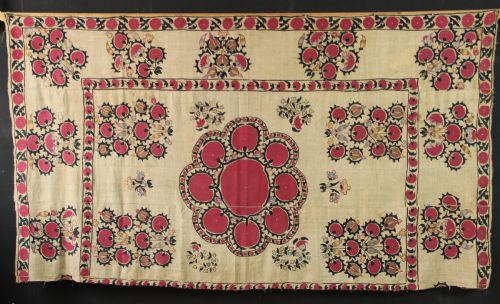
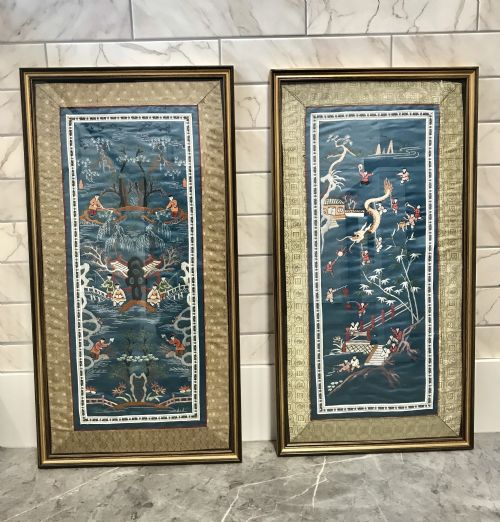
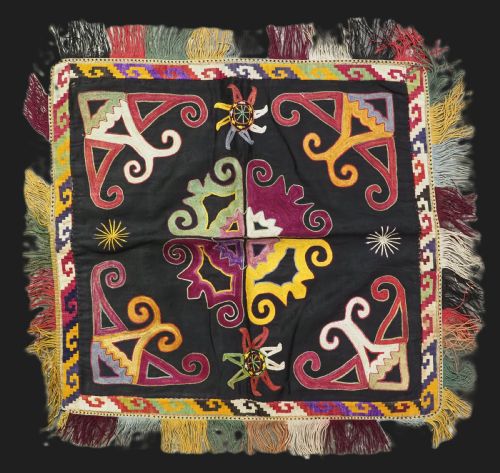
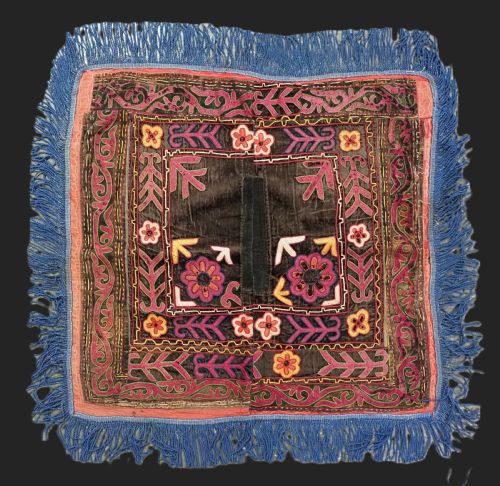
A silk embroidery wall hanging encompasses diverse textile traditions, most frequently seen here in Central Asian Suzanis, Lakai tribal ilgiches, and Persian Rasht embroidered panels. These pieces span from the mid-nineteenth century through to the early decades of the twentieth century, reflecting regional domestic and tribal crafts.
Buyers will encounter specific functional forms repurposed for display, including dowry hangings, mirror covers, saddle rugs, and bed covers. Uzbek and Persian workshops dominate the selection, bringing distinct medallion motifs and floral patterns executed in vibrant regional colour palettes.
Materials and construction
Needlework is executed predominantly using fine silk threads applied to supportive foundation fabrics such as cotton, wool, linen, or felt. Ground materials often provide a contrasting backdrop, seen in Mughal red wool grounds and green velvet panels.
Techniques combine surface embroidery with applique work, utilising metallic threads alongside dyed silk to build rich textural depth. Many panels show hand-sewn construction methods handed down through generations of regional artisans.
Several Central Asian pieces were once intended to decorate the flanks of horses or conceal household mirrors from evil spirits.
Assessing quality
Quality rests upon the fineness of the needlework and the complexity of the design layout, with denser stitching and balanced compositions commanding attention. The clarity of the botanical or geometric motifs and the harmonious retention of natural dye colours elevate certain panels above standard domestic pieces.
The integrity of the foundation fabric and the preservation of delicate silk highlights significantly influence the standing of an item. Survival of original borders and complete panels without major structural intervention marks the superior examples.
The Silk Embroidery Wall Hanging Glossary
- Suzani
- A traditional embroidered tribal textile from Uzbekistan and surrounding regions, usually featuring large sunburst or floral medallions worked in silk on a cotton or linen ground.
- Ilgich
- A specific type of Central Asian hanging or dowry embroidery, often produced by Lakai tribes and characterised by energetic geometric and zoomorphic motifs.
- Applique
- A decorative technique where pieces of fabric, such as felt or velvet, are sewn onto a larger foundation ground to build up layered patterns.
- Rasht embroidery
- A distinctive Persian style utilising intricate silk threadwork and felt applique, typically centred around floral medallions and scrolling vines.
Silk Embroidery Wall Hanging: Frequently Asked Questions
How were these textiles originally used?
Many examples served as dowry items, bed covers, or decorative wall furnishings within nomadic and village households. They marked important life events and added insulation and decoration to domestic interiors.
Over time, collectors recognised their artistic merit and transitioned them from functional household objects to displayed wall art.
How do I hang a textile safely?
Mounting a delicate textile requires distributing the weight evenly to prevent stress on the ancient foundation fibres. Professional conservation framing or a padded velcro support sleeve works best for heavier pieces.
Keep mounted panels away from direct sunlight and strong artificial lights to protect the natural dyes from fading.
How do I distinguish regional styles?
Uzbek Suzanis generally display grand floral sprays and central medallions on pale linen or cotton grounds. In contrast, Persian Rasht panels rely heavily on detailed silk work layered over coloured felt backgrounds.
Lakai ilgiches often feature smaller, highly dynamic geometric shapes and vibrant contrasts unique to tribal workshops.
What materials make up these embroideries?
The primary medium is hand-spun or cultivated silk thread, chosen for its lustrous sheen and capacity to hold vibrant dyes. This thread is worked onto sturdy backing materials including cotton, wool, linen, and heavy felt.
Selected pieces incorporate metallic thread highlights or velvet grounds to add further tactile richness.