

Vintage Dog Sculpture
A vintage dog sculpture brings character and sculptural presence to a room, capturing breeds from dachshunds to pugs in bronze, terracotta, and porcelain.
Vintage Dog Sculpture
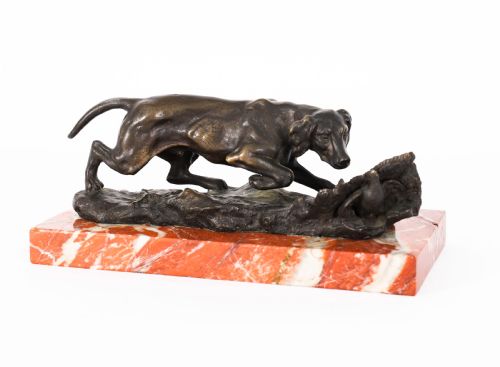
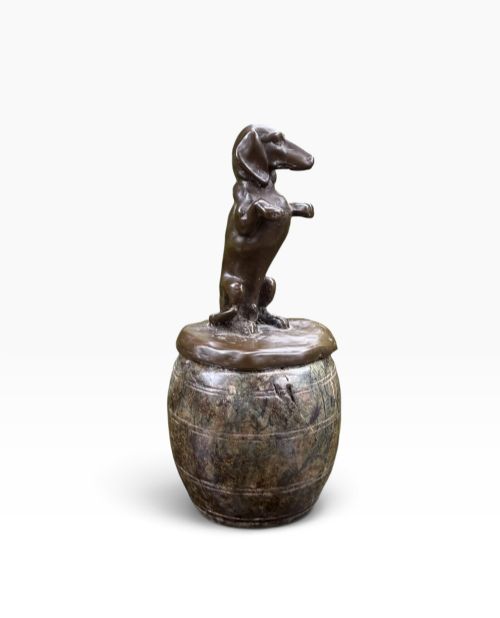
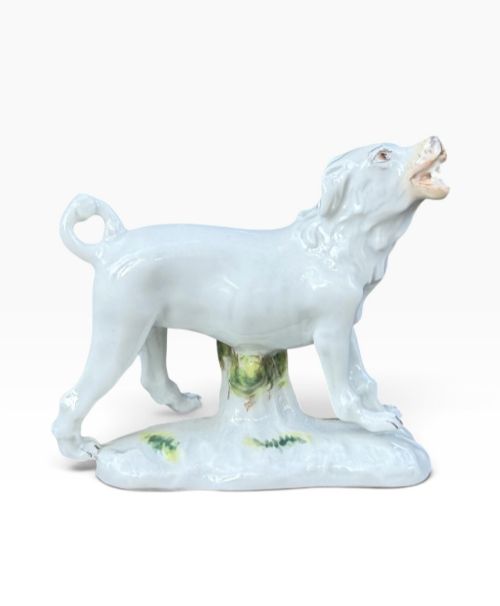
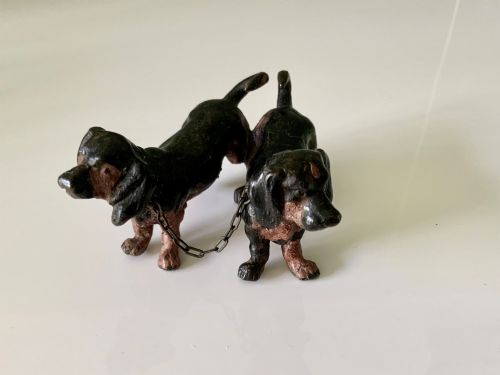
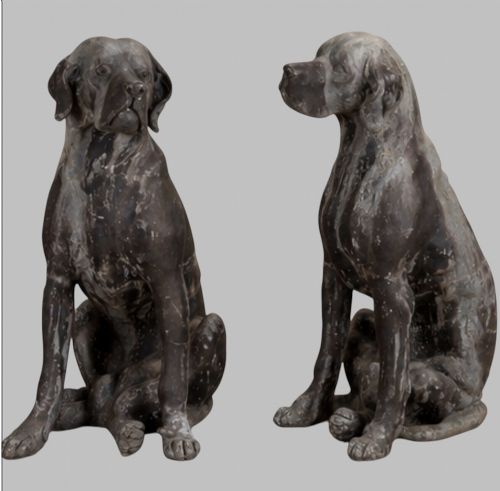
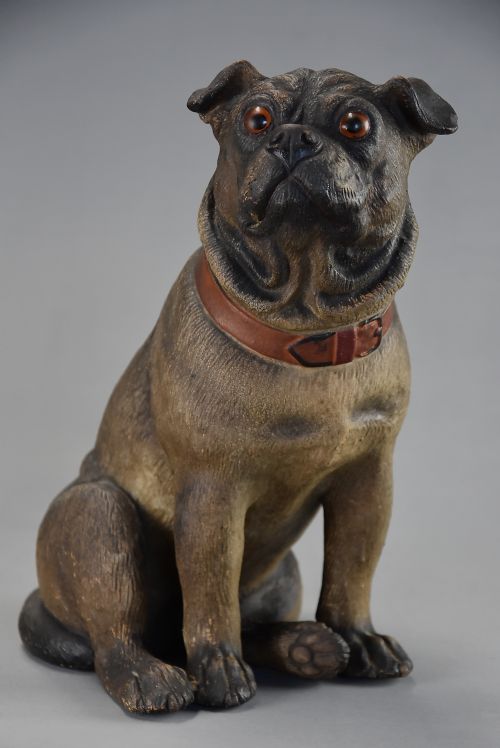
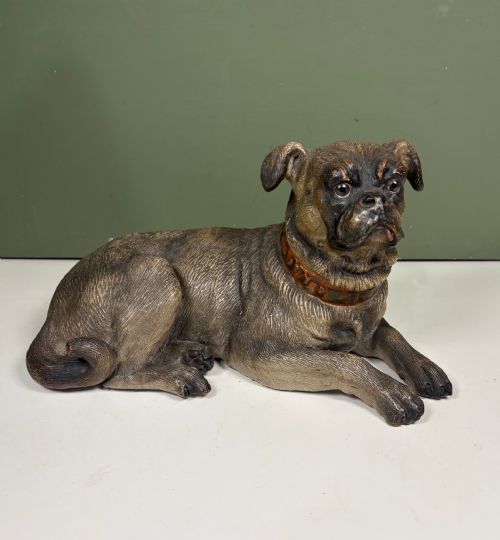
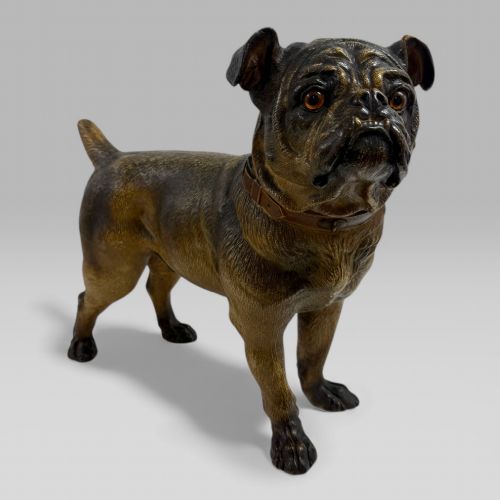
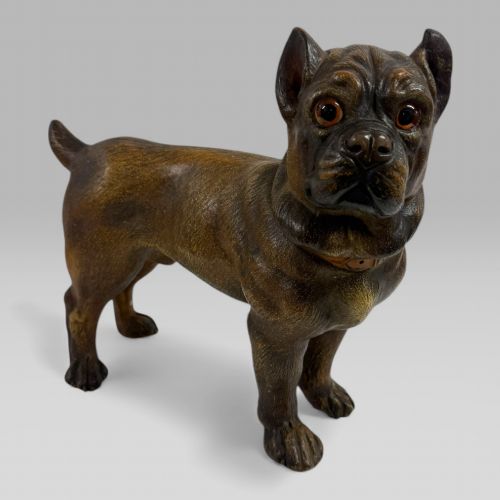
When searching for vintage dog sculpture, collectors encounter a diverse array of figures spanning the nineteenth and twentieth centuries, originating from British, French, Austrian, and Asian workshops. The most frequent pieces on this page are cabinet bronzes, cold-painted Austrian models, and ceramic figurines depicting hunting hounds, terriers, and pugs.
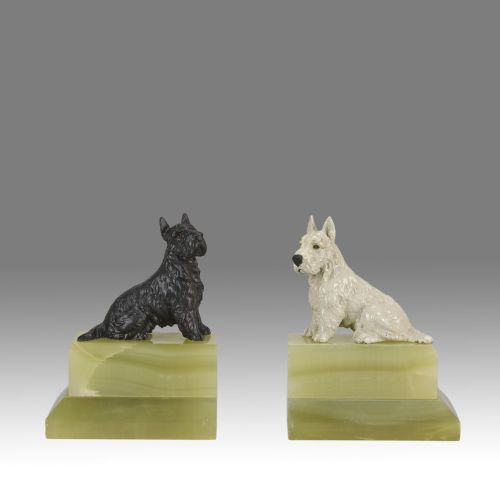
The selection ranges from functional items such as bookends, tobacco jars, and footstools to pure decorative figurines and sculptural studies. Victorian and Edwardian examples sit alongside Art Deco works, reflecting changing domestic tastes for animal subjects over more than a century.
Materials and methods
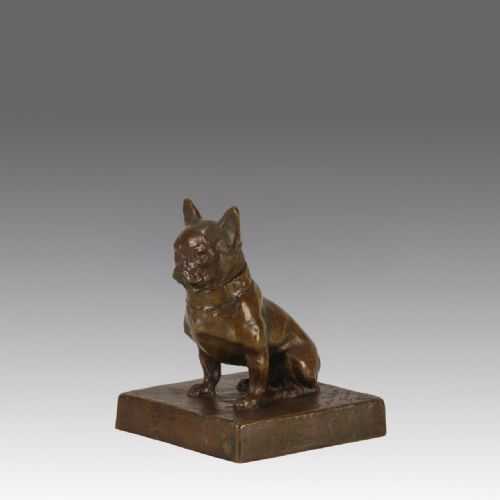
Bronze stands out as the primary metal, often cast by the lost-wax method and finished with cold-painted polychrome colours or dark patination. Sculptors mounted many of these metal figures on marble bases or paired them with stone plinths.
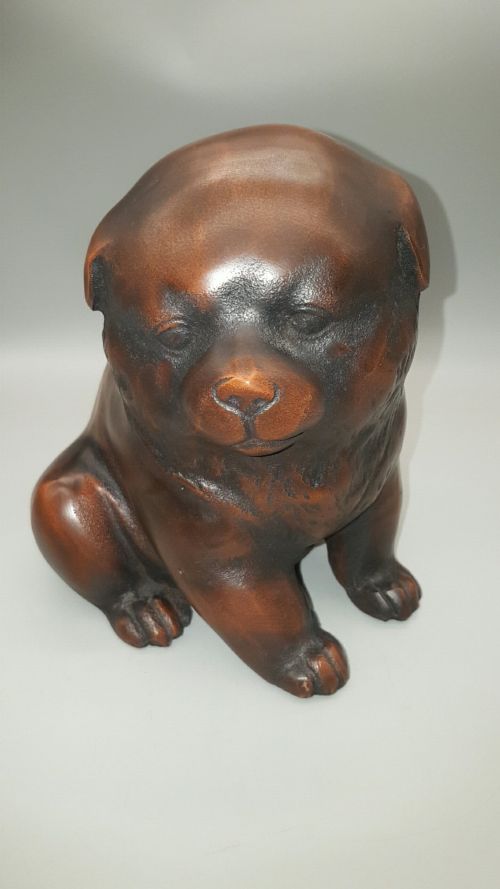
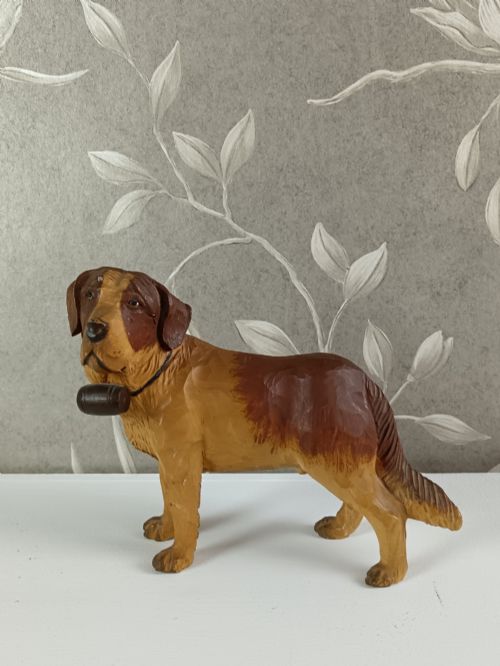
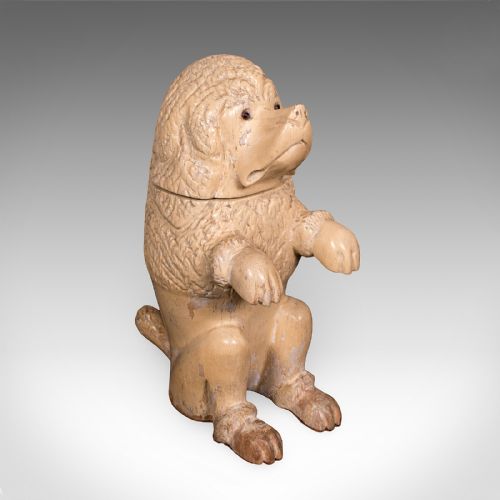
Ceramic and terracotta pieces utilise fired clay, sometimes glazed or hand-painted with enamel details, particularly in Austrian animalier figures and Oriental porcelain works. Wood, fruitwood, boxwood, and cast iron also appear in utilitarian items like footstools, tobacco jars, and bookends.
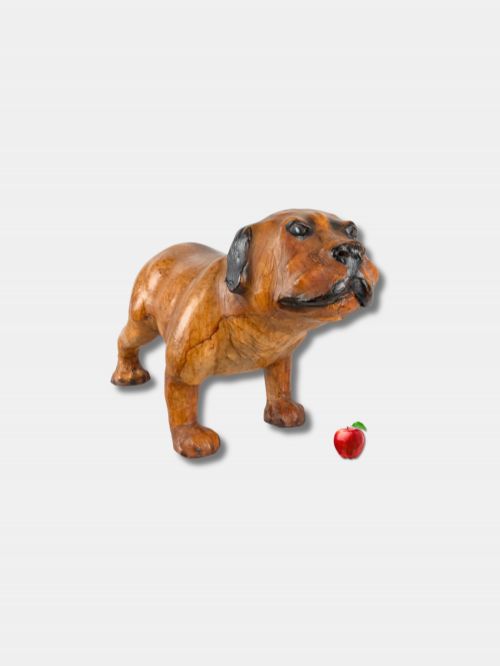
Leather dog footstools by Omersa for Liberty offer a cheerful place to rest weary feet after a long walk.
Understanding quality differences
Quality rests on the fidelity of the casting and the sensitivity of the modelling, where master sculptors capture musculature and posture with anatomical conviction. Surface finishing, such as the preservation of delicate cold-painted colours on Austrian bronzes or the crispness of hand-carved wood and boxwood details, distinguishes superior pieces from standard commercial castings.
The presence of a known signature or foundry mark elevates a work, shifting an anonymous decorative object into a documented piece of animalier art. Weight, material density, and the harmony between the animal figure and its marble base also mark the division between standard production and fine workmanship.
Carl Kauba·Tsunemitsu·Dora Heber·Omersa For Liberty·Prosper Lecourtier·Edith Parsons·Jules Moigniez·Karl Hagenaur·Arthur Waagen·Geo Maxim
The Vintage Dog Sculpture Glossary
- Animalier
- A nineteenth-century artistic movement dedicated to the realistic depiction of animals, particularly predators and hounds. Practitioners rendered fur, muscle, and motion with close observation.
- Cold-painted bronze
- A technique where bronze castings receive paint applications without subsequent kiln firing. This finish is fragile and its survival intact defines condition.
- Vienna bronze
- Small, highly detailed bronze figures produced in Austrian foundries around the turn of the twentieth century. They often depict animals in humorous or realistic poses.
- Foo dog
- A traditional Chinese guardian lion depicted as a stylized canine figure. These symbols of protection appear in glazed porcelain, boxwood, and cast iron.
- Parian
- A fine white biscuit porcelain resembling marble, developed in the nineteenth century. It lent itself to smooth figural studies of dogs and human figures.
Vintage Dog Sculpture: Frequently Asked Questions
What periods do these dog sculptures come from?
The listings span from the nineteenth century through the Art Deco era and into the mid-twentieth century. Most examples cluster around the Victorian, Edwardian, and early twentieth-century periods.
Materials and styling help date the pieces, with nineteenth-century works often showing classic animalier patination, while 1920s and 1930s items display distinct Art Deco geometric influences.
How were cold-painted bronzes decorated?
Artisans applied polychrome paint directly onto the cooled bronze surface using oil or water-based pigments without high-temperature firing. This delicate technique created lifelike coats and markings on dogs like pugs and terriers.
Because the paint did not undergo kiln baking, surviving pieces often show wear that records their handling and age over the decades.
What is the difference between an animalier bronze and a decorative figure?
Animalier bronzes focus on anatomical accuracy and naturalistic behaviour, created by sculptors who studied animals in motion or repose. They treat the subject as a serious artistic study rather than a mere ornament.
Decorative figures, by contrast, often serve utilitarian purposes or emphasise charm and whimsy, such as bookends, footstools, and tobacco jars.
How do I identify a terracotta dog sculpture?
Terracotta pieces consist of fired earthenware clay, often finished with painted surfaces to represent pugs and hunting dogs. They tend to be larger, sometimes life-size, and possess a porous ceramic body beneath any surface pigment.
Austrian workshops produced notable terracotta animal figures during the late nineteenth century, prized for their substantial presence.